Posts Tagged book lists

How I Became a Ghost by Tim Tingle

Well done, Mr. Tingle.

Imagine a class full of anxious 5th graders sitting on the rug at your feet begging for the next chapter in our read aloud, How I Became a Ghost by Choctaw native and story teller Tim Tingle.

As a teacher, I incorporate every moment into a teaching moment, and storytelling is no different. This is my third year reading this book aloud and a common comment after each session is how much my students love this story.

A couple of years ago, I sent two students on an errand, and they later burst through the classroom doors out of breath. They said they had run as fast as they could across the campus to get back before I started reading. I realized then, that I shouldn’t send kids on errands or make kids do catch-up work when we were visiting the land of the Choctaw on the Trail of Tears.

How I Became a Ghost is not only entertaining, it is also brutally honest. It is a tale of the Trail of Tears, when  Native Americans were forced to leave their homes in Mississippi and relocate to land now called Arkansas and Oklahoma.

The story is told through the eyes of Issac, a ten-year old Choctaw. In the very beginning, Isaac announces to his readers (or listeners in this case) that he is going to be a ghost soon. And because of his condition, premonitions of grisly events begin to plague him.

This is where the brutally honest part comes in. There are many disturbing scenes that are so well-told, that the kids shriek in shock. But they get it. And they are anxious for you to keep reading. For example, during one of Isaac’s premonitions, he sees an old Choctaw couple burning in flames. Soon after, the same couple die when soldiers sneak into the neighborhood at night to set everyone’s homes on fire. And then there is the premonition of pus-filled sores covering some of the tribe’s bodies. You guessed it. Soldiers ride into camp and offer the shivering population blankets exposed to Smallpox.

Choctaws were removed west of the Mississippi started in 1831. Louisiana Indians Walking Along a Bayou by Alfred Boisseau was painted in 1846.

Smallpox became a huge topic in the classroom and I had to teach a mini-lesson on communicable diseases (which ties into our Health curriculum) and the use of diseased blankets.  The bigger story, which we discussed several times, was the relationship between native tribes, societal beliefs, and the government in the 1830s.

Because Tim Tingle is a master storyteller, tie-ins to Native American culture are seamlessly woven into the story. We learn how the spiritual world is part of the family unit and how those who have passed on look after and protect those still walking the earth.  When Isaac becomes a ghost, his story does not stop there. As a ghost he is able to assist the living as they continue their fight to stay alive while walking the trail.

As with most great books, and one that has won many awards, the literary elements are rich. Besides profound sayings worthy of insightful discussion, we examined how imagery comes from the imagination. The scene goes from text on paper to an image inside our heads. In the following scene, Isaac’s feet are frozen in a puddle, and when he pulls his feet up the skin tears off. The kids cringe when this happens, but they understand how bitter cold can affect the body and the desperate conditions of the Choctaw. It is interesting to see imagery taking shape through the imagination of a fifth grader.

Some conversations: What is the author saying? Why does the author make a point of one hundred footprints turning into a thousand? Why were the footprints bloody and not regular footprints?

Isaac looking back and seeing a bloody trail of footprints.

Isaac covered with a blue blanket leaning against a tree with his feet frozen in ice.

One of the reasons I originally chose to read a book on Native American history is because it helps students to build a broader concept of how the U.S. was formed. Books can be powerful tools and it is a tool that sits at the top of my teacher toolbox.


STEM Tuesday — Pair Up! Comparing Nonfiction Titles — Booklist

This month, we take a look at pairs of books that focus on the same subject or theme. Readers can compare and contrast how authors have each approached these fascinating stories to craft their nonfiction middle grade books. In some cases authors have taken a different approach in organization and in others a different point of view. Reading both will provide more details and information on each topic, and also show that all authors find their own way into each story.

Support Independent Bookstores - Visit IndieBound.org Support Independent Bookstores - Visit IndieBound.org

Mary Mallon, known as Typhoid Mary, unwittingly spread the deadly disease as a cook. Read two nonfiction titles that tell this amazing story.

Fatal Fever: Tracking Down Typhoid Mary by Gail Jarrow tells the investigative story behind the tale. 

Terrible Typhoid Mary by Susan Campbell Bartoletti approaches the story as a biography. 


Support Independent Bookstores - Visit IndieBound.org Support Independent Bookstores - Visit IndieBound.org

The history of chocolate is important to both science and history. These two authors have provided books that delve into chocolate’s origins and its history as the confection we love.

Chocolate: Sweet Science & Dark Secrets of the World’s Favorite Treat by Kay Frydenborg 

The Book of Chocolate: The Amazing Story of the World’s Favorite Candy by HP Newquist


Support Independent Bookstores - Visit IndieBound.org Support Independent Bookstores - Visit IndieBound.org

If learning about scavengers (and the important part they play in the food chain) is up your alley, then these two new titles are for you.

Rotten:  Vultures, Beetles, Slime, and Nature’s Other Decomposers by Anita Sanchez will be released in January of 2019 and delves into all kinds of decomposers. 

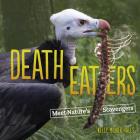
Death Eaters:  Meet Nature’s Scavengers by Kelly Milner Halls also focuses on decomposition and provides lots of interesting photos.   


Support Independent Bookstores - Visit IndieBound.org Support Independent Bookstores - Visit IndieBound.org Support Independent Bookstores - Visit IndieBound.orgThese three titles focus on our waste and where it ends up. Eco-justice readers will be inspired by all three.

Tracking Trash: Flotsam, Jetsam, and the Science of Ocean Motion by Loree Griffin Burns focuses on how ocean currents move debris around

Plastic, Ahoy! Investigating the Great Pacific Garbage Patch by Patricia Newman follows a team of scientists who study the Great Pacific Garbage Patch for the first time.

This Book Stinks! Gross Garbage, Rotten Rubbish, and the Science of Trash by Sarah Wassner Flynn dives deep into the cycle of trash.


Support Independent Bookstores - Visit IndieBound.org Support Independent Bookstores - Visit IndieBound.org

These two titles provide a look at how dogs use their perfect sniffers to help us.

Poop Detectives: Working Dogs in the Field by Ginger Wadsworth focuses on conservation canines.

Sniffer Dogs: How Dogs (and their Noses) Save the World by Nancy Castaldo introduces readers to all kinds of sniffer detection dogs. 


Support Independent Bookstores - Visit IndieBound.org Support Independent Bookstores - Visit IndieBound.org

Two great volcano titles for geology units.

Eruption: Volcanoes and the Science of Saving Lives by Elizabeth Rusch deals with the science of eruption. 

Life on Surtsey: Iceland’s Upstart Island by Loree Griffin Burns focuses on the aftermath. 


Support Independent Bookstores - Visit IndieBound.org Support Independent Bookstores - Visit IndieBound.org

Budding naturalists will love learning about how apes are studied in the wild with these two titles.

Gorilla Doctors: Saving Endangered Great Apes by Pamela S. Turner

Untamed: The Wild Life of Jane Goodall by Anita Silvey


STEM Tuesday book lists prepared by:

Nancy Castaldo has written books about our planet for over 20 years including her 2016 title, THE STORY OF SEEDS: From Mendel’s Garden to Your Plate, and How There’s More of Less To Eat Around The World, which earned the Green Earth Book Award and other honors. Nancy’s research has taken her all over the world from the Galapagos to Russia. She enjoys sharing her adventures, research, and writing tips. She strives to inform, inspire, and educate her readers. Nancy also serves as the Regional Advisor of the Eastern NY SCBWI region. Her 2018 title is BACK FROM THE BRINK: Saving Animals from Extinction. www.nancycastaldo.com

Patricia Newman writes middle-grade nonfiction that inspires kids to seek connections between science, literacy, and the environment. The recipient of  a Sibert Honor Award for Sea Otter Heroes and the Green Earth Book Award for Plastic, Ahoy!, her books have received starred reviews, been honored as Junior Library Guild Selections, and included on Bank Street College’s Best Books lists. New in 2018:  Eavesdropping on Elephants: How Listening Helps Conservation. During author visits, she demonstrates how her writing skills give a voice to our beleaguered environment. Visit her at www.patriciamnewman.com.


The Cybils are Coming!

The Cybils are the Children’s and Young Adult Bloggers Literacy Awards, and they recognize authors and illustrators whose books combine literary merit and popular appeal. For the past two years, I’ve had the privilege to serve as a Cybils judge for poetry. It’s been so much fun! The best part, of course, are the books. I’ve read some truly amazing poetry. As a second-round judge, I read only the books that the first-round readers selected for the second round. Last year, that meant we got to read Kwame Alexander, Nikki Grimes, David Elliott, Michelle Schaub, Chris Harris, Margarita Engle, and J. Patrick Lewis. Amazing, right?

Almost as fun as the reading, though, is the discussion. With a group of incredibly thoughtful and experienced poets, teachers, and librarians, we discussed the pros and cons of each book, eventually (with some hand-wringing and last-minute angst) working our way into a final selection. The final joy of the process is getting to shout from the rooftops about the winner, knowing that your efforts are going to help get a wonderful book in the hands of more kids. You can see a list of all the 2017 winners here.

Applications to become a Cybils judge will open later this month. Check the website or follow @Cybils on Twitter so that you don’t miss it. If you aren’t up for serving as a judge, though, you can still take part by nominating books for the award. Nominations will open in early October. There are categories for picture books, easy readers, middle grade, and young adult, in addition to poetry, and for non-fiction, speculative fiction, and graphic novels. Nominate books in as many categories as inspire you, as a broad selection of books only enhances the awards process. The book needs to have been published in English in 2018 in the United States or Canada. Full rules on nominating are here. It’s a great way to get the word out about a book you love. And as an incorrigible book pusher, I think you can’t get much better than that.

Kate Hillyer is a middle grade writer and occasional poet. She blogs here and at The Winged Pen, and has been known to interrupt perfect strangers mid-conversation so that she can recommend books to them. She served as a Cybils judge for poetry in 2016 and 2017. You can find Kate online at www.katehillyer.com and on Twitter as @SuperKate.