
There’s a line that pops up on social media from time to time that says, “People come into your path for a reason, a season, or a lifetime.” It’s been playing in my head this past week, ever since I learned that one of my closest friends is dying. Thinking about our too short friendship has got me thinking about the various other people I have had the fortune to call my friend. It’s also got me thinking about how friendships grow and change over time. Which is why I’ve put together a list of some of my favorite Middle Grade Books about friendship. Consider it a tribute to friendships old and new, long and short, loved and lost.
 The Last Great Adventure of the PB & J Society
by Janet Sumner Johnson
When her best friend’s house is threatened with foreclosure, young Annie Jenkins is full of ideas to save the home: selling her appendix on eBay, winning the lottery, facing down the bankers . . . anything to keep Jason from moving. But Jason’s out-of-work dad blows up at the smallest things, and he’s not very happy with Annie’s interventions, which always seem to get them into more trouble. But when Annie tracks a lost treasure to Jason’s backyard, she’s sure the booty will be enough to save Jason’s family. Pirate treasure in the Midwest seems far-fetched, even to Annie, but it could be the answer to all their problems. Now all she has to do is convince Jason. As the two hunt for answers and the pressure gets to Jason and his family, Annie discovers that the best-laid plans aren’t always enough and there are worse things than moving away.
 You Go First by Erin Entrada Kelly
Twelve-year-old Charlotte Lockard and eleven-year-old Ben Boxer are separated by more than a thousand miles. On the surface, their lives seem vastly different—Charlotte lives near Philadelphia, Pennsylvania, while Ben is in the small town of Lanester, Louisiana.
Charlotte wants to be a geologist and keeps a rock collection in her room. Ben is obsessed with Harry Potter, presidential history, and recycling. But the two have more in common than they think. They’re both highly gifted. They’re both experiencing family turmoil. And they both sit alone at lunch.
During the course of one week, Charlotte and Ben—friends connected only by an online Scrabble game—will intersect in unexpected ways as they struggle to navigate the turmoil of middle school. The New York Times-bestselling novel You Go First reminds us that no matter how hard it is to keep our heads above troubled water, we never struggle alone.
 Raymie Nightingale by Kate DiCamillo
Raymie Clarke has come to realize that everything, absolutely everything, depends on her. And she has a plan. If Raymie can win the Little Miss Central Florida Tire competition, then her father, who left town two days ago with a dental hygienist, will see Raymie’s picture in the paper and (maybe) come home. To win, not only does Raymie have to do good deeds and learn how to twirl a baton; she also has to contend with the wispy, frequently fainting Louisiana Elefante, who has a show-business background, and the fiery, stubborn Beverly Tapinski, who’s determined to sabotage the contest. But as the competition approaches, loneliness, loss, and unanswerable questions draw the three girls into an unlikely friendship — and challenge each of them to come to the rescue in unexpected ways.
 The Season of Styx Malone by Kekla Magoon
Caleb Franklin and his big brother Bobby Gene are excited to have adventures in the woods behind their house. But Caleb dreams of venturing beyond their ordinary small town.
Then Caleb and Bobby Gene meet new neighbor Styx Malone. Styx is sixteen and oozes cool. Styx promises the brothers that together, the three of them can pull off the Great Escalator Trade–exchanging one small thing for something better until they achieve their wildest dream. But as the trades get bigger, the brothers soon find themselves in over their heads. Styx has secrets–secrets so big they could ruin everything.
 Roll by Darcy Miller
When Lauren (but call him “Ren,” pretty please) Hall sees birds falling from the sky, he knows something is wrong. But just as he’s starting to worry, he realizes that the birds are plummeting toward the ground on purpose.
Turns out they’re Birmingham Roller Pigeons, and his new neighbor Sutton is training them for a competition.
Sure, it’s strange, but Ren’s best and only friend Aiden has picked this summer to start hanging with the popular kids. So Ren starts training pigeons with Sutton—what’s the worst that could happen? A bird falls on his head?
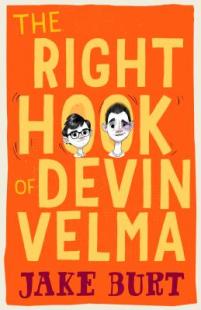 The Right Hook of Devin Velma by Jake Burt
Devin wants to hit it big on the internet by pulling a stunt at an NBA game—one the entire nation will be watching. Addison can’t turn Devin down, but he can barely manage talking to his teachers without freezing up. How’s he supposed to handle the possibility of being a viral sensation?
Addi’s not sure why Devin is bent on pulling off this almost-impossible feat. Maybe it has something to do with Devin’s dad’s hospital bills. Maybe it all goes back to the Double-Barreled Monkey Bar Backflip of Doom. Or maybe it’s something else entirely. No matter what, though, it’s risky for both of them, and when the big day finally comes, Devin’s plan threatens more than just their friendship.
 Stanley Will Probably Be Fine by Sally J. Pla
Nobody knows comics trivia like Stanley knows comics trivia.
It’s what he takes comfort in when the world around him gets to be too much. And after he faints during a safety assembly, Stanley takes his love of comics up a level by inventing his own imaginary superhero, named John Lockdown, to help him through.
Help is what he needs, because Stanley’s entered Trivia Quest—a giant comics-trivia treasure hunt—to prove he can tackle his worries, score VIP passes to Comic Fest, and win back his ex-best friend. Partnered with his fearless new neighbor Liberty, Stanley faces his most epic, overwhelming, challenging day ever.
What would John Lockdown do?
Stanley’s about to find out.
 Wish by Barbara O’Connor
Eleven-year-old Charlie Reese has been making the same secret wish every day since fourth grade. She even has a list of all the ways there are to make the wish, such as cutting off the pointed end of a slice of pie and wishing on it as she takes the last bite.
But when she is sent to the Blue Ridge Mountains of North Carolina to live with family she barely knows, it seems unlikely that her wish will ever come true. That is, until she meets Wishbone, a skinny stray dog who captures her heart, and Howard, a neighbor boy who proves surprising in lots of ways. Suddenly Charlie is in serious danger of discovering that what she thought she wanted may not be what she needs at all.
From award-winning author Barbara O’Connor comes a middle-grade novel about a girl who, with the help of a true-blue friend, a big-hearted aunt and uncle, and the dog of her dreams, unexpectedly learns the true meaning of family in the least likely of places.
What are some of your favorite Middle Grade books about friendship? Please, share in the comments section.




 Nancy Castaldo

 Welcome to STEM Tuesday: Author Interview & Book Giveaway, a repeating feature for the fourth Tuesday of every month. Go Science-Tech-Engineering-Math!

 Your host is