
Posts Tagged Author Interview

Author Interview: Shea Fontana

DC Superhero Girls: Out of the Bottle Cover

DC Superhero Girls: Out of the Bottle Cover

As a proud comic book nerd, one of the coolest things about my job as a collection development librarian is  the opportunity to preview the latest in the DC Superhero Girls series, OUT OF THE BOTTLE, which was released in August, and SEARCH FOR ATLANTIS, which hits bookstores on October 2nd.

OUT OF THE BOTTLE highlights Harley Quinn as the comic book character she’s created for Ms. Moone’s art class comes to life and wreaks havoc on Superhero High. SEARCH FOR ATLANTIS introduces Raven and Mera to the team. Mera is a new student at Super Hero High, and as she and Wonder Woman becomes friends, Bumblebee becomes anxious that she’s losing her best friend. When the heroes discover that Atlantis has been stolen, the girls have to work together to get it back.

DC Superhero Girls: Search for Atlantis Cover

DC Superhero Girls: Search for Atlantis Cover

Then, I had a chance to talk to author Shea Fontana about the series.

MUF: Every book in the DC Superhero Girls series deals with an important life lesson. For example, OUT OF THE BOTTLE stresses the importance of mental health care, and SEARCH FOR ATLANTIS deals with accepting change. Do you feel that the graphic novel format makes these issues more accessible for young readers? If so, how?

The graphic novel format really gives us the space and intimacy with the reader to dive into big ideas. Plus, having these awesome, well-known characters explore these topics makes it accessible for kids. Our heroes are aspirational for kids reading the books, and we want to show kids that even heroes face hardships. When kids deal with those types of things, like mental health care or accepting change in their friendship groups, it can feel very lonely and it helps to know that superheroes are dealing with it, too! My goal with these types of stories is to always help kids feel less alone and empower them — like they have a team of superheroes that can fight and win every battle with them.

MUF: SEARCH FOR ATLANTIS has a couple of new beginnings. Both Mera and Raven are introduced, and the Teen Titans were essentially formed. Which of these new beginnings were you most excited about introducing? Was it fun brainstorming new names for the Titans? Were there any rejected names that didn’t make it into the book?

I loved integrating both Mera and Raven into this graphic novel! Both are such wonderful, and very different characters. From the beginning of the series, I knew that I wanted to build up to the Teen Titans reveal, bringing together the traditional Titans that kids know from the TV show as well as the comic book version that includes Miss Martian and Bumblebee. The misnaming thread was a fun way to build the tension toward what everyone knows is coming — of course their group name should be the Teen Titans!

MUF: Why was Brainiac chosen as the villain for this story?

We knew that Brainiac got away at the end of the DC Super Hero Girls: Intergalactic Games animated movie, so he’s been waiting in the wings for his next attack. Since in the Legends of Atlantis movie, we meet Mera and Aquaman under water on their “turf,” I wanted to do something different, but still Atlantis-oriented with this story. So, I decided to bring Atlantis out of the water. Since Brainiac is a collector of bottled cities, it seemed the perfect fit.

MUF: What was your favorite part of the story? What was the most difficult to write? What was the most fun?

My favorite part of the story is how Miss Martian steps up as a leader. She’s not the regular kind of leader that the heroes expect — she doesn’t seem as bold as Wonder Woman or as outgoing as Supergirl. But she has a quieter style of leadership that is just as valid.
The ending on this one was difficult for me to write. I really felt for and related to Bumblebee!

MUF: Who’s your favorite superhero? Who’s the most fun to write about? Why?

I loved writing Raven in this story! Her personality is a great contrast to a lot of the other characters. She has an edge and attitude that we don’t often see in kid superhero stories and it’s fun to explore that. 

MUF: Conversely, who’s your favorite villain? Who’s your favorite to write about?

We have had so many fun villains in this series, both in the graphic novels and the animation. I think my favorite is Dark Opal, because he went into villainy as a back-up career when musical theater didn’t work out. Mera’s sister, Siren, who we meet in the Legends of Atlantis animated move, is also great. She’s so controlling and manipulative.

MUF: If you could teach any class at Superhero High, which one would you want to teach?

Power Naps 101.

MUF: Right there with you! I think that would be my favorite class to take. Is there a superhero or villain that you’d like to write about that you haven’t yet? Who?

It had been Batman, as he is my childhood favorite hero, and he is not featured in DC Super Hero Girls. But now I’ve had the chance to write him in BATMAN: OVERDRIVE which will be published under the upcoming DC Zoom middle grade imprint! I can’t wait for everyone to read it — it’s some of the most fun I’ve had writing.

MUF: And finally, do you have any advice for aspiring writers and writers who would love to work on graphic novels one day?

Read a lot and do a lot! The best way to get familiar with story structure, dialogue, and how graphic novels work is by reading. But the best way to come up with stories is by doing! While the old adage of “write what you know” isn’t true (I don’t know how to fly or shoot lasers out of my eyes), the more you experience, the more you’ll have to pull from when thinking of story ideas. Whenever I need the courage to do something new, I tell myself, “Well, it could be a good experience for a story…”

Shea Fontana is a writer for film, television and graphic novels.  Her credits include developing and writing the DC Super Hero Girls animated shorts, TV specials, movies and graphic novels; Polly Pocket, Doc McStuffins, The 7D, Whisker Haven Tales with the Palace Pets, Dorothy and the Wizard of Oz , the new Muppet Babies series; two Disney on Ice shows where she wrote new material for the worlds of Mickey Mouse, Inside Out, Disney Princesses, Finding Dori, Frozen, and other Disney and Pixar properties; and the feature film, Crowning Jules. Learn more about her and her writing at http://www.sheafontana.com/.


STEM Tuesday — Pair Up! Comparing Nonfiction Titles — Interview with Author Kay Frydenborg

Welcome to STEM Tuesday: Author Interview & Book Giveaway, a repeating feature for the fourth Tuesday of every month. Go Science-Tech-Engineering-Math!

Today we’re interviewing Kay Frydenborg, author of CHOCOLATE: Sweet Science & Dark Secrets of the World’s Favorite Treat, a title in this month’s featured book pairs. School Library Journal gave it a starred review, saying, “This fascinating book presents a deep, multifaceted glimpse at a delectable dessert: chocolate. Engaging—even witty in places—and enlightening.”

Mary Kay Carson: How did Chocolate come about?

Kay Frydenborg: Chocolate was my second book for Houghton Mifflin Harcourt (HMH), following Wild Horse Scientists—a project that I’d loved researching and writing both for the subject matter (a long-time interest of mine that I’d tried to write about in different ways for years), and for the opportunity to join the ranks of Scientists in the Field (SITF) books, authors, and editors I so admired. When I started thinking about my next book, I was drawn to other subjects that might lend themselves to the series. So when I came across an article in the New York Times about scientists searching in the jungles of Peru for ancient cacao trees previously thought to have been extinct, I felt that little zing of recognition. I immediately pictured the scientists hiking along a tangled jungle path, and imagined the oppressive heat and the buzzing insects, the sweat and physical exertion along with the anticipation and sense of discovery that must have propelled them.

I learned that one of the principal researchers introduced in that NYT article was a USDA plant scientist headquartered in Beltsville, Maryland, within an easy drive of my home. I found his phone number and made sure he was actually there and would be willing to talk with me about his work, and I began to see a new SITF book take shape in my mind’s eye. But when I pitched the idea to my editor at HMH, I got a response I wasn’t expecting: she and her managing editor didn’t want the SITF book about chocolate scientists, but they did want a “big” stand-alone book about chocolate, for a slightly older (YA) audience. It would be longer, more complex, and broader in scope than what I’d originally proposed. Unlike wild horses, chocolate was a subject I knew little about except that I liked to eat it, so it would require a lot of research. I barely knew what a cacao tree looked like, or where it grew, or whether it was large or small. I thought about it for a bit, and then took a deep breath and accepted the challenge. It was an opportunity I couldn’t pass up, and luckily, I do love research.

MKC: Care to share a fun research moment or two?

Kay: The first was when I met and interviewed Lyndel Meinhardt, the United States Department of Agriculture plant scientist with the unusual name. He was so knowledgeable and generous in sharing his knowledge of all things cacao, and he introduced me to my first in-person cacao tree, which was actually living in a big pot on the floor of his office. Photos almost don’t do justice to this tree and its fruit, which seems about as different from chocolate as a spare tire is from a rubber tree. After introducing me to “his” cacao tree and showing me slides and maps from a couple of chocolate expeditions to the Amazon jungle, Lyndel led me to a climate-controlled greenhouse on the sprawling USDA campus, where rows of carefully-tended young trees of varying heights were thriving more than 3,000 miles from their natural habitat near the equator. Lyndel told me about the many diseases to which cacao trees in the wild are susecptible, about the closely guarded storage vaults where precious plants are stored in a few places in the world, and about how advances in genomic testing have opened a whole new world of chocolate science.

Another favorite moment? The day I received a surprise package in the mail from Dan Pearson, a California-based chocolate entrepreneur who was a major character in the book. He’d sent me a stash of his own fine Peruvian dark chocolate, in several forms, and even included some raw cacao beans. I didn’t eat the beans (although Dan told me you can), but I sure did enjoy the chocolate bars and nibs! A little went a long way, so they lasted forever, and knowing about where they came from and how they were created made them even more delicious. I could almost close my eyes and see that little tree in a steamy Amazon forest when I tasted that amazing chocolate.

MKC: What approach did you take for Chocolate and why did you choose it?

Kay: I wanted to approach this very big subject from the dual perspective of history and science—the approach I’ve followed for all of my nonfiction books. I’m equally fascinated by both ways of looking at just about everything, and find that starting by tracing the history of a given thing or event naturally leads into exploring the science around it. In the case of chocolate, the history is ancient and complex, and I was soon enthralled by stories of the ancient Mesoamerican peoples who first figured out how to transform cacao pods into chocolate, and then about the dramatic impact that European conquerers had on those ancient, rich civilizations.

Following the trail of chocolate opened a whole, fascinating world to me. This is why I love writing narrative nonfiction! I guess I write for myself, first—to satisfy my own curiosity, and I hope others—both young people and not-so-young readers—will be just as curious as I am. I read many books and articles over the course of my research, but fairly early on I also identified and began interviewing original sources, like Lyndel Meinhardt and Dan Pearson, as well as many others. Personal interviews make the story come alive for me.

Kay Frydenborg is the author of several books, including They Dreamed of Horses, Animal Therapist, Wild Horse Scientists, Chocolate: Sweet Science and Dark Secrets of the World’s Favorite Treat, and A Dog in the Cave. She lives in Pennsylvania with her husband and two dogs, who are always hungry but are definitely not allowed to eat chocolate. When not writing, she enjoys spending time with them and riding her horse as often as she can. Learn more about her and her books at www.kayfrydenborg.com.

MKC: How is your book different from other books about chocolate for older kids?

Kay: There actually aren’t a lot of other nonfiction books about chocolate for young adult readers (although H.P. Newquist’s is a good one), while there are quite a few books on the topic for younger kids and for adults. I think one thing that sets my book apart is its narrative approach. Once I started writing, the cacao tree itself assumed a prominent place in the narrative. It became a “character” in my mind—the central character in the long story of chocolate. It provided a specific image and focus that I thought made a vast, multifaceted subject more accessible—at least, it did for me! So I started by picturing one individual tree growing in a particular place, just as one might choose one particular person to be the central character of a novel. I spent a lot of time visualizing that tree and its surroundings and then describing the particulars of its fascinating features, and I often came back to that original image as I wrote. I imagined the forest animals breaking open and feasting on the cacao pods, and then the first humans to discover the tree and its remarkable fruit. Later in the book, when I introduced a larger cast of human characters past and present, I tried to ensure that the connection to that wonderful, fragile cacao tree was a consistent thread to pull the reader through the layers of history and intricacies of the science, the technology, and the business of chocolate. The little tree that opened the narrative reappeared in the form of the cacao tree in a remote Peruvian canyon that began a kind of odyssey for one of my central human characters, Dan Pearson, as well as Lyndel Meinhardt, the USDA scientist. I enjoyed tracing all of these connections through time and place.

MKC: Do you have a favorite chocolate treat?

Kay: I guess I most love a really dark fudgy treat like, um, fudge! The old-fashioned kind that is hard to find and tricky to make. Or a good, fudgy brownie or my grandmother’s recipe for fudge pie (which appears in my book!)


Win a FREE copy of CHOCOLATE: Sweet Science & Dark Secrets of the World’s Favorite Treat!

Enter the giveaway by leaving a comment below. The randomly-chosen winner will be contacted via email and asked to provide a mailing address (within the U.S. only) to receive the book.

Good luck!

Your host this week is Mary Kay Carson, unapologetic chocoholic and author of Mission to Pluto and other nonfiction books for kids. @marykaycarson


STEM Tuesday–Checking Your Health– Interview with Author Gail Jarrow

Welcome to STEM Tuesday: Author Interview & Book Giveaway, a repeating feature for the fourth Tuesday of every month. Go Science-Tech-Engineering-Math!
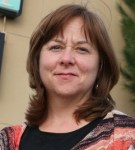
Today we’re interviewing Gail Jarrow about her Deadly Diseases Trilogy: Red Madness, Fatal Fever, and Bubonic Panic. Both Red Madness and Bubonic Panic are among this month’s featured health and medicine books. Gail is an author of nonfiction books for ages 8-18 about science and history (and the history of science). Her books have received many honors, including the YALSA Award Nomination for Excellence in Nonfiction, a Notable Social Studies Trade Book, Outstanding Science Trade Book, a NSTA Best STEM book, the Jefferson Cup Award, the Eureka! Gold Award, an Orbis Pictus Recommendation, as well as Kirkus Reviews and School Library Journal Best Books and VOYA Honor Book distinctions.


Mary Kay Carson: How did these books come about?

Gail Jarrow: It all started with a chance discovery in the Cornell University library stacks.  While researching scurvy for a magazine article, I spotted a shelved book on pellagra written by a Cornell professor I had met. Even though the book wasn’t about my topic, I took it home to read because I knew her. I was fascinated by this forgotten nutritional deficiency disease that had once affected millions of Americans, and I sensed it would make an interesting story for young readers. But pellagra turned out to be one of those ideas you file away until you can figure out how to approach the subject. I didn’t figure it out for a dozen years. After online databases made it easier to access old medical journals and hundreds of newspapers from the early twentieth century, I saw a way to write Red Madness as a medical mystery using the experiences of doctors and pellagra victims. As part of my pellagra research, I used U.S. Public Health Service reports from the early 1900s.  I came across many entries about typhoid fever and plague, two other epidemic diseases that the Public Health Service was trying to control then. That was how Fatal Fever and Bubonic Panic were born from Red Madness, completing the Deadly Diseases trilogy. It goes to show that new ideas can be hiding anywhere and it pays to be receptive to them.

MKC: I have to ask, which of three deadly diseases—plague, typhoid, or pellagra—would you least like to suffer from? 

Gail: These diseases all have nasty symptoms. But without question, I would NOT want to contract plague. It is the deadliest of the three. We have effective antibiotics for plague today, but the survival rate is decent only if you’re diagnosed early on. If you have pneumonic plague, your chances diminish drastically. Antibiotics work against typhoid, though scientists are seeing more antibiotic resistance. Yet even before we had those drugs, the majority of typhoid victims recovered. Pellagra is easily treated with diet change or niacin supplements.

MKC: These books were quite a journey through primary sources. Do you have a favorite finding?

Gail: Of all the intriguing information I uncovered, my favorite had to do with typhoid fever. I discovered that the epidemiologist who tracked down Typhoid Mary had—four years earlier—helped end a typhoid outbreak in Ithaca, New York, where I live. He determined that the likely source of that outbreak was a creek not far  from my house. Finding connections to your own life makes history and science come alive. When I write for young readers, I look for ways to connect the book’s content to their lives. For example, in Fatal Fever, I included specific details about the physical effects of typhoid on college students in Ithaca, some of whom died during the 1903 epidemic. I found these case studies among infirmary records and other local archival material. Because the victims were teens, I hoped this would help my readers relate to a disease they probably knew nothing about.

MKC: Any further reading recommendations for fans of the Deadly Diseases Trilogy?

Gail: To add a few to the STEM Tuesday Checking Your Health list: Suzanne Jurmain’s Secret of the Yellow Death deals with medical sleuthing. John Fleischman’s Phineas Gage: A Gruesome But True Story About Brain Science would grab young readers. I really enjoyed Poison by Sarah Albee and How They Croaked by Georgia Bragg, two books that use humor to explore medical topics.

Want to know more about Gail Jarrow and the Deadly Diseases Trilogy?


Win a FREE copy of BUBONIC PANIC: When Plague Invaded America!

Enter the giveaway by leaving a comment below. The randomly-chosen winner will be contacted via email and asked to provide a mailing address (within the U.S. only) to receive the book.

Good luck!

Your host this week is Mary Kay Carson, author of Mission to Pluto and other nonfiction books for kids. @marykaycarson