Posts Tagged Author Interview

Children’s Authors Travel to Israel and Inspiration Blooms

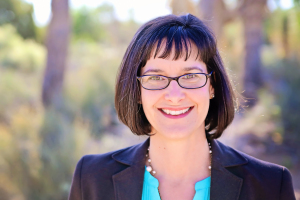
Leslie Kimmelman in Israel


                                         Author Leslie Kimmelman has just returned from a tour of Israel, as one of eighteen  picture book and middle grade authors sponsored by the  PJ Library Organization. I wondered what a trip with so many creative and zany minds would be like. How would Israel look through their eyes? What details did they see that might go into a book? Did they come up with story ideas? Leslie is one of the most creative people I know and I couldn’t wait to ask when she returned.

Annabelle: Was there a single experience that you would like to share with young readers?

Leslie:Every single experience was a revelation–I think one of the most important things in life is to let go of preconceived notions as much as possible and be open to new adventures. The trip was everything I expected, only in the sense that it was an incredible trip. But it opened my eyes and enriched me in ways I never could have anticipated. You can see how meaningful the trip was to me by counting my (over)use of adjectives in answering your questions!         

Annabelle: What surprised you the most? How would you explain or dramatize it in a book?

Leslie: I’m not up to that yet–still processing everything that happened, and waiting to see what rises to the top. I will say that two things stood out to me. The first was how moving it was to be in a place with thousands and thousands of years of history. I am a huge history enthusiast, but I don’t think I’ve ever felt so strongly that feeling of walking in the steps of civilization after civilization–civilizations that thrived, then were gone, then replaced by another, and so on. Particularly in Jerusalem. We had an underground tour that gave me goose bumps. Being connected to the generations that came before us is one of the most compelling traditions of Judaism, I believe, but in Israel I felt that in a visceral way. I’m trying to get over the feeling that I may not have the words adequate to describe what I experienced. (Not something a writer wants to feel!) 

The second thing that struck me quite strongly and unexpectedly is how many disparate communities make up the country. Standing in Jerusalem and seeing and hearing so many different cultures, all at the same time–a bar mitzvah at the Kotel, the call to prayer from the minaret, the holy places of Christianity. I am not diminishing the very considerable problems of these groups living together in close proximity, but it was amazing to see. We also toured an extremely impressive school where Jewish and Arab children learn together in both languages. The person who showed us around and does outreach for the school is from, improbably, New Jersey. Either of these two themes would be a good underpinning for a children’s book.

Annabelle: Wow, agreed! So was traveling as a group of writers like being in an idea laboratory? Did you and your colleagues bounce ideas off each other?

Leslie: It wasn’t so much that we bounced ideas of each other, though there was some of that. It was more that we were experiencing all of these new and fantastic adventures in the company of a group of incredibly talented and thoughtful people, who just happened to also be children’s book authors and artists. (And did I mention funny? There were definitely a lot of really funny people on the trip.) It was exciting to be able to see each new experience through the eyes of so many interesting colleagues. Everyone had a different take, something to add.  As far as specific ideas go, I think we were all too busy taking it in to formulate specific ideas. At least, I was…. I can’t wait to see what kind of books this trip inspires from everyone.

Annabelle:Neither can I! Now tell me –did anything unexpected happen?

Leslie:  Everything was unexpected, especially for me, as I’d never been to Israel before. The trip was planned so beautifully. It approached Israel from every possible perspective: historical, archaeological, political, cultural, aesthetic. Each experience added to the mosaic. We got to do things that even Israelis don’t get to do–like a behind-the-scenes, close-up look at the Dead Sea Scrolls. That was very emotional. Kayaking on the Dead Sea was magical: The Israelis I spoke with didn’t even know that was a possibility! Celebrating Shabbat in an Israeli home (we divided into groups of three authors per home) was inspiring. From a purely practical standpoint, nothing unexpected happened, which was kind of unexpected! No one got lost or sick–oh, except that one person’s luggage didn’t arrive with the rest. (He was a really good sport about it.) Mostly everything went like clockwork. Everyone got along as if we’d known each other for years. Pretty awesome.

Annabelle: What stood out about the culture? In writing about it, would you focus on history, food, music, art, or something else?

Leslie: Again, I think the history and the multicultural aspect resonated most with me. I definitely want to find out more about some of the people who loom large in Israel’s history. We saw the kibbutz home of David Ben Gurion, the first president of Israel, and it was remarkably modest. But check back in a few months. And I have to add: The food was excellent, too!

Annabelle: Thanks, Leslie. I can’t wait to see how this experience blossoms into one of your books!

Leslie Kimmelman’s latest books are BELLY BREATHE, A VALENTINE FOR FRANKENSTEIN, and WRITE ON, IRVING BERLIN, a Sydney Taylor Notable Book.


STEM Tuesday– Taking a Look at Climate Change/Earth Science– Interview with Sneed Collard

Welcome to STEM Tuesday: Author Interview & Book Giveaway, a repeating feature for the fourth Tuesday of every month. Go Science-Tech-Engineering-Math!

Today we’re interviewing Sneed Collard, author of HOPPING AHEAD OF CLIMATE CHANGE: Snowshoe Hares, Science, and Survival. The book follows scientists as they study snowshoe hares and other animals that change their coat colors each winter as they adapt to shorter winters brought on by climate change.

Mary Kay Carson: How did Hopping Ahead of Climate Change come about? 

Hopping Ahead of Climate Change: Snowshoe Hares, Science, and Survival was named a Junior Library Guild selection.

Sneed Collard: This book actually has an instructive background in patience and timing. I first got a contract for this book for Houghton Mifflin’s well-known “Scientists in the Field” series, and planned to travel to Bhutan to follow Scott Mills and other scientists as they studied animals that changed their coat colors every year. The year was 2008, the dawn of the Great Recession, and unfortunately I was unable to get the permissions I needed to travel and work in Bhutan so the entire project just fell apart. As it turned out, that was a good thing, because Professor Mills was just beginning his work on coat-color-changing animals and I really wouldn’t have had much to say about his work at the time.

Around 2014, however, I happened to run into Prof. Mills again and asked him what he’d been working on. He enthusiastically shared results of his recent research looking at the impacts of climate change on snowshoe hares, and I thought, “Oh, well now is the time to write this book.” By this time, I’d also started my own publishing company, Bucking Horse Books, and I thought, “Rather than go through the multi-year process of trying to get a contract for this book, I am just going to write and publish it myself.” It was one of the best moves that I’ve made.

MKC: Could you share a favorite research moment? 

Sneed: One of the really fun things about this project was the opportunity to go into the field in Montana with Prof. Mills and visit his research laboratories, then located at North Carolina State in Raleigh. During several trips, I had the opportunity to watch Prof. Mills track radio-collared snowshoe hares as well as take blood samples and tag them. On my last visit with him, we headed into the woods near Seeley Lake, Montana. Scott had set out cages the night before and we hit the jackpot, capturing a number of snowshoe hares. One of the last was a young hare, or leveret. Scott coaxed the leveret into a burlap sack while he took a blood sample and tagged it. Then, I stood a few yards away ready to take a photo as he released the hare back into the wild.

“He’s going to go fast,” Scott warned. When he opened the sack, though, the hare didn’t run away. Instead, it just sat in Dr. Mills’ lap for about twenty seconds. Then, it hopped toward me and posed for another twenty seconds while I fired photo after photo.

“Wow,” Scott said. “They never do that. I think it was doing that just for you.” One of those photos, by the way, ended up on the title page and page 54 of the book.

Sneed B. Collard III has written more than eighty award-winning nonfiction and fiction books for young people including Woodpeckers—Drilling Holes & Bagging Bugs; One Iguana, Two Iguanas: A Story of Accident, Natural Selection, and Evolution, and his newest picture book Birds of Every Color. In 2006, Sneed was awarded the prestigious Washington Post-Children’s Book Guild Nonfiction Award for his body of work. Learn more about Sneed at his website www.sneedbcollardiii.com.

MKC: What are you working on now

Sneed: So a passion I have shared with my sixteen-year-old son, Braden, for the past five years is birds. (Follow their birding blog at www.fathersonbirding.com.) I am constantly thinking about bird diversity and biology, and the survival issues faced by many birds. This has resulted in a number of recent books including Fire Birds—Valuing Natural Wildfires and Burned Forests, Woodpeckers—Drilling Holes and Bagging Bugs, and my newest picture book title, Birds of Every Color, which features photos by both Braden and myself. To study birds, scientists and ordinary citizens spend a huge amount of time counting birds and it was suggested to me that this might make a good topic for a book. Braden and I started our research by participating in recent Christmas Bird Counts in our area, but I also plan to participate in a variety of other bird-counting programs held in various places and at various times of the year. It’s one of those books where I probably won’t know exactly where it’s heading until I’ve completed my research, but I think it will turn into an engaging series of stories about birds and bird studies.

MKC: Do you have a STEM background?

Sneed: Science has been a part of my life since my earliest memories. Both of my parents were biologists, and I vividly remember going out catching crickets with my mom or digging through tidepools with my dad while they were still students at U.C. Santa Barbara. I must have gotten the gene because I didn’t hesitate to declare a marine biology major at U.C. Berkeley before going on for a master’s in scientific instrumentation at U.C.S.B. I realized, though, that there were probably enough scientists to save the world. The bigger problem was the immense gulf between what scientists know and what the general public—including politicians—understand. I think it was this gap that helped push me into a writing career.

Win a FREE copy of Hopping Ahead of Climate Change!

Enter the giveaway by leaving a comment below. The randomly-chosen winner will be contacted via email and asked to provide a mailing address (within the U.S. only) to receive the book.

Good luck!

Your host is Mary Kay Carson, author of Alexander Graham Bell for Kids, Mission to Pluto, Weird Animals, and other nonfiction books for kids. @marykaycarson

AUTHOR INTERVIEW: Sarah Scheerger on debut OPERATION FROG EFFECT

I just read an absolutely delightful debut called OPERATION FROG EFFECT (Random House), by author Sarah Scheerger. It’s funny, sometimes sad, has a wonderfully diverse cast of characters, and even includes a graphic novel element.  The multi-POV novel traces one transformative year in the life of teacher Ms. Graham’s fifth-grade students. Because of her innovative teaching style, students learn to rely on their own ingenuity, deepen their empathy for each other, and fight for what they believe in. Their story is told through their journal entries and drawings.

As I often do, I drafted my middle-grade son to read with me, and he loved it too, so when I got the chance to interview Sarah, I included some of the questions he had for her as well.

Interview with Sarah Scheerger

The Origins of OPERATION FROG EFFECT

MUF: What inspired you to write this book?

My fourth-grade teacher, Mr. Nubling, was innovative. He took risks, he made us think, and he understood when we made mistakes. He had a “growth mindset” before that was such a popular concept. He actually had us build our own model rockets in class and shoot them off on the school fields. (This probably wouldn’t happen today, but this was the eighties.) Mr. Nubling only had four fingers on one hand. One year (not my year), a student accidentally shot off his rocket while Mr. Nubling was still securing it in place. And despite losing a digit, Mr. Nubling continued to shoot off rockets every year with his fourth graders.

When I thought of writing a middle-grade novel, my upper elementary years jumped out at me as the most memorable. My character Emily has the voice most similar to my own fifth-grade voice. I connected with her need to belong and her confusion as her friend group shifts. All the characters in this story are fictional, of course.

MUF: Why did you decide to use a multi-POV approach?

I love the way multiple points of view provide the opportunity for misunderstandings, for unreliable narrators, and for a quick moving pace. I love the use of the graphic novel component (Blake’s voice) for multiple reasons. I see how my own children gravitate toward reading graphic novels, and I wanted a way to incorporate some of that element in this story. I thought perhaps the graphic novel component might widen the potential readership. Plus. . . I love how illustrations can convey emotions. Also, I wanted to create a character who has his own unique learning style. Blake is a student who struggles with writing but loves to draw.

Teaching Tolerance

MUF: I was fascinated by the Whistler/Non-Whistler project. Is that a real teaching model?

My fourth-grade teacher, Mr. Nubling, did this experiment with our class. To be honest, my memory is fuzzy, so I’m not sure whether he did an eye color experiment or based it on gender. I only remember my feelings of injustice! I was confused and upset… and that experiment has stuck with me ever since.

When writing this book, I researched the eye color experiment. It originated with a teacher, Jane Elliot. She talked about it on “Oprah” back in the nineties. Here’s a clip. https://www.huffingtonpost.com/2015/01/02/jane-elliott-race-experiment-oprah-show_n_6396980.html

In my first version of Operation Frog Effect, I considered doing the actual “eye color experiment”. But after much thought, my editor and I decided the point would be most poignant if I selected something entirely random, like the ability to whistle. (By the way, I cannot whistle myself.)

About that Frog…

MUF: Frogs are an important symbol in many cultures – often indicating a need for transformation or cleansing, for a new perspective on life. I can’t help but wonder whether this symbolism tied into your choice of the frog as a class pet? Ms. Graham’s class had an incredibly transformative year!

You’re totally right. This was a transformative year for Ms. Graham’s class.
Sweet Kermit was an addition during my first round of edits. My editor and I were brainstorming titles and ideas for metaphors and themes. We decided that a class pet frog could bring out Blake’s nurturing/caring side, had the potential for fun complications (oops—frog on the loose!) as well as created fun cover art. (My heart melts for the frog on the cover of the book.)

The frog symbolism was important too. You’re right that frogs are an important symbol for many cultures, and my editor and I also loved the concept of making ripples. Frogs make ripples in the water, and my characters made ripples in the world. (I love the ripples on the cover too!)

Writing the Book

MUF: What is your favorite part?

I love Blake’s sections. Gina Perry did a fabulous job. I’m hopeful that his sections will reach kids in a different way than the traditional text. Interestingly, I rewrote all of Blake’s sections for the audiobook. It was a group effort—I worked together with the producer to transform the illustrations back into inner dialogue… what Blake would have been thinking as he was sketching. (This was so fun—the producer and I met for coffee and worked together!)

And the counselor in me loves the little tidbits of social-emotional learning that Ms. Graham shares with her class.

MUF: What was the hardest part of the book to write?

Oh, great question! I did find it challenging to keep track of threads and details across characters. I kept lists and charts. I wanted to give each character equal playing time, make sure they each had their own arc, their own strengths, and their own weaknesses. I wanted to be sure the voices were different enough to be distinct. I also took extra care with the representation of my diverse characters. I had seventeen different authenticity readers! Each reader shared different insights, from his/her own perspective. It was really important to both me and my editor that we take extra steps to be sure we represented each character authentically.

(Cool fact: the audiobook is narrated by nine different diverse voices. This was really important to me, and I’m so thrilled with the end result.)

MUF: How many times did you have to rewrite?

Too many to count! Let’s just say that I started this book when my daughter was born. And now
she’s four and a half!
I do love revisions, though. Once I have the skeleton of the book written, I enjoy going back and fine-tuning.

Writing Multiple POV

MUF: Multi-POV books can be a real challenge in revisions – how did you approach that challenge?

This was definitely a challenge! There were so many layers of revisions with this book. I managed this in a variety of ways, but mostly I followed these steps:
• I went through and revised threads/overall plot
• then went back through one voice at a time, looking carefully at how this specific change impacted each specific character (for example, all of Kayley’s entries, then all of Cecilia’s, etc.)
• And then… I went back through the whole manuscript from beginning to end.

These multi-layered revisions occurred many times throughout the revision process. One change in a single plot point impacted each character in his/her own unique ways. Each time I went through I found more details to change.

MUF: My son and I both had the same comps in mind as we read – BECAUSE OF MR. TERUPT by Rob Buyea, and THE LAST FIFTH GRADE OF EMERSON ELEMENTARY by Laura Shovan. Did either of those influence your writing or your choice to do multi-POV?

Perhaps on some level, the book Wonder impacted my choice to do Multi-POV. I have a huge author crush on that book. R.J. Palacio reached so many kids, and I’ve enjoyed watching how teachers have incorporated Wonder into their curriculum. Since I’m a school-based counselor, I love it when teachers find creative ways to incorporate social-emotional learning and empathy-building into their curriculum.

I think Because of Mr. Terupt and The Last Fifth Grade of Emerson Elementary are great comps too. In fact, you’ll find all these books (as well as tips about classroom activities) in the School Stories Educator’s Guide at the following link: https://images.randomhouse.com/promo_image/9780525644125_5528.pdf

Thank you for reading Operation Frog Effect! Here’s a link to the audiobook clip: https://www.penguinrandomhouse.com/books/575577/operation-frog-effect-by-sarah-scheerger/9780525644125/

OPERATION FROG EFFECT, published by Random House, will be on shelves TOMORROW, February 26, 2019.