Posts Tagged “writing for children”

STEM Tuesday– Naturalists — Book List

A naturalist is a person who observes plants, animals and fungi, and looks at how they fit into their environments. You don’t have to go to a special school to learn how to be a naturalist; you just have to be curious. Here are a few books about naturalists, and how you can become one.

I Begin with Spring: The Life and Seasons of Henry David Thoreau by Julie Dunlap and Megan Elizabeth Baratta

Henry Thoreau collected leaves and arrowheads from a young age. He could tell when skunk cabbage was blooming by smelling the air. As an adult, he kept copious notes about nature, sending samples and observations to scientists. Observant readers will enjoy the timeline that runs along the bottom of the pages. Back matter dives into phenology (botanical signs of the seasons) and how Thoreau’s work has helped modern scientists understand climate change.

Wildheart: the Daring Adventures of John Muir by Julie Bertagna

Beginning with boyhood in Scotland and continuing with his adult life in the US, this book presents John Muir’s life in graphic novel format. Muir, more famous as founder of the Sierra Club, was a careful observer of nature. His study of glaciers in Alaska informed his understanding of Yosemite.

Darwin’s Rival: Alfred Russel Wallace and the Search for Evolution by Christiane Dorion

This is an adventure story – a tale of exploration, field research, shipwrecks, and a friendship between two naturalists that evolved over time. Both Wallace and Darwin wrote about natural selection and the evolution of new species. But instead of competing against each other for credit, both tried hard to treat each other fairly – to the benefit of all. Filled with maps and spreads showing diversity of beetles, butterflies, and birds.

The Incredible Yet True Adventures of Alexander Von Humboldt: The Greatest Inventor-naturalist-scientist-explorer Who Ever Lived by Volker Mehnert

Another adventure story of two naturalists — Alexander Von Humboldt (a young German inventor who from childhood preferred exploring nature) and Aimé Bonpland (a young French doctor who preferred studying plants and rocks) — who undertook the first scientific expedition into South America’s rainforest and the Andes mountains. Stunning illustrations highlight their discoveries of plants, geology, animals, and cultures unknown to anyone in Europe. As well as Alexander’s later trek through the wilds of Siberia. His books and lectures inspired a generation of naturalists and scientists – including Charles Darwin. With a conversational tone, maps, and direct quotations, this book brings to life their fascinating, daring, and harrowing adventures.

The Lady and the Octopus: How Jeanne Villepreux-Power Invented Aquariums and Revolutionized Marine Biology by Danna Staaf

From making hats to fine dresses for wealthy Parisians, Jeanne Villepreux put her sewing skills to work. When she had the freedom to study nature, she got interested in sea creatures. Could she bring them into her house like she did caterpillars and turtles? She invented aquariums for holding sea animals, and began to study small octopuses called argonauts that lived in the local waters. Back matter includes “how to be a naturalist.”

What Linnaeus Saw: A Scientist’s Quest to Name Every Living Thing by Karen Magnuson Beil

As a boy and young man, Carl Linnaeus also preferred exploring nature to his studies. This engaging and exciting biography follows his adventures and discoveries in the Scandinavian Mountains, research into the scientific mysteries of unknown animals and plants, and dreams to catalogue every plant and animal in the world. Ultimately, his frustration at a lack of consistency in cataloguing plants and animals, led Linnaeus to create the classification system still used today. Includes period illustrations and maps, scientific update sidebars, direct quotations, and intensive back matter.

Steve and Bindi Irwin by Amy Breguet

From childhood, Steve and Bindi Irwin, where both raised to be modern-day naturalists and conservationists. Filled with great photos, fascinating side bars, and a fair review of controversies, this is a great look at their relationship and dedication to animals, tireless work to preserve wild spaces, and drive to inspire others to preserve and protect nature. Back matter offers numerous ways to get involved.

You Can Be a Naturalist, Too!

The Observologist: A Handbook for Mounting Very Small Scientific Expeditions by Giselle Clarkson

This book presents four potential sites for conducting naturalist expeditions, along with the sorts of things one might observe while there. They are easily accessible to kids of all ages and include a damp corner (perfect site for discovering more about centipedes and fungi), pavement (great habitat for ants and worms) and weedy patches.

Be a Nature Explorer!: Outdoor Activities and Adventures by Peter Wohlleben

This book is filled with 52 activities that range from following slugs and snails to mapping plants that move. In addition to a pencil and notebook, Wohlleben suggests a few other things to take along including plastic containers, a hand lens, binoculars, and maybe a cell phone with a camera and a nature app.

The Naturalist at Home: Projects for Discovering the Hidden World Around Us by Kelly Brenner

The 20 individual projects specify the season(s) and study topic involved and specific materials needed. The projects range from creating a woodland in ajar, sugaring for moths, and finding tardigrades. With wonderful illustrations, a general naturalist toolkit, easy to follow steps, sidebar tips and warnings, and a few bonus activities, this is a great book for budding naturalists.

The most important book – is the one you’ll use to collect your notes and drawings.


This month’s STEM Tuesday book list was prepared by:

Sue Heavenrich is an award-winning author, blogger, and bug-watcher. A long line of ants marching across the kitchen counter inspired her first article for kids. When not writing, she’s either in the garden or tromping through the woods. Her books for middle-grade readers include Funky Fungi: 30 Activities for Exploring Molds, Mushrooms, Lichens, and More and Diet for a Changing Climate. Visit her at www.sueheavenrich.com

Maria is a children’s author, blogger, and poet who is passionate about making nature and reading fun for children. She was a round 2 judge for the Cybils Awards (2017 – present), and a judge for the #50PreciousWords competition since its inception. Two of her poems are published in The Best of Today’s Little Ditty 2016 and 2014-2015 anthologies. When not writing, critiquing, or reading, she bird watches, travels the world, bakes, and hikes. Visit her at www.mariacmarshall.com.

Meet Katie Monson, Literary Agent

Katie Monson

Katie MonsonKatie Monson loves kids, and she also loves books. For 12 years, Katie was a self-employed childcare provider, watching children in her home and enjoying the privilege of being home to raise her children. But recently, she decided to massively change up her life and find a new path that still allowed her to work from home and be with her kids. That new path led her to SBR Media. 

SBR Media is a literary agency for all genres. It was established in April 2016 by Stephanie Phillips. Today, SBR Media has 11 agents representing over 300 clients. As one of those agents, Katie Monson is known to be self-motivated, organized, and ready to represent clients and help lead them to success. We’re grateful she took the time to share a little bit about herself and her work with our MUF readers.

Welcome, Katie! Your path to becoming an agent is fascinating and not all that typical. What led you to the world of books and publishing? 

I’ve always had a passion for reading, ever since I was a little girl. Over the years, I developed a strong interest in reading indie romance books, which naturally led to blogging, beta reading, and editing small manuscripts for authors. 

It sounds like agenting was a natural fit. Now that you’ve been in this role for a while, what do you find to be the best and worst parts of being an agent?

The best part about being an agent is working with my authors and making their dreams come true!

The worst part is how I cannot possibly take on all the manuscripts that I read. I would love to be able to help everyone but it’s just not possible. Sending the rejection letters and knowing how the author is going to feel is the worst.

Here at MUF, we’re all about middle grade. As an agent who represents this category of work, what do you love most about middle grade novels?

I love middle grade novels because they are multifaceted. They can be for pure entertainment, but while they are being enjoyed, there can also be underlying themes that help kids navigate through life and challenges they may face. Middle grade books can help make kids feel less alone and know that what they are going through is normal!

Which middle-grade book(s) influenced you most as a child?

I loved the Wayside School books!  They were so funny to me, and I still remember them to this day. I shared them with my own kids, and they loved them too!

What are some of your favorite current middle grade novels?

I really love any of Raina Telgemeier books!  My kids loved them too!

Which genres/themes/subjects are you drawn to/not drawn to?

I am not a big sci-fi and fantasy reader, so I lack the experience needed to represent these. I love themes of being true to yourself, being a great friend/person, subtle lesson-teaching (not being in your face about it). I also love when a novel explains big feelings!

What do you look for in a query, and what types of queries do you hope to find?

A query needs to be brief and engaging. I want to be drawn in so quickly that I can’t wait to get my hands on the manuscript. Don’t give away too much, but don’t be vague either.  

I’m on the hunt for another middle grade to add to my list. I’m looking for an engaging plot with a twist no one sees coming. I want to keep the kids reading on their toes (as well as the editor we are pitching to).  

What are the top reasons you pass on a submission?

There are many reasons why but the top ones I would pass on are:

  • Word count is not where it needs to be
  • Not an exciting query that makes me NEED to read more
  • I couldn’t connect with the writing/story/characters

Do you ever participate in pitch parties, and if so, what do you love about them?

I participate in events when I find the time! LOL! I love to see how authors are able to explain their entire manuscript in such a short amount of words. I love these events so much that I have even set up a pop-up event of my own! 

That sounds interesting! Can you tell us a little more about this pop-up event?

YES!  I will randomly set up my own personal pop-up pitch event.  I ask for a brief description of their manuscript (I usually have these open to all authors) and a mood board if they have one.  From there, if I like their post then I have them contact me for more information on how to submit to me.  

We know you’re closed to submissions right now, but can you give us an idea of when you’ll reopen?

The plan is this spring for a week. This is a really busy season for me, so I am unsure of the exact time, but it will most likely be sometime in May. My best advice is to watch my socials! 

You can check out my Manuscript Wish List here: https://www.manuscriptwishlist.com/mswl-post/katie-monson/

My Instagram handle is https://www.instagram.com/litagentkatiem/ and you can follow me on X at https://twitter.com/

Before you go, we’d love to learn about your life outside of work. What are your favorite things to do that have nothing to do with being an agent?

I love to get lost in a good book. What agent wouldn’t love reading for pleasure? (Although, it’s harder to come by these days!) I also love traveling! Seeing the mountains in Tennessee and the beaches in Florida are two of my most favorite things. And I love spending time with my family. 

So, when I’m not reading, sitting by the pool, or complaining about the cold Rochester winters, you can probably find me traveling to the beaches of Florida, the Great Smoky Mountains in Tennessee, and spending time with my husband and four children in Rochester, New York.

Books, beaches, mountains, and family – that sounds great! Thanks so much for joining us, Katie. It’s been a pleasure getting to know you, and we’ll be watching for you to open for submissions. 

STEM Tuesday– Radio/UV Waves and Applied Physics — Author Interview

Welcome to STEM Tuesday: Author Interview, a repeating feature for the last Tuesday of every month. Go Science-Tech-Engineering-Math!

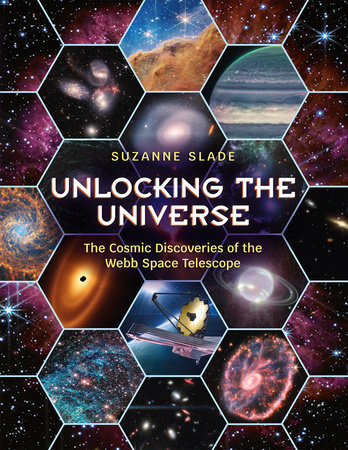
Today we’re interviewing Suzanne Slade, author of Unlocking the Universe: The Cosmic Discoveries of the Webb Space Telescope. Unlocking the Universe transports readers to NASA for an up close look at how the James Webb Space Telescope was designed, built, tested, and deployed. The behind the scenes photographs and wonderous space images will leave you agape in wonder!

Unlocking the Universe has been named:

  • Junior Library Guild Selection
  • NSTA 2025 Best STEM Book
  • New York Public Library Best Books for Kids

Plus, you can watch a goose-bump inducing book trailer here.

And now, let’s launch into the interview!

Emily Starr: I’ll start with the obvious. The Webb images are breathtaking! What was your involvement in choosing which images to include?

Ring Nebula

Ring Nebula

Suzanne Slade: I started writing this book before Webb had released any space images, so it was super exciting when its first image, a gorgeous galaxy cluster, was unveiled on July 11, 2022. After that, I waited with bated breath for each new spectacular image.

I wanted the book to share a variety of Webb space images, such as nebulas, galaxies, dying stars, nurseries where stars were being born, and more. For example, this image of the Ring Nebula (left) revealed new details of a dying star at the center that gives us a glimpse of what could happen to our Sun. (But nobody panic. The Sun has billions of years left!)

To be honest, there were so many gorgeous images that it was excruciating to decide which ones would make the cut. Near the end of the project, we did manage to squeak in some extra ones on the cover montage, in the back matter pages, and in the end sheets.

Emily Starr: This month, the blog is helping readers explore radio/UV waves and applied physics. Physics concepts can sometimes seem difficult and complicated to children (and some adults!) – like the electromagnetic spectrum. What are your considerations when thinking about how to make advanced science easy for kids to understand?

Suzanne Slade: There are many things to consider when writing about complex science topics for children. Here are a few I implemented in this book.

James Webb Space Telescope

James Webb Space Telescope

Near the beginning of the book some basic science/space terms are defined within the text, such as “nebula” and “exoplanet,” to help readers ramp up on the topic.

Sidebars with colorful infographics helped explain more complicated topics (like the electromagnetic spectrum.)

As we know, a picture is worth a thousand words. So we made the decision to use photos, instead of illustrations, for the entire book. As I poured through hundreds of potential photos to show readers how the Webb telescope was designed and built, I carefully selected interesting ones that would draw the reader in.

Two page spread showing the Webb Space Telescope's primary mirror

Two page spread showing the Webb Space Telescope’s primary mirror

I also looked for photos which shared bits of information not covered in the text. For example, the book explains how Webb’s large primary mirror, which collects distant light in space, is made up of 18 hexagonal shaped gold panels. The photos in the spread at the left show how the panels are assembled into the primary mirror plus more, such as the size of the mirror relative to the workers, the precise way the panels fit together, how the workers and many components were protected from dust contamination, etc.

Emily Starr: Small blocks of layered text also make the book very accessible to younger readers. How did that format come about?

Suzanne Slade: The design layout, which includes the layered text you mention, was a collaborative effort between myself, the editor, and the spectacularly creative book designer. We tried a few different ideas before arriving at the book’s final design. One fun aspect about creating this book, which is not common in most book projects, was that I was able to meet with the editor and book designer in person can discuss the layout. Fortunately, I live north of Boston part-time, and the publisher, Charlesbridge, is located in Watertown near Boston.

Emily Starr: What was your process for contacting experts and conducting interviews at NASA? Was the agency receptive and helpful?

Suzanne Slade: It can be challenging to know who to contact at NASA or other agencies when working on science books, and these smart experts are very busy people. As luck would have it, one of my high school acquaintances, Dr. Jonathan Gardner, is the Deputy Senior Project Scientist for the JWST. I reached out to him, and he kindly agreed to answer questions and vet the manuscript, which was extremely helpful. I had worked with a NASA engineer, Sandra Irish, on a previous project. She was enthused about this book topic and happy to share her expertise. There are also great online interviews which were helpful as well.

Emily Starr:  The JWST was such a long and complicated project that I’m sure you sifted through piles of research. How did you decide what details to include in the book?

Suzanne Slade: I could write volumes about research and the difficult process of deciding which information to include in a book and what seems best to leave out. The short answer is: I try to include some content that readers can easily understand or may already be familiar with, along with new information that will expand their understanding of the topic and hopefully inspire them to want to learn even more. I prioritize facts and random information nuggets I feel young readers will find fascinating.

Orion Bar

Orion Bar

Emily Starr: As an educator who teaches students to expect and even celebrate failures, I appreciated the section about testing and setbacks. Why was it important to you to include those details?

Suzanne Slade: I’m a mechanical engineer who used to work on rockets and car braking systems, so I understand a big part of engineering and science is trial and error, or mistakes and re-designing. I think it’s important for readers to understand that progress in science is built on failures. As a storyteller, I also know that a happy ending is more satisfying when the journey to get there was filled with challenges that needed to be overcome.

Emily Starr: Many of your books delve into interesting space-related topics. What do you hope readers understand about space by reading your work?

Suzanne Slade: Basically I hope they catch a glimpse of the enormity of space, and the many mysteries and unanswered questions about our cosmos we have yet to understand. I’d also be pleased if my books inspire readers to pursue their dreams of a career in a space related field, such as a researcher, teacher, engineer, explorer, or citizen scientist.

Emily Starr:  Are you working on other space-related projects in the near future? (Actually, we would be happy to learn about any of your upcoming projects!)

Suzanne Slade: In celebration of the 50th anniversary of the first moon landing, I wrote Countdown: 2979 Days to the Moon and Daring Dozen. Since then, I’ve been thinking about the many talented women who made the Apollo missions possible. So I wrote a book about the sharp, dedicated women who helped engineer, stitch, design, plan, and execute the Apollo moon missions. Of course, thousands of women worked on those missions, so it was difficult to decide how many women to feature. In the end, I decided to share the stories of twelve women to mirror the twelve men who’ve walked on the moon so far. This exciting book, titled Women on a Mission, releases in October 2025. I can’t wait!


Sibert Honor author Suzanne Slade has written more than 150 children’s books. As a mechanical engineer who worked on rockets, many of her titles are about space and women in STEM. Some recent titles include The Universe and You, Mars Is: Stark Slopes, Silvery Snow, and Startling Surprises, June Almeida, Virus Detective!, The Woman Who Discovered the First Human Coronavirus, and A Computer Called Katherine: How Katherine Johnson Helped Put America on the Moon (NSTA Best STEM Book). Her title, Astronaut Annie, soared to the ISS and was read by astronaut Anne McClain for Story Time From Space.


Emily Starr

As a former fourth grade teacher and founder of StarrMatica, a STEM publishing company, Emily Starr has developed award-winning K-5 science curriculum and professional learning materials for 20 years. She is a member of the Iowa State Science Leadership Team, a peer reviewer for the National Science Teaching Association’s journal Science and Children, and a frequent presenter at state and national education conferences. Her debut middle grade nonfiction book will be released in 2025 from the Iowa Ag Literacy Foundation.