Posts Tagged We Need Diverse Books

WNDMG Wednesday -Interview with Kaela Rivera

We Need Diverse MG Logo hands holding reading globe with stars and spirals floating around

We Need Diverse MG Logo hands holding reading globe with stars and spirals floating around

Interview with Kaela Rivera

I absolutely fangirled when Kaela Rivera agreed to let me interview her for the MUFMGA.

Cece Rios and the Desert of Souls and Cece Rios and the King of Fears

When you read this introduction to Cece Rios and the Desert of Souls and Cece Rios and the King of Fears, I bet you’ll see why I am such a huge fan.

Cece Rios and the Desert of Souls
When a powerful desert spirit kidnaps her sister, Cece Rios must learn
forbidden magic to get her back, in this own voices middle grade fantasy perfect for fans of The Storm Runner and Aru Shah and the End of Time.

Cece Rios and the King of Fears

In its thrilling sequel, Cece and her sister Juana must journey into the stronghold of Devil’s alley to challenge the criatura king El Cucuy if they, and their criatura friends, have any hopes of staying alive. 

Can’t you just feel the excitement and tension? Plus, I love a good story that touches on a type of mythology we don’t read about often—or should I say often enough?


Tzitzimitl

Your story places a lot of emphasis on Tzitzimitl. What is it about this Aztec God that captured your attention?

Tzitzimitl

One of my favorite things about Mesoamerican mythology is this emphasis on exploring and understanding duality. It reminds me that our ancestors were wrestling with our own duality as people, just as we do now. How we can be both beautiful and dangerous, healing and painful, loving and wrathful. That theme is perfectly captured in the legend of Tzitzimitl, a creature who’s almost demon, almost goddess.

In myth, Tzitzimitl is both the protector of children and pregnant women and also a wrathful warrior who attacks the earth whenever there’s an eclipse. She devours and destroys when her loyalties call upon it, but she also protects and uses her power to have mercy on humans. Her character is of great importance throughout the series because I wanted Cece, my main character, to learn that both good and evil wars inside people. It’s our job as we wrestle with them to choose which one wins.

That is such interesting insight. It’s not always a black and white world, and your readers can learn to appreciate that right along with Cece.

381_01_2.jpg (608×600)

Los Cinco Soles (The Five Suns)

Aztec Mythology

Did you spend much time studying Aztec mythology and/or culture before you wrote your books?

I’d studied all kinds of folklore and mythology before writing Cece Rios and the Desert of Souls, but very little of it had been from Latin America, despite my heritage. That changed when I went to visit my abuelo when I was in college, and he told me stories about curanderas and brujas and La Llorona. I came home with a desire to learn more, and after researching all kinds of folktales and myths, inspiration struck, and I started writing Cece.

prepara-la-escoba-llega-el-primer-desfile-de-brujas-a-la-cdmx

Las Brujas (The witches)

In fact, one of the reasons I love to write is because it’s one of the best ways to learn. Want to know more about folklore? Write an article or story about it, and you’ll find yourself encountering all kinds of questions that send you hunting excitedly for answers. That process also connected me more and more with my culture, something I’ll forever be grateful to my abuelo for inspiring.

Abuelitos and abuelitas are truly wonderful!


Monsters/Monstruos

Chupacabra

What do you think are the scariest Aztec monsters?

Honestly, so many Aztec monsters are terrifying! Most Latin American monsters are; in fact, most monsters from mythology across the world is—a testament to the kinds of fears our ancestors wrestled with in even harsher times. But like the horror genre itself, there’s a distinct morality about the terror in Latin American mythology and folklore. There’s usually a reason why something became terrifying, or why terror was inflicted.

In Cece Rios and the King of Fears, I got to include a few of my favorites, including Alux. In the story, he’s a dark criatura, but in actual tradition aluxes were small, magical beings similar to how those of European descent might think of dwarves or fairies or elves. But they had a ferocious side, and they could curse or harm people if they trespassed on their homes, good will, or even nature itself. I took that inspiration into my series because I think the exploration of nature itself being both benign and dangerous is fascinating.


Huichol

Another one of my other favorite legendary beings comes from Huichol tradition (the Huichol are direct descendant of the Aztecs): Tukákame

Tukákame

He’s something between a demon and a zombie—an animated corpse that burns at the touch of water and has skeleton birds for minions. He eats human flesh, and he seemed like an appropriate way of exploring destruction in the second book, though I did that more symbolically than outright.

Buñelos

I see that you know how to make buñelos which are amazing. What other Mexican foods do you like to make (or eat!)?

Yes, I adore buñelos! I’m quite happy to say I’ve gotten pretty great at timing exactly how long they need to fry for, too.

I also like making enchilada sauce from scratch. Well, “like” might be a strong word—it takes a few hours, so I’m sometimes reluctant to start, but chile sauce really does taste better when it’s fresh, not from a can.

Spanish rice and refried beans are also a classic, so I can’t not mention them (or I won’t, at least, hah!). Spanish rice with garlic smashed with the side of a knife? Mmm. The smell fills up your whole kitchen, and I love that. Refried beans that taste fresh, not canned? All half-smashed by hand in a pan? An absolute must.


This is one I don’t make myself, but I also really like gansitos. My friend introduced them to me a bit later in life, and now I can’t quite get over the perfect blend of cinnamon, vanilla cake, chocolate, and raspberry filling. It might be junk food, but it’s my junk food. I even had them at Cece Rios and the King of Fears’ launch party!

I see from your website that you’re part British, part Mexican-American. Any plans of focusing on your British roots for upcoming stories?

I do, actually! Well, I suppose I should say I have plans to combine my heritages together in my stories, to embrace the mix I was born with. I have a YA fantasy that will combine the Victorian language of flowers, and certain aspects of British culture, with an Aztec kingdom steeped in old magic. Plus, a playful middle-grade written with a narrator that nods toward old British fairytales, but focused on latine main characters and setting.

This has been so fascinating. I hope you’ll come back when Cece Rios and the Queen of Brujas comes out, and if any readers are interested in learning more about Kaela Rivera, you can find her and her recipe for buñelos at:

https://www.instagram.com/kaelacub/

https://twitter.com/Kaela_Rivera_

https://www.kaelarivera.com/

Interested in learning more about mythology. Check out

Check out this interview with author Karla Arenas Valenti and learn about her book which is named after the fun game Lotería

Author Spotlight: Sally J. Pla

For those of you who are regular Mixed-Up Files readers, you know that I LOVE to do author interviews. So, you can only imagine how thrilled I was to have the good fortune to chat with one of my favorite authors—and favorite author friendsSally J. Pla!

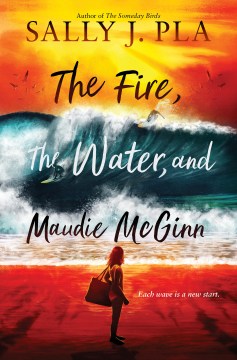
Sally, who wrote the best-selling MG novels The Someday Birds and Stanley Will Probably Be Fine, is also the author of a picture book, Benji, the Bad Day, and Me. Her latest MG novel, The Fire, The Water, and Maudie McGinn, is out tomorrow, July 11, from Quill Tree Books.

A  Summary of Maudie McGinn

Neurodivergent Maudie always looks forward to the summers she spends in California with her dad. But this year, she must keep a troubling secret about her home life—one that her mom warned her never to tell. Maudie wants to confide in her dad about her stepdad’s anger, but she’s scared.

When a wildfire strikes, Maudie and her dad are forced to evacuate to the beach town where he grew up. It’s another turbulent wave of change. But now, every morning, from their camper, Maudie can see surfers bobbing in the water. She desperately wants to learn, but could she ever be brave enough?

As Maudie navigates unfamiliar waters, she makes friends—and her autism no longer feels like the big deal her mom makes it out to be. But her secret is still threatening to sink her. Will Maudie find the strength to reveal the awful truth—and maybe even find some way to stay with Dad—before summer is over?

Interview with Sally J. Pla

MR: Sally! I’m jumping up and down with excitement to welcome you to the Mixed-Up Files. Thanks for stopping by, my friend!

SJP: I’m jumping up and down with excitement to be here! I love Mixed-Up Files! And you!

MR: First, you already know how much I loved The Fire, The Water, and Maudie McGinn. I laughed, I cried, and I rooted for Maudie from beginning to end. What was the inspiration behind this wonderful book?

SJP: Thank you so much for those kind words! In terms of inspiration, I guess you could say that for this book, the setting was the first character. Maudie’s story is set in an RV campground by the beach, in a fictional town in San Diego County. I live in this county, not too far from the beach, and there’s an actual RV campground that I often meander through during beach walks.

Something about the place is so appealing. Lawn chairs pulled up to fire pits, folks chatting, kids whizzing around on skateboards, surfers making their way up and down the cliff steps with their boards. The supply store, the rangers’ office, the snack bar—it’s a whole little world. So, as I walked, I started to weave a narrative in my head about a young girl who lived in a fictionalized beachside campground. What would be her story? And what could have brought her there?

All About Maudie
MR: The protagonist Maudie, who is autodivergent, is a kind, lovable, and highly relatable character. How were you like Maudie as a child? How were you different?

SJP: Maudie has many of my childhood behaviors, quirks, and challenges. She dislikes change. She has shy attacks– i.e., going mute when overwhelmed, just as I did. She loves simple, comfortable clothing. She is incredibly empathetic, caring, and sensitive. Nothing about her is too girly or precious. Maudie is willing to be brave, though, and she wants to delve into life; to join in, to try new things. These are all ways we are similar.

As for differences: Maudie’s mom and dad were struggling teen parents who split, and now she has a difficult stepdad situation. This is not my family history. Although, like Maudie, I did experience emotional and physical abuse in my formative years.

The Future is Female

MR: As a follow-up, Maudie McGinn is your first MG novel to feature a female protagonist. What made you decide to switch it up?

SJP: I have three boys. Between them and all their friends hanging out, I used to joke that the testosterone in my house was giving me facial hair! Because I lived in boy-world for a long time, it naturally filtered into my writing choices. But now they are grown, I am turning to my own personal stories and experiences. It’s time to write for GIRLS.

Autistic girls are diagnosed at a rate four times less than boys. They fly under the radar, because their behaviors can be more subtle. Part of why I write is that I want to shine a spotlight on this.

Poisonous Secrets

MR: An important theme in the novel is secret keeping, when Maudie’s mom makes Maudie promise not to tell anyone about the abuse she’s suffering at the hands of her stepfather, Ron. What were you trying to say about secret keeping—and secrets in general?

SJP: That sometimes, secrets are poison. They corrode your sense of self, your self-esteem. Certain secrets are intricately connected to shame. And you can’t really heal yourself from the damage they do, until you find the power within yourself to show them the sunlight. Speak them aloud. I feel so strongly that we need to learn to air certain secrets, if we ever plan to heal from them.

Maudie’s mother puts Maudie in a dire situation by making her promise to keep her new stepdad’s anger attacks upon Maudie a secret. It compounds the abuse. And Maudie has trouble speaking, in general—so how does she find her way through this dilemma?

Fact: Autistic (or otherwise neurodivergent) and disabled children are three times more likely to experience abuse than their normal-presenting peers. Quite frankly, they are more likely to frustrate a caregiver or parent. And they are less likely to be believed or listened to, after the fact.

 Hang Ten

MR: Maudie wants to learn how to surf, so she takes lessons from former pro surfer Etta Kahana. Unless I’m mistaken, Sally, you’re not a surfer yourself. How did you make the surfing scenes so realistic? What kind of research did you do?

SJP: Many of my family members are surfers. And where I live, a lot of it is just in the air. I also have surfing-enthusiast friends—most notably, my pal Janet Berend, lifelong surfer, author, and teacher. She read the whole manuscript for me to check it for surf-accuracy, and I’m forever indebted to her. (Any mistakes are my own!)

I do not surf, but when I was younger, I used to love to windsurf. I still have my old Mistral board. Nowadays, though, all I do is swim. And I deeply enjoy being surrounded by all that beautiful, watery blue.

Literary Leanings
MR: Maudie McGinn is a wonderful hybrid of prose and verse. What made you choose this particular literary form for your novel?

SJP: Maudie has a glitch: She has some auditory processing delays. Auditory processing (listening-understanding-responding within typical speed parameters) is a challenge for some autistic people. It was for me when I was very young.

So, words come to Maudie, and leave her lips, at a halting pace sometimes. Verse is perfect for this. I found myself writing verse for her without even realizing it. Verse format reflects how she sometimes thinks: in slow, considered, spare, fragments.

Path to Publication

MR: What was the path to publication like with Maudie McGinn? To use a surfing analogy, was it a smooth ride or did you wipe out once in a while?

SJP: Ha ha, great analogy! Publishing IS like surfing: a ridiculous and unpredictable combination of skill, timing, and luck. Lord knows, I’ve messed up that combination often enough in the past, but Maudie was more or less of a smooth ride. I wrote it during Covid, so there were big waves of emotion involved. But the writing flowed.

I’m so grateful to be at Quill Tree Books, an imprint of HarperCollins, that raises up underrepresented voices. Quill Tree’s slogan is: “Many branches, many voices,” and I love that.

No World Too Big

MR: You have a poem in the MG poetry anthology, No World Too Big: Young People Fighting Global Climate Change. Can you tell us about this project? How did you get involved, and why?

SJP: I was super honored to be asked to write the poem for Greta Thunberg, as she is one of my absolute heroes! Talk about an autistic girl with courage and grit! It’s such an inspiring anthology, with gorgeous illustrations by Jeanette Bradley. Editors Lindsay Metcalf and Keila Dawson were a joy to work with! And there is no more important issue affecting our next generation—affecting all of us—than climate crisis.

(For more information on the impacts of our changing climate, check out this STEMTuesday interview with author Christy Mihaly.)

Write This Way…

MR: What does your writing routine look like, Sally? Do you have any particular writing rituals?

SJP: I have insomnia, and sometimes do my best work sitting up in bed in the wee hours. That is a HORRIBLE method, however, and I do not recommend it unless you enjoy feeling dopey and groggy all day. Otherwise, I try to be an early bird. Hot tea. Quiet. A comfy armchair. Oh, and ‘Freedom’ blocking software on my laptop, to keep me from wandering away into every rabbit hole in the cyberwilderness.

A Novel Mind

MR: In addition to being an acclaimed children’s book author, you run anovelmind.com, a site about mental health and neurodiversity in children’s literature. Can you tell MUF readers a bit about it? What was the impetus behind starting this site?

SJP: Thank you for mentioning A Novel Mind! I cofounded it a few years ago with my friend, neurodivergent author/licensed therapist Merriam Saunders.

It grew out of our many, many complaining conversations, bemoaning how hard it was to find stories with quality, authentic autism/ADHD/disability/mental health representation. The stories that didn’t “other” or “pathologize” the neurodivergent kid, or use them for the purpose of what’s called “inspiration porn.” The stories that just showed neurodivergent or otherwise challenged kids going about their lives naturally, and having adventures, etc. Because these stories help show kids their power. They are great touchstones to classroom conversations. They grow empathy. They heal.

We have well over 1,000 such books in our searchable database now. And there are Educator Resource pages on the site with tons of informative links, curated by amazing autistic librarian Adriana White and myself. There are close to 200 guest posts on our weekly blog, now, written by some of today’s foremost award-winning children’s authors, and educators and other professionals. In sum: it’s a great resource, and a labor of love. I hope Mixed-Up Files readers will check it out!

MR: What are you working on now? Enquiring Mixed-Up Files readers want to know.

SJP: A dual point-of-view Romeo+Juliet retelling, set against the background of a simmering family feud, in a small farming town in the upper Midwest, in the early days of the culture wars. Upper middle-grade!

Lightning Round!

MR: And finally, no MUF interview is complete without a lightning round, so…

Preferred writing snack? Roasted almonds.

Coffee or tea? I love the smell of coffee but sadly can’t drink it! I’m “English Breakfast” all the way!

Cat or dog? Big goofy dogs are my total weakness.

Favorite beach? I grew up on Southport Beach, in Connecticut. It’s the setting of so many memories: big nostalgia! But now I live by, and love, Moonlight Beach, Swami’s, Cardiff Beach, Del Mar dog beach, La Jolla Shores–all my favorite San Diego sandy spots.

Zombie apocalypse: Yea or nay? No apocalypses of any kind for me, thank you very much!

Superpower? To not feel sensory overwhelm, fear, or anxiety anymore would be a superpower enough. But if we’re being truly aspirational: SuperWorldPeaceMaker!

Favorite place on earth? The chair in my living room that looks out over a beautiful canyon and soaring hills, and it’s so peaceful, all you hear are birds.

If you were stranded on a desert island with only three things, what would they be? A deluxe resort! Great friends! Good weather! Ha ha.

MR: Thank you for chatting with us, Sally—and congratulations on the publication of The Fire, The Water, and Maudie McGinn. I thoroughly enjoyed it, and I know MUF readers will too!

SJP: Thank you so much, Melissa! This is my most personal and heart-felt book yet, and I hope everyone who reads it, falls in love with Maudie a little bit. Then I’ll feel as if I’ve done my job.

Bio
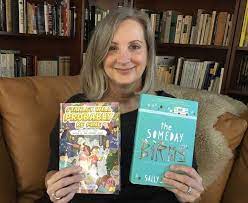
Sally J. Pla is the award-winning author of acclaimed middle-grade novels THE SOMEDAY BIRDS and STANLEY WILL PROBABLY BE FINE, and the picture book, BENJI, THE BAD DAY, AND ME. Her books are Junior Library Guild Selections with starred reviews that have appeared on many awards lists and “best books” roundups. Her latest middle-grade novel, THE FIRE, THE WATER, AND MAUDIE McGINN, pubs on July 11, 2023 (Quill Tree/HarperCollins).

Sally has appeared on television and radio as an author and autism advocate, and she runs the website resource A Novel Mind (anovelmind.com). Learn more about Sally on her website and  follow her on Twitter and Instagram.

Author Spotlight: Heather Murphy Capps + a GIVEAWAY

Today, I’m bubbling over with excitement to chat with Mixed-Up Files contributor Heather Murphy Capps about her middle-grade debut, Indigo & Ida. Hailed by Kirkus as “… A satisfying story that demonstrates how the past can shed light on the present,” and by author Chad Lucas as “brimming with passion on every page,” the novel–which earned a star from Booklist–is out now from Carolrhoda Books/Lerner. Want a chance to win a copy? Details below! 👇

But first…

A Summary of Indigo & Ida

When eighth grader and aspiring journalist Indigo breaks an important story, exposing an unfair school policy, she’s suddenly popular for the first time. 

The friends who’ve recently drifted away from her want to hang out again. Then Indigo notices that the school’s disciplinary policies seem to be enforced especially harshly with students of color, like her. She wants to keep investigating, but her friends insist she’s imagining things.

Meanwhile, Indigo stumbles upon a book by Black journalist and activist Ida B. Wells―with private letters written by Ida tucked inside. As she reads about Ida’s lifelong battle against racism, Indigo realizes she must choose between keeping quiet and fighting for justice.

Interview with Heather Murphy Capps

MR: Before we start Heather, I’m beyond thrilled to welcome you to the Mixed-Up Files as a published author! Woohoo!

HMC: Thank you so much! Those words … “published author” … will never get old and positively send delicious thrills down my back!

Inspiration: Ida B. Wells

MR: First, I have to tell you how much I enjoyed Indigo & Ida. What was your inspiration behind this wonderful book?

HMC: I’m so excited and grateful you like Indigo and Ida … thank you! My inspiration came from several different places, but this book truly began as an exploration of the themes of friendship and finding the courage to speak your truth.

First, I wanted to investigate friendship from the perspective of a girl who’s seeing for the first time that sometimes friends you thought you’d keep for a lifetime turn out to be friends you keep for just a season.

The grounding in history came from a story I learned about Ida B. Wells: that she helped Alice Paul and her team organize and prepare for the Woman’s Suffrage Parade in 1913. But when the big day arrived, Paul told Wells that she would have to march in the back of the parade with the other Black women, because to march up front alongside the white women would anger Southerners. Paul didn’t want to risk losing the strong political power of the Southern women.

When I learned this story, I was overwhelmed. I felt so deeply, so viscerally, a sorrowful connection to Ida in that moment when she realized her friend wasn’t the person she thought she was. We’ve all been there, and even when the stakes aren’t as high as these, it still hurts, and the betrayal is still very real. I couldn’t stop thinking about Ida and about other questions that percolated up in the next few days: Why had I never learned this particular fact before, when I learned about the Woman’s Suffrage Parade? Why was this story omitted from the teaching of that important milestone for women’s suffrage?

That was when Indigo—a journalist like Ida—was born, along with the idea that I wanted to write a story that would connect the two across the centuries.

Speak Your Truth

I also wanted to carve out my own space within the Black American literary tradition that illustrates the concept of the two voices—public and private. (W. E. B. DuBois’s “double consciousness.”) For me, that idea is similar to “code switching.” There’s the outward voice, the public-facing personality that covers up the parts of us that don’t fit in a default white society, and then there’s the private personality and voice, which is the one where we feel safe being ourselves within our own community. Indigo has two voices—the one she uses at school where she’s trying to fit in and where she’s shushed when she tries to speak out about the injustice she finds, and her private voice, which is empowered by Ida’s voice urging her to speak her truth.

Crusade for Justice

MR: Indigo discovers a copy of Crusade for Justice, the autobiography of Black journalist and civil-rights activist Ida B. Wells, during a stint in school detention. What is it about Wells’ autobiography that inspires Indigo to investigate the injustice experienced by Black and brown kids at her school? Also, can you tell readers what impact Wells’ autobiography has had on you personally?

HMC:  Wells’s autobiography is wonderful reading. She’s fearless and dogged in her investigations—as one of the first investigative journalists in this country, she set the bar high. I’m in awe of her work and want to honor her by doing my best to follow in her footsteps, even though I am no longer a reporter.

One key word in her autobiography that stands out to Indigo–and to me too—is the word “outrage.” Ida is outraged by rampant injustice and by all who willfully ignored or perpetrated these injustices. That word galvanizes Indigo’s desire to push for the truth. I don’t necessarily want to live a life of constant outrage, but I do want to be vigilant about speaking up and fighting injustice.

Letters from Ida

MR: Indigo finds letters written by Ida B. Wells tucked inside the pages of Wells’ autobiography. What made you choose this device to tell Ida’s story—and, as an extension, Indigo’s?

HMC: The sheaf of letters Indigo discovers inside the autobiography are from Ida B. Wells to an unidentified recipient. In these letters, Ida tells the story of her life and narrates some of the challenges she faces—and it’s these stories that empower Indigo to use her voice like Ida did, to shine a light of truth on the injustices of the world.

Key moments in Indigo’s story develop as she reads about the pivotal moments in Ida’s life, and we see many parallels between these two characters who live in completely different times but are connected by a desire for justice as well as by evidence of this country’s ongoing struggle with bias and racism.

Originally, I wanted to show Ida’s life story through quotes from her own body of work, including her autobiography. But even though Ida was a gifted writer, her style is from another century. I needed to ensure her story was accessible to a 21st century audience, so I wrote the letters myself, doing my best to reflect Ida’s distinctive voice.

Fact Versus Fiction

MR: I loved how you wove in real-life events from Wells’ life—including an incident in which, at age 20, Wells bit a white train conductor who forcibly removed her from her seat in a “whites only” car. (She later sued the railroad for violating equal accommodation statutes and won $500 in damages.) This letter, among others, is fictionalized but sounds incredibly authentic. How did you achieve this feat?

HMC: Isn’t that an amazing story? It’s one of my favorites, even though it doesn’t end well. The $500 in damages was later clawed back, and Wells was accused of harassment for pursuing the lawsuit.

To find Wells’ voice, I read her work as deeply as I could to educate myself. To articulate her voice, I talked out loud to myself. (If anyone were to observe me, they’d seriously have a good laugh–ha!) So, I walked around my living room, talking out loud, and listening for Ida’s voice. I tried to live various moments through her eyes, and play out how she must have felt. I then translated those reactions, along with her own observations, into her letter.

The Source of the Matter

MR: What did your research process look like? I know you used Wells’ autobiography as a starting point, but what other sources did you find useful? (For more on the life of Ida B. Wells, check out Heather’s Mixed-Up Files post here.)

HMC: I read as much of her work as I could lay my hands on! I researched during Covid, which meant I wasn’t able to research beyond what I could access online and in physical copies of her books and pamphlets. That said, we are extremely fortunate in that so much of her work does still exist, and I was able to read her seminal investigative reports: Southern Horrors and The Red Record (both on the lynching crisis in America). I also read collections of her newspaper columns and her Memphis diary.

The “Double Consciousness”

MR: In addition to Indigo’s quest for the equal treatment of Black and brown students, the theme of popularity looms large. How does Indigo’s need for popularity bump up against her quest for social justice?

HMC: This internal struggle she faces is part of my exploration of the “double consciousness.” Indigo—like so many of us—just wants to be liked and to hang onto dear friends she thought she’d have for a lifetime. This quest for popularity is her public voice, the one that craves acceptance and assimilation. Her private voice is the one she usually hides because it’s not the one she thinks will serve her quest for popularity. But it’s the one that deeply feels outrage at the unfairness of her school’s discipline policy, and ultimately, it’s the one she feels empowered to use because of Ida’s letters.

MR: Indigo is a strong, resourceful, and highly relatable character. How were you like Indigo as a child? How were you different?

HMC: I wish I’d been as brave as Indigo! I definitely struggled with the desire to be popular. I wasn’t one of the popular kids, not by a long shot. I often felt like I was hiding large parts of myself just to fit in with the rest of the students at my school, and Indigo feels that way too.

Heather Murphy Capps Reporting

brown skinned female tv reporter on a US Navy carrier

MR: You were a television news journalist for almost two decades. How did your career in journalism prepare you to be a novelist? Also, what was the most exciting (or weirdest!) story you ever reported?

HMC: I loved being a reporter; it was so interesting and edifying to get such a close view of the major events that tell the stories of our times. An invaluable skill I honed over the years was being able to research deeply and narrate nuanced concepts for a general audience. I draw on that when I write.

The weirdest or most exciting story I ever reported… WOW. Great question. There are a few I can’t mention in a middle-grade blog (!!), but I’d have to say the greatest opportunity I had to tell important stories came when I was embedded on three different Navy ships in the beginning of Operation Iraqi Freedom. On the opening night of the war, I was flown to the aircraft carrier USS Theodore Roosevelt, which launched the first F-14’s and F-18’s of the conflict. While I personally opposed our country’s involvement, I was committed to honoring the work and sacrifice of our service members.

Path to Publication

MR: As a follow-up, can you tell us about your path to publication? Was it smooth sailing or bumpy seas?

HMC: Aaahhh I love being able to be transparent about the fact that Indigo and Ida is my FIFTH book. Not smooth sailing! I faced a lot of rejection, but I kept working hard to improve my craft, and I am still working hard.

I often joke about the fact that I must have something karmic I am trying to learn in that my two primary life occupations—news reporting and novel writing—are both notoriously hard to break into and full of rejection!

Writing Rituals

MR: What does your writing routine look like, Heather? Do you have any particular writing rituals?

HMC: I like to light a candle and, if it’s cold out, light a fire. In the summertime, I write on my sunporch and take breaks to watch the birds outside (and walk around my backyard talking to myself, ha!) It’s a wonderful view, truly my happy place. Sometimes when the timing works out, I also check in with some of my writing friends and we sprint together. On days when I am pressed for time (kids! Day job!) I just jump in at odd moments and do as much as I can, even if it’s not perfect.

#WNDMG: The Backstory

MR: You curate the popular Mixed-Up Files series, “We Need Diverse Middle Grade” (#WNDMG). What was the impetus for this series? How can interested MG authors contribute?

HMC: I started the series because I felt that, while we have a team of truly inclusive, equity-minded contributors who value and work toward diversity in publishing, we needed to do more. We needed a dedicated space on the blog that centered diverse voices and spaces—and in the days following George Floyd, that need felt crucial to me. So, our admin team collaborated on ways to best make this happen, and here we are—WNDMG is about to celebrate its third anniversary and now has a dedicated team of four contributing authors! We do accept guest posts from diverse authors but rely mostly on the diverse voices from our WNDMG and MUF teams.

Next Up: Magical Realism

MR: Your next MG novel, The Rule of Three (out Fall 2024 from Carolrhoda/Lerner), features a biracial seventh-grade boy who conjures smoke in stressful moments. Can you tell us a bit more about the novel? Also, what is it about magical realism that sparks your imagination?

HMC: The novel follows Wyatt and his father as they navigate the discovery of and healing from a unique genetic expression of generational trauma—they literally create smoke. It’s a tough subject, and I tried to honor all its inherent complexity but also tried to embed moments of lightness. Talking about generational trauma is painful and if you’re Wyatt, you can only take so much before you have to just throw a baseball or crack a joke.

What I love about magical realism is that this literary style is historically unique—used only by storytellers coming from marginalized communities with the intent to use everyday magic as a way to cope with the tragedy of oppression.

MR: What are you working on now? Can you give us a hint?

HMC:  I am working on TWO things right now, believe it or not! One is an exciting adventure, and the other is not middle grade … but that’s all I can tell you. 🙂

Lightning Round!

MR: And finally, no MUF interview is complete without a lightning round, so…

Preferred writing snack?  

Tea with almonds or Twizzlers or jellybeans or cookies. I have a HUGE sweet tooth!!

Coffee or tea?

Both!

Cat or dog?

I have two cats, so I guess cat. But I love dogs too!

Zombie apocalypse: Yea or nay?

Sure, why not? Lots to write about, but honestly I’d personally become a vampire or a witch instead. I like the idea of being able to run fast and have super-attuned senses.

Superpower?

Teleporting!

Favorite place on earth?

In front of a fireplace or a lake with all my people.

If you were stranded on a desert island with only three things, what would they be?

My laptop, a grape vine I could cultivate to start a vineyard, and a pair of running shoes.

MR: Thank you for chatting with us, Heather—and congratulations on the publication of Indigo & Ida. I thoroughly enjoyed it, and I know MUF readers will too!

HMC: Thank you so much, Melissa—what a fun interview! I so appreciate the chance to chat! I hope our readers will consider buying Indigo and Ida or recommending it to their local public and school libraries!

Bio

Heather Murphy Capps writes about history, social justice, science, and magic. She is a mother of two, an Army wife, and an education equity activist. As a biracial author, Heather is passionate about creating diversity in publishing. Learn more about Heather on her website and follow her on Instagram and Twitter. To join Heather’s mailing list, click here.