

There were times when I had to set The Miraculous aside as author Jess Redman’s prose addressed death, grief and the belief that joy exists in the midst of, and often as a result of loss.

We meet eleven-year-old Wunder on the eve before his little eight-day old sister’s funeral. Wunder is a self-proclaimed miracologist. As in, he records stories about residents of his little town with miraculous outcomes. But after the loss of his baby sister, Wunder doesn’t believe in miracles any longer.
Faye, a cape-wearing mascara-making-raccoon-eyes member of Wunder’s Unexplainable and Inexplicable Phenomenon Society swoops into his life. Together they discover a mysterious woman (who just might be a witch) living in an abandoned house near the cemetery. The old woman asks Wunder and Faye for help. She sends them on a mission that leads them to adventure, healing, friendship and a renewed belief in miracles.
Ultimately, Jess Redman’s debut offers “Because there can be miracles even in the midst of unfathomable sadness and anger, even in the depths of grief and confusion. And these, these are the hidden ones, the ones we must search for.”

Jess Redman is a therapist and an adjunct professor of psychology. She currently lives in Florida with her husband, two young children, and an old cat named Soul Pie. The Miraculous is her debut novel.
To learn more about Jess, visit her website, www.jessredman.com
JKR: Thank you so much Jess for your time. I understand you are a fan of the Mixed-Up Files of Middle Grade Authors! Welcome!
The Miraculous openly addresses death and grief. What have you learned through your experiences as a therapist that you felt were really important for young children to understand through your book?
JR: As a therapist, I think that the middle-grade years—ages 9 to 13—are a very special time. These are the years when kids are beginning to look out and beyond for the first time, years when they are starting to ask big questions and to develop a more nuanced understanding of emotions and life—and death.
By this age, most kids know someone who has died, even if it isn’t a family member or close friend. Yet, many adults are hesitant to discuss grief, and death is frequently seen as scary, forbidden, too intense, and too painful to even bring up. But kids are thinking about and worrying about and trying to figure out these topics anyway.
With The Miraculous, I wanted to tell the story of one young person’s thoughts and feelings and experiences coping with death. I wanted it to be an honest and open look at how the main character, Wunder, moves through grief, while still telling a story full of mystery and magic.
It was important to me that young readers hear that there are many ways to grieve and many ways to express emotions and that their questions, no matter how big or overwhelming, are valid and important. It was also important to me that the story show the power of friendship and community in coping with loss.
JKR: You offered that after sending out ARCs to readers that it was suggested that The Miraculous might help both children working through grief as well as adults. How does this make you feel?
JR: When I wrote The Miraculous, I was very aware of my young audience. I wanted to tell a story that was honest about grief and loss but was also gentle and hopeful and magical. The book has only been in the world for a few weeks, but already I have heard from young readers who have experienced losses of many kinds and who have connected with the story, and that brings me so much joy. When I do school or library visits, young readers will talk with me about their losses because The Miraculous opens the door for that conversation, and it’s an honor to hear those stories.
But what I feel about The Miraculous is what I feel about many middle-grade stories: they are for everyone. Since ARCs started going out, I’ve also heard from many adult readers who have lost siblings, parents, and spouses, and from those who have lost precious children, from devastating miscarriages to the unexpected death of an adult child. It has been an incredible privilege to hear these stories as well and to know that The Miraculous has contributed healing and hope. Adults, I believe, also need stories about grief and loss that are gentle and hopeful and magical.
So to the adult readers of this story who have lost a loved one, I want to say:
I see you.
You are not alone.
And yes, this story is for you too.
JKR: As a bereaved parent, I could so relate to topics including “the wrong things people say but they really just don’t know how to say I’m sorry,” and how we all grieve differently. I can only imagine that children, especially those who have experienced death within their circles, will relate to these passages as well. Can you offer anything on this?
JR: One of my best friends lost her father when we were nine. It was one of the first deaths I really understood, and I remember vividly my own uncertainty when I watched my friend board the bus on her first day back at school. How would she behave? Would she cry? What would I say? How would I comfort her?
I think it’s so important for kids to learn that grieving, like many emotional experiences, is a complex and individual process. There isn’t a wrong way to grieve, and in The Miraculous, characters grieve in many different ways.
I think it’s also important that kids learn how to support a friend who is grieving. In The Miraculous, Wunder’s parents do not talk to him very much about his sister’s death. His best friends don’t know what to say, so they don’t say anything. Wunder’s loss is compounded by these additional losses until he finds support in new, unexpected places.
To be able to accept someone else’s emotions, to say, “I’m so sorry this has happened” and then to sit with them and allow them to feel without trying to change or fix or explain—that can be really hard. Hard for kids, hard for adults. Yet, it’s what we so often need when we’re hurting.
JKR: I love the term miracologist. How did you come up with this?
JR: When I first started thinking about Wunder, I knew that he would be someone who believed in impossible and magical things, but I wasn’t sure how that would work out on the page exactly. It slowly came to me that what Wunder really believed in was miracles—miracles of all types, from the everyday miracle of sunrise to the inexplicable miracle of a loved one healed from an illness. I love stories that are infused with a little bit of magic, and I love characters that have quirks and unusual hobbies, so miracle-collecting was perfect. And who better to collect and study miracles than a miracologist? Although I, like Wunder in the first chapter of the story, did try terms like miracler and miraclist before settling on miracologist.
You address friendships, and the challenges one faces as being both an older friend to someone who has experienced loss, as well as a new friend. Can you expand on this theme?
Yes, themes of friendship and community are very important in this story. Wunder has two best friends. Neither are sure how to respond when Wunder returns to school after his sister’s death. Tomas acts as if nothing has happened, while Davy is too nervous to say anything at all. Wunder is left feeling more isolated and confused.
Then he meets a new friend, Faye, who has just lost her grandfather. Faye isn’t the most cuddly, touchy-feely of souls, but she talks to Wunder about his sister. She acknowledges his sadness. As the book progresses, Wunder and Faye’s friendship deepens. It is a friendship forged in mutual vulnerability and shared emotional experiences, which is something I see happen often for clients who are in the midst of loss.
In the end, Wunder’s old relationships shift and change too. Having relationships, old or new, where you can safely and fully express your emotions is so important to mental health, and I hope kids see that in Wunder’s relationships with his friends.
JKR: Finally, what was the greatest takeaway that you hope your readers will experience through reading of Wunder’s journey?
JR:In the story, Faye says something to Wunder that I think sums up the message of the story: “Sometimes the brightest miracles are hidden in the darkest moments…but you have to search for them. You can’t be afraid of the dark.”
I don’t believe in glossing over sadness or just looking on the bright side or forcing ourselves to see the silver lining. But I do believe that we can find joy and meaning and deep relationships and new purpose after and even within great loss. I believe that our pain can be transformative. I believe that there is always light, no matter how dark the darkness. The path to that light is very personal and cannot be rushed or forced, but I believe we can get there, and that we can help one another along.
I understand you have another work coming out next spring. Can you share a bit about your next book?
My second middle-grade book, QUINTESSENCE, comes out on July 28, 2020. In the story, 12-year-old Alma Lucas moves to a new town. She’s lonely and friendless and she begins experiencing panic attacks. And then she sees a star—a star that looks like a child—fall into her backyard. With help from her school Astronomy Club and a mysterious shopkeeper, she goes on a sometimes-magical quest to get the star home—and to find home within herself.
It’s a story I’m so excited about, full of science and mystery and, of course, light and dark. It’s here on Goodreads: https://www.goodreads.com/book/show/46223313-quintessence
JKR: Is there anything else you care to add?
If you’ve read The Miraculous, thank you so much! It has meant so much to me to have this story that holds so much of my heart out in the world and to know that it’s being read.
JKR: Thank you so much Jess for your time! Jess has kindly offered a copy of The Miraculous to one lucky reader. For a chance to win, enter using the Rafflecopter widget below.(For U.S. readers only please!) The winner will be announced August 30. Good luck!


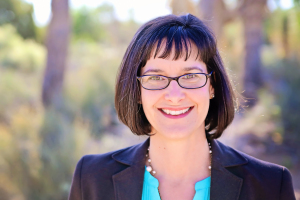


 Carla Mooney loves to explore the world around us and discover the details about how it works. An award-winning author of numerous nonfiction science books for kids and teens, she hopes to spark a healthy curiosity and love of science in today’s young people. Find her at