Posts Tagged New Releases

Author Interview: Shea Fontana

DC Superhero Girls: Out of the Bottle Cover

DC Superhero Girls: Out of the Bottle Cover

As a proud comic book nerd, one of the coolest things about my job as a collection development librarian is  the opportunity to preview the latest in the DC Superhero Girls series, OUT OF THE BOTTLE, which was released in August, and SEARCH FOR ATLANTIS, which hits bookstores on October 2nd.

OUT OF THE BOTTLE highlights Harley Quinn as the comic book character she’s created for Ms. Moone’s art class comes to life and wreaks havoc on Superhero High. SEARCH FOR ATLANTIS introduces Raven and Mera to the team. Mera is a new student at Super Hero High, and as she and Wonder Woman becomes friends, Bumblebee becomes anxious that she’s losing her best friend. When the heroes discover that Atlantis has been stolen, the girls have to work together to get it back.

DC Superhero Girls: Search for Atlantis Cover

DC Superhero Girls: Search for Atlantis Cover

Then, I had a chance to talk to author Shea Fontana about the series.

MUF: Every book in the DC Superhero Girls series deals with an important life lesson. For example, OUT OF THE BOTTLE stresses the importance of mental health care, and SEARCH FOR ATLANTIS deals with accepting change. Do you feel that the graphic novel format makes these issues more accessible for young readers? If so, how?

The graphic novel format really gives us the space and intimacy with the reader to dive into big ideas. Plus, having these awesome, well-known characters explore these topics makes it accessible for kids. Our heroes are aspirational for kids reading the books, and we want to show kids that even heroes face hardships. When kids deal with those types of things, like mental health care or accepting change in their friendship groups, it can feel very lonely and it helps to know that superheroes are dealing with it, too! My goal with these types of stories is to always help kids feel less alone and empower them — like they have a team of superheroes that can fight and win every battle with them.

MUF: SEARCH FOR ATLANTIS has a couple of new beginnings. Both Mera and Raven are introduced, and the Teen Titans were essentially formed. Which of these new beginnings were you most excited about introducing? Was it fun brainstorming new names for the Titans? Were there any rejected names that didn’t make it into the book?

I loved integrating both Mera and Raven into this graphic novel! Both are such wonderful, and very different characters. From the beginning of the series, I knew that I wanted to build up to the Teen Titans reveal, bringing together the traditional Titans that kids know from the TV show as well as the comic book version that includes Miss Martian and Bumblebee. The misnaming thread was a fun way to build the tension toward what everyone knows is coming — of course their group name should be the Teen Titans!

MUF: Why was Brainiac chosen as the villain for this story?

We knew that Brainiac got away at the end of the DC Super Hero Girls: Intergalactic Games animated movie, so he’s been waiting in the wings for his next attack. Since in the Legends of Atlantis movie, we meet Mera and Aquaman under water on their “turf,” I wanted to do something different, but still Atlantis-oriented with this story. So, I decided to bring Atlantis out of the water. Since Brainiac is a collector of bottled cities, it seemed the perfect fit.

MUF: What was your favorite part of the story? What was the most difficult to write? What was the most fun?

My favorite part of the story is how Miss Martian steps up as a leader. She’s not the regular kind of leader that the heroes expect — she doesn’t seem as bold as Wonder Woman or as outgoing as Supergirl. But she has a quieter style of leadership that is just as valid.
The ending on this one was difficult for me to write. I really felt for and related to Bumblebee!

MUF: Who’s your favorite superhero? Who’s the most fun to write about? Why?

I loved writing Raven in this story! Her personality is a great contrast to a lot of the other characters. She has an edge and attitude that we don’t often see in kid superhero stories and it’s fun to explore that. 

MUF: Conversely, who’s your favorite villain? Who’s your favorite to write about?

We have had so many fun villains in this series, both in the graphic novels and the animation. I think my favorite is Dark Opal, because he went into villainy as a back-up career when musical theater didn’t work out. Mera’s sister, Siren, who we meet in the Legends of Atlantis animated move, is also great. She’s so controlling and manipulative.

MUF: If you could teach any class at Superhero High, which one would you want to teach?

Power Naps 101.

MUF: Right there with you! I think that would be my favorite class to take. Is there a superhero or villain that you’d like to write about that you haven’t yet? Who?

It had been Batman, as he is my childhood favorite hero, and he is not featured in DC Super Hero Girls. But now I’ve had the chance to write him in BATMAN: OVERDRIVE which will be published under the upcoming DC Zoom middle grade imprint! I can’t wait for everyone to read it — it’s some of the most fun I’ve had writing.

MUF: And finally, do you have any advice for aspiring writers and writers who would love to work on graphic novels one day?

Read a lot and do a lot! The best way to get familiar with story structure, dialogue, and how graphic novels work is by reading. But the best way to come up with stories is by doing! While the old adage of “write what you know” isn’t true (I don’t know how to fly or shoot lasers out of my eyes), the more you experience, the more you’ll have to pull from when thinking of story ideas. Whenever I need the courage to do something new, I tell myself, “Well, it could be a good experience for a story…”

Shea Fontana is a writer for film, television and graphic novels.  Her credits include developing and writing the DC Super Hero Girls animated shorts, TV specials, movies and graphic novels; Polly Pocket, Doc McStuffins, The 7D, Whisker Haven Tales with the Palace Pets, Dorothy and the Wizard of Oz , the new Muppet Babies series; two Disney on Ice shows where she wrote new material for the worlds of Mickey Mouse, Inside Out, Disney Princesses, Finding Dori, Frozen, and other Disney and Pixar properties; and the feature film, Crowning Jules. Learn more about her and her writing at http://www.sheafontana.com/.


STEM Tuesday — Pair Up! Comparing Nonfiction Titles — Booklist

This month, we take a look at pairs of books that focus on the same subject or theme. Readers can compare and contrast how authors have each approached these fascinating stories to craft their nonfiction middle grade books. In some cases authors have taken a different approach in organization and in others a different point of view. Reading both will provide more details and information on each topic, and also show that all authors find their own way into each story.

Support Independent Bookstores - Visit IndieBound.org Support Independent Bookstores - Visit IndieBound.org

Mary Mallon, known as Typhoid Mary, unwittingly spread the deadly disease as a cook. Read two nonfiction titles that tell this amazing story.

Fatal Fever: Tracking Down Typhoid Mary by Gail Jarrow tells the investigative story behind the tale. 

Terrible Typhoid Mary by Susan Campbell Bartoletti approaches the story as a biography. 


Support Independent Bookstores - Visit IndieBound.org Support Independent Bookstores - Visit IndieBound.org

The history of chocolate is important to both science and history. These two authors have provided books that delve into chocolate’s origins and its history as the confection we love.

Chocolate: Sweet Science & Dark Secrets of the World’s Favorite Treat by Kay Frydenborg 

The Book of Chocolate: The Amazing Story of the World’s Favorite Candy by HP Newquist


Support Independent Bookstores - Visit IndieBound.org Support Independent Bookstores - Visit IndieBound.org

If learning about scavengers (and the important part they play in the food chain) is up your alley, then these two new titles are for you.

Rotten:  Vultures, Beetles, Slime, and Nature’s Other Decomposers by Anita Sanchez will be released in January of 2019 and delves into all kinds of decomposers. 

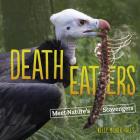
Death Eaters:  Meet Nature’s Scavengers by Kelly Milner Halls also focuses on decomposition and provides lots of interesting photos.   


Support Independent Bookstores - Visit IndieBound.org Support Independent Bookstores - Visit IndieBound.org Support Independent Bookstores - Visit IndieBound.orgThese three titles focus on our waste and where it ends up. Eco-justice readers will be inspired by all three.

Tracking Trash: Flotsam, Jetsam, and the Science of Ocean Motion by Loree Griffin Burns focuses on how ocean currents move debris around

Plastic, Ahoy! Investigating the Great Pacific Garbage Patch by Patricia Newman follows a team of scientists who study the Great Pacific Garbage Patch for the first time.

This Book Stinks! Gross Garbage, Rotten Rubbish, and the Science of Trash by Sarah Wassner Flynn dives deep into the cycle of trash.


Support Independent Bookstores - Visit IndieBound.org Support Independent Bookstores - Visit IndieBound.org

These two titles provide a look at how dogs use their perfect sniffers to help us.

Poop Detectives: Working Dogs in the Field by Ginger Wadsworth focuses on conservation canines.

Sniffer Dogs: How Dogs (and their Noses) Save the World by Nancy Castaldo introduces readers to all kinds of sniffer detection dogs. 


Support Independent Bookstores - Visit IndieBound.org Support Independent Bookstores - Visit IndieBound.org

Two great volcano titles for geology units.

Eruption: Volcanoes and the Science of Saving Lives by Elizabeth Rusch deals with the science of eruption. 

Life on Surtsey: Iceland’s Upstart Island by Loree Griffin Burns focuses on the aftermath. 


Support Independent Bookstores - Visit IndieBound.org Support Independent Bookstores - Visit IndieBound.org

Budding naturalists will love learning about how apes are studied in the wild with these two titles.

Gorilla Doctors: Saving Endangered Great Apes by Pamela S. Turner

Untamed: The Wild Life of Jane Goodall by Anita Silvey


STEM Tuesday book lists prepared by:

Nancy Castaldo has written books about our planet for over 20 years including her 2016 title, THE STORY OF SEEDS: From Mendel’s Garden to Your Plate, and How There’s More of Less To Eat Around The World, which earned the Green Earth Book Award and other honors. Nancy’s research has taken her all over the world from the Galapagos to Russia. She enjoys sharing her adventures, research, and writing tips. She strives to inform, inspire, and educate her readers. Nancy also serves as the Regional Advisor of the Eastern NY SCBWI region. Her 2018 title is BACK FROM THE BRINK: Saving Animals from Extinction. www.nancycastaldo.com

Patricia Newman writes middle-grade nonfiction that inspires kids to seek connections between science, literacy, and the environment. The recipient of  a Sibert Honor Award for Sea Otter Heroes and the Green Earth Book Award for Plastic, Ahoy!, her books have received starred reviews, been honored as Junior Library Guild Selections, and included on Bank Street College’s Best Books lists. New in 2018:  Eavesdropping on Elephants: How Listening Helps Conservation. During author visits, she demonstrates how her writing skills give a voice to our beleaguered environment. Visit her at www.patriciamnewman.com.


STEM Tuesday–Checking Your Health– Interview with Author Gail Jarrow

Welcome to STEM Tuesday: Author Interview & Book Giveaway, a repeating feature for the fourth Tuesday of every month. Go Science-Tech-Engineering-Math!

Today we’re interviewing Gail Jarrow about her Deadly Diseases Trilogy: Red Madness, Fatal Fever, and Bubonic Panic. Both Red Madness and Bubonic Panic are among this month’s featured health and medicine books. Gail is an author of nonfiction books for ages 8-18 about science and history (and the history of science). Her books have received many honors, including the YALSA Award Nomination for Excellence in Nonfiction, a Notable Social Studies Trade Book, Outstanding Science Trade Book, a NSTA Best STEM book, the Jefferson Cup Award, the Eureka! Gold Award, an Orbis Pictus Recommendation, as well as Kirkus Reviews and School Library Journal Best Books and VOYA Honor Book distinctions.


Mary Kay Carson: How did these books come about?

Gail Jarrow: It all started with a chance discovery in the Cornell University library stacks.  While researching scurvy for a magazine article, I spotted a shelved book on pellagra written by a Cornell professor I had met. Even though the book wasn’t about my topic, I took it home to read because I knew her. I was fascinated by this forgotten nutritional deficiency disease that had once affected millions of Americans, and I sensed it would make an interesting story for young readers. But pellagra turned out to be one of those ideas you file away until you can figure out how to approach the subject. I didn’t figure it out for a dozen years. After online databases made it easier to access old medical journals and hundreds of newspapers from the early twentieth century, I saw a way to write Red Madness as a medical mystery using the experiences of doctors and pellagra victims. As part of my pellagra research, I used U.S. Public Health Service reports from the early 1900s.  I came across many entries about typhoid fever and plague, two other epidemic diseases that the Public Health Service was trying to control then. That was how Fatal Fever and Bubonic Panic were born from Red Madness, completing the Deadly Diseases trilogy. It goes to show that new ideas can be hiding anywhere and it pays to be receptive to them.

MKC: I have to ask, which of three deadly diseases—plague, typhoid, or pellagra—would you least like to suffer from? 

Gail: These diseases all have nasty symptoms. But without question, I would NOT want to contract plague. It is the deadliest of the three. We have effective antibiotics for plague today, but the survival rate is decent only if you’re diagnosed early on. If you have pneumonic plague, your chances diminish drastically. Antibiotics work against typhoid, though scientists are seeing more antibiotic resistance. Yet even before we had those drugs, the majority of typhoid victims recovered. Pellagra is easily treated with diet change or niacin supplements.

MKC: These books were quite a journey through primary sources. Do you have a favorite finding?

Gail: Of all the intriguing information I uncovered, my favorite had to do with typhoid fever. I discovered that the epidemiologist who tracked down Typhoid Mary had—four years earlier—helped end a typhoid outbreak in Ithaca, New York, where I live. He determined that the likely source of that outbreak was a creek not far  from my house. Finding connections to your own life makes history and science come alive. When I write for young readers, I look for ways to connect the book’s content to their lives. For example, in Fatal Fever, I included specific details about the physical effects of typhoid on college students in Ithaca, some of whom died during the 1903 epidemic. I found these case studies among infirmary records and other local archival material. Because the victims were teens, I hoped this would help my readers relate to a disease they probably knew nothing about.

MKC: Any further reading recommendations for fans of the Deadly Diseases Trilogy?

Gail: To add a few to the STEM Tuesday Checking Your Health list: Suzanne Jurmain’s Secret of the Yellow Death deals with medical sleuthing. John Fleischman’s Phineas Gage: A Gruesome But True Story About Brain Science would grab young readers. I really enjoyed Poison by Sarah Albee and How They Croaked by Georgia Bragg, two books that use humor to explore medical topics.

Want to know more about Gail Jarrow and the Deadly Diseases Trilogy?


Win a FREE copy of BUBONIC PANIC: When Plague Invaded America!

Enter the giveaway by leaving a comment below. The randomly-chosen winner will be contacted via email and asked to provide a mailing address (within the U.S. only) to receive the book.

Good luck!

Your host this week is Mary Kay Carson, author of Mission to Pluto and other nonfiction books for kids. @marykaycarson