
Posts Tagged New Releases

Author Spotlight: Eileen Moskowitz-Palma + a GIVEAWAY!

Eileen Moskowitz-Palma and I first crossed paths more than a decade ago, at the Backspace Writers Conference, in New York. I can’t remember which panels I attended, but one thing stands out: meeting Eileen. We were sitting in a large, well-lit room, waiting for the keynote to begin, when she turned around and smiled at me. It was the warmest, friendliest smile I had ever seen, and naturally I wanted to bask in her… Eileen-ness.

It didn’t take before she and I became fast friends, chatting about our daughters (we both have onlies); our writing styles (we both err on the side of funny), and our diminutive statures (Eileen is half an inch taller than I am, which she never lets me forget.) 🙂

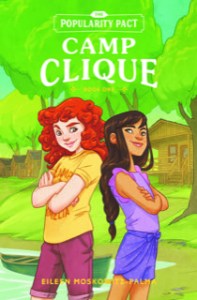
Her debut middle-grade novel, THE POPULARITY PACT: CAMP CLIQUE, which Kirkus describes as “{a}…solid mix of s’mores and girl empowerment… encouraging but never saccharine,” is out now from Running Press Kids. Here is a brief summary:

In the blink of a summer, Bea goes from having a best friend and a place she belongs to being dropped and invisible, eating lunch alone and only talking to teachers. The end of sixth grade and the start of Camp Amelia can’t come soon enough. 

But then the worst part of school, ex-best friend Maisy, shows up in Bea’s safe place and ruins it all. Maisy lands in the same bunk as Bea and summer suddenly seems dire. Never having camped a day in her life, Maisy agrees: it’s hopeless. She should be at home, spending time with her little sister and hanging out with her super popular crew of friends–not at this stupid adventure camp failing everything and being hated by everyone. In a desperate bid to belong, Maisy offers Bea a deal: if Bea helps her fit in at the camp, she will get Bea into the M & M’s, their town’s popular clique, when they enter seventh grade in the fall. The Popularity Pact is born.

 MR: Hi, Eileen! Before we start, can I say how excited I am about this novel? It’s your first middle grade!

EMP: Thank you for that wonderful introduction Melissa. You are one of my first real writing friends and the best take away from that conference! When we met all those years ago, I introduced myself as a rom-com writer, and I really thought that’s what I was. I even published a rom-com back in 2014. But one day the idea for The Popularity Pact series came to me. I was two pages in to the manuscript when I realized I finally felt at home as a writer.
MR: CAMP CLIQUE is told from the alternating perspectives of two ex-BFFs, Bea and Maisy, who strike a mutually beneficial deal in the name of popularity. Is the quest for popularity an issue that affected you as a tween? If so, how did it shape your experience in middle school, and beyond?

EMP: Middle school wasn’t about popularity for me as much as it was about navigating strong and meaningful female friendships. For most kids, late elementary school into middle school is when friendships feel more important than anything else in their world. I loved having a best friend and the certainty that came with knowing I had someone to sit with at lunch or pair up with on a school project, but most importantly I loved having someone I could talk to about anything. I lived for those after-school hangouts, and phone calls and sleepovers. As long as I had my person, I felt a strong sense of belonging. But when my best friend and I had an argument, it felt like the floor had been ripped out from under me. In The Popularity Pact series, I wanted to tap into those complicated dynamics of tween friendships, the intensity of both the good and bad moments.

MR: In addition to popularity, Maisy has other issues on her mind: troubles at home, and acute anxiety. She seeks out the crunchy-granola camp therapist, Dr. Beth, for help. Do most camps have therapists in residence now? If so, what kind of research did you have to do to see how these therapists work with campers? (i.e., short-term vs. long-term therapy; reporting to parents, etc.).  I would imagine it’s very different from therapy done in a more traditional setting.

EMP: From the small bit of research I did, it seems like more and more camps are recognizing the need for mental-health support that extends into the summer months. It makes perfect sense for a child who is undergoing therapy during the school year to seek the same supportive care while at camp. I didn’t extend my research into how therapy is typically done at most camps, because Camp Amelia is unique. Instead, I imagined what type of therapy environment would work for a kid like Maisy who was resistant to therapy, and anxious about talking about her issues at home. Dr. Beth was born because I thought she had the perfect personality and out-of-the-box methods to get Maisy to open up about the secret she had been keeping for over a year. Dr. Beth shares her therapy cabin with a menagerie of rescue cats. The way she holds back and lets the cats come to her is similar to the way she gets through to Maisy.

MR: I actually went to two sleepaway camps as a child: the artsy Camp Hillcroft, where I made enamel jewelry and sang folk songs around the campfire, and sporty Camp Gilford, where I was bullied mercilessly and wished I had a Dr. Beth to talk to. Did you go to sleepaway camp? If so, how did the experience shape the novel? Maisy and Bea’s characters specifically?

EMP: I never went to sleepaway camp because my family spent most of the summer at a cottage in Twin Lakes, Connecticut, an area of the Berkshires which is home to several summer camps. When I was building the world of Camp Amelia, I thought of the white Birch trees that I always associate with the woods that surround Twin Lakes. I pictured the fireflies zapping across the summer sky and heard the sound of the crickets. I remembered how it was always cold there at night, not matter how hot the days were. I thought of the feeling of the wet dirt path under my feet after swimming in the lake. That cottage was my safe place away from any drama I had waiting for me back home. It was the one place where the stressors of my school life couldn’t permeate. I thought about what it would feel like if an ex-best friend showed up there, and it was easy to think about how Bea would feel when Maisy permeated her camp life. For Maisy’s perspective, I thought about some of the uncomfortable parts of country life, like how cold the lake water is, or how scary it can be to see little creatures running across a dirt path. I imagined what it would be like for an anxious kid like Maisy to get sent to camp in the woods against her will.

MR: Camp Amelia is an adventure camp, with the focus on team spirit and athletic ability. There’s even a camp-wide sports competition (“the Cup”), where winning is everything. Were you sporty like Bea, or anxious like Maisy? Perhaps an amalgam of both?

EMP: I was definitely not sporty. I was a tiny, uncoordinated kid with asthma who got picked last in P.E. In fact I was so unathletic, that my P.E. teacher would have to give me multiple tries to pass each section of the mandatory yearly fitness challenge. Like Maisy, I am an anxious person, so I was always scared of getting hit with the ball, whether it was a dodgeball or a basketball. I always try to think of ways to add more natural drama and tension to a story. I came up with the camp idea first, but then I thought…What if it’s an adventure camp? And what if Maisy was anxious and unathletic like me? In every scene where Maisy has to confront a fear at adventure camp, I was able to think about how I would feel in that situation and it made it very easy to write.

 MR: Book Two, THE POPULARITY PACT: SCHOOL SQUAD, comes out on October 6. Can you give us a teaser?

EMP: I would love to! Bea kept up her end of the bargain by getting Maisy “in” with the girls at camp. Now it’s Maisy’s turn to fulfill her promise to ingratiate Bea with the popular girls. When Bea is accepted into this new inner circle, she begins to lose sight of what true friendship is all about. As Bea seems prepared to sacrifice anything to be “cool,” Maisy realizes there’s more to life than hanging out with a bunch of mean girls. Can she convince Bea that the popularity pact was a mistake? Can these former friends find their way back to each other?

MR: And finally, what’s your wildest camp story? I know you have one…

EMP: It took over 40 years for me to finally have my own camp experience. When my book tour was canceled because of COVID-19, I was devastated about the school visits that weren’t going to happen. I had been looking forward to connecting with readers in the classroom because of my experience as a former elementary school teacher. At the same time, my social media feed was filling up with posts by desperate parents who were suddenly juggling multiple homeschooled kids, while also working from home. I realized I could help. My husband and I brainstormed the idea of a free virtual writing camp. I would give kids a multi-session program that was positive, educational, and creative, while also allowing their parents a reprieve that they didn’t have to feel guilty about. In four days, I had a roster filled with 75  kids from all over the country, and a growing wait list for the next session. I have just completed my first camp session, and it has been just as healing for me as it has been for the kids. It gives me a sense of purpose and allows me to serve others in a time when I have been feeling helpless. For more information about my writing camp, or other writing resources for children during this time, please visit my website (see below).

MR: Oh!!! One last thing! A MUF author interview wouldn’t be complete without a lightning round, so…

S’mores or bug juice? S’mores

Friendship bracelets or French braiding? Not to brag, but I am really good at braiding, so French Braiding of course.

Favorite camp song? I actually wrote my own camp song for Camp Clique, which I am very proud of.

Favorite sporty activity? Running

Favorite artsy activity? Painting

The ideal care package? Beauty products and chocolate…lots and lots of chocolate: 🙂

Best camp prank? I have never done a prank in real life. BUT, I had a lot of fun writing a prank scene that the Sunflower bunk girls play on their rival bunk the Dandelion Bunk.

And now… a camp-tastic

GIVEAWAY!!!

Eileen has generously offered to gift THREE lucky readers with an autographed copy of Camp Clique, a bookmark, and two friendship bracelets! Just comment on the blog for a chance to win!

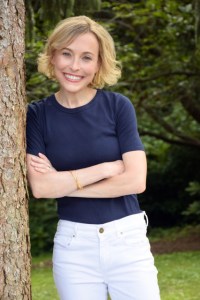
When EILEEN MOSKOWITZ-PALMA double majored in Elementary Education and English at the University of Massachusetts, Amherst, she thought she would have to choose between a career as a writer or a teacher. It wasn’t until she was almost 40 that she realized she could do both. Now, Eileen divides her time between writing middle-grade novels and teaching Beginner Novel Writing and Writing for Children and Young Adults at The Writing Institute at Sarah Lawrence College. Eileen lives in Westchester, New York, with her husband and daughter. Learn more about Eileen on her website and follow her on Instagram.

New STEM Book Release – Interview with Author Karla Valenti and a giveaway

I’m so excited to welcome author Karla Valenti to the Mixed Up Files blog!


Karla has written the first book in a new series called My  Super Science Heroes published by Sourcebooks.

The first book, Marie Curie and the Power of Persistence, uses a novel storytelling approach to bring this historical figure to life for readers, both young and old. Written and illustrated as a dynamic superhero story, this book introduces children to Marie Curie as an important scientist whose greatest achievement was not the discovery of radium and polonium, nor having earned two Nobel Prizes, but rather for her extraordinary power – the power of persistence.

Booklist says, “A fun, engaging take for kids who may not realize they’ve got the power to be science lovers.”

Kirkus — “This is a fact-filled, admiring examination!”


This looks so FUN, Karla, how did you come up with idea to give scientists “superpowers”?

I responded to a call for submissions put out by the Marie Curie Alumni Association (a global nonprofit association of researches and scientists). MCAA wanted to partner with an author to create a book about Marie Curie. The idea was that the book would be a source of funding for the science association’s many research initiatives. I was very excited about the proposal and the work MCAA does, and I wanted to find a way to partner with them on this initiative. So I began by doing extensive research about Marie Curie. The more I read about her life, a common theme began to stand out: what made this woman so remarkable was not just what she accomplished, but more precisely how she achieved what she did.

Marie faced a tremendous amount of challenges throughout her life (starting from a very young age). While most of her biographies ultimately focus on her great discoveries, it seemed to me that the more interesting story was her remarkable persistence in battling these many difficulties. Her persistence almost seemed to be a ‘super power’ without which she wouldn’t have accomplished anything! I immediately knew this would be my focus – not what she did, but who she was and how that trait enabled her to succeed. This also struck me as an exciting way to bridge a connection between a famous scientist and a young reader embarking on the study of STEM for the first time. In other words – the link was a key trait that both Marie and the readers have in common: persistence.

By framing this narrative as one of a super hero, I was able to to leverage a number of familiar storytelling tropes and structures that children know and enjoy. It was also a compelling way to show (vs tell) the antagonistic forces she faced in her life and how she ultimately defeated them. For example, her nemesis: Mr. Opposition, starts off quite large and intimidating (he has yellow eyes and fangs). As the story progresses and Marie persists, Mr. Opposition shrinks and loses his frightening characteristics. Children do not need to be told that she vanquished him, for they can see the transformation happening directly. All in all, it seemed fitting that such a strong and accomplished woman should be deemed a super hero.

Thus was born, the My Super Science Heroes series.

I proposed the story to MCAA and my proposal was selected as the winner. I began working with the science association and the incredible illustrator – Annalisa Beghelli – to put together the book. Initially, we were going to crowdsource the book but before the campaign was even over, Sourcebooks had found out about the series and wanted to partner with us to bring it to life. On April 7th, 2020 the book was born and we couldn’t be more delighted about this tremendous collaboration.


 Since you are using a fictionalized story, how much of your book is based in fact?

Everything about Marie’s life in the book is true, including the opposition she faced in reaching her goals. The only part that is fictionalized is how we represent that opposition.


How did you get involved in writing about science? Do you have a background in it? Or have you just been interested in science for a long time?

Though I am keenly interested in many scientific areas of study, I have always felt very intimidated by STEM and never though of myself as scientifically-capable. Indeed, this was one of the reasons I wanted to write a book that made it easy for young readers to relate to scientists. I wanted them to see that one didn’t need to be a genius or Nobel-prize worthy in order to love science. Rather, traits like persistence and curiosity are the hallmarks of scientists around the world.


What would you love kids to take away from this series?

Thank you for asking this question. There are a few things I would love for children to take away form this series:

(1) What defines us isn’t what we ultimately achieve, but who we are in the pursuit of our dreams. Marie is a super hero not because she discovered Radium and Polonium, but because she was persistent.

(2) Stories can be told in many ways. We do not need to be constrained to one particular “narrative.” For instance, just because Marie was a scientist doesn’t mean her life story must be told as a non-fiction biography. It can also be told as a super hero tale! In the same way, we get to decide what kind of story we want our life to be.

(3) We all battle antagonists throughout our life. It helps to know that even our heroes have struggled with the same challenges we face and, more importantly, that we share the same ability to overcome those challenges.


 Is there anything else you would like to share?

The Marie Curie Alumni Association has been instrumental in bringing this book to life. A portion of all proceeds go to help support the many research initiatives run by the MCAA. Also, they have created a wonderful 40-page Experiment Guide which can be found on my site, here, as well as a page dedicated to the My Super Science Heroes series.

Check out Karla’s website here

One last thing – stay tuned for the next book in the series: Alan Turing and the Power of Curiosity where Alan Turing faces off against his nemesis: Miss Enigma (Jan. 2021).

That sounds amazing, Karla. What a STEM-tastic series! Thanks for being on the blog. 

And for you lucky readers, Karla has offered to giveaway one signed copy of her new book. To enter, just leave a comment below or Tweet about this post and Tag @mixedUpFiles  and Karla (@KV_Writes) on Twitter. The more times you tweet, the more chances you have to win! 


STEM Tuesday — Earth Day 50th Anniversary Celebration– Book List

We are avid Earth Day proponents. If you’ve ever heard us speak, you’ve probably heard us say that every day is Earth Day. This month we feature a number of new environmental titles for children, many with activities that young readers can do while sheltering in place during the coronavirus pandemic. According to a March 18, 2020 article  in Scientific American, “a number of researchers today think that it is actually humanity’s destruction of biodiversity that creates the conditions for new viruses and diseases like COVID-19, the viral disease that emerged in China in December 2019, to arise—with profound health and economic impacts in rich and poor countries alike. In fact, a new discipline, planetary health, is emerging that focuses on the increasingly visible connections among the well-being of humans, other living things and entire ecosystems.”

Now, more than ever, it’s time to show our children how to become better stewards of our planet and appreciate the beauty around us. 

Support Independent Bookstores - Visit IndieBound.org One Earth: People of Color Protecting Our Planet by Anuradha Rao With stars from Kirkus and Publishers Weekly, this book profiles twenty environmental activists of color from around the world. Their individual stories show how they went from kids who cared about the environment to leaders in their communities.


Support Independent Bookstores - Visit IndieBound.org Wildlife Ranger Action Guide: Track, Spot & Provide Healthy Habitat for Creatures Close to Home by Mary Kay Carson Dive into citizen science with a new book from a respected STEM author. This book is all about showing young readers how to make the world a better place for honey bees, monarch butterflies, frogs, lizards, and more. We love books that encourage children to take an active role in protecting wildlife.


Support Independent Bookstores - Visit IndieBound.org Garbage: Follow the Path of Your Trash with Environmental Science Activities for Kids by Donna Latham; illustrated by Tom Casteel When we say, “Throw it away,” where is away? This book helps children track what happens to their garbage. Where does it go? Does it break down? How? Can we decrease the amount we’re throwing away? The authors include a number of hands-on STEM activities to get kids doing…and thinking!


  Support Independent Bookstores - Visit IndieBound.org The Wondrous Workings of Planet Earth: Understanding Our World and Its Ecosystems by Rachel Ignotofsky In this illustrated tour of Earth’s ecosystems, Ignotofsky makes conservation science accessible and entertaining using art, maps, and infographics. Young readers will discover how our planet works and how to become better stewards of its life-giving processes.


  Support Independent Bookstores - Visit IndieBound.org The Organic Artist for Kids: A DIY Guide to Making Your Own Eco-Friendly Art Supplies from Nature by Nick Neddo Did you know the natural world can provide art supplies? This title connects kids to their wilderness roots and reminds them that art used to be made with all-natural materials. Through a number of different art projects, such as creating your own paintbrushes and paint, Neddo shows young readers how to practice awareness and perception, two skills necessary to the creative process. A great antidote to Nature Deficit Disorder!


Support Independent Bookstores - Visit IndieBound.org Eyes Wide Open: Going Behind the Environmental Headlines by Paul Fleischman This Green Earth Book Award title offers a wake-up call for middle-grade and young adult readers as they try to make sense of the flood of environmental news. Readers discover there is more at work than merely wanting to help — money, politics, history, and psychology are all connected.


  Support Independent Bookstores - Visit IndieBound.org Generation Green: The Ultimate Teen Guide to Living An Eco-Friendly Life by Linda Sivertsen Sure, we want to be eco-friendly, but how do we accomplish that? Siversten offers dozens of tips on how to shop, dress, eat, and travel with a lighter carbon footprint.


Support Independent Bookstores - Visit IndieBound.org Human Footprint: Everything you will Eat, Use, Wear, Buy, and Throw Out in Your Lifetime by Ellen Kirk A powerful visual tool from Ellen Kirk and NatGeo that helps kids visualize the extent of their consumption. Did you know we each consume 13,056 pints of milk; take 28,433 showers; and eat 12,888 oranges, 14,518 candy bars and buy $52k,972 of clothes in our lifetime?


Support Independent Bookstores - Visit IndieBound.org Recycle This Book: 100 Top Children’s Book Authors Tell You How to Go Green edited by Dan Gutman Dan Gutman assembles essays from a number of noted children’s authors to show young readers what’s happening to our planet and how they can take action to save our world.


Support Independent Bookstores - Visit IndieBound.org Friends of The Earth: A History of American Environmentalism with 21 Activities by Pat McCarthy A collection of inspiring stories about the women and men who had the foresight to preserve Yosemite, Mt. Ranier, the Grand Canyon, and the Florida Everglades. Through these stories, young readers form a picture of American environmentalism and conservation. McCarthy helps kids act with 21 eco-activities.

Support Independent Bookstores - Visit IndieBound.org Rachel Carson and Ecology for Kids: Her Life and Ideas with 21 Activities and Experiments by Rowena Rae Rachel Carson’s life and work were rooted in the study of nature. She’s best remembered for her book, Silent Spring, which exposed the harmful effects of chemical pesticides in the US. In addition to Rachel Carson’s biography, this title includes a timeline, resources, sidebars, and 21 hands-on activities to inspire our next generation of environmental thinkers.


Support Independent Bookstores - Visit IndieBound.org World Without Fish by Mark Kurlansky and Frank Stockton An urgent look at overfishing in our world ocean. A world without fish affects ocean ecosystems, our economy, biology, politics, history, culture, food, and nutrition. Stockton’s graphic images offer a unique representation to the frightening possibility of a world without fish.


Support Independent Bookstores - Visit IndieBound.org No One is Too Small to Make a Difference by Greta Thunberg  Greta Thunberg is the Swedish teen that has rocked the climate change argument. She began with once-a-week protests, which sparked a global movement among millions of tweens and teens. This title features a collection of her inspiring speeches at climate summits around the world. Greta has been nominated for  a Nobel Peace Prize and was Time’s 2019 Person of the Year.  


Looking for more Earth Day titles? Check out the annual Green Earth Book Award lists. And don’t forget the following classics that might already be part of your collection:

  • The Great Kapok Tree: A Tale of the Amazon Rainforest by Lynne Cherry
  • The Lorax by Dr. Seuss
  • Hoot by Carl Hiaasen

Support Independent Bookstores - Visit IndieBound.org Support Independent Bookstores - Visit IndieBound.org Support Independent Bookstores - Visit IndieBound.org


STEM Tuesday book lists prepared by

Nancy Castaldo has written books about our planet for over 20 years including, THE STORY OF SEEDS, which earned the Green Earth Book Award, Junior Library Guild Selection, and other honors. Nancy’s research has taken her all over the world from the Galapagos to Russia.  She strives to inform, inspire, and empower her readers. Nancy also serves as the Regional Advisor of the Eastern NY SCBWI region. Her 2018 multi-starred title is BACK FROM THE BRINK: Saving Animals from Extinction. Visit her at www.nancycastaldo.com. 

Patricia Newman writes middle-grade nonfiction that empowers young readers to act on behalf of the environment and their communities. The Sibert Honor author of Sea Otter Heroes, Newman has also received an NSTA Outstanding Science Trade Book Award for Eavesdropping on Elephants, a Green Earth Book Award for Plastic, Ahoy!, and a Eureka! Gold Medal from the California Reading Association for Zoo Scientists to the Rescue. Her books have received starred reviews, been honored as Junior Library Guild Selections, and included on Bank Street College’s Best Books lists. During author visits, she demonstrates how young readers can use writing to be the voice of change. Visit her at www.patriciamnewman.com. Stay tuned for her upcoming Planet Ocean – fall 2020.