Posts Tagged New Releases

Author Spotlight: Will Taylor + a GIVEAWAY!

In today’s Author Spotlight, Melissa Roske chats with author Will Taylor about his latest middle-grade novel, The Language of Seabirds (Scholastic, July 19) as well as his inspiration behind writing it. (Spoiler alert: It’s the book of his heart.) Plus there’s a chance to win one of THREE copies of Will’s book–plus a signed bookplate–if you enter the giveaway. Scroll down for details! 👇👇👇

The Language of Seabirds

Jeremy is not excited about the prospect of spending the summer with his dad and his uncle in a seaside cabin in Oregon. It’s the first summer after his parents’ divorce, and he hasn’t exactly been seeking alone time with his dad. He doesn’t have a choice, though, so he goes… and on his first day takes a walk on the beach and finds himself intrigued by a boy his age running by.

Eventually, he and Runner Boy (Evan) meet—and what starts out as friendship blooms into something neither boy is expecting… and also something both boys have been secretly hoping for.

Interview with Will Taylor

MR: Welcome to the Mixed-Up Files, Will! Thanks for joining us today.

WT: Thank you so much for having me!

MR: First and foremost, I loved The Language of Seabirds and devoured it in two sittings, staying up past 2am both times. I was in tears by the end. What a powerful, gorgeously written book!

WT: Gah! Oh goodness, thank you, thank you, thank you! This book is an actual piece of my heart, and it means the world to hear you connected with it.

Personal Exploration and Gratitude

MR: As stated in the author’s note, the book is deeply personal to you. It’s the book that “changed [your] heart.”It’s also very vastly different from your other MG titles. What was the impetus for writing it?

WT: *big exhale; stares out the window* I think mostly I just needed to try. I adored writing the silly, bouncy MG of my first three books, but writing them didn’t require any change from me. When the opening image and title of Seabirds popped into my head one evening, I knew this would be different: a character-driven book that would require a huge amount of honesty and a willingness to go into all sorts of uncomfortable places. That frankly terrified me. Luckily my agent more or less demanded I write it, and after a few false starts I found my feet and the story began to grow.

By the time the first draft was done, I could tell that I was definitely growing along with it. I guess it was a story I needed to explore, even if I didn’t feel ready. It was scary, since I knew it wasn’t what my readership was used to and I didn’t even know if I had the skills to properly tell it, but I think sometimes the thing that scares you is a signpost of exactly where you should put your attention. I’m definitely grateful I did.

Heart of Glass

MR: As above, your novel addresses a difficult topic for many tweens: grappling with their sexual orientation. In fact, Jeremy, the 12-year-old protagonist, has built an “invisible pane of glass” that goes everywhere with him; a “secret shield and barrier.” Could you tell us more about that?

WT: The pane of glass is partly a literary device (readers will notice Jeremy and Evan swapping beach glass as they grow closer, and there’s a ton of broken glass at the climactic end of the book—symbolism!), but mostly it was a way for me to describe my own invisible wall I carried with me from my late elementary years right through college.

Before I came out, every decision I made was filtered through that barrier. I was constantly monitoring myself and others, assessing potential threats and checking my defenses, running a whole secondary operating system aimed solely at keeping the truth about who I was hidden. I gave Jeremy that exact feeling in order to investigate it on the page, and I hope, if I’ve done my job correctly, many LGBTQIA+ readers will see their own experiences reflected there as well.

Speaking in Code

MR: Additionally, the book’s dedication reads: “For every kid who’s had to speak in code.” Is this similar to the “glass wall” Jeremy has built for himself?

WT: The dedication is a nod to the innumerable queer codes that have arisen over the years as people who feel isolated behind their walls pull off the trick of carefully reaching out for community while still remaining hidden to the world at large. I will never forget the first time I saw through another closeted gay boy’s walls and realized he could see through mine. We both shifted just the tiniest bit, just enough to see and be seen, to confirm, and no one else around us knew it. I remember being giddy for the briefest moment, then doubling up my walls and leaving just to feel safe again. I was thirteen.

Looking back as an adult, I understand now just how stressful it was living with that constant sense of danger. I dedicated Seabirds to kids who’ve had to learn to speak in code as a way of acknowledging them and the extra weight they carry every hour of the day.

Birdish Books

MR: In addition to friendship and romance, birds factor heavily into your book— particularly the seabirds of the Oregon coast. What is it about seabirds that piques your interest and speaks to you as an author? Do you have any favorite bird-related books, fiction and/or nonfiction? (For more birdish book suggestions, click here.)

WT: Oh, I love seabirds! I really can’t explain why, they just feel magical. And they have so many options, from riding the wind to jumping off tall cliffs to walking along the beach to sitting down anytime they like right there on the ocean. Imagine how free we would feel if we could do all those things! (Ooo, hey, symbolism again!)

As for bird books, the list you linked to is great! I adored Celia C. Peréz’s Strange Birds and Kaela Noel’s Coo. I’m sure there are some awesome non-fiction bird books for younger readers out there, too, and hope folks check in with their indies and libraries for recommendations if they’re interested!

Secret Language

MR: As a follow-up, Jeremy and Evan create their own seabird-related secret language. For instance, “marbled murrelet” mean friends, and “Caspian tern” means high-five. What gave you the idea to create a secret language for Jeremy and Evan? Also, what is its significance in terms of the boys’ friendship and budding romance?

WT: The secret language idea goes back to the theme of queer coding, for sure, but fits specifically into this story because Jeremy starts off really not ready to talk about what he’s feeling. Just the idea of expressing these emotions he’s trained himself to keep hidden is unthinkable for the first entire half of the book. Still, he craves the spark of connection, just like I did, so the bird code becomes a way for Jeremy to safely tell Evan what he’s going through inside. To tell his truth, but tell it slant, as Emily Dickinson so perfectly put it.

Of course, in the simplest sense codes are also just plain fun. I loved codes as a kid! When so much of the world is out of your control, secret words make you feel powerful and special and part of some grand adventure, especially if they’re shared with friends. I think creating and using the language of seabirds plays a big role in helping Jeremy and Evan overcome the awkward stage any new friendship has more quickly than they might have done without it. As the book progresses and they grow closer, that secret language takes on deeper and deeper meaning, culminating with the addition of one final bittersweet word at the end.

The More Things Change

MR: Relocation is another important theme in your book, due to Jeremy’s possible move to another city following his parents’ divorce. How does this affect Jeremy in terms of the “glass wall” he’s built around himself?

 WT: Jeremy is very scared of change. He feels safe in familiar environments, places where he knows what potential threats are present and how he can defend himself against them. When he’s unable to predict that, he doubles down on his internal glass wall as the only thing he can count on to keep him safe. Readers can see this throughout the book as they spot Jeremy often looking out from behind a window, or from an overlooked corner, or from a few steps behind whoever he’s with. This is second nature to him, the urge to put something between him and the world, and his greatest fear is the exposure that would happen if anyone—particularly his parents or peers—were to look back and fully see him.

Rather than feeling like an opportunity for an upgrade, then, relocation becomes a risk—one that might feel too big to take. Whether he will base his final decision on hope or fear (the two sides of his glass wall) is something we definitely see him struggle with throughout the book.

Read, Read, Read… and Write, Write, Write!

MR: The Language of Seabirds is your fifth published book for middle-grade readers. Where do you get your ideas and inspiration from? Is there a secret sauce you can share with Mixed-Up Files readers?

WT: It is so, so wild to realize this is book five. I one-hundred percent still feel like a newbie! I’m not sure I can suggest any secret sauce apart from read, read, read, and write, write, write–but I absolutely recommend keeping notes on anything that catches your attention. I have stacks of notebooks full of story ideas, character sketches, potential titles, science facts, scribbled plot outlines, favorite TV episodes, dream fragments, etc., and I flip through them all a couple times a year. Different pieces jump out at me every time, all going into the big compost pile in my head, and every now and then enough pieces come together in the right way that I feel that “click” and the story unrolls like a carpet. You can feel it happen.

After that, it’s time for the long hard work of bringing the story into the world through the keyboard. (And after five published books and half a dozen shelved ones, I’ve finally accepted this part never gets any easier. It is, simply, the work.)

So that’s my tip, I guess! Gather the things you love and like. Wallow in your dork-level fascinations. Compile interesting fragments. Harvest notions and oddments and dreams. Futz and sort and tinker. Run a net along the riverbed of your life and see what sparkles in the sun. Watch what clumps together. Listen for the “click.”

Writing Routine and Rituals

MR: What does your writing routine look like, Will? Do you have any particular rituals?

WT: I lost my longtime day job at the start of the pandemic, so this system has only applied to my last couple books, but my routine is based on spending at least one full hour every weekday being there for my current WIP. (Important to note I live alone so have the privilege of doing this regularly.) Many days I wind up working for several hours, on others that single hour is all I can manage, but I try my best to always make sure that one core hour happens.

Being There

WT: I want to point to my use of the term “being there,” by the way. This took me a long time to understand, but writing isn’t always about putting words on the page. Sometimes the book needs you to just sit with it, mulling things over, listening to the burble of characters, massaging a handful of sentences or one tricky transition. And that counts. That’s time spent in company with the book. Of course, deadlines are real things, too, so words do need to happen. But I really believe getting into the mindset of spending time with my books rather than approaching them like a boss trying to extract labor has helped my work enormously.

Oh, and I have no idea why, but I write best with something over my head. A blanket, a hoodie, a towel, whatever’s comfy and available—for some reason it helps me tune out the world and deep dive into my imagination. It does make me look like a giant mushroom, however, so thank goodness I prefer writing alone!

Books on the Horizon

MR: What are you working on now? Enquiring minds want to know!

WT: Okay, so I have like half a dozen “post-click” projects in the “waiting to be written” pile, but I’ll just share about the two MGs I’m actively spending time with right now. One is a historical escape adventure set in 12th-century England full of swords and castles and haunted forests and ice, the project of my Susan Cooper- and Rosemary Sutcliff-loving heart. The other is another contemporary gay middle school romance, a comedy this time, centering around a ballet dancer boy having to hide his sexuality if he wants to make the big time and the overlooked, “couldn’t hide it if I tried” soft boy who helps him reconnect with his heart and art. Basically a gay version of Strictly Ballroom crossed with my second-favorite movie of all time, Center Stage. Neither of these are under contract yet, but I’m working hard so hopefully that will change soon!

Catch That Dog!

WT: I have to shout out my latest silly MG, Catch That Dog, which came out in June. It’s another book of my heart, specifically the part that sobbed and laughed all through Flora & Ulysses. I’m super proud of it and hope anyone into “overlooked girl and her remarkable pet overcome terrible grownups” stories will check it out.

Lightning Round!

MR: And finally, no MUF interview is complete without a lightning round, so…

Preferred writing snack?

Hmm, I don’t really eat while I write, but when I’m done writing, a grilled cheese sandwich is my favorite thing to bring me back to earth.

Coffee or tea?

Both! Coffee in the morning, tea in the afternoon. With an English dad and Welsh stepdad I was raised with tea making up a solid third of my diet, but coffee took over the morning slot a long while back and is absolutely not going anywhere.

Favorite seabird?

People are gonna think I’m joking, but I am obsessed with regular old seagulls! There are tons of them around my part of downtown Seattle (my upstairs neighbor feeds them anchovies from his window so they like our building) and I am always so jealous of how they can soar and glide on the wind like hawks, and sit comfortably on deep, deep water, and explore the world so freely through the vertical axis. I totally want to be one someday.

Zombie apocalypse: Yea or nay?

Hahah I don’t know if I get the question! Um, nay? Let’s . . . not have one?

Superpower?

Healing. No contest.

Favorite place on earth?

Gah! Okay, I have to cheat and give three answers: Death Valley, the Orkney Islands, and the hills around my uncle’s house in the tiny village of Taliesin, Wales.

If you were stranded on a desert island with only three things, what would they be?

This has genuinely been the hardest question! My practical homebody survival brain says tent, water purifier, and hand-crank distress radio, but that’s neither funny nor interesting. . .

Okay, how’s this: If I had to live there alone for a while and could find enough resources not to promptly die, I would want the big, illustrated edition of Ursula K. Le Guin’s The Books of Earthsea; a hand-crank record player equipped with Kate Bush’s entire discography; and a giant pallet of pens and paper so I could keep on writing kids’ books. Because it’s genuinely all I’ve ever wanted to do.

MR: Thank you for chatting with us, Will—and congratulations on the publication of The Language of Seabirds. I truly loved it, and I know MUF readers will too!

WT: Thank youuu! It’s been an honor and an absolute pleasure!

And now…

A GIVEAWAY!

(THREE winners in all!)

For a chance to win a copy of THE LANGUAGE OF SEABIRDS–plus a signed bookplate–comment on the blog–and, if you’re on Twitter, on the Mixed-Up Files Twitter account, for an extra chance to win! (Giveaway ends 7/21/22 EST.) U.S. only, please. 

About the Author

Will Taylor is a reader, writer, and honeybee fan. He lives in the heart of downtown Seattle surrounded by all the seagulls and not quite too many teacups. When not writing he can be found searching for the perfect bakery, talking to trees in parks, and completely losing his cool when he meets longhaired dachshunds. His books include Maggie & Abby’s Neverending Pillow Fort; Maggie & Abby and the Shipwreck Treehouse; Slimed; Catch That Dog!; and The Language of Seabirds. Learn more about Will on his website and follow him on Twitter and Instagram.

Author Spotlight: Lakita Wilson + a GIVEAWAY

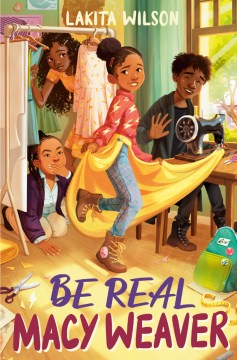
In today’s Author Spotlight, Lakita Wilson chats about her MG debut, Be Real, Macy Weaverout tomorrow, July 12, from Viking—as well as how she juggles her job as a college professor with her writing life. Plus, scroll down for a chance to win a copy of Be Real, Macy Weaver! 

Book Summary

Eleven-year-old Macy Weaver knows relationships are complicated. Fresh off her latest friendship breakup, she’s spent most of her summer break on her own. So, when Macy’s mother decides to go back to college three states away, Macy jumps on the chance to move—anything for a fresh start.

But Macy’s new home isn’t exactly what she expected. Her mother’s never around and her dad’s always working. Lonelier than ever, Macy sets her sights on finding a new best friend. When she meets Brynn, who’s smart and kind and already seems to have her whole life figured out—down to her future as a fashion model—Macy knows she’s it. The only problem is that Brynn already has a BFF and, as everyone knows, you can only have one.

Resorting to old habits, Macy turns one small lie into a whole new life—full of fantastic fashion and haute couture—but it isn’t long before everything really falls apart. Ultimately, Macy must determine how to make things right and be true to herself—rather than chasing after the person she thinks she’s supposed to be.

Interview with Lakita Wilson

MR: Welcome to the Mixed-Up Files, Lakita! Thanks for joining us today.

LW: Thank you, for having me!

MR: First, I have to tell you how much I enjoyed Be Real, Macy Weaver. It’s the kind of book I would have been drawn to as a tween, because—like Macy—I was desperate to have a best friend. I’m guessing the desire for a close friendship was something you craved, too?

LW: Of course. I think, for me, it took so long to find my community because I still struggled to find myself. It’s kind of hard finding people who get you, if you haven’t quite gotten yourself yet.

Would I Lie to You?

MR: Macy, the fashion-forward protagonist, weaves a web of lies to impress Brynn, the object of her BFF affection. At the same time, the lies cause Macy untold guilt, shame, and anxiety (i.e., she gets the “creepy-crawlies” whenever she tells a lie and/or feels anxious). What is it about lying that makes most of us get the “creepy-crawlies”? And what were you trying to say about lying in general?

LW: Macy told pretty big lies throughout the story. Other characters told smaller lies, or let lies linger to cover up things they didn’t want to reveal either. I truly believe that people want to be their most authentic selves, but there’s often an inner voice telling us that our truest self isn’t good enough. So, lying becomes a shield to protect us from the potential rejection of our peers. I think the conflict of needing to live in our truth, yet fearing such vulnerability creates anxiety. Describing the creepy crawly feeling Macy felt on her arms and legs, was my way of showing how this anxiety doesn’t just stay inside of us, but shows up in physical ways.

Significance of Symbolism

MR: Speaking of webs, Macy befriends a spider—Charlotte—with whom she shares her secrets, worries, and fears. I know this is an homage to Charlotte’s Web, but it’s also a symbolic choice. Other bits of symbolism include Macy’s first and last names (i.e., Macy’s = a department store/Macy is into fashion; Weaver = weaver of lies/weaving of fabric). Labels are symbolic, too (clothing labels/labeling oneself and others). I’m guessing these were purposeful choices. Why is symbolism important to you as a writer?

 LW: Okay, here’s the funny thing about Macy’s name. I chose Weaver on purpose. Here is a girl who constantly weaves a web of lies and she’s learning to sew in the book. So, it made sense. However, the first name wasn’t an intentional choice. I love Macy Gray, and I think the name Macy is pretty—so that’s how I chose her first name. The ridiculous thing is, I live in walking distance of a Macy’s department store. You would think I would’ve connected the two a LOT sooner than I did. I still shake my head over this all the time!

MR: In addition to friendship, abandonment is a predominant theme in your book. For instance, Macy’s mom uproots the family so she can attend college in another state—and then promptly checks out of Macy’s life. How does this feeling of abandonment affect Macy in terms of the choices she makes, and the lies she tells?

Attachment Theory

LW: As I was writing Macy’s story, I needed to figure out why she was so needy. Everyone wants a best friend, but there was a certain desperation that Macy had about needing a best friend, right from the beginning. And that level of neediness doesn’t come out of nowhere.

When it comes to parenting, there are four different attachment styles. I teach my college students that parents who are present and responsive to their child’s needs help create a secure-attachment. Children who develop a secure-attachment are more confident, trusting, and able to explore the world and interact with peers, knowing that they have this safe base to always go back to—even if situations get a little tough. But Macy didn’t have that with her Mom.

When a parent is sporadic with their time, attention and affection, this creates an anxious-insecure attachment. These children often know deep down they can’t rely on the parent, so they become clingy—with that parent, and other relationships. These children become needy, angry and distrustful. We see this play out in Macy’s behavior almost from the very beginning of the story. She’s very needy in her friendships, clinging to them like they are her only hope. She quickly becomes angry or anxious when her expectations are dashed. And she never gives anyone the true version of Macy, because she’s not only distrustful of others, she doesn’t trust herself to be loveable or worthy of friendship.

Switching it Up

MR: Turning back to writing, Be Real, Macy Weaver is your first MG novel, but you’ve written a YA novel, too (Last Chance Dance is coming out in spring 2023), as well as nonfiction (What Is Black Lives Matter?) and biographies of such luminaries as Thurgood Marshall, Rosa Parks, and Michelle Obama. Is it tricky to switch it up? Or just fun?

 LW: For me, it’s super fun. I’m interested in a lot of things, and super curious about the world around me. Being able to write in different genres and for different age groups gives me multiple lanes and strategies in which to talk to children about the world around us.

A Writer’s Juggling Act

MR: In addition to being a children’s book author, you are a college professor. How do you juggle your writing career with your day job? What does your writing routine look like? 

LW: I don’t know if I would be able to write as much if I had a typical nine-to-five job. Even though I am full-time faculty at my college, I don’t go into the office Monday-Friday from nine to five. Faculty are fortunate enough to stack our schedules with courses on certain days, freeing other days for things like writing. So, in order to keep up with my teaching responsibilities and write, I usually keep a pretty strict, consistent schedule. I also use a planner that I write down a schedule and a to-do list. I used to get up every day at 5 a.m and write for a few hours while the world slept. Then I would go to work, or run errands. But the pandemic has ruined me. I’m up all night, wandering my house like the resident ghost. So, I’ve switched my writing schedule according to when my kids are in school. When my daughter is home from college, I tend to write overnight because during the day we distract each other with invitations to watch the latest reality show. 🙂

Social Media Star

MR: Lakita, I noticed that you’re killing it on social media, with an impressive 23K followers on Instagram (LakitaReads). What is the secret to your success? Any tips for other writers trying to up their social-media game? Do you have a preferred platform? Also, how much time do you spend on social media?

LW: Yes. I am killing my social media accounts—and not in a good way. Ha! In 2017/2018, I was book blogging and sticking to strict schedules, and posting three times a day, every day. Instagram was my go-to platform. My followers consistently went up, and I formed many cool relationships from the experience. Now I post sporadically, and it’s killing my engagement, and my followers are dropping off by the dozens. Sometimes I feel guilty about wasting a great platform and I just want to donate it to an organization that’s willing to bring it back to life. But, there’s also the hope that one day I’ll revive that page and bring it back to its glory days. Poor @LakitaReads, lol.

Next Project

MR: What are you working on now, Lakita? Can you give us a hint?

LW: Right now, I am finishing up a draft of my second middle-grade novel. I will give you a one-word hint: bald. I’m also working on a non-fiction project centering hip hop and feminism.

Lightning Round!

MR: And finally, no MUF interview is complete without a lightning round, so…

Preferred writing snack? Chipotle. I know this isn’t technically a “snack”, but it’s what I prefer. I need to cut down though. I eat it way too much when the kids are at school.

Coffee or tea? Pepsi.

Cat or dog? Two dogs. One old. One young—to give you the perfect balance.

Favorite designer? Alexander McQueen

Favorite model? Naomi Campbell

Zombie apocalypse: Yea or nay? Nay. I scream when a leaf blows by my window. Do you honestly think I can handle zombies?!

Superpower? I just taught my puppy to push a button when he wants a treat. Is that a superpower, or do I now work on-call for my puppy? Hmm…

Favorite place on earth? My bed. Sleep is the best!

If you were stranded on a desert island with only three things, what would they be? A functional Chipotle restaurant (staffed), one of those inflatable floaties, and Megan Thee Stallion—we’re on a deserted island, so she’ll have plenty of time to teach me to dance! (You know, I almost gave a more acceptable answer here, but in honor of Macy I’m choosing to Be Real, ha!)

MR: Thank you for chatting with us, Lakita—and congratulations on the publication of Be Real, Macy Weaver. I thoroughly enjoyed it, and I know MUF readers will too!

LW: Thank you for having me!

And now…

A GIVEAWAY!

For a chance to win a copy of Be Real, Macy Weavercomment on the blog–and, if you’re on Twitter, on the Mixed-Up Files Twitter account for an extra chance to win! (Giveaway ends 7/13/22 EST.) U.S. only, please. 

About Lakita

Lakita Wilson is a Professor of Education, writer, and advocate for diverse and inclusive children’s literature. A 2017 recipient of SCBWI’s On-the-Verge Emerging Voices Award, Lakita also obtained her MFA in Writing for Children and Young Adults from Vermont College of Fine Arts. Lakita lives in Maryland with her two children and Shih-Tzu. Learn more about Lakita on her website and follow her on Twitter and Instagram: Lakitareads and Lakitawrites.

Interview with Molly and the Machine author Erik Jon Slangerup and Giveaway!

Welcome, Erik! 

Thanks for having me! Big fan of the Mixed-Up Files!…and all things mixed up.

SLANGERUP_EDITED_1500px-5047-2.png

I can say that I knew you when, as we hosted you at Claire’s Day way back in 2006! I am so excited for the release of your latest, Molly and the Machine  a heart-warming novel for middle-grade readers.

Ha, yes, it’s been a minute! But that festival is such a great memory for me. I recall a moment stepping out of a tent, and seeing some kids skipping along in these fantastic, colorful costumes, one holding balloons, and another blowing bubbles, and I thought: wow, this is really magical…books are magical.

MollyFinalCover.jpg


Tell us a little bit about your journey as a writer…

Oh man, as I look back to way back when, it really does feel like a journey now, ha! For 25 years, I was lucky enough to make my living as a creative writer in the ad business—as many do—while writing some picture books on the side. It was lots of fun, and helped hone my craft, but a few years ago, I felt like time was growing short, and decided to make the side gig the main one. Shortly after that, I had a serendipitous coffee with an amazing writer friend, Bryan Hurt, who put me in touch with Elizabeth Rudnick, another amazing person, who eventually became my agent. Prior to that, I’d already been shopping my manuscript for “Molly and the Machine,” but Liz helped me beat it up, expand it, and make it much better. Revising was a very long process, because I’m a slow writer. But after that, things moved fast, and we sold it in an exclusive first look over a weekend, which I can now appreciate is pretty crazy.

 When did you start writing Molly And The Machine?

The kernel for Molly and the Machine actually began as a sketch, a little more than ten years ago—told you I was slow! I like to draw as well as write, so that’s sometimes how I initially capture an idea. (I have that sketch framed in my office now.) I grew up watching old monster movies, like The 7th Voyage of Sinbad, and was always terrified of being eaten by some giant creature like the cyclops. So I channeled that fear into a story about a giant robot who swallows children.

The young protagonist is Molly McQuirter, an eleven-year-old girl who is navigating the grief from her parent’s broken marriage, her dad’s broken heart, all the while dealing with an annoying young brother. Molly is inventive, creating Rube Goldberg-like chain reaction machines, and she escapes her reality by taking off on her bicycle, Pink Lightning. How did the character of Molly come to you?

What a great description. Isn’t Molly great? Like all characters, I suppose she’s an amalgamation of many people I know—my Mom, my daughters, maybe even a little of myself. I’m the oldest of four, and I think there’s always this feeling of responsibility that comes with having younger sibs. But I was really attracted to the idea of taking some of the traditional gender norms in literature, like “knight rescues damsel,” and flipping them. So, among other things, this is a story about a girl who sets out on a quest to rescue her brother. Girl saves boy.

At the heart of the story is love. Which relationship in the novel was your favorite?

I’m so thrilled that comes through—even between all the explosions and mishaps. Most of all, I love the dynamic between Molly and her beloved “Gruncle” Clovis, because for me its representative of the kinds of bargains we all strike among those we love to meet people where they are in life, and accept the gifts they’re able to offer, even when it falls short of a “model relationship,” whatever that might be. That’s life—being stuck in a room filled with weird, wonderful, incredibly flawed people, and figuring out how to love them.

Grunkle is quite a character and brought to mind Hagrid from Harry Potter. Would you say the same?

That hadn’t occurred to me! Unlike some younger debut authors, I only experienced Harry Potter as a parent, so while I love that universe, it doesn’t occupy quite the same space in my heart and mind that it does for, say, my oldest son, Dalton, who remains a huge fan to this day. But now that you mention it, I can see the similarities! Both Hagrid and Gruncle are very well-intentioned, but sort of bumbling their way through everything, aren’t they? Oh, and of course, they both have these monster motorcycles with sidecars! (Gruncle’s “Blue Thunder” is a refurbished bike from World War II—with some James-Bond-like gadgets—like Molly’s “Pink Lightning.”) And although Gruncle is far from half-giant stature, he does have a very big personality!

The setting, the Hocking Hills area of Ohio is a character in itself. Why did you choose to use this location for the background?

Yeah, those hills to play a big role in the story. Ohio is filled with all kinds of little tucked-away treasures like this. Aside from it being one of my favorite getaways, I chose Hocking Hills because I love exotic locales. This might sound strange to someone born and bred in Ohio, but for a Californian transplant like myself, the landscape here is so lush and green, it feels like another world. And that’s just the feeling I wanted to convey. (The woods also made the perfect hiding spot for a ten-story-tall robot.)

The novel is set in the 1980s, a time before many of the conveniences and distractions young readers have today. Offer a bit about your experiences in growing up during this time frame and how that transferred into your novel.

My generation was much more feral. We were pre-cellphone, pre-internet, pre-GPS. Who knows, maybe less of us survived intact, but the ones who did have good stories to tell! The environment that young people grow up in today can present a different set of challenges. It’s what drew me to the idea of an enormous robot that swallows children. On one level, the robot can be seen as a metaphor for all the ways technology envelopes us—and has the power to make us feel more connected, or more isolated. And navigating that can be really complicated. So, I hope this story invites more conversation and reflection on that.

What do you hope young readers take away from Molly And The Machine?

I hope readers come away with the sense that are real adventures out there to be had—and sometimes the outcomes might depend on how they apply their own wits and grit.

 I understand you are already working on a sequel to Molly’s first story. Can you share a bit about this new adventure?

Absolutely! Right now, I’m deep into revisions on “Molly and the Mutants,” the next book in the series. I don’t want to give too much away, but I’ll share that the resolution at the end of book one inadvertently winds up causing the problem that arises in book two… and that problem takes the shape of some very large—and very hungry—amphibious creatures that require even more ingenuity on Molly’s part to save everyone in Far Flung Falls from becoming something’s lunch. (As you can see, I’m tapping into my fear of being eaten again.)

Thank you, Erik, for your time and for offering insights into your writing journey, and the creation of Molly and the Machine.

Oh, it’s my pleasure, Julie! Love chatting books!

The publisher, Simon & Schuster has graciously offered a complimentary copy for a giveaway, to one lucky winner. To enter, click here