
Posts Tagged middle-grade readers

Author Spotlight: Rosanne Parry + a GIVEAWAY

Author Spotlight: Rosanne Parry + a GIVEAWAY                                                            

Today, I’m excited to shine the Author Spotlight on children’s author and fellow MUF member Rosanne Parry! Rosanne’s latest MG novel, A Wolf Called Fire, praised by Kirkus as “an exciting and thoughtful portrait inspired by a real animal who succeeded by being different,” was out February 4 from Greenwillow Books and is a 2025 Junior Library Guild Gold Standard Selection and a #1 Indie Best Seller.

Interview with Rosanne

Welcome, Rosanne! Congratulations on the release of your beautiful new novel! It’s a pleasure to highlight the work of a fellow MUF member. A Wolf Called Fire is such a wonderful addition to the Voice of the Wilderness Series. Can you tell us a little background about what inspired these books?

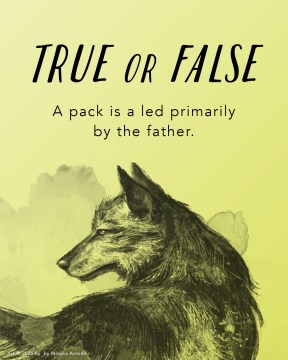
Over the years I’ve gotten many letters from young readers who loved A Wolf Called Wander and were very worried about what happened to the brother he loved so much. So I was happy to return to the world of my wolf pack in the Wallowa Mountains. And there is much more research now about the dynamics of how wolf packs are lead and what kind of wolf grows up to be the alpha. So I wanted to explore how a wolf pup who starts out his life as the omega pup goes on to become a leader.

Point of View

It is so interesting that this story was inspired by a real wolf who became such an extraordinary pack leader, and I was amazed at how you were able to truly capture the point of view of an animal. I’d love to hear about your process and how you manage to write from this perspective so effectively. 

The work of reading fiction is to step outside of the self for a time and live as the fictional character does. So the work of the writer of fiction is to describe that fictional life and world with accuracy and detail that is not just vivid but accessible to the reader.

I have to reach out toward the wolf and ask myself what does this environment feel like. What color is the dirt and how does it feel under my feet and what does it smell like and what does the smell of this particular patch of dirt I’m standing on tell me about the world I need to survive in.

And then I also have to reach toward that child reader and ask myself what words will make this particular wilderness come to life. Because my reader has almost certainly never been to the backcountry of the Eagle Cap Wilderness and probably has not spent any time at all in the wilderness. So how can I choose words that will make them feel a part of that wilderness experience. It takes a lot of research and a lot of time spent in the actual settings of the story.

Voice

You describe the natural world so vividly through all the senses. Your writing is beautiful and lyrical. What advice do you have to new writers as they strive to find their voices?

I would encourage new writers to think of their voice as not so much something external to quest after, as though you might, at last, arrive at the Tree of Symbolism and pluck your own voice from among its fruits. Your voice has always resided within. So it’s more an enterprise of listening deeply to yourself and asking yourself what you hope to communicate in a particular story. And then thinking what a story needs in terms of tone and structure. Your own voice is already there. It’s more a matter of being humble enough to recognize it and proud enough not to let the editing process knock off all the interesting edges.
Characters

Along with Warm, the book includes many other memorable characters. Do you have a favorite secondary character? Who and why?

I really enjoyed writing Snow and Pounce in this story. Both are female wolves with plenty of leadership qualities who find themselves is a pack they don’t like. The one gathers her courage and leaves her pack. But the other quietly forms alliances within the pack she hates and in the end forms a new pack with them.

Back Matter

With its wonderful educational content, this book is sure to be a huge hit with teachers, and the exciting, fast-paced story and beautiful illustrations throughout will be so appealing to kids. Your back matter is very interesting and an excellent supplement. Young readers are going to absolutely adore learning about the real wolf behind the story, as well as the map of Warm’s journey and the pictures of the animal tracks. I love all you say about how kids can make a difference. How did you decide what to include in the back matter? 

When the first Voice of the Wilderness book was written I could not find an American publisher for it, so it was the British publisher Andersen Press who took it on. I had a meeting with them in London when we were at the beginning of the editing process. A British audience knows so little about the American wilderness that we talked at length about how to make the text accessible to them. Illustrations were my editor’s idea. I asked for the back matter to make the book work for teachers who also have to teach map reading and ecosystems and natural history and human history. They agreed that teachers need every bit of support we can offer, and so they set the standard for the books that followed. I’m grateful that Greenwillow has stuck with the format because the price of paper is rising and absolutely every page counts.

What was your biggest challenge in writing this story?

Greenwillow was very keen to have FIRE come out in 2025–their 50th anniversary year. And my approach to writing is not a speedy one. Honestly, the biggest challenge was getting the story researched and written in time to have it so beautifully illustrated and designed. It was a huge team effort. Much gratitude to the illustrator, Mónica Armiño, art director Sylvie Le Floc’h, and editor Virginia Duncan.

Writing Process

Will you tell us a little about your writing process? Where/when do you prefer to write?

I love to write outside when it’s warm enough for that. My treehouse is a favorite spot, but the truth is I can write almost anywhere and I often have to make due perching in whatever space is available. Research is probably the most defining aspect of my writing. I do a lot of it and it requires a fair amount of camping at the moment. Fortunately I love that!

Takeaways

What do you hope readers take away from this story?

Literacy is my primary objective. Because it’s a relatively short book, it’s often a 7 or 8 or 9 year olds first middle grade novel that they have read on their own, and they are a better reader by the time they get to the end of it. I want my reader to feel empowered to read ever more complex and challenging books and newspapers. I want them to care about the wilderness and believe that they have something to say in the defense of land and creatures who cannot speak for themselves.

Influences

What are some current books that have influenced you as a kidlit writer?

I really enjoy books that test the limits and try something new. Virginia Euwer Wolff is a long time friend and mentor. She’s also one of the first YA authors to write in verse. Her Make Lemonade was a game changing read for me.

I have heaps of admiration for Brian Selznick who pioneered an alternating text and sequential illustration story that stands apart from all the rest and makes me think about story in new ways every single time. If you haven’t read The Invention of Hugo Cabret, you are in for a treat.

I’m also a big fan of the graphic novel Little Monarchs by Jonathan Case. It’s a climate future story about a middle school girl and her scientist guardian who are traveling a west coast almost devoid of humans. The story alone is fabulous but the author included non-fiction touches large and small that I very much appreciated. There are pages of the main character’s homework which provide useful back story and fun facts. There are directions on how to tie knots or get into a backpacker’s hammock or navigate by stars. Every new setting has the GPS coordinates in case you wanted to find the place for yourself. A real innovation — blending traditional graphic novel panels with the finest in illustrated nonfiction.

Can you give us some insights into what you’ll be working on next?

My next Voice of the Wilderness novel will be about ravens.

And for the lightning round:

Coffee or tea? Cocoa

Sunrise or sunset? Sunset

Favorite place to travel: The homeward journey has always been my favorite.

Favorite dessert: Ice cream

Superpower: Moral Courage and Compassion are the superpowers we most need.

Favorite music: When I was writing A Wolf Called Fire I listened to a lot of classical pieces by Vivaldi and Respighi. They made me think of the forest.

Favorite book from childhood:  A Wizard of Earthsea by Ursula LeGuin

Thanks again, Rosanne! It was so much fun to learn about you and get a behind the scenes look at your amazing novel! Learn more about Rosanne on her website and follow her on Instagram.

Bio

Rosanne grew up in Oregon loving its wild places and fabulous libraries.  She’s the author of the bestselling Voice of the Wilderness novels and nonfiction picture books. Her newest is A Wolf Called Fire. Rosanne sells books at Annie Blooms, and writes in a treehouse in her backyard.

For a chance to win a signed copy of A Wolf Called Fire, comment on the blog!  (Giveaway ends March 17, 2025 MIDNIGHT EST.) U.S. only, please. 

From the Classroom: Using Graphic Novels to Explore Transitions

Let’s face it – students in the middle grades face lots of transitions. These can be moment-to-moment transitions (i.e. we’re best friends and five minutes later we aren’t), place-to-place (i.e. moving or starting a new school), and body-to-body (i.e. what is puberty doing to my body?!). Authors Rene Rodriguez-Astacio and David Low recommend using Superhero Graphic Novels to help students navigate these transitions as the graphic novel medium, with spaces between panels, force middle grade readers to fill in the gaps which can contribute to them doing the same in their transitioning lives.  And superheroes, in particular, are super popular with this age group!  Below are some superhero graphic novel titles, how they can support middle grade readers with all the transitions they face, and how teachers might consider using them in the classroom.

Spider-Man

cover of Miles Morales Shock Waves graphic novel with miles morales running in center of the cover.

In Miles Morales Shockwaves, Miles Morales, a biracial middle grader, helps raise funds for Puerto Rico to support his mother’s lost family home after an earthquake. He organizes a block party sponsored by Harrison Snow, CEO of Serval Industries. Miles (as Spider-man) is led to uncover a conspiracy when it is revealed that Snow is providing financial support to Puerto Rico to excavate valuable crystals unearthed after the earthquake. Rodriguez-Astacio and Low recommend that teachers provide some background on the relationship between the U.S. and Puerto Rico, especially in light of the 2020 earthquakes and the 2022 devastating hurricane. This graphic novel explores the various transitions associated with identity, place, and family, something middle schoolers may be facing.

Ms. Marvel

Cover of Ms. Marvel, Stretched Thin with Ms. Marvel running away from a helmeted villain.

Ms. Marvel’s super power is her ability to contort her body, but in Ms. Marvel – Stretched Thin, Kamala Kahn wakes up with big feet and a lack of control on how to fix them. This funny image is a great metaphor for the awkwardness of puberty and the various ways middle schoolers often don’t have control over their bodies. All the various ways Kamala’s body contorts throughout the book relates to the coming-of-age themes in the book and middle schoolers accepting new responsibilities, often with great struggle. Ms. Marvel can relate as even though she may do one thing well, her inability to excel in every aspect of her life leads her to feel like a failure. Kamala feels like she is stretched “too thin” when trying to be successful at everything and she is also literally stretched thin! Teachers can use graphic novels like Ms. Marvel (or the Hulk or the X-men) to examine the literal and metaphorical representations of body change and how gender, race, class, and power create different contexts with which transitions occur and are interpreted.

Finally, Rodriguez-Astacio and Low remind us that graphic novels should be seen as more than “transition books” for reluctant or resistant readers. Graphic novels are great for interpreting deep issues and themes. In the comments below, share what types of books you use to help with all the transitions your middle grade readers face on a daily basis!

Author Spotlight: Sydney Dunlap

Today, I’m thrilled to shine the Author Spotlight on children’s author and fellow MUF member Sydney Dunlap! Sydney’s latest MG novel, Racing the Clouds, praised by Kirkus as a “hopeful, heartfelt story of resilience… handled with a gentle touch,” is out February 18 from Jolly Fish Press.

Interview with Sydney 

Melissa: Welcome to the Mixed-Up Files, Sydney! It’s always a pleasure to shine the Author Spotlight on a fellow MUF member, especially a new(ish) one.

Sydney: Thank you so much, Melissa! I’m very excited to be a part of MUF.

Melissa: Racing the Clouds, comes out in just FIVE days (!). What’s going through your mind right now? (I can only guess. 🙂)

Sydney: Honestly, that after working on this book for such a long time, it’s hard to believe it’s about to be out in the world. And I’m looking forward to my launch events. I’m very lucky to get to have an in-conversation event with Lynne Kelly (one of my blurbists) at a great independent bookstore called Buy the Book near my home in Texas, as well as one with Kate Albus (another of my blurbists) at the wonderful Scrawl Books in northern Virginia, close to where I lived for many years. I love going to my friends’ book launches as well as having my own. Gathering with friends and family to celebrate is so much fun!

About the Book

Melissa: Can you tell readers a bit about the novel? Also, what was the inspiration behind it?

Sydney: Racing the Clouds is the story of a 13-year-old girl named Sage who has a big secret involving her mom’s whereabouts. The story begins after she hears from her grandparents—her mom’s parents, who she’s never met—for the first time in her life. They invite her to visit, and she wants to fix what’s gone wrong in her family, so she flies to Ohio by herself as soon as school gets out for the summer. She feels an almost immediate connection with her grandfather, but her grandmother is so strict and formal that it doesn’t seem they’ll ever see eye-to-eye. Sage learns that family relationships—and people—can be much more complex than they appear on the surface. She also begins to understand more about the power of forgiveness and how to find her way forward during a difficult time.

As for the inspiration, I like writing about topics that are very real and part of a lot of people’s lives but aren’t always discussed that much, like drug addiction, which is a component of the story. I also thought it would be interesting to explore what might happen when a person hears from relatives they’ve never met and never heard anything good about, and to find out their perspective.

Hiding in Plain Sight

Melissa: Sage, the protagonist, is hiding more than she’s telling—especially when it comes to her mom. (I’ll avoid spoilers, so I won’t say more.) What was it like to get into the head of such a guarded character? Carrying a secret is such a heavy burden to bear.

Sydney: I used to be involved in theater when I was growing up, and I think that acting gave me a chance to feel like I really was the character. When I write, I have that same kind of experience, so I only revealed what it felt like Sage would be okay revealing at different points along the story. It was a huge relief when Sage could finally tell her friend Marla the whole story. I felt a burden off my chest, the same as Sage did, after writing the scene where she reveals what really happened.

Exploring Real-Life Issues

Melissa: Your previous novel, It Happened on Saturday, is also a contemporary novel that deals with real-life issues, namely human trafficking. What compels you to write about difficult issues for young readers? I know this is something you’re passionate about.

Sydney: As a child, I loved to read books about real things that could happen to kids in real life, and I especially enjoyed books written by Katherine Paterson and Judy Blume, because they wrote so honestly about all kinds of difficult topics. My experiences volunteering with child trafficking survivors and my realization that I couldn’t find any middle grade books with that subject matter – even though kids ages 11-14 are an especially vulnerable group — led me to write It Happened on Saturday. As for Racing the Clouds, I feel that there is room for more books for young readers dealing with addiction in the family, as it is a huge part of life for many children.

It’s a Dog’s Life

Melissa: Another passion of yours is animals, which is evident in your sympathetic portrayal of Nicky, a stray dog Sage rescues while visiting her estranged grandparents in Ohio. Can you tell us more about Sage’s bond with Nicky, and how it helps Sage to connect with her prickly grandmother?

Sydney: The Philadelphia apartment where Sage and her family lived until their recent move didn’t allow dogs, so Sage has never had a pet. When she meets Nicky, she is drawn to him because he seems so lost and like he could really use a friend. Sage is utterly flabbergasted to discover that her strict, formal grandmother has a soft spot for dogs. Taking care of Nicky together gives them a common purpose and something they can be in complete agreement about. Dogs bring such positive energy wherever they go, and I’ve seen people in my own extended family who disagree on pretty much everything else find common ground in their love for dogs.

Drummer Girl

Melissa: Like her dad, a once-almost-famous musician, Sage is a talented drummer. Is this a common interest, or did you have to do extensive research on how to play the drums?

Sydney: My son used to play the drums when he was in elementary and middle school, and I got to sit in on lots of drum lessons and of course see many concerts. We still have his old drum set in our house and my husband likes to play around on it, so drums are pretty familiar to me.

Path to Publication

Melissa: Switching gears, can you tell MUF readers about your path to publication? I know you were an elementary school teacher for many years. What led you to writing for kids?

Sydney: I’ve always loved books and writing, and ever since elementary school, I’ve had the idea that one day I wanted to be an author. I took creative writing classes in high school and college, then became a member and also a conference organizer for the Society of Children’s Book Writers and Illustrators, where I studied the craft and business aspects of writing for a long time. I drafted some manuscripts and sent them out here and there, but it wasn’t until I had the idea for It Happened on Saturday that I got really serious about pursuing traditional publication. Once I started working on that manuscript, I began writing almost every day and eventually signed with my agent, Ann Rose.

Writing Is Rewriting

Melissa: As a follow-up, your debut MG novel, Jeremy Norbeck: Animal Whiz Kid, came out in 2014. What have you learned about the publishing industry—and about writing—since then?

Sydney: I wrote that story while I was an elementary school teacher, and I used to read it out loud to my students while I was working on it. I wanted to use it right away in my classroom because it fit right in with our unit on animal adaptations, so I published it through CreateSpace (now Kindle Direct Publishing) to have it available immediately. I had already learned a lot about the publishing industry through my experiences with SCBWI, but I learned much more once I signed with my agent and then got a publishing contract for It Happened on Saturday.

My biggest takeaway is that writing is really rewriting over and over, and that you are almost never done, because there will always be something to edit or improve, up until your last look before a book goes to the printer. You work as hard as you can (with help from your critique group if that’s part of your process) to have a story be its very best before your agent sees it, and then you do the same thing with their assistance until it goes to your editor, and then you do the same thing with their expertise and guidance. And when you compare what you started with to the finished product, you realize how amazing it is that the spark of an idea could turn into a finished story, and that you are incredibly lucky to have had so many wonderful helpers along the way.

Confessions of a Pantser

Melissa: While we’re on the subject of writing, what does your writing routine look like? Also, are you a plotter or a pantser?

Sydney: My writing routine varies a lot, depending on what else I have going on. I’ve been traveling quite a bit lately, and I’m trying to learn to work while on the go, such as editing a manuscript while on a flight. At home, I sandwich writing in between my other responsibilities, my part-time work tutoring students, and my activities, and I find I’m always better able to write if I get some exercise first, usually walking my dog, going running, or doing yoga. I am a pantser through and through; I have to start writing a story to figure out who my characters are, what they want, and what obstacles will be in their way.

Sydney’s Writing Advice

Melissa: What advice would you give to fledgling MG authors?

Sydney: I’d say to read a lot of books in your chosen genre and try to think of them as texts showing examples of different ways to start/end a story, describe settings, keep up your pacing between action and dialogue, reveal character, etc. And I’d highly recommend joining a critique group. Writing friends are the BEST. You can provide each other an amazing listening ear, as well as sharing and getting helpful feedback on your work. And you all speak the same language. Non-writer friends might have no idea what you mean when you talk about queries or MG, YA, plotting vs. pantsing, etc.

Melissa: What are you working on now, Sydney? Can you give Mixed-Up Files readers a sneak peek?

Sydney: I’ve been working on a story told from two points of view that involves themes of freedom and standing up for yourself, both within one’s own family and within society.

Lightning Round!

Melissa: No MUF interview is complete without a lightning round, so…

Preferred writing snack? Granola bar

Coffee or tea? Tea

Superpower? Flying. I would LOVE to fly, not just to get places quickly, which would be amazing, but also for the experience of soaring through the air with the birds.

Favorite travel destination? Anywhere with a beautiful mountain view

If you were stranded on a desert island with only three things, what would they be? I’m not sure about the rules, but if allowed, I’d bring my dog, my cat, and a horse from the stable where I ride! Exploring a desert island on horseback with my furry pals running along beside me could be kind of fun! 😊

Melissa: Many thanks for joining us today, Sydney, and congratulations on the forthcoming publication of Racing the Clouds. It’s an engaging and heartfelt book, and I’m sure MUF readers will agree!

Sydney: Thank you again for your kind words and thoughtful questions, Melissa! I’m very grateful for the opportunity to share this behind-the-scenes look at Sage’s story with the MUF audience!

Bio

Sydney Dunlap is an award-winning author and former elementary school teacher. She enjoys reading and writing heartfelt, hopeful books that explore tough topics that aren’t often addressed in middle-grade literature. Her 2023 debut novel, It Happened on Saturday, has received several medals and was named a 2025 OLA Masterlist selection and Utah Beehive Award nominee, as well as a Crystal Kite Honor Book. A lifelong animal lover, Sydney lives with her family in a home where the dogs and cats outnumber the people. You can find her online at www.sydneydunlap.com.