
Posts Tagged middle-grade nonfiction

New books just in time for the holidays!

Check out these new December releases for all of your favorite middle-grade readers! This selection includes the newest from an adventure series and an out-of-this-world book on space by renowned astronomer Dean Regas.

Never After: The Broken Mirror, Roaring Brook Press, written by Melissa de la Cruz 
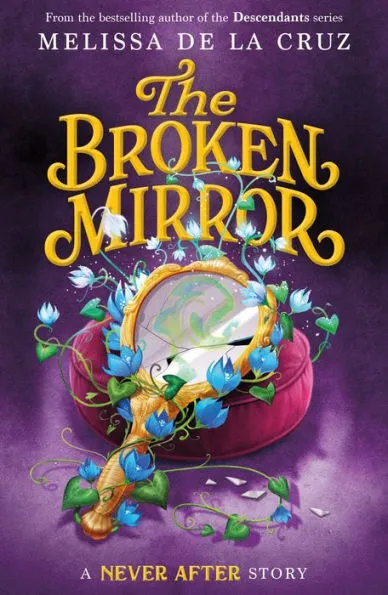
Real life and fairy tales collide in Never After: The Broken Mirror, book three of the funny and thrilling series from #1 New York Times–bestselling author Melissa de la Cruz.

The Never After crew is back for another twisted adventure. This time, they’re off to Snow Country—that is, after they rescue the beleaguered Lord Sharif of Nottingham from the evil Robin Hood, who has been plaguing the land with his thievery and mischief.

But Robin’s antics aren’t the only dangers afoot in the Kingdom of Never After. At the behest of her daughter, the evil Cinderella, Queen Olga has turned Prince Charming into a Frog after his wedding to the beautiful Hortense. And how could we forget the ominous Prophecy, which still looms large over Filomena and her friends?

Along with Jack, Alistair, Gretel, Beatrice, Byron Bessley, and some new Snow Country pals like Rose Red and a chatty magic mirror, Filomena sets off to find the only ones who can save the kingdom once and for all: The League of the Seven – a group of fearless warriors devoted to fighting the ogres at any cost.

Still, new threats lurk around every corner, both in Never After and back home in North Pasadena . . . Even with the League of the Seven’s help, can Filomena and her friends rescue the land from Olga’s clutches? Or will the ogres finally prevail?

1000 Facts About Space, National Geographic Kids, written by Dean Regas

BLAST OFF into the WONDERS OF OUTER SPACE with ONE THOUSAND INCREDIBLE FACTS!
Did you know … that one of Saturn’s moons is so hollow it would float in water? That the largest known star is 3.69 billion times bigger than our sun? Or that Jupiter likely has diamonds floating in its clouds?

Explore dazzling facts about the vast expanse of space, from glowing stars billions of light-years away to supermassive exploding supernovas to rockets thundering into the unknown. This comprehensive book takes you on a mind-blowing tour of our unbelievable universe and is full of fascinating facts on topics such as space exploration, our solar system and galaxy, and beyond.

Expert astronomer Dean Regas―former host of PBS’s Star Gazers and astronomer of the Cincinnati Observatory―takes you on an incredible tour of facts about each planet in our solar system, dwarf planets, our sun and other stars, exoplanets, comets, asteroids, galaxies, space travel, and so much more. Hundreds of stunning photographs bring the facts to life.

The Universe in You: A Microscopic Journey, Holiday House, written and illustrated by Jason Chin
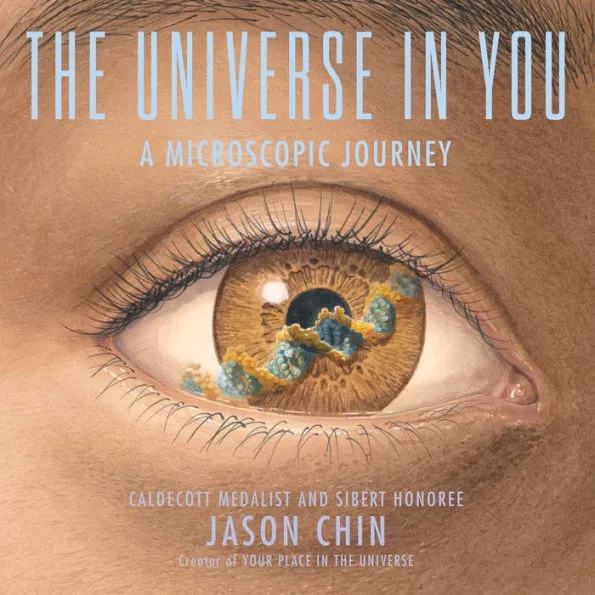
The Universe in You: A Microscopic Journey

Jason Chin, winner of the Caldecott Medal for Watercress, dives into the microscopic building blocks of life in this companion to the award-winning Your Place in the Universe.

In Your Place in the Universe, Jason Chin zoomed outward, from our planet, solar system, and galaxy to the outer reaches of the observable universe. Now, Chin reverses course, zooming in past our skin to our cells, molecules, and atoms, all the way down to particles so small we can’t yet even measure them.

Like its companion, The Universe in You is a mind-boggling adventure that makes complex science accessible and enjoyable to readers of any age.

Impeccably researched, wholly engrossing, and with extensive backmatter for additional learning, The Universe in You is another knockout from the award-winning creator of RedwoodsGrand Canyon, and other distinguished works of nonfiction for young readers.

A Junior Library Guild Gold Standard Selection

Minecraft: Master Builds, Random House World, by Mojang AB

Minecraft: Master Builds - Mojang Ab

Marvel at Minecraft’s greatest creations and meet the builders who have taken the game to new levels.

Packed with stunning illustrations, Minecraft Master Builds showcases the creations that have taken the game to new levels, and introduces the builders behind them.

Explore all the possibilities of Minecraft, from stunning underwater sculptures to impressive space panoramas, or travel through time to visit grand medieval towns and futuristic cityscapes. Each colossal creation is shown in beautifully rendered illustrations to highlight the painstaking details that make these builds masterful. The exclusive interviews with the builders shed light on the creative forces and processes behind each build.

Whether you’re marveling at the wonders that Minecraft’s greatest builders have to offer, or searching for inspiration to become one yourself, your tour begins here.

Pencilmation: The Graphite Novel, Penguin Young Readers, written by Ross Bollinger

Pencilmation: The Graphite Novel - Bollinger, Ross

Join the characters from Pencilmation in this new graphic novel featuring new stories, comics, activities, and more


STEM Tuesday gift recommendation– Buy STEM/STEAM books for the holidays!


Happy Holidays!!

It’s that time of year where people scramble to find gifts. We, at STEM Tuesday, recommend you give the gift of CURIOSITY. DISCOVERY. ADVENTURE… Buy a STEM/STEAM book for someone! Not only will you be opening a child’s eyes to the wonder of the world around them, you’ll also be supporting a STEM author, too. 

But what topic? And where do I find a great book? While your first thought might be to look at award lists (which also start to come out this time of year),  we recommend that you look further than that. The award books are great, but there are also plenty of other STEM/STEAM books out there that don’t win awards. So look widely and take a gander at our monthly book lists. They are chock-full of great titles!

author christine Taylor-butler

Our own Christine Taylor-Butler did a post on where to find great STEM books and how to support STEM authors last year. Since it’s very pertinent to today, I’m re-posting it here. (Thanks, Christine!)

Over the past two years authors I interviewed for STEM Tuesday have taught me about spider silk made from genetically modified goats, women who were denied a spot in the astronaut program despite performing better than their male counterparts, and implicit bias in archeology that may skew what we know about ancient civilizations. One author/illustrator judged an MIT contest showcasing implausible scientific ideas. Another learned to dive with a photographer in order to better understand the nature of ocean conservation. And while the world knows about the women showcased in Hidden Figures, one author published a book about fifty additional African American women whose STEM contributions changed the world.

If I were to ask you to name the above authors, would you be able to do it without looking at my interviews? That’s my concern in a nutshell. A select few of these authors have been recognized with awards, but most have not. Nonfiction is a staple for helping young readers develop executive functioning and learn more about the world around them, but the authors are not often celebrated in proportion to their contributions to children’s literature. Even with awards, most authors are still struggling to become household names let alone achieve financial stability.

Writing STEM is hard. The research often rivals an academic research paper. Many of us write for magazines, textbooks, trade publishers and educational publishers. What is often true is that authors need to log a lot of hours in the library, speaking to experts and researching in the field to determine how to best present the subject matter in a way a student can understand. In a sense, we have to do a deep dive to understand the material before we can explain it coherently to someone else. Unique to children’s publishing there are additional rules to follow. There’s an art to working within those constraints. I’ve been asked to do planet books of 4,000 words for upper elementary students and recast those same facts for a beginner readers using only 300 words. It’s not just the word count but the choice of words. For instance, with younger students we have to be mindful about sentence length, how many multisyllabic words in a sentence, and words common for that reading level and Lexile range.

After the books are printed and in circulation, awards are tricky. For every author that receives recognition, there are many equally skilled authors that don’t. And remember, the industry celebrates winners, not runners up. A different committee, on a different day, might have picked a different book entirely from the same pile. I know, because I’ve been on a number of awards committees. There are epic battles and painstaking discussions before a consensus is reached.  I’ve also noticed that the attention paid to award winning fiction authors is sustained much longer than for nonfiction authors. Those awards often translate into more work for fiction authors and higher compensation but not necessarily for their nonfiction counterparts.

I’ve been luckier than most of my peers in this respect. I’ve published more than 90 books for children and have more under contract. So I wanted to raise my voice to challenge the readers of this blog to change the nature of the game. The industry pays attention to where the money is flowing. Publishing pays attention to social media chatter and reviews. You can help my STEM peers by doing the following.

Once a month:

  1. Check out a book (or two) from the library. If you need a place to start, we have great recommendations on our STEM Tuesday site. Books that are checked out stay in circulation longer.
  2. If you’re in a school district, consider adding a book to the school library or classroom. I know budgets are small, but even one book is a boon for that author.
  3. Write a review. It only takes five minutes. Amazon, Goodreads, Barnes and Noble.
  4. Give a shout out to an author whose work you admire. Try to pick someone who isn’t getting a lot of marketing support from publishers. The ones the awards committees didn’t announce. I’m all for boosting underdogs. That shout-out will make an author’s day.
  5. Buy a STEM book as a gift for the holidays! 


Win a FREE copy of the book of your choice from me, Jennifer Swanson.

It’s the holiday season so let’s do something positive to end 2022.

This month, instead of us telling you what we found fascinating…this time you tell us.

What nonfiction book have you loved?

What’s next on your wish list?

Enter the giveaway by leaving a comment below.

The randomly-chosen winner will be contacted via email and asked to provide a mailing address (within the U.S. only) to receive the book.

Good luck!


******************************
Jennifer Swanson, author
Jennifer Swanson dreams of one day running away to the Museum of Science and Industry- then maybe she could look at all the exhibits and try out all the gadgets without competing for them with her kids. An author of fifty nonfiction science books for kids, Jennifer’s goal is to show kids that Science Rocks! She lives in sunny Florida with her husband and Great Pyrenees dog, Sasha. When not writing she’s on the hunt for fun science facts. www.jenniferswansonbooks.com

STEM Tuesday– The Science of Art– Author Interview with Karen Latchana Kenney

Welcome to STEM Tuesday: Author Interview, a repeating feature for the fourth Tuesday of every month. Go Science-Tech-Engineering-Math!

Today we’re interviewing Karen Latchana Kenney, author of FOLDING TECH: Using Origami and Nature to Revolutionize Technology. Booklist says, “From folded cranes to collapsible solar sails, this offering provides an enticing look at a unique STEAM crossover.”

Mary Kay Carson: How did you come to write Folding Tech?

Karen Latchana Kenney: My editor Domenica DiPiazza at Lerner Publishing approached me with this topic after watching the PBS documentary The Origami Revolution. I loved the idea of connecting art with technology and wanted to expand it even more. I had questions—what other influences could help engineers find new folding techniques? And why is folding technology so important—what is it used for?

I found that folding technology is important in space, due to the spatial and weight restrictions necessary for rockets to reach Earth’s escape velocity. So, to get large solar arrays needed to power telescopes into space, they had to be able to fold up compactly within a rocket’s body and then unfold efficiently (without direct human assistance) when in space. Another area where folding is important is inside the human body, where it is useful to have compact tools enter small wounds and then expand inside the body. Smaller wounds are not only more aesthetically desired, but they decrease healing time and possibilities for infections.

Folding Tech covers not only where folding technology is needed in our lives, but also the artistic and natural inspiration for new folding techniques and the mathematics behind different kinds of folds. I spoke with and researched mathematicians (like Tom Hull, professor at Western New England University), professional origamists (including Robert J. Lang, who’s worked on a foldable space telescope lens), software engineers, and entomologists. I also included folding activities for kids to try, such as the natural folding patterns created through a force folding technique developed by Biruta Kresling. It was especially fun to connect these ideas with developing technology, like deep-sea collection tools inspired by origami.

MKC: Anything special about the book you’d like us to know?

Karen: I really like the interactive nature of this book, with origami folding exercises to try and Lerner’s AR app. The app brings images to life, like NASA’s InSight Mars lander image in Chapter 5. It shows how the lander’s solar arrays unfold from their compact shape. It’s really cool!

MKC: Care to share a favorite research discovery from Folding Tech?

Karen: One of the most fascinating bits of research I found was related to the folding mechanisms of insect wings, particularly the study of ladybug wings. Beetles have these delicate and large wings compactly folded underneath hard elytra, which rapidly unfold (in less than 1/10th of a second!) when they want to take flight and escape predators. Because they are hidden under elytra, it was difficult to study their folded shapes and the ways they unfolded and then folded back again. The scientists could not take high-speed photographs or videos of the unfolding process.

source: Saito et al. (2017)

The solution came from someone not involved with the research—a secretary working with the researchers. She proposed replacing an elytron with a prosthetic made from UV-cured clear resin (commonly used in nail art). It worked, and the researchers were able to see and record how the wing unfolded and folded back again! They found that the wings’ veins stored energy like a spring when folded. That’s how the wings popped out so quickly to unfold. I love how a surprising idea from an unexpected source was key to solving this mystery. Here’s a diagram from the study that shows how ladybugs fold their wings.

MKC: Why do you choose to write STEM books?

Karen Latchana Kenney’s award-winning and star-reviewed books have been named a YALSA Quick Pick for Reluctant Readers, a 2015 Book of Note from the TriState Review Committee, a 2011 Editor’s Choice for School Library Connection, and Junior Library Guild selections. Visit her website or follow @KLatchanaKenney.

Karen: I love the curiosity and wonder inherent in working with STEM topics—the initial moment when scientists find the question they want to answer, the methodical experimentation and documentation they undergo to find clues to the mystery they want to solve, the collaboration across multiple disciplines needed to fully understand a problem, and often the surprising accidental discoveries scientists make when trying to find their answers.

Part of my interest in STEM is simply that I enjoy learning more about science and the natural world and writing about these topics helps me learn about unusual discoveries and scientific connections. I like seeing how concepts connect across multiple contexts—like the way ancient arts can influence space technology. Another big part of my interest in writing about STEM topics is my desire to promote respect and awe for the wonders of our world. I hope that my books will help kids have more respect for the environment and see what may have become mundane in the natural world in a new and exciting light. I hope these kinds of books initiate new questions that need to be solved by our future scientists.

… – . —  – ..- . … -.. .- -.– … – . —  – ..- . … -.. .- -.– … 

Your host is Mary Kay Carson, author of The River that Wolves Moved, Wildlife Ranger Action Guide, The Tornado ScientistAlexander Graham Bell for Kids, Mission to Pluto, and other nonfiction books for kids. @marykaycarson