Posts Tagged middle-grade fiction

Interview with Alexandra Alessandri about her Latest Book GROW UP, LUCHY ZAPATA

It is my extreme pleasure to welcome Alexandra Alessandri to the Mixed Up Files today.

Q&A With Writer Alexandra Alessandri: Diversity, Equity & Inclusion in Literature & Language Arts Education

Alexandra Alessandri

Alexandra Alessandri is the award-winning author of several books for children, including Isabel and Her Colores go to School, The Enchanted Life of Valentina Mejía, and Lupita’s Hurricane Palomitas. The daughter of Colombian immigrants, she is also an educator and a poet. She lives in Florida with her husband and son and today, she’s here to tell us about her latest book GROW UP, LUCY ZAPATA.

About the Book and Characters:

Luchy and Cami’s friendship is central to the story. What inspired you to explore the ups and downs of a long-time friendship during such a pivotal time as middle school?

The inspiration for Luchy and Cami’s friendship began as my son finished fifth grade and embarked on his middle school journey. I was revising another project, but as I lived through those moments with him, navigating the messy feelings of excitement, fear, and anticipation, I couldn’t help but see the seeds of a story. Later, as he went through a friendship breakup, I remembered my own painful one, and the seeds were planted. Like Luchy and Cami, my friend and I had been BFFs since we were two, and like Luchy, I was ditched for the “cool” kids when she finally came to my school. As I thought about our middle school experiences three decades apart, I couldn’t help but reflect on the changes that come during this transition from elementary to middle school, especially when there’s a new school or when there’s a shift in personal circumstances. Slowly, as I wrote down what I was remembering and witnessing, from who-likes-whom and soccer tryouts to teachers and friendships, the ups and downs of Luchy and Cami’s relationship came into clear focus.

NOT COOL ENOUGH

Middle Schoolers Judge If Adults Are Cool - YouTube

The story touches on the idea of feeling “too immature” or “not cool enough.” How do you think this resonates with young readers, especially those navigating new social dynamics in middle school?

I think young readers are especially keen at feeling the push-pull that comes with growing up, and they’ll hopefully connect with Luchy, Cami, and Mateo’s journey because it’ll feel real to them. They, too, are juggling the desire to grow up with the fear of letting go of their childhood. As students move on to middle school and enter new social dynamics there, there’s a stronger urge to fit in. The fear of their peers perceiving them as “too immature” or “not cool enough” rises, in part because we have this innate desire to belong. And in showing three middle school characters who are “growing up” in different ways and at different rates, I’m hoping that young readers will recognize their own realities and know that it’s okay to grow up at your own pace.

On Diversity and Cultural Identity:

As a Colombian American author, how did your own experiences influence the way you portrayed

Is It Colombia or Columbia?

Luchy’s and Cami’s cultural backgrounds?

I knew early on that I wanted to explore the various ways we might connect to our culture, but specifically, the ways Colombian Americans might experience this part of their identity. Often, I write protagonists who share my cultural heritage, but as I dove into Luchy’s story, I decided both she and Cami would be Colombian American. It’s what would make their families connect, as often happens to those living in the diaspora. The city Luchy’s and Cami’s families come from is Manizales, my dad’s birthplace, and this part of the backstory was inspired by a real event, where I met someone as an adult who was from Manizales and who knew my uncle.

However, as I wrote, I discovered that despite their shared connection to the motherland, they experienced their identity quite differently, and this stemmed, in part, from comparing my own first-gen experience to my son’s second-gen one. In some ways, I’m most like Cami, having grown up speaking fluent Spanish and visiting Colombia often so there was never a question of whether I was truly Colombian—even if sometimes I didn’t feel enough of a Colombian because I wasn’t born there, a sentiment that Luchy feels keenly. My son, on the other hand, is more like Luchy; he doesn’t speak Spanish, but he still connects to this part of his culture in other ways, like through music, food, and soccer.

Incorporating Colmbian Culture into the Story

In what ways did you incorporate Colombian culture into the story, and how do you hope it will resonate with both Colombian American readers and those from different backgrounds?

Columbia University in the City of New York

I focused on including details that Luchy would’ve felt drawn to—like the food and fruit juices her abui makes, which are staples in many Colombian households, as well as the art and colors found in Colombia’s murals peppered throughout cities like Medellín and Cartagena. The murals described actually exist, and I was lucky to visit them during my last trip there. Luchy’s nickname for Mateo, Tigre, is also a nod toward Colombia’s Ramadel Falcao, a soccer star that she would’ve watched with her papi. In those moments, connected to those other elements of her identity as foodie, artist, and athlete, she would find that she’s not as far removed from her culture as she might think. Also, as a big fan of renowned Colombian author Gabriel García Márquez and magical realism, I left a few nuggets in Luchy’s art project, the one that ultimately leads to her epiphany about Colombia, and Mami’s scrapbooks and Luchy’s research take her to some beautiful and wonderous landscapes of Colombia. My hope is that those who are Colombian American might immediately recognize their own story in these pages while those from different backgrounds might discover a different story about Colombia and Colombian Americans.


Writing for Middle Graders:

The Importance of Middle School ...

Middle school can be such a transformative time. What drew you to write about this age group, and how do you hope your book will impact readers going through similar experiences?


One of the things I love about writing for this age group is just how much change happens in a few short years—physically, emotionally, socially, and intellectually. Young readers are expanding their circles, figuring out who they are in relation to their families, their peers, and their communities. They’re learning what they love, and don’t love, and what they feel passionate about. It’s a wonderful time of transformation—of metamórfosis like Abui says. One of the recurring feedback I’ve been receiving about Luchy’s story is how real it is—and I love it! In these pages, I hope Luchy, Cami, and Mateo will become my readers’ friends, that in following Luchy in her attempts at salvaging her friendship with Cami, they might find hope that even if things don’t work out the way we want, it’ll still be okay. And hope, in the end, is what keeps us going.

Friendship

Friendship is such a key theme in the book. How did you approach writing the evolving dynamics between Luchy, Cami, and Mateo?

6 ways to help your child thrive socially in middle school - Phyllis Fagell


To discover and understand the evolving dynamics between Luchy, Cami, and Mateo, I did a lot of freewriting and brainstorming exercises from each of their different perspectives. I wanted characters who leapt off the page, who felt real and familiar and who each had their own struggles and conflicts, and to do that, I had to spend time with each character individually, separate from Luchy. I sat with the characters and got to know them, their families, their fears, and desires. The more time I spent with each character, the more I discovered what made them tick, what their vulnerabilities and strengths were—and this helped create the evolving dynamics between the three.

Take Away Message

If there’s one message you hope readers take away from Luchy’s story, what would it be?

Key Takeaways Written By Man In The Note Stock Photo - Download Image Now - Key, Take Out Food, Sign - iStock

That they are enough just the way they are, and that the way they experience their identity is valid and real. Don’t let anyone tell you otherwise.

What’s Next?

Can you share what’s next for you as an author? Are there any new projects on the horizon?

Colorful Kaleidoscope Seamless Pattern Decorative Hexagon Ornament Geometric Design Element Rainbow Wallpaper Fabric Paper Furniture Print Abstract Flower Or Star Psychedelic Style Stock Photo - Download Image Now - iStock

Up next, I have a short story titled “Kaleidscope,” about a girl who emerges from grief and battles with fibromyalgia to discover how to love herself again, in the anthology All the Love Under the Vast Sky, a collection of short stories in verse surrounding the theme of love—look for it on January 14, 2025! I also have picture book coming in 2026 about an anxious girl nicknamed “Pajarito” and the nightly walks with her mami, as Pajarito wonders if she’ll ever feel brave enough to fly out on her own. Like with my current books, these two are also deeply inspired by my lived experiences, including my own journey with fibromyalgia.

Connect with Alexandra

You can connect with Alexandra and learn more about all her wonderful books here.

Author Spotlight: Anh Do

If you haven’t heard of Anh Do, it’s for one reason, and one reason only: you haven’t spent time in Australia. There, he’s a beloved TV personality, stand-up comic, artist, memoirist, and yes…  bestselling children’s author. His wildly popular Wolf Girl series, which features Gwen, a plucky, slingshot-toting tween and her pack of furry and feathery friends, has sold over a million copies Down Under.

The second installment in the series, The Great Escape, is now available in the U.S. from Harper, along with Book 1, Into the Wild, which came out last year.

But first…

The Great Escape: A Summary

After spending four years alone in the wild, Gwen is overjoyed to see another human being. But all that changes when she’s thrown into the back of a van and taken to a remote prison camp. The situation looks dire. How will her pack of loyal animal friends find her? Where are her parents and sister? Are the other kids in the camp friends or enemies? And, above all, how will she escape?

And now, without further ado…

ANH DO!

MR: Welcome to the Mixed-Up Files, Anh! It’s an absolute pleasure to have you here!

AD: Thank you, Melissa. It’s a real joy to be here!

MR: Although American readers may not be familiar with the Wolf Girl series, the books have sold more than a million copies in Australia. What’s the secret to writing a series with such strong reader appeal? It’s no mean feat, especially in today’s competitive market.

AD: I have a super short attention span, which was a problem when I was a kid, sitting in class. But  now it’s my superpower. My books have to be fascinating to me, first and foremost, so my children’s books have truckloads of awesome things that happen. Every few pages there is something amazing, or moving, or surprising, or funny. I guess this keeps my readers totally engaged and delighted.

Anh’s Inspiration

MR: What was your inspiration for the series, and for your plucky protagonist, Gwen? She’s quite a force of nature.

AD: When I was a kid, my family owned a farm. We had seven dogs that helped keep foxes at bay and look after the other animals. They became like my little band of buddies. I spent entire days wandering around the forest with my pack of dogs.

About 30 years later, I was watching my three-year-old daughter, sitting with her soft toys and talking to her fluffy dog toys, when suddenly the idea of Wolf Girl popped into my head: a little girl who gets lost in the forest and befriends a wolf puppy and a bunch of adorable dogs. Over the years they become family, and the dogs teach her how to become more in tune with her senses and how to detect danger, the way dogs do. Some people have said that Wolf Girl is a bit like Tarzan but with dogs instead of apes, and a young girl instead of a muscle-bound man.

Kindness in the Face of Adversity

MR: In The Great Escape, Gwen is taken to a prison camp, where children are forced to work as unpaid laborers. There, she meets Rupert, a fellow inmate who shows compassion to Gwen by sneaking her food. What were you trying to say about the nature of kindness, particularly in the face of adversity?

AD: I think human beings are innately kind. Of course there are exceptions, but whenever you see a natural disaster, like a hurricane or fire, people will help other people who are total strangers. I have found that in my childhood. I grew up very poor and was raised by a single mum. Many people, young and old, helped me and I wouldn’t be where I am today if it wasn’t for their kindness.

Animal Friends

MR: Gwen shares the spotlight with a pack of heroic animal friends: a wolf, four dogs, and an eagle who serve as her protectors. As Gwen says, “If not for my animals, I don’t know if I would have survived.” Can you elaborate?

AD: Gwen is about eight years old when she befriends the lost animals and they become her family. The dogs and eagle help her hunt for food and provide her with warmth when she curls up amongst them. But they also provide her with emotional comfort. The animals mean that she is not totally alone.

Vietnam to Australia

MR: While we’re on the subject of survival, your 2010 memoir, The Happiest Refugee, chronicles your family’s perilous journey by boat from war-torn Vietnam to Sydney, Australia. How did that experience shape you as a writer and influence your books?

AD: Yes, I am a refugee and my family lived through the Vietnam war. In fact, my father and uncles fought alongside American soldiers, so I grew up with stories told at the dinner table every night. Every story was life and death, kindness and betrayal, love and loss and danger. All these things are now deeply infused in my books.

Renaissance Man

MR: Switching gears, I think it’s fair to say that you’re the true definition of a Renaissance man. Not only have you written dozens of books for children and adults, but you’re also a stand-up comic, an actor, an artist, and have even competed on Dancing with the Stars! Is there anything you’re not good at, Anh?

AD: I can’t swim. Tried loads of times but I sink really quick!

MR: As a follow-up, with so many things going on in your life—including a multi-city comedy tour—how do you juggle it all?

AD: I love everything I do, so it doesn’t feel like work. It feels like pursuing a hobby. When something stops feeling like fun, I drop it pretty quick; otherwise it will sap my energy.

MR: Rumor has it that Wolf Girl is being adapted into a film, with actress Rose Byrne as the producer. Can you tell us more? Also, will you be in it? 🙂

AD: I can’t tell you too much, except to say that I am super excited about Wolf Girl as well as many of my other titles being turned into TV or film adaptations!

Anh’s Writing Routine

MR: What does your writing routine look like, Anh? Do you have a particular time during the day when you prefer to write? Any habits or rituals?

AD: I write everywhere, on planes, in taxis, even whilst shopping. If an idea pops into my head when I’m shopping, I stop and type the idea into my phone to capture the idea before it flies off with the wind. I was once in a gift store and I saw a statue of the three monkeys who are blocking their eyes, ears. and mouth. You might’ve seen this kind of statue before. Suddenly an idea popped into my head: imagine a trio of villains called ‘Senseless’ who can walk into a bank and make everyone in the bank momentarily lose their sight, hearing, and verbal ability? Wouldn’t that be a scary trio of villains? So they are now the main villains in my series Skydragon.

The Secret Cave

MR: The final book in the Wolf Girl trilogy, The Secret Cave, is coming out in March 2026. Can you give readers of taste of what’s to come? (No spoilers, of course! 🙂)

AD: The Secret Cave has an Indiana Jones kind of adventure vibe. By the way, Book 3 is not the final Wolf Girl book. In Australia, Wolf Girl is up to 14! The series is a sweeping tale told over many years and there is heartbreak and family reunions and betrayal and love and loss and everything in between!

MR: What are you working on now, Anh?

AD: Another 100 books. I’ve released over 100 books in Australia. Now for the next hundred.

Lightning Round!

MR: And finally, no MUF interview is complete without a lightning round, so…

Preferred writing snack? Nuts

Coffee or tea? Coffee

Superpower? Laughter

Best piece of writing advice? Do whatever it takes to get really, really good.

Favorite joke? Why is 6 scared of 7? Because 789.

Favorite place on earth? Tuscany

If you were stranded on a desert island with only three things, what would they be? A nice yacht, a helicopter, and a submarine

MR: Thank you for chatting with me, Anh—and congratulations on the publication of The Great Escape. I can’t wait to read book #3, when it comes out next year!

AD: Thank you, Melissa. It’s been so much fun!

Author Melissa Roske smiling and signing a book at a bookstore event. She is seated at a wooden table in front of bookshelves, wearing a sleeveless purple dress.

Melissa Roske is a writer of middle-grade fiction. Before spending her days with imaginary people, she interviewed real ones as a journalist in Europe. In London she landed a job as an advice columnist for Just Seventeen magazine. Upon returning to her native New York, Melissa contributed to several books and magazines, selected jokes for Reader’s Digest (just the funny ones), and received certification as a life coach. In addition to her debut novel Kat Greene Comes Clean (Charlesbridge), Melissa’s short story “Grandma Merle’s Last Wish” appears in the Jewish middle-grade anthology, Coming of Age: 13 B’Nai Mitzvah Stories (Albert Whitman). Learn more about Melissa on her Website and follow her on Facebook and Instagram.

Elephant Appreciation Day

Elephant Appreciation Day occurs during the month of September. What better time to read a book with one of these magnificent animals as a main character. Elephants, the largest land animals in the world, are intelligent, affectionate, and fiercely protective. Enjoy a story where they are front and center.

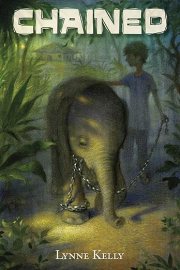
Chained by Lynne Kelly (2012) elephant appreciation day

After ten-year-old Hastin’s family borrows money to pay for his sister’s hospital bill, he leaves his village in northern India to take a job as an elephant keeper and work off the debt. He thinks it will be an adventure, but he isn’t prepared for the cruel circus owner. The crowds that come to the circus see a lively animal who plays soccer and balances on milk bottles, but Hastin sees Nandita, a sweet elephant and his best friend,  chained up when she’s not performing and hurt with a hook until she learns tricks perfectly. Hastin protects Nandita as best as he can, knowing that the only way they will both survive is if he can find a way for them to escape.

Interview with the author, Lynne Kelly.

An Elephant in the Garden: Inspired by a True Story  by Michael Morpurgo (2013)

elephant appreciation dayDuring World War II, Lizzie and Karl’s mother is a zoo keeper, and their family has become attached to an orphaned elephant named Marlene. Marlene will be destroyed as a precautionary measure so she and the other animals don’t run wild should the zoo be hit by bombs. The family persuades the zoo director to let Marlene stay in their garden instead.

When bombs hit the city, the family flees with thousands of others, but staying safe isn’t easy with an elephant in tow. But along the way, they meet Peter, a Canadian navigator who risks his own capture to save the family.

An Elephant in the Garden is inspired by historical events, and by the author’s admiration for elephants, “the noblest and wisest and most sensitive of all creatures.”

The Elephant in the Room  by Holly Goldberg Sloan (2022) elephant appreciation day

It’s been almost a year since Sila’s mother traveled halfway around the world to Turkey, hoping to secure the immigration paperwork that would allow her to return to her family in the United States.

The long separation is almost impossible for Sila to withstand. But things change when Sila accompanies her father (who is a mechanic) outside their Oregon town to fix a truck. There, behind an enormous stone wall, she meets a grandfatherly man who only months before won the state lottery. Their new alliance leads to the rescue of a circus elephant named Veda, and then to a friendship with an unusual boy named Mateo, proving that comfort and hope come in the most unlikely of places.

Elephant Secret  by Eric Walters (2018)

elephant appreciation daySam was born and raised in an elephant sanctuary. When a beloved elephant dies giving birth, Sam develops a connection with baby Woolly, who isn’t actually an elephant but was cloned from woolly mammoth DNA. And the billionaire genius behind the cloning experiment will stop at nothing to protect his investment.

Smart, determined, and loving, Sam stands up to this powerful adversary to protect the sanctuary and the herd. In the best tradition of child-animal friendship stories, Elephant Secret explores the strong and complex bond between Sam and her elephants while offering a fascinating, authentic glimpse into elephant—and human—behavior.

The Elephant’s Girl  by Celesta Rimington (2021) elephant appreciation day

An elephant never forgets, but Lexington Willow can’t remember her past. Swept away by a tornado as a toddler, she’s dropped in a nearby Nebraska zoo, where an elephant named Nyah protects her from the storm. With no trace of her family, Lex grows up at the zoo with her foster father, Roger; her best friend, Fisher; and the wind whispering in her ear.

Years later, Nyah sends Lex a telepathic image of the woods outside the zoo. Soon, Lex is wrapped up in an adventure involving ghosts, lost treasure, and a puzzle that might be the key to finding her family. Can Lex summon the courage to discover who she really is? And why the tornado brought her here all those years ago?

The Girl Who Stole an Elephant  by Nizrana Farook (2022)

elephant appreciation dayInspired by the lush terrain of Sri Lanka, this tale of friendship, risk, and reward is just right for middle-grade fans of fantasy and page-turning adventure.
Chaya, a nobleman’s rebellious, outspoken, no-nonsense daughter, can’t resist the shiny temptations the king’s palace has to offer.

But playing Robin Hood for an impoverished community doesn’t come without risks. When Chaya steals the queen’s jewels from a bedside table, a messy getaway jeopardizes the life of a friend. After an equally haphazard prison break, Chaya barely escapes … on the king’s prized elephant!

With leeches and revolution lurking in the jungle, Chaya leads her companions on a daring escapade. But after leaving her village as a thief, can she return as a hero? Or will Chaya’s sticky fingers be the beginning—or the end—of everything for this ragtag gang of getaways?

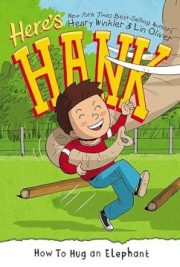
How to Hug an Elephant  (Here’s Hank series #6)  by Henry Winkler (2015) elephant appreciation day

When Hank’s class takes a field trip to the zoo, he gets lost after his partner (and nemesis) ditches him. Unable to read the map, Hank wanders and finds himself locked in a habitat with an elephant. Elsie is a rescue and must be kept isolated. He begins a game of soccer with her, and they become fast friends. But when Hank notices how lonely Elsie is, he’s determined to help her find her own animal friends.

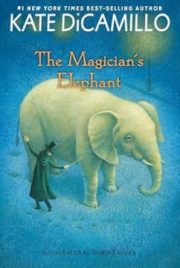
The Magician’s Elephant  by Kate DiCamillo (2015)

elephant appreciation dayWhen a fortuneteller’s tent appears in the market square of the city of Baltese, orphan Peter Augustus Duchene has questions that he needs to ask. Does his sister still live? And if so, how can he find her? The fortuneteller’s mysterious answer (An elephant will lead him there!) sets off a chain of events so remarkable, so impossible, that you will hardly dare to believe it’s true.
The Magician’s Elephant is a dreamlike and captivating tale told by Newbery Medalist Kate DiCamillo. In this timeless fable, she evokes themes of hope and belonging, desire and compassion with the lightness of a magician’s touch.

A Million Shades of Gray  by Cynthia Kadohata (2011) elephant appreciation day

Y’Tin is brave—no one in his village denies that. His mother may wish that he’d spend more time on schoolwork than on elephant training. But she knows that it takes a great deal of courage and calm to deal with elephants the way Y’Tin does. He’s one of the best trainers in the village—and, at twelve years old, he’s certainly the youngest. Maybe he’ll open up his own school someday to teach other Montagnards how to train wild elephants. At least, that was the plan before American troops pulled out of the Vietnam War. Now his village is occupied by Viet Cong forces seeking revenge. And Y’Tin sees his life change in a million terrible ways.

Now, his bravery is put to the test. He can stay in his village, or he can risk his life and his elephant’s by fleeing into the jungle. The Montagnards know their surroundings well, but Y’Tin knows how unsafe it can be and the danger he will face if he chooses to leave.

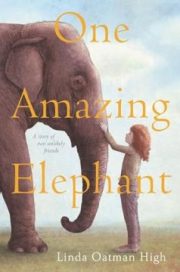
One Amazing Elephant  by Linda Oatman High (2017)

elephant appreciation dayIn this heartwarming novel, a girl and an elephant face devastating loss and slowly realize that they share the same powerful love.

Twelve-year-old Lily Pruitt loves her grandparents, but she doesn’t love the circus. But the circus is their life. She’s perfectly happy to stay with her father, away from her neglectful mother and her grandfather’s beloved elephant, Queenie Grace.

Then Grandpa Bill dies, devastating Lily and Queenie Grace. When Lily travels to Florida for the funeral, she keeps her distance from the elephant. But the two are mourning the same man and form a bond born of loss. And when Queenie Grace faces danger, Lily must come up with a plan to help save her friend.

Saving Lilly  by Peg Kehret (2002) elephant appreciation day

Erin Wrenn and her friend David are in big trouble. They refuse to go on a field trip to the Glitter Tent Circus. They wrote a report on the sad lives of circus animals and discovered that the Glitter Tent Circus is one of the worst animal abusers. Mrs. Dawson is determined to give her students the happy circus experience she remembers from her childhood. She won’t let Erin and David share their report or pass around a petition asking for a different field trip. Erin is determined to force Mrs. Dawson to change her plans … or she’ll stage a sit-in at school.

Then Erin sees an even bigger problem. Lilly, a mistreated elephant, is about to be sold to a hunting park. How can she save Lilly before it’s too late? It seems impossible, but can one girl — and a class of sixth graders — make a difference?

Thunder II: Footprints in the Sand  by Erik Daniel Shein (2017)

elephant appreciation dayA search for adventure may get Thunder, the elephant, more than he bargains for. He never expects to find himself alone again, but the footprints left by his mother will be his guide to healing and finding his way. On his journey, he finds himself making some new friends. Razor, a grumpy lion. Dash, a speedy genet. Archie, a chatty lizard. And two whimsical gorillas, Harold and Neville. A trip back to the caves reunites Thunder with old friends, and together they join forces to save the day and help Thunder find peace.

What Elephants Know  by Eric Dinerstein (2016) elephant appreciation day

Abandoned in the jungles of Nepal, two-year-old Nandu is found living under the protective watch of a pack of wild dogs. From his mysterious beginnings, fate delivers him to the King’s elephant stable. There, he is raised by unlikely parents. The wise head of the stable, Subba-sahib, and Devi Kali, a fierce and affectionate female elephant.

When the king’s government threatens to close the stable, Nandu searches for a way to save his family and community. A risky plan could be the answer. But to succeed, they’ll need a great tusker. The future is in Nandu’s hands. He sets out to find a bull elephant and bring him back to the Borderlands.

Author Eric Dinerstein brings to life Nepal’s breathtaking jungle wildlife and rural culture, as seen through the eyes of a young elephant, struggling to find his place in the world.

The bookshelf has more elephant story suggestions, some of them oldies but goodies.

Elephant Appreciation Day