
 Today, we welcome author Ciera Burch to shine in the Author Spotlight. Her MG debut novel, Finch House, is out September 5th from Margaret K. McElderry Books. But first…
A Summary
Eleven-year-old Micah has no interest in moving out of her grandfather’s house. She loves living with Poppop and their shared hobby of driving around rich neighborhoods to find treasures in others’ trash. To avoid packing, Micah goes for a bike ride and ends up at Finch House, the decrepit Victorian that Poppop says is Off Limits. Except when she gets there, it’s all fixed up and there’s a boy named Theo in the front yard. Surely that means Finch House isn’t Off Limits anymore? But when Poppop finds her there, Micah is only met with his disappointment.
By the next day, Poppop is nowhere to be found. After searching everywhere, Micah’s instincts lead her back to Finch House. But once Theo invites her inside, Micah realizes she can’t leave. And that, with its strange whispers and deep-dark shadows, Finch House isn’t just a house…it’s alive. Can Micah find a way to convince the house to let her go? Or will she be forced to stay in Finch House forever?

Interview with Ciera Burch
MR: Welcome to the Mixed-Up Files, Ciera. It’s always exciting to have a debut author on our blog!
CB: Thank you for having me!
MR: Could you tell Mixed-Up Files readers about Finch House?
CB: Of course! Finch House is a horror middle-grade novel about a young girl, Micah, whose curiosity draws her to an old Victorian house that she’s been forbidden by her poppop, her grandfather, to go near. When he goes missing, she’s drawn back to the house to search for him, and she discovers mysteries about the house, the people who used to live there, and even things about her own family’s past.
Victorian Inspiration

MR: What was your inspiration behind the novel?
There are so many inspirations behind Finch House—my own poppop’s basement, my attitude on change, my love of horror as a genre despite being easily frightened. One of my biggest inspirations, however, was my love of Victorian houses. There was a neighborhood near mine growing up that was full of them, and every time we drove past my eyes would be glued to the window. I loved imagining what the houses looked like on the inside and who used to live in them and, for some of the scarier ones, what ghosts or witches might exist inside. That curiosity never left and eventually manifested into Micah, who’s even more curious than I was as a child.
A Dark Room, Creaky Floorboards…BOO!
MR: What is it about the genre of spooky MG that appeals to you most? Were you into ghosts, haunted houses, and the supernatural as a child?
CB: Oooh, what a great question. I think it’s probably the courage that the characters possess. I was, and still am, a bit easily spooked but getting to read about characters who are brave in the face of scary things is always fun to me. Plus, I love the atmosphere. A dark room, creaky floorboards… it always gets my heart racing in the best ways.
I wasn’t quite as into them as a child as I am today, but I did enjoy the Goosebumps books. I always tried to pick the ones I thought might be less scary based on the cover. Those, and Scary Stories to Tell in the Dark always had me up reading until way too late…and then burying my head under the covers to hide from all the monsters.
Breaking the Rules

MR: Micah, the main character of your novel, knows that Finch House is strictly off-limits—but she dares to go inside anyway. What is it about rule-breaking that is often so enticing? And what does this say about Micah’s character that she ignores Poppop’s instructions?
CB: I think it’s the sense of self that it allows you. After all, it’s typically someone else who has set the rules—Poppop in this case. In choosing to break a rule, you’re making your own decisions. Your own rules, even! There’s something thrilling about that, especially as a kid, the aspect of being in charge of yourself and doing what you want to do regardless of what anyone else has said or told you to do.
As for Micah personally, I think it shows a good portion of her stubbornness—she wants answers and she’s going to get them whether or not she’s been told otherwise. I think she craves the knowledge that her usually very open Poppop won’t give her in this particular instance. And honestly, she also just thinks it’s fun. At first, anyway.
(For more spooky fun from the Mixed-Up Files archives, click here.)
Poppop: Fact versus Fiction
MR: Speaking of Poppop, I’m guessing this character is based on your own grandfather. Can you tell us about him? How is he similar to the fictional Poppop? How is he different?
CB: He is! Oh, man, I love talking about my Poppop. He’s great. He’s the most adorable man in his 70s that you’ve ever seen. He has a single gold tooth, forever wears his Navy hat, and chuckles in answer to just about anything. In terms of similarities, he and the fictional Poppop look pretty much alike and they both go networking! I also think they share a sense of comforting quiet. Unless he’s telling a story, my Poppop isn’t a huge talker but he’ll listen to you and I think both Poppops do that well. They also both spoil their granddaughters! In terms of how he’s different, my Poppop can probably be a little grumpier sometimes.
Writing for Different Readers

MR: In addition to being a writer of middle-grade fiction, you write YA (Something Kindred, out Winter 2024 from Farrar Straus Giroux Books for Young Readers) as well as short stories. What is the secret sauce for writing with different readerships in mind? The biggest challenge? The greatest reward?
CB: Honestly, I just try to stay true to the story and to the characters. They are usually about the age of the general readership—kids or teens or adults, etc—but I don’t tend to think too much about that when I’m writing. I’m focused on what my characters’ lives are and whether they are coming across as genuine and if the situation they’re in fits them—or doesn’t fit them.
I think the focus on readership is important, of course. If I’m discussing grief in MG versus YA, I’m going to go about handling things differently, but I don’t ever really censor myself based on who’s reading because that feels limiting for both me and my readers. I try to tell the best story I can for my characters first and foremost to do them the justice they deserve. That’s where both the biggest reward and biggest challenge comes into play for me: creating authentic, fully fleshed-out characters who people can relate to in any age range or format or genre.
One City One Story

MR: As a follow-up, your short story, “Yvonne,” about a queer woman of color who reconnects with her biological grandmother, was selected as the 2019 One City One Story read for the Boston Book Festival. Can you tell us about that? What was it like to be chosen for this prestigious opportunity at such a young age? (You were only 23!)
CB: I’d honestly forgotten about it after I submitted the story at first! I was in grad school for my MFA at the time and working two jobs, so I was very busy and I had a spreadsheet of what story I’d sent to which contest or magazine and when. So I didn’t stress about them all, once I marked a short story down, I tried my best to forget about it. When I got the email, I was at work, at the indie bookstore, and tried super hard not to freak out at the register! I took a quick break to call my mom in the stairwell and from there…everything got real.
Being chosen for that was more than a dream come true, it was something I hadn’t even dared to imagine for myself. So, it was really amazing to have my very diverse, queer story be celebrated by the entire city from the newspaper to the radio to all the languages that it was lovingly translated into. It was such a wonderful experience that I’ll never forget, especially because it just reaffirmed my goals in life: I can write professionally while telling diverse stories and be successful at it.
Path to Publication

MR: Can you tell us about your path to publication? Was it smooth sailing or bumpy seas?
CB: It was pretty smooth. I waited until my manuscript, which was also my master’s thesis, was ready and then I started by querying an agent who had reached out to me during the One City One Story whirlwind and a few other agents on my spreadsheet. I was signed pretty quickly and I was lucky enough that I was talking to editors and was offered a book deal for my YA very shortly after that.
Ciera’s Writing Routine
MR: What does your writing routine look like? Do you have any particular rituals?
CB: I’m such a big type-A person that it’s really shocking that I don’t have a routine! It used to be whenever I could find the time; on my lunch break, after a closing shift, on my phone on the metro, etc. Typically, at night since I’m a big night owl. But these days, I like to take a few hours a day or two a week to write at a café or library during the day and the rest of the week it’s me typing away on my couch or at my desk.
MR: What are you working on now, Ciera? Enquiring Mixed-Up Files readers want to know.
CB: I’m currently working on my second middle grade! I don’t know how much I can say but it involves a summer camp, missing campers, and a particular cryptid native to my home state.
We All Scream for Ice Cream

MR: Before I let you go, I must share that we have something in common: We’re both ice cream lovers. What’s your favorite flavor? (I know… it’s like being asked to pick your favorite child.) Also, you have a favorite ice cream haunt? (sorry!).
CB: Yay ice cream! My absolute favorite food group. Hmmm…a favorite flavor is so hard! I’m going to have to go with a good old classic and say Mint Chocolate Chip. Perfect blend of mintiness with just a hint of chocolate. Favorite ice cream haunt in Boston was probably J.P Licks (or the Scoop N Scootery for late night writing cravings!) and now in D.C I’d probably go with Larry’s Homemade Ice Cream.
Lightning Round

MR: And finally, no MUF interview is complete without a lightning round, so…
Preferred writing snack? (besides ice cream) Dark chocolate peanut butter cups from Trader Joe’s!
Coffee or tea? Neither, actually! Strictly a hot chocolate girl.

Zombie apocalypse: Yea or nay? No way!
Superpower? Flying!
Favorite place on earth? Scotland!

If you were stranded on a desert island with only three things, what would they be? A copy of Roll of Thunder Hear My Cry by Mildred D. Taylor, my stuffed bunny, and a hair tie!
MR: Thank you for chatting with us, Ciera. It a pleasure, and I’m sure MUF readers will agree!
CB: Thank you so much for having me! These were such fun questions to answer.
Bio

Ciera Burch is a lifelong writer and ice cream aficionado. She has a BA from American University and an MFA from Emerson College. Her fiction has appeared in The American Literary Magazine, Underground, the art and literary journal of Georgia State University, Stork, and Blackbird. Her work was also chosen as the 2019 One City One Story read for the Boston Book Festival. While she is originally from New Jersey, she currently resides in Washington, DC, with her stuffed animals, plants, and far too many books. Learn more about Ciera on her website and follow her on Instagram and Twitter.


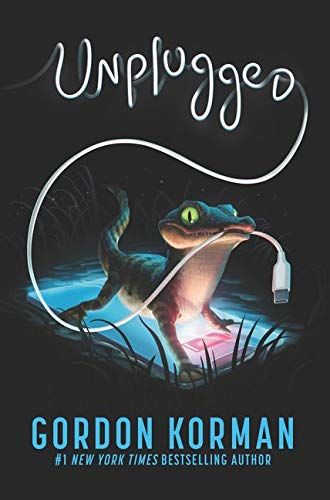 Genre Swapping: Take a familiar setting from a favorite book or class novel study and re-imagine the time and place by changing the book’s genre. For example, what if a modern comedy like Gordon Korman’s Unplugged was actually a high fantasy? Or if Lauren Wolk’s historical Wolf Hollow was contemporary? Build this “reset” world, keeping premise details in mind.
 Narrative Nonfiction Worldbuilding: Apply worldbuilding analysis to a work of narrative nonfiction as a way to glean factual detail and comprehend the setting’s full impact on the tale, especially one in which the setting seems distant or almost otherworldly, like Race to the Bottom of the Earth: Surviving Antarctica by Rebecca E.F. Barone.