Posts Tagged middle grade books

STEM Tuesday–Dinosaurs/Paleontology– Writing Tips & Resources


Backmatter Matters

Imagine you wake up in a strange place. Although the place does not feel threatening, just being there is jarring because you don’t know why you are there, or how you got there. You don’t know what to do or how to interact. That’s what reading a nonfiction book might be like, if it weren’t for the mighty powers of peritext.

Peritext? What’s that? All of the elements in a book that are not in the main body of text. In STEM nonfiction books, peritext can be paramount.

Pick up a nonfiction book from this month’s list and search out those elements. There’s the cover (front and back) and maybe some flap or cover copy; these introduce you to the book and give you a preview of the author’s “take” on the topic. There’s a copyright page and, most likely, other standard elements such as a table of contents, glossary, and index; these give you context, a map to guide your journey, and help when needed. But there may be more—much, much more.

Consider how different the book would be without all of that. What would the reader miss? What do each of those elements actually do for the book? 

Before I began writing professionally, I essentially ignored peritext. I rarely read any portion of the backmatter (everything after the main body of text). One day, a writer friend told me she reads every word of the endnotes—I was astounded. Who would do that?

Then I tried it with a book I loved and realized just how much I had been missing. These elements are designed for the inquiring mind! As a reader and writer, it is worth studying the peritext and pondering its value. Peritext invites us into the reading experience and launches us into the next one.

Try this:

1. Ask a friend to select a nonfiction book that you have never seen. Have them binder clip together the pages that contain the main text. (Note: peritext includes illustrations and chapter titles, etc, but let’s focus on the frontmatter and backmatter for now.)

2. Study the peritext (no peeking at the main text). Jot down a list of what’s there.

      • Is there a table contents? An index? What about a timeline? Anything interesting about the endpapers?
      • Ask yourself: Who uses each of these elements? Who creates them? Do any serve multiple purposes?
      • Now, read the material. From the peritext, what impression do you get about the book?
      • What questions are sparked in your mind?
      • If these elements are illustrated, jot down notes about them as well.

3. Skim the glossary or index.

      • Do some entries surprise you?
      • What questions do you now have? Are you now more, or less, eager to read the book? To read other material on the topic?
      • Search for clues to the core of the book. Not the topics covered, but the theme, the big ideas, the conclusions. (Don’t forget the covers.)

4. Finally, read the entire book.

      • Consider how well the elements in the peritext support the main text.
      • If you were the author, illustrator, editor, etc. would you have done things differently?
      • What factors might impact what’s included in the backmatter? (FYI, typically the author creates most of the backmatter and other publishing professionals create most of the frontmatter and covers.)

As an author, this is how I look at books. I want to know what is there, why it is there, and how it is used. To help me inquire, I started a running list of the elements in various books. Just off the top of your head, you might remember books with recipes, timelines, acknowledgments, bibliographies, or an author’s note, but you would be amazed at the variety. And think how much each of those elements can vary, not only in content, but also in presentation. In some books, the backmatter was even more interesting to me than the main text. 

Backmatter isn’t limited to nonfiction; however, it seems to be more common and extensive in nonfiction. Why? What types of fiction include extensive backmatter? What if more fiction included backmatter?

Try this:

1. Read a book that has limited backmatter.

2. List at least 3 elements which could have been included.

3. Create 1 of those elements for the book. (You might have to make something up for the sake of the exercise.)

4. Share it with a friend and ask if the added element is valuable.

If you’re not careful, you will now find yourself picking up books and flipping to the backmatter before you read the frontmatter. You’ll be noticing how cool it is that the glossary of Dining With Dinosaurs only includes words not already defined in the main text. (So smart—those are the only ones a reader should need in the glossary!) You might start wishing every historical text included a visual timeline like Dinosaurs: Fossils and Feathers (Science Comic Series). And when you begin to write your next piece, you might start thinking about the backmatter before the front matter. This is what reading like a writer will do to you!


Heather L. Montgomery can’t resist writing backmatter–the ulimate playground for a nonfiction writer. She almost let it take over her upcoming book, Who Gives a Poop? The Surprising Science Behind Scat (Bloomsbury, September 2020). Aren’t you eager to dive into that? For now, you’ll have to be satisfied with the perimatter in her 15 other STEM titles. www.HeatherLMontgomery.com 


The O.O.L.F Files

Just a few more dino books because you can never have too many…

The First Dinosaur: How Science Solved the Greatest Mystery on Earth, written by Ian Lendler, illustrated by C. M. Butzer. In this 220-pager, Lendler carefully lays out how the idea of dinosaurs came to be. Beginning with a bone discovered before the concept of dinosaurs—or even fossils—existed, Lendler walks readers through a wealth of scientific studies to share a story you want to know. This book is likely to blow young minds (and yours).

Dinosaurs By the Numbers (A Book of Infographics), written and illustrated by Steve Jenkins. In classic Jenkins style, this fact-packed book is sure to please dino lovers. Maps, graphs, size-comparisons, all formatted on clean white space do an excellent job of accentuating dinosaur facts and extremes. And, there’s an illustrated table of contents–such tantalizing peritext!

When Sue Found Sue: Sue Hendrickson Discovers Her T. Rex, written by Toni Buzzeo, illustrated by Diana Sudyka. This picture book tells how a curious girl grew to be an inquisitive scientist who discovered the most complete (and likely the most famous) Tyrannasoarus rex fossil ever found (so far). Perfect for kids who are collectors and those who yearn to make their own discoveries.

STEM Tuesday– Dinosaurs/Paleontology — Book List

If you’ve got a budding paleontologist in your home, you know there can never be too many books about dinosaurs! Who doesn’t love the mystery of ancient bones and tales of mighty lizards that roamed the Earth. These books run the gamut from detailed sketchbook to biography to comics to hands-on paleontology activities.

ALL ABOUT DINOSAURS:

Dinosaur! Dinosaurs and Other Amazing Prehistoric Creatures As You’ve Never Seen Them Before, by John Woodward
Highly illustrated, in depth, evaluation of dinosaurs from their definition through the Cenozoic era. Created by DK and the Smithsonian Institution, it is full of facts on fossils, amphibians, sea creatures, woolly mammoths, Neanderthals, insects, and more.


Dinosaur bones: And What They Tell Us, by Rob Colson
Opening this book is like opening a field sketchbook. It’s filled with watercolor drawings, complete with labels and descriptive notes. Annotated skeleton sketches allow readers to compare their own bones to those of dinosaurs and other prehistoric animals. A fun way to browse dino facts.


So You Think You Know About … Dinosaurs (series), by Ben Garrod
Scientist Ben Garrod reminds readers that we can be a scientist at any age. His books may be pocket-sized, but they are filled with dinosaur discoveries, battles, adventures, fascinating facts, quizzes, cartoon illustrations and paleo art. And lots and lots of passion for dinos. Each book focuses on one kind of dinosaur: Stegosaurus, Tyrannosaurus Rex, Velociraptor, and Triceratops.

Dining with Dinosaurs: A Tasty Guide to Mesozoic Munching, by Hannah Bonner
If you are starving for dinosaur knowledge, this book serves up a full-course meal of mouthwatering Mesozoic food facts. Starting with who ate who. Along the way, we meet scientists who explain tough questions about dinosaur poop, teeth, and more.


SCIENCE OF PALEONTOLOGY:

The Story of the Dinosaurs in 25 Discoveries: Amazing Fossils and The People Who Found Them, by Donald Prothero

Exploring paleontology from the eighteenth-century to the present, twenty-five individual chapters describe the stories behind the most important fossil discoveries and the researchers who found them. The book explores the escapades, rivalries, and scientific debates that have occurred around dinosaur bones.

Dinosaurs: Fossils and Feathers, by M. K. Reed (“Science Comic”)

This is a fun, graphic introduction to dinosaurs in their natural habitats. Follow paleontologists through history as they try to piece together the mystery of the giant bones uncovered in cliffs and deserts. Learn how our ideas about dinosaurs have changed and continue to change. Endnotes clarify ongoing scientific debates, and a glossary will have you speaking like a paleontologist in no time.

WORKING IN THE FIELD:

Gutsy Girls Go for Science: Paleontologists, by Karen Bush Gibson; illus. by Hui Li

The first chapter introduces the science of paleontology, along with tips for how to pack your field kit. Then we examine the work and challenges of scientists Mary Anning, Mignon Talbot, Tilly Edinger, Zofia Kielan-Jaworowska, and Mary Leakey. There are plenty of “Field Assignments” (hands-on STEM projects) ranging from modeling an excavation to finding clues in teeth, and informative sidebars are sprinkled through the chapters.

BIOGRAPHIES:

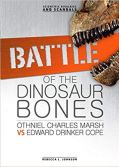
Battle of the Dinosaur Bones: Othniel Charles Marsh VS Edward Drinker Cope, by Rebecca L. Johnson
Explores the struggle and legacy of two scientists, Othaniel Marsh (Yale) and Edward Cope (Philadelphia), determined to become world-famous paleontologists. This book details the confusion and mistakes created by their haste and rivalry that took years to sort out.


Curious Bones: Mary Anning and the Birth of Paleontology, by Thomas W. Goodhue

Biography of Mary Anning and her life’s work of collecting fossils. Details the important discoveries she made and her contribution to the emerging science of paleontology, even though women weren’t allowed to attend colleges. It includes a discussion of societal and religious changes which occurred because of her discoveries.


History VIPs: Mary Anning, by Kay Barnham

This biography explores the life of Mary Anning, from her first fossil finds at the age of ten to her sales of important discoveries to wealthy scientists. Mary’s fossil finds made a great contribution to what scientist understood about pre-historic life. Sidebars and text boxes give context to help readers understand the society and events of the wider world in which she lived, as well as quotes and fun facts that touch on the humorous side of history.

Tooth & Claw: The Dinosaur Wars, by Deborah Noyes.

This is a tale of the epic rivalry that exploded into a personal – and professional – war between two early fossil hunters. Edward Drinker Cope wanted to find the biggest, best bones of the newly discovered dinosaurs. So did Othniel Charles Marsh. Their race to uncover bones played out across the American West and they discovered dozens of dinosaur species. But their animosity ruined their lives. Includes a list of museums where modern dino-hunters can find bones.

Pre-HISTORICAL FICTION:

Dinosaur Empire! (Earth Before Us series) by Abby Howard

Ronnie is just a normal fifth grader, who is having a bit of trouble passing her science class quiz on dinosaurs. Until… her neighbor, a retired paleontologist, lends a helping hand. With a bit of time travel and science “magic”, Ronnie and Ms. Lernin find themselves in the Mesozoic era.
Other books in the series: Mammal Takeover! and Ocean Renegades!


The Dino Files Trilogy: A Mysterious Egg; Too Big to Hide; It’s Not a Dinosaur! By Stacy McAnulty

Nine-year-old Frank loves visiting his grandparents in the summer. His grandmother is a famous paleontologist and, along with his grandfather, owns the Dinosaur Education Center of Wyoming. Frank calls it DECoW and loves that it’s got labs and dig sites where people – including him – can dig for fossils. But what happens when fossils aren’t so … extinct?

STEM Tuesday book list prepared by:

Sue Heavenrich writes about science for children and their families, from space to backyard ecology. Bees, flies, squirrel behavior—things she observes in her neighborhood and around her home—inspire her writing. A long line of ants marching across the kitchen counter generated one of her first articles for kids. When not writing, you can find her committing acts of science from counting native pollinators to monitoring water quality of the local watershed. Her most recent book is Diet for a Changing Climate (2018).

Maria is a children’s author, blogger, and poet passionate about making nature and reading fun for children. She’s been a judge for the Cybils Awards from 2017 to present. And a judge for the #50PreciousWords competition since its inception. Her poems are published in The Best Of Today’s Little Ditty 2017-2018, 2016, and 2014-2015 anthologies. When not writing, critiquing, or reading, she bird watches, travels the world, bakes, and hikes. Visit her at www.mariacmarshall.com

Would your favorite childhood books get published today?

Writer friends often gripe that classic and modern classic children’s literature is rife with so many of the no-nos we are counseled to avoid. So much exposition! Too much description or flowery language! So episodic. Too much showing not telling. Not to mention the subtle or not so subtle references to dads reading Playboy magazine that I keep finding as I re-read some of my childhood favorites. (Although I’m sure they were all the kinds of dads who subscribed to the magazine because the articles were really good.)

As anyone who has been following my previous posts might guess, I have been caught up in the theme of old-fashioned vs modern and what still feels fresh no matter the decade or era. Continuing in this vein, this time the question I am asking is: would classics that are still in print and greatly enjoyed by young people today, actually get published today?

I posed the question to many different kinds of people in the children’s book publishing industry and in the writing community, both in the US and the UK, and have been having some really interesting conversations. Because my personal taste tends toward the character-driven quieter dramas of everyday life rather than the big action, adventure etc., and those are the kinds of books I want to write, I asked about mid-to-late-century books from authors like Beverly Cleary or Judy Blume, or older ones like Ballet Shoes and Anne of Green Gables, as well as ‘modern classic’ UK favorites like Enid Blyton and Roald Dahl.

I realized that this is a large question and might only be answerable on a case by case basis. And that one could think about it as both a philosophical exercise and as the basic question of ‘if x manuscript landed on an editor’s desk today would it be published?’ But I invited people to take the question in any direction that felt interesting to them and now I would like to share a few answers.

In Short: the answer is NO. And YES.

Kendra Levin, Editorial Director at Simon & Schuster Books for Young Readers, said: “Here’s the thing about this question, which is a good one: it’s very hard to imagine an alternate world where those classics you mentioned– Beverly Cleary’s Ramona books, Judy Blume’s Fudge books, Roald Dahl, et al– weren’t already published in the past. …one reason I feel books like those don’t get published as much today is that these classics already exist, and are so enduring that anything similar will feel like an also-ran when compared with them.”

This answer both stopped me in my tracks and finally answered what has been bothering me enough to keep exploring it. It seems obvious now and perhaps I have been dense or obtuse because I so love some of these books of the past I was depressed that I couldn’t set out to write one myself. (Never mind personal talent or ability!) But Kendra’s answer reminded me of seeing Pulp Fiction when it first came out. I went to see it three times! I had never seen or experienced anything like it. But if it came out today it wouldn’t be so astounding and beloved because so many movies now look like it or have used its structure. It’s simply the difference between something being an original, done for the first time, and something being derivative. Indeed, we already have Judy Blume.

Wanted: More Mirrors

But Kendra added something that shifted the question and reframed it in an important way:

“What I think more and more people are recognizing is that, while we have many books that do live alongside Ramona, Fudge, and the Dahl catalog, the vast majority of those books continue to represent children who already have the privilege of seeing themselves and their lives reflected in many, many books. There are very few, if any, books about a black (or Latinx or indigenous or Asian-American or…or…or…) girl who does all the things Ramona does, in her own way that’s unique to her life and world– fight with her sister, worry about being creative enough, mishear song lyrics, get into trouble, and so on. Writers and publishers and booksellers have a responsibility to work together to present far more books reflecting the many experiences that have been held outside the gates of published literature, and those are the books that can become the classics of the next hundred years. And many writers and publishers and booksellers are working on this very project as we speak– and I predict that more will commit to it more deeply in the years to come.”

So Kendra thinks that on one hand, something exactly like Ramona or Fudge would not necessarily be published today, but on the other hand, a new Ramona or Fudge can–it just might not look like what some people may picture when they say “a book like Ramona” or “a book like Fudge.” To her, it’s about redefining what you consider a potential classic and expanding the way you create comparisons; resisting putting books into the same boxes they have been put into for the past decades. She said, “The books of Cleary and Blume and Dahl are often called ‘universal’ and we have to recognize that they are not truly universal– and also that a book about a character who is living a different experience than Ramona’s or Fudge’s or Matilda’s can be just as ‘universal’ as these characters are said to be.”

Clever…But Racist

Indeed, I hope the paths toward books published today that will be tomorrow’s classics are wide and infinite. Candy Gourlay, a British-Filipina author, whose Costa-shortlisted book BONE TALK has just been released in the US, and who often speaks about how growing up she didn’t know that characters who looked like her could also be in books, responded to my question like this:

“My books at home as a child were not very contemporary as my parents bought those ‘Children’s classics’ collections sold by door to door salesmen and only discovered Enid Blyton when I moved schools. Nevertheless I loved Tom Sawyer and Heidi and Black Beauty etc. Recently someone on Twitter called me out when I mentioned how much I loved Tom Sawyer on a blog. Why, she asked, do you recommend a racist book? First of all I was not recommending it … I was just stating that this was a book I loved … but I guess she was right in that, saying I loved it was a recommendation. I was stung and terrified that she was right. I re-read Tom Sawyer. It was every bit as clever and well written as I remembered it. But yes, it was racist. Not about black people but about Native Americans. I wrote a blog about it.”

Recently, Candy was tagged on Twitter by teachers discussing how Bone Talk would be a good companion to studying Robinson Crusoe. She said: “I realised they would be studying it on the basis of the primitivism of my heroes, which seems dangerous to me. So I created resources for my website that responded to these issues.”

I highly recommend reading Candy’s thought-provoking and soul-searching post as she grapples with the complicated legacy of the books she loved as a child, and also watching the video she includes of Grace Lin’s PBS video about what to do when your beloved books are racist. Also check out the classroom resources she created for teaching today’s children a classic story alongside her own novel.

Separating the Author from the Book

Then there are the problems with the authors themselves. In 2018 there were several news stories revealing that plans to commemorate Roald Dahl in the UK with a special edition coin a couple of years before had been scrapped over concerns about his anti-semitic views. But during his lifetime, in both the UK and the US, Roald Dahl’s anti-semitic views were known but unremarked on in a way that I cannot imagine an author getting away with today without having their career shattered. Or perhaps I am being naive. Either way, the Dahl books are still staples in libraries, bookstores and homes—including ours—and they are still adored by both old and new generations of readers.

Conclusion: La-di-da-di, We Likes to Party

Doug E. Fresh and Slick Rick: their 1984 song La-di-da-di has been sampled over 500 times

Fashions and styles change, but enduring stories do not. Reading Anne of Green Gables today, I am tempted to skip large swathes of description that might bog down or bore (fairly or unfairly) a child of today. It is also largely episodic. Then there is the uncomfortable bit where the bad guy who sells Anne the hair dye that turns her hair green is a German Jewish peddler. But the story itself, about an orphan with spunk who loves beauty and tugs on everyone’s heartstrings—characters’ and readers’ alike—is evergreen. Beyond the classic book that is still in print after more than a century, the story keeps undergoing artistic iterations in the form of plays, movies, graphic novels and TV series, including the latest one on Netflix Anne with an E.

For me personally, Kendra’s answer finally made me see that I was on a path that was taking me in the wrong direction. But also that all is not lost for future Ramonas and Fudges—as well as Toms and Annes—whatever they might look like, whatever their names might be, whatever their small and large dramas, and whatever is unique to their particular world.

Recently I have been obsessed by a TED Talk on originality given by famed musician, DJ, and producer Mark Ronson. He explains that when sampling first started 30 years ago, artists didn’t do it to “cash in on the familiarity.” But rather because they heard something in that music that spoke to them and “they instantly wanted to inject themselves into the narrative of that music.” He shows how one song, La-di-da-di by Doug E. Fresh and Slick Rick has been sampled over 500 times, by musicians as various as the Notorious B.I.G. to Miley Cyrus. But it’s not derivative because each time it is reimagined and used in a different way. Each musician, or creator, takes an idea—a sample—but makes it their own. He gives the example of Amy Winehouse’s Back to Black album, which captures a long-lost sound, but without the very 21st century personality and firebrand that was Amy Winehouse, the project would have risked being pastiche. Instead, she brought the ingredients that made it urgent and of the time. Mark Ronson’s take is that you can’t “hijack nostalgia wholesale” because it leaves the listener feeling sickly. You have to take an element of those things and bring something fresh and new to it.

I love this idea and would argue that this is a good metaphor for any art or artist. And in particular for children’s book writers. For me it is personally a productive way to think about the classics, and what we—any of us, from any background—might choose to create for the children of today, and the future. What do you think?