Posts Tagged middle grade books

Author Spotlight: Beth McMullen

Today I’m thrilled to interview fellow Mixed-Up Files member Beth McMullen, author of the best-selling middle-grade adventure series, Mrs. Smith’s Spy School for Girls. Her latest book, Lola Benko, Treasure Hunter—the first in a series—is out from Aladdin on August 25, and I was lucky enough to snag a copy. (Spoiler alert: It’s really good.) Here’s a brief summary:

“Having a world-traversing archaeologist dad means twelve-year-old Lola Benko is used to moving around not putting down roots anywhere. But then her father disappears. The official story is that he was caught in a flash flood, but Lola’s research shows the day in question was perfectly pleasant. And it will take more than empty reassurances from suspect strangers for Lola to give up on her dad. She has a feeling his disappearance has to do with a mythical stone he was studying—a stone so powerful, it could control the world. But in the wrong hands, it could end it, too…”

And now, without further ado… heeeere’s Beth McMullen!

MR: Beth! I have so many questions for you. May I start with a confession?

BMcM: Haha! Of course!

MR: I loved Mrs. Smith’s Spy School for Girls and wish I’d written it myself. Kidding aside (okay, I wasn’t really joking), how did you come up with the concept? A 12-year girl who’s drafted into an elite spy ring at a fancy-schmancy Connecticut boarding school is an entirely original idea.

BMcM: I went to boarding school as a kid and always wanted to use the setting because….come on…who thought putting 600 teenagers together day and night with minimal adult supervision was a good idea?? It felt ripe for ridiculous adventures! At the time, I was writing mysteries for adults and made a few attempts to work in the boarding school angle but…no go. I just couldn’t get it to snap. I even tired a young adult version but that, too, felt flat (like, pancake flat). It wasn’t until I landed on Abby Hunter, twelve years old, that it started to come together. The spy idea just naturally followed as I always suspected the school I went to was up to something other than attempting to educate us. Plus, I love spy stories and can’t seem to stop writing them.

MR: Mrs. Smith’s plucky protagonist, Abby Hunter, has a delightfully distinctive voice. In fact, you could teach a master class on MG voice using Abby as an example. What’s the secret?

BMcM: I didn’t want Abby to be a superhero. I wanted her to be real, to be scared of things but walk through them anyway, to rise to the challenges as they appeared even when the result was messy or awkward. Part of the reason I wrote this series in first person present is so I could show the dialog in Abby’s head, how she convinces herself to do something that might otherwise feel overwhelming. To show a girl being brave despite uncertainty was appealing to me on so many levels.

When I’m writing, I keep a list of the main character’s defining traits and keep that close at hand. And then I start working out the details and fine tuning as I move through the plot points. It always takes me about fifty pages to find the ‘voice’ but when it clicks I know it. The key to Abby was her dry sense of humor and sardonic leaning take on the world. Once I figured that out, I was in.

MR: Another secret I’m dying to know: What’s it like to write a series? Did you have the plots for all three books planned out in advance—or did you wing it? Also, how do you keep the enthusiasm going from book #1 to book #3?

BMcM: Oh boy. Series!! I am never prepared! It took me a long time to show Mrs. Smith’s #1 to my agent (I didn’t write for kids and was pretty sure it was a complete disaster) but when I did, she said we had to pitch it as a series. Well…great! Right?! So I went back and rewrote the last quarter to give it series potential but that was the extent of my thought. When the offer to write three Smith’s books came, well..again…great!  The panic didn’t set in until I sat down at my laptop to a blank page and thought, so what is book two about anyway??

The great thing about writing a series is that you’ve done a lot of the hard character work already. On the flip side, you are locked into things that maybe you’d have done differently if you’d known where you were going. I’m hugely envious of authors who plot out an entire series arc before writing a single word. However, I am not one of those people. So I start with plot and additional secondary characters and a destination that hopefully lets the characters learn something new and different about themselves along the way.  And I keep my fingers crossed it works. 🙂

MR: Lola Benko, Treasure Hunter is your second series with a plucky preteen protagonist. How is Lola similar to Abby? How is she different? Also, how did you ensure that Lola’s voice was entirely different from Abby’s? Considering that you’ve had Abby’s voice in your head for so many years, it couldn’t have been easy.

BMcM: That is a great question! Both characters are single minded in their determination and discover that good friends and a team make a world of difference in reaching goals. But Lola is a bit more cavalier, a little more likely to step over the line, very comfortable justifying the means with the end. She believes need is the mother of invention so is constantly tinkering and creating things that will help her in her quest to find her missing father. Lola is worldly in many ways but also clueless about a lot of regular things, like how to make friends. I really enjoyed watching her realize how nice it was to no longer be so alone.

MR: In terms of your writing routine, how has it changed since the pandemic? What have been the biggest obstacles you’ve had to face? Any unexpected positives?

BMcM: This pandemic…wow…didn’t see that one coming. It’s hard to write fiction when real life is so unbelievable, isn’t it? When the shelter in place order came in California I was just finishing up Lola #2 and suddenly I could no longer go to my office and the only reason I have an office is because I am terrible at working from home. TERRIBLE. I had to really discipline myself to finish the draft and also keep it from going too dark because I was absorbing all the horror that was happening in the world. That was pretty tough. And as soon as I turned in that draft in May, I had to launch right into my third series for Simon & Schuster, a more fantasy oriented story which is due in December. That was brutal. But I returned to my office two weeks ago and I’m pleased to say things are improving. Pandemic positives? Working in my bunny slippers, no question.

MR: Finally, Beth, you’ve extremely prolific, having written novels for both children and adults. Not to be repetitive, but what’s your secret? Also, what advice would you give to aspiring writers?

BMcM: I spend a lot of time noodling ideas before I put anything down on paper. Like, years. (And if an idea can survive years in my head, I like to think it has staying power.) This means by the time I sit down to actually write, I’ve worked out quite a bit of what a character is like already. For example, right now I have a middle grade idea that first occurred to me last summer. I keep coming back to it in idle moments. I keep adding things to it, pushing out the edges, and I know at some point I’ll start writing it, if only to free up the space in my head for something new.

The advice I always give to aspiring authors is that you just can’t quit. If you do, you are absolutely guaranteed that nothing will happen. But if you keep at it, keep pushing, who knows where things will go? I’m a firm believer in possibilities. They are limitless.

MR: Oh, one more thing. As you know, no MUF interview is complete without a lightning round, so…

Preferred writing snack? Anything with sugar! Lots of sugar! So much sugar! (Sorry, clearly I’m unhinged.)

Coffee or tea? Coffee. If I could hook up an IV, I would.

Cat or dog? Cat!

Favorite song? Oh boy. This is hard!  “Vienna” by Billy Joel

Zombie apocalypse: Yea or nay? Definitely. It’s 2020. Expect it any minute now.

Superpower? If I drink caffeine I can stay awake forever.

Favorite place on Earth? New Zealand

Hidden talent? I’m a total Type A but no one knows it.

If you were stranded on a desert island with only three things, what would they be? Three tubes of chapstick.

James Bond or Harriet the Spy? (Okay, this was a setup. 🙂 ) I feel like I exist to blend (shaken not stirred) those two together and put them on the page.

MR: Thank you for chatting, Beth—and congratulations on the upcoming publication of Lola Benko, Treasure Hunter! I really enjoyed it, and I know MUF readers will too!

BETH McMULLEN is best known for the Mrs. Smith’s Spy School for Girls trilogy (Aladdin/S&S), middle-grade spy thrillers, packed with action, adventure and humor. She is also the author of the forthcoming Lola Benko, Treasure Hunter series (Aladdin/S&S) about a globetrotting 12-year-old searching for her father, a famous archeologist who has gone missing. And in March 2022, look for Cats & Dragons (Aladdin/S&S), a middle-grade action/adventure series packed with friendship, fantasy, whiskers and wings. Beth lives in Northern California with her husband, kids, cats and a very tolerant parakeet named Zeus. Visit her website and follow her on Twitter and Instagram.

Exploring THE PLACES WE SLEEP with Author Caroline DuBois

I have a new guest for you, today! She’s written a tender, moving tale in verse that journeys a young girl through everyday details while living during a time of national crisis. The first words of this story made me pause and take notice. And the rest, poked me right in the heart to the end. The writing is beautiful and real, the story is important, and the growth of the main character is hopeful. I’m very excited to share The Places We Sleep with you and welcome Author Caroline DuBois to share her thoughts about the book.

Hi Caroline! It’s wonderful to have you visit our Mixed-Up Files family. Let’s share your beautiful cover and story with readers first.

THE PLACES WE SLEEP

by Caroline DuBois

A family divided, a country going to war, and a girl desperate to feel at home converge in this stunning novel in verse.

It’s early September 2001, and twelve-year-old Abbey is the new kid at school. Again.

I worry about people speaking to me / and worry just the same / when they don’t.

Tennessee is her family’s latest stop in a series of moves due to her dad’s work in the Army, but this one might be different. Her school is far from Base, and for the first time, Abbey has found a real friend: loyal, courageous, athletic Camille.

And then it’s September 11. The country is under attack, and Abbey’s “home” looks like it might fall apart. America has changed overnight.

How are we supposed / to keep this up / with the world / crumbling / around us?

Abbey’s body changes, too, while her classmates argue and her family falters. Like everyone around her, she tries to make sense of her own experience as a part of the country’s collective pain. With her mother grieving and her father prepping for active duty, Abbey must learn to cope on her own.

Written in gorgeous narrative verse, Abbey’s coming-of-age story accessibly portrays the military family experience during a tumultuous period in our history. At once personal and universal, it’s a perfect read for fans of sensitive, tender-hearted books like The Thing About Jellyfish.

If you would, share with our readers one book from your childhood that has stayed with you, and how can children’s authors in today’s unsettled world achieve this same unforgettable feel?

Mary Norton’s The Borrowers sparked my imagination as a child. My librarian mom introduced it to me. Norton’s world-building of tiny people living in the walls and borrowing from the people with whom they lived was pure escape for me from the big complicated world.

Children’s authors in today’s uncertain world can achieve this same unforgettable feel by either delivering children to a rich land of imagination, or by providing children a story in which they can see themselves. Then they can envision and dream of ways they can be and all the things they can achieve.

What made you decide to write “The Places We Sleep” in verse?

Abbey’s story came to me naturally in poetry, perhaps as a lyrical way to process 9/11 and my brothers’ deployment, but also likely because I’d recently completed my MFA in poetry. It began as more of a character sketch through poems and eventually turned into a story. I wanted to write about how world events have rippling effects on individuals and familial relationships in unexpected ways. The snapshots or scenes that poems allow you to write provided me with the perfect medium.

Your description of poems being scenes is fascinating and also beautiful. It definitely worked. How much of the novel is inspired by your own experience growing up in the South in a military family?

Although I did not grow up in a military family, both of my grandfathers served in the military, as well as both of my brothers, my brother-in-law, and my sister-in-law. Abbey’s story is about being a military child, but it’s also about many other things—identity, loss and grief, creating art in the face of tragedy, tolerance and acceptance, and friendship. It’s about how world events can touch individuals in large and small ways.

That they do. ♥ This couldn’t have been an easy story to write. What was the most difficult part?

I faced two specific challenges in writing this story. One was creating full, round characters through poems. And the other was making decisions about how to approach a national tragedy age-appropriately and sensitively. Having a great editor at Holiday House and a sensitivity reader helped with both.

Why do you think this story is important for the middle-grade audience?

Middle grade students I’ve taught often have had only a fuzzy understanding of the events of 9/11, and the nonfiction texts they’ve typically enjoyed the most in my classroom were almost always couched in a narrative story. I hope Abbey’s story will spark curiosity in young readers about 9/11 and the monumental lessons we learned and are still learning from that tragedy. I hope the book will leave readers with a memorable story about a girl who may not be all that different from themselves. Furthermore, I hope student readers are gently nudged to learn the names of others with whom they share classes and hallways and to act with kindness and dignity to those they may not know or understand. Maybe it will even inspire some young reader to choose to deal with life’s challenges through art or poetry or other forms of creativity.

Inspiring young readers to engage in conversation about the events of 9/11 is a wonderful.

How much research did you do for the story?

I lived through 9/11 and began writing and reading about it immediately thereafter. Additionally, I’ve had various family members in the military as well as taught students who experienced and still experience islamophobia. I conducted research as I was writing the story, as well as mined the living resources around me to create as authentic a portrayal of the historical backdrop to the story as I could.

What can young readers expect from your main character Abbey?

I hope that young readers can see themselves in Abbey as she navigates challenging world events along with the struggles of middle school and adolescence. Currently, teens and children are facing their own difficult world events. I hope readers see how Abbey perseveres and strives to be a good friend, to be kind, and to express empathy and tolerance to others.

All extremely important traits, especially in today’s world. Do you have any advice for librarians and teachers on how to encourage middle schoolers to give in verse books a try?

Books in verse make great shared read-aloud opportunities. You’re never too old to be read to or to enjoy reading aloud to someone else. Another way to inspire and hook a child on the joy of reading is by giving a book talk. Where an educator may not have time to read an entire chapter, there’s always time for a poem or two. And once one student starts reading it, the likelihood is that his or her friends will pick it up too. Books in verse create more white space between scenes as well as playful or dramatic visual messages with syntax, punctuation, and form, which can motivate adolescent readers.

Circling back to my first question, what do you hope stays with your readers after they read this story?

Perhaps The Places We Sleep will spark curiosity in young readers about 9/11 and the monumental lessons we learned and are still learning from that tragedy. I hope student readers are gently nudged to learn the names of others with whom they share classes and hallways and to act with kindness and dignity to those they may not know or understand. Maybe it will inspire some young reader to choose to deal with life’s challenges through art or poetry or other forms of creativity.

Here’s a little bit more about Caroline:

Caroline Brooks DuBois found her poetic voice in the halls of the English Department at Converse College and the University of Bucknell’s Seminar for Young Poets. She received a Master of Fine Arts degree in poetry at the University of Massachusetts, Amherst, under the scholarship of Pulitzer Prize winning poet James Tate, among other greats in the poetry world.
DuBois’s writing infuses poetry and prose and has been published by outlets as varied as Highlights High Five, Southern Poetry Review, and The Journal of the American Medical Association and has been twice honored by the Society of Children’s Book Writers and Illustrators. Her debut middle-grade novel-in-verse, The Places We Sleep, is published by Holiday House and to be released August 2020.
DuBois has taught poetry workshops, writing classes, and English at the middle school, high school, and college levels. In May 2016, she was recognized as a Nashville Blue Ribbon Teacher for her dedication to her students and excellence in teaching adolescents.
DuBois currently lives in Nashville, Tennessee, where she works as an English instructional coach and sometimes co-writes songs for fun with her singer-songwriter husband. She has two teenage children and a dog, Lilli, and she enjoys coaching soccer and generally being outside.
WEBSITE | TWITTER | INSTAGRAM

Thank you for sharing some of your writing journey with us, Caroline! All the best with The Places We Sleep.

EXTINCT! Facts & Fiction for Middle-Grade Readers

Many kids in this age group can rattle off more dinosaur names and the details about more species than most other twelve people put together. And they have learned much of this on their own, through eager reading! What could be more exciting during this pandemic, when schools are closed and normal summer activities are limited, than for young readers to find books that hold their avid interest for hours and days?

More books on the ever-hot topic of dinosaurs come out every year. I’ve been writing a book about extinct American animals and have been looking at just about everything available for middle-grade readers on the subject. I recommend the following page-turners:

Stephen Brusatte is a leading young paleontologist, but also an engaging author of books for children and adults. In his Day of the Dinosaurs: Step Into a Spectacular Prehistoric World (Wide-Eyed Editions, 2016), readers witness over 100 prehistoric creatures of the land, sea and air through 2nd-person narrative. Older middle graders might also enjoy his best-selling adult book, The Rise and Fall of the Dinosaurs (William Morrow, 2019)

Kelroy Pim and Jack Horner both fell in love with dinosaurs as kids and now have become leading scientists in the field. In their book, Dinosaurs—The Grand Tour: Everything Worth Knowing About Dinosaurs from Aardonyx to Zuniceratops (The Experiment, 2nd Ed., 2019), readers will find many of the mind-changing latest discoveries. The book also includes Jack Horner’s working field notes and suggestions for how and where readers might go to make their own prehistoric finds.

Extraordinary animals lived and went extinct millions of years before and after those great dinosaur beasts. This may be a whole new area for dino-fans to explore. Fortunately there are a number of wonderful books to help them get a sense of our vast natural history. One is Matt Sewall’s Forgotten Beasts: Amazing Creatures That Once Roamed the Earth ( Pavilion Children’s , 2019). The well-known and little-known creatures featured in this stunningly illustrated book span half a billion years, ending with the extinction of the Tasmanian Tiger in the 1930s.

In their well-researched, humorous, and visually compelling book, Prehistoric Ancestors of Modern Animals: If Extinct Beasts Came to Life, (Hungry Tomato, 2017), Mathew Rake and Simon Mendez use digital photography to show what modern animals might be like if they still had the attributes of their prehistoric ancestors. See also their Prehistoric Giants, Prehistoric Sea Beasts, and Prehistoric Predators, all published in 2017.

 For comprehensive, visually appealing reference books for this age group, you can’t miss with anything published by the Smithsonian or by DK Eyewitness books. Some examples: William Lindsay, Prehistoric Life: Discover the Origins of Life on Earth from the First Bacteria to the Coming of Humans (DK Eyewitness Books, Reprint ed., 2012). Or Paul Taylor, A History of Life in 100 Fossils (Smithsonian Books, 2014).

Would readers like to dig up some fossils of their own? Thousands of prehistoric animal and plant remains lie underfoot waiting to be found all over this country (except maybe in Rhode Island where, because of glaciation, fossil hunters may only come up with a trilobite or two and some Carboniferous cockroaches).  Amateur fossil hunters, (including children!),  have made many scientifically important finds

Mathew Rake and Dan R. Lynch’s Fossils for Kids: Finding, Identifying and Collecting (Adventure Publications, 2020) covers all those topics, but also explains how to collect responsibly so that you preserve the scientific record. Albert Dickas‘s 101 American Fossil Sites You’ve Gotta See (Mountain Press Publishing, 2018) shows state-by-state where to see prehistoric animals on display, or observe expert digs in progress, or dig on your own.

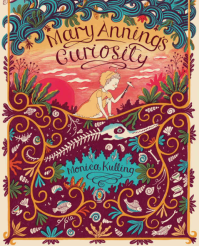
Would they like to read fiction about fossils? Try Monica

Kulling’s Mary Anning’s Curiosity (Groundwood Books, 2017), a fictionalized account of the childhood of the 19th century shell-collector who revolutionized paleontology 
with her discoveries. Or read Roger Reid’s Time: A Jason Caldwell Mystery (NewSouth Books, 2011) set in a world-famous Paleozoic Footprint site in northern Alabama.

At a moment when there is much uncertainty in the present and about the future, it may be refreshing for readers to focus on the long time of Earth’s natural past. At the very least, they can have fun reading about some fascinating ages and creatures. Please pass this list of books along to any middle-graders you know. There are many more titles that I could have included, but they will find them. I wish there were a reading equivalent of “Bon appétit!”