Posts Tagged librarians

How do I motivate students outside the classroom?

Distance learning took many teachers by storm.

With the advent of Covid19, teaching went from being in front of a classroom of students to being behind a computer with periods of facetime. The magic of the classroom and active student engagement was gone. Every teacher was faced with the same question. “How do I motivate students outside the classroom?”

Before I describe the following Harry Potter contest, imagine using other books you’d like to feature. How could you incorporate a biography? A STEAM book? Historical Fiction? Think how this system could work in your own classroom between students, between classrooms within the grade level teams, or between grade levels in the same school. Have fun. Think outside the box.

Our school librarian was concerned that our students would opt for entertainment games instead of reading a good book. She and the other librarians in our school district came together and created a Harry Potter Contest. The contest was designed to be a competition between schools.

After creating the different elements of the contest, the librarians designed a website with weekly instructions and a leaderboard featuring house points. Before the contest began, the librarians sorted the schools into houses. My school was sorted into Hufflepuff.

(As a side note, we just finished the contest and it was a HUGE success. Students were engaged, books were read, lively conversations took place, and best of all, the schools came together in a friendly reading competition. Oh, and Hufflepuff won!)

Harry Potter Contest

Week One

  1. Reply to your Hogwarts invitation letter via electronic owl (Google Form)

Prompt positive responses are worth 5 pts; late responses will still be accepted, but will only be worth 1 pt.)

  1. Access a copy of the first Harry Potter book. The audiobook is currently available to stream for free online (in English, Spanish, French, Italian, German, and Japanese) from Audible Stories; and the ebook is free on Amazon for Amazon Prime members (please talk to your parent/guardian for assistance).
  2. Take a picture of yourself reading/listening to the first Harry Potter book (worth 1 pt). Submit to your house email box.

Week Two

  1. Read Chapters 1-4
  2. Find out what wand you would get by taking this quiz
  3. Design your own wand or Arm yourself with a wand such as a chopstick, stick, or pencil. Post a pic with a sign showing your quiz results (worth 5 pts). Submit your results to your house email box.
  4. Take the Ch 1-4 Trivia Quiz (Teacher created Google Form) Your answers must be submitted by noon on (TBA). Participation is worth 10 pts. The winner from each House will battle the other Houses in a Trivia Match. Extra points will be awarded to the house that wins.

Week Three

  1. Read Chapters 5-8
  2. Show your House spirit by making a House bookmark. Post a pic of you using your new bookmark (worth 10 pts)
  3. 3. Ch 5-8 Trivia Quiz Your answers must be submitted by noon on (TBD date). Participation is worth 10 pts. The winner from each House will battle the other Houses in a Trivia Match. Extra points will be awarded to the house that wins.

Week Four

  1. Read Chapters 9-13
  2. Create your Patronus animal out of origami
    • Dog (easy)
    • Cat (easy)
    • Horse (that flips) (medium)
    • Bird (that flaps) (medium)
    • Snake (medium)
    • Rabbit (medium)
    • Fox (not hard, per se, but has more steps to it)
    • Phoenix (not hard, per se, but has more steps to it)
    • Mouse/Rat (doable, but slightly tricky at times)

Share a pic of your Patronus (worth 15 pts)

  1. Chapters 9-13 Trivia Quiz. Your answers must be submitted by noon on (TBD date). Participation is worth 10 pts. The winner from each House will battle the other Houses in a Trivia Match. Extra points will be awarded to the house that wins.

Week Five

  1. Read Chapters 14-17
  2. Make something for the Hogwarts end-of-year feast (for some inspiration, click here)
  3. Take a pic of your food/beverage for the virtual banquet table (worth 20 pts) Submit to your house email box.
  4. Ch 14-17 Trivia Quiz Your answers must be submitted by (TBA) to be in the running to compete in the Trivia Cup Final against the other Houses; the winner from each House will battle the other Houses in the Trivia Cup Final held at (TBA) with questions from the whole book.

    The winning school wins the HOUSE CUP!

    The winner is awarded the right to display the HOUSE CUP for one year, until the next competition.


STEM Tuesday– Symbiotic Relationships– Writing Tips & Resources

Field of California poppies

Photo by Nils Larson

The Writer’s Walk: Nurturing Creativity in Difficult Times

Every day, as part of my writing process, I take a walk outside among Joshua Trees and, in spring, golden California poppies. Often a writing problem weighs on my mind: an opening that’s not quite right, a subplot that’s stumbling, a structure that’s just not working. As my feet pound the ground, my brain is only partially occupied by the scurrying rabbits and calling quail. My mind wanders just as I do. And in those moments I often have a breakthrough, an “aha moment” that leaves me eager to return to my manuscript.

We are living during a difficult time when so many of us are encouraged to stay indoors to keep ourselves, our friends, and neighbors safe. Yet one thing we are still allowed to do is to go outside for exercise. And we need to. Humans have a symbiotic relationship with nature. We need nature, and it needs us.

Forest Talk by Melissa Koch

Even before I read Melissa Koch’s FOREST TALK, one of the books on this month’s booklist, I knew humans had a symbiotic relationship with trees. We breathe in oxygen released by trees. Trees use the carbon dioxide we exhale for photosynthesis. But here’s what Koch wrote that astonished me: “Trees don’t just make people physically healthier. They also improve our spiritual well-being.” 

Koch goes on to cite several studies that show being among trees or even simply seeing trees out a window helps us heal faster and reduce stress, blood pressure, anxiety, and negative thoughts. The Japanese government even coined the term “forest bathing,” which involves walking in the woods and using all your senses to take in your surroundings as a way to improve mental health. 

I’d argue this symbiotic relationship holds the key not just to our sanity but to our creativity too.

Starting a Writer’s Walk Practice

There’s no time like the present for starting a writer’s walk practice. Before you do, a few ground rules. 

  • First, leave your headphones at home, so your senses are fully engaged with the world around you. 
  • Leave your notebook at home too. The idea is to keep your body and your mind moving. 
  • When you begin, focus your attention on a few deep breaths in and out. Notice the feeling of the ground beneath your feet. 

Eventually, your mind may wander. This is good. When it does, magical things might happen. Things like:

  • Story sparks – As you walk, observe animals, even little insects. What kind of bird did you hear? Why is the sky suddenly filled with butterflies? What makes those wispy, thin clouds?  Back home, that wondering might turn into research and even writing about a new topic. But there’s no pressure if it doesn’t.
  • Storing up sensory details – Use your walk to closely observe your surroundings. Note not only the sights, but also the smells, sounds, and textures. What do things look like and sound like? Can you think of analogies? Now file those details away for future use. One day when you need to capture how the leaves rustled or the birds called, you’ll remember, and these details will reappear in your writing.
  • Poem practice – I love poems for their ability to capture a single moment in exquisite detail. When you observe something interesting on your walk, maybe an autumn leaf floating in a rain puddle, challenge yourself to craft a little poem in your mind. No need to write it down. It’s just an exercise in paying attention and noticing small details, a way to remind yourself to focus on individual moments and concrete details in your writing.
  • Solving problems – I can’t tell you the number of aha moments I’ve had during my daily walks. The key for me is to think about my problem right before I begin. Then I clear my mind and focus on my breath, the feel of my feet, letting my mind wander. If and when my brain is ready, it might wander back to my story and play with the problem.

So, if you are allowed, get outside and take a writer’s walk. Your mind, your body, and your writing will thank you!


O.O.L. F (Out of Left Field)

Can’t get outside right now? Relax by watching a nature webcam here.

Experience California’s golden poppies live on their own webcam:

The app Headspace is offering free meditations during the pandemic, including a 10-minute walking meditation, perfect for a writer’s walk.

ReadWriteThink shares a wonderful Poetry Walk lesson from Patrick Striegel.

Read more about how walking boosts writing with this article from Publication Coach.

The New Yorker reports on how walking helps us think.


Kirsten W. Larson used to work with rocket scientists at NASA. Now she writes books for curious kids. She’s the author of WOOD, WIRE, WINGS: EMMA LILIAN TODD INVENTS AN AIRPLANE, illustrated by Tracy Subisak (Calkins Creek, 2020), THE FIRE OF STARS, illustrated by Katherine Roy (Chronicle, Fall 2021), along with 25 other nonfiction books for kids. Find her at kirsten-w-larson.com or on Twitter/Instagram @KirstenWLarson.

STEM Tuesday– Symbiotic Relationships– In The Classroom

As I write this post, my community is still under a Stay-At-Home order, and has been for several weeks. There has been a lot of debate about when and how we should open up different areas of the country. Communities are trying to balance the health of businesses and the economy with the health of people. In a way, the two interests are intertwined in a close and long-term relationship. Which is a lot like this month’s topic – symbiosis.

Symbiosis is when two dissimilar organisms are closely associated with each other. Sometimes both benefit from the relationship. Other times, only one benefits. The books we’re highlighting this month dive into how symbiosis works. They are a great starting point for different sciences activities and discussions in the classroom.

Natural Attraction: A Field Guide to Friends, Frenemies, and Other Symbiotic Animal,  by Iris Gottlieb

Watercolor illustrations combine with a humorous, scientific text to examine thirty-five odd and unusual symbiotic animal, plant, and bacteria relationships. It includes statistics, graphs, takeaways, and fun additional facts about mutualism, commensalism, and parasitism.


Symbiosis, by Alvin Silverstein

Photographs and a sprinkling of fun fact sidebars enhance the examination of plants, animals and fungi partnerships (both beneficial and necessary), symbiosis of numerous parasites and microorganisms (including Ebola and SARS), and the possibility of symbionts from space. The engaging text is supplemented with scientific terms, a glossary, and further research suggestions.


Partners in the Sea, by Mary Jo Rhodes and David Hall

You’ve probably heard about cleaner fish, but there are so many more undersea partnerships. There are fish that hang out in anemones, tiny crabs and shrimps that live inside sponges, and a bunch of animals that partner up with algae.


There’s A Zoo on You! by Kathy Darling

You share your body with more than a thousand microscopic species of bacteria, fungi, and other too-small to see organisms. Some are beneficial, such as tooth amoebas that eat bacteria. Others, like some fungi, take advantage of the relationship by benefiting at our expense.


It’s a Fungus Among Us: The Good, the Bad & the Downright Scary, by Carla Billups and Dawn Cusick

Most land plants live in a symbiotic relationship with fungi, and use the fungal web to share information with their plant buddies in the garden, field, and woods. Some animals develop beneficial partnerships with fungi, too – but others are attacked by fungal parasites.


Things That Make You Go Yuck! Odd Couples, by Jenn Dlugos & Charlie Hatton

Everything on earth is involved in a symbiotic relationship, some good and some bad. Amazing close-up photographs coupled with trivia questions, humor, sidebars, and a dash of gross-out facts makes this book on animal, plant, and microorganism adaptation and survival an entertaining and educational read about some unusual and creepy relationships.


Forest Talk: How Trees Communicate, by Melissa Koch

Trees are talking all around us, using an underground network of fungi and roots to communicate with one another. They also share chemical messages from their leaves, sending defense signals to other plants when pests attack.


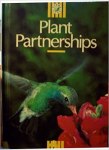
Plant Partnerships, by Joyce Pope

An examination of the dependence of numerous plants and lichen on other plants and animals for their habitat or survival. Covers instances of symbiosis, parasitism, gardening, and pollination by insects and mammals.


Even if your school and library are closed for the rest of the school year, you can still try some activities to explore symbiosis.

Explore Online
Use the Internet to learn about symbiosis. What are the three general types of symbiosis? How can you describe each type of symbiotic relationship and how do the organisms interact in each? Make a poster or PowerPoint presentation to compare and contrast the three types of symbiosis. Make sure to include at least two examples of organisms that use each type of symbiotic relationship. How is each relationship the same or different than the other relationships? Why would an organism want to be in a symbiotic relationship? You can also include any interesting information that you learned in your research.

Create a Game
Using what you have learned about symbiosis and the Internet, make a list of pairs of organisms in symbiotic relationships. With this information, you can create a card game, board game, or trivia game that involves matching organisms in symbiotic relationships. You’ll need to develop the rules of the game, instructions on how to play, and determine how players win the game.

Draw What You’ve Learned
Use your artistic skills to create a drawing, painting, or other artistic creation that shows a symbiotic relationship. What organisms did you portray in your art? Where are the organisms? How are they interacting? Is the relationship positive or negative? How does your art show this? What can someone learn about this relationship from the art?

Write About It
Write a short story or poem that involves symbiosis. Get creative! What characters will you create? How will they illustrate a symbiotic relationship in your story or poem? How does their relationship impact the plot or themes of your writing? What other information can you include in your writing?

*************************************

Carla Mooney loves to explore the world around us and discover the details about how it works. An award-winning author of numerous nonfiction science books for kids and teens, she hopes to spark a healthy curiosity and love of science in today’s young people. She lives in Pennsylvania with her husband, three kids, and dog. When not writing, she can often be spotted at a hockey rink for one of her kids’ games. Find her at http://www.carlamooney.com, on Facebook @carlamooneyauthor, or on Twitter @carlawrites.