Posts Tagged librarians

STEM Tuesday– Getting Your Comic-on with Great Science Graphic Novels– Writing Tips & Resources

STEM Tuesday’s Gone Graphic

Comics? We don’t need any of that nonsense in STEM.

What was that? No, I did not see the STEM Tuesday “Great Science Graphic Novel” book list for this month.

Bah-humbug! We didn’t have STEM books like that when I was a kid. Textbooks were perfectly fine for us.

No, my name is not STEMbeneezer Scrooge. Now, get off my lawn and leave me be. It’s time for my nap.

Who’s there? I thought I told you to skedaddle.

Aye! It’s a spirit.

Leave me be! I’m just an old STEM guy stuck in my ways. I’m going back to sleep before Wheel of Fortune comes on.

“STEMbeneezer, log on and follow me!”

What in the world? Another STEM spirit!

Smooth, Ghost of STEM Present. Real smooth. But I’m not going to get on the internet to scour bookstores.

Haven’t you heard of online identity theft and spyware?

Jeez, leave me be, I’m going back to sleep. And where do you come up with these “original” names, anyway?

What are you? You must be the Spirit of STEM Future.

Aack! Don’t beam me up, Scotty!  I don’t want to go!

NOOOooo!!!

A hint? For what?

Help meeeeeeee!

Holy bad dreams. What happened? How long have I been asleep?

I know that answer!

Come, on! The answer’s easy.

Graphic storytelling is a great format for STEM books.

I’m a changed man. Textbooks have their place but the graphic novel format really does work well with STEM storytelling.

Graphic storytelling + STEM = Natural match

Using graphics to define a STEM concept has been a natural partnership for ages.  I present the evidence.

DaVinci designs are a graphical how-to manual
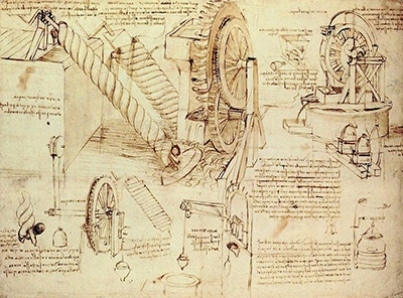
DaVinci’s water lifting device proposal

A canon design

Galileo’s graphic notes on his observations of Jupiter’s moons
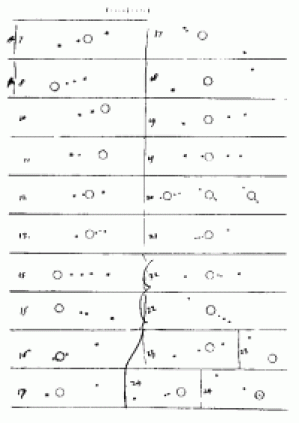
Sir Issac Newton’s Graphic Notes

Illustrated concept from NEWTON’S PRINCIPIA
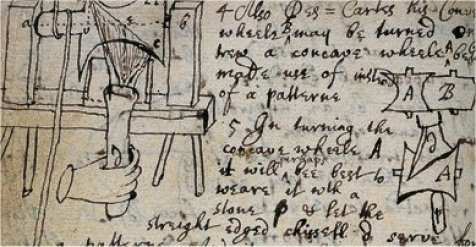
From Newton’s Notes on Alchemy
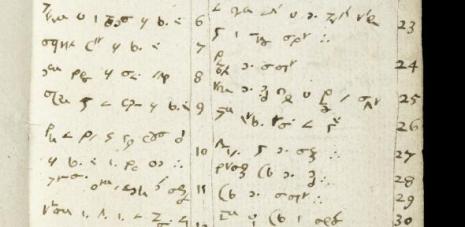
A young Isaac Newton’s graphical code listing his sins committed

Chemistry

If you have the reagents, you could probably make your own Vitamin A from this graphical reaction.

Maps of biological pathways

The Krebs Cycle, aka The “I wish I had a dollar for every time I memorized & forgot this pathway in my school days” Cycle.


TNF pathway from one of our lab’s publications. It tells the visual story of an E. Coli effector subverting the TNF inflammatory pathway.

Let the evidence show using graphics has worked in STEM since the STEM fields were born.

It’s only natural they work in the field of STEM storytelling, right?

Visual Storytelling

A picture is worth a thousand words.


UNDERSTANDiNG COMICS: THE INVISIBLE ART by Scott McCloud

This a book you must read whether you are interested in straight graphic storytelling or storytelling in general. It doesn’t matter if the storytelling is fiction or nonfiction, graphic storytelling can be a powerful option for a writer.

Sketchnotes

Sketchnoting is a great way to take notes for the visual-minded individuals. I follow Eva-Lotta Lamm and her work with sketchnotes. She offers a free, downloadable Mini Visual Starter Kit at her website to help you get started with sketchnotes.

Conclusion

Hopefully, you are now convinced that images and STEM go together. The graphic novel format for nonfiction and STEM books not only works, but it fits. Just as architects and engineers use a blueprint drawing to relay information to the contractor and specialists, STEM writers can use graphic storytelling to relay information to the reader.

Still not a believer? Go to the STEM Tuesday book list and give those titles a try. It’s a much less harrowing path than visits from a trio of STEM spirits.

Take it from me. STEM graphic novels and comics are the real deal!

Mike Hays has worked hard from a young age to be a well-rounded individual. A well-rounded, equal opportunity sports enthusiasts, that is. If they keep a score, he’ll either watch it, play it, or coach it. A molecular microbiologist by day, middle-grade author, sports coach, and general good citizen by night, he blogs about sports/training related topics at www.coachhays.com and writer stuff at www.mikehaysbooks.comTwo of his science essays, The Science of Jurassic Park and Zombie Microbiology 101,  are included in the Putting the Science in Fiction collection from Writer’s Digest Books. He can be found roaming around the Twitter-sphere under the guise of @coachhays64.


The O.O.L.F Files

The O.O.L.F. Files this month emphasizes the power of visual storytelling in STEM and to celebrate the season, a few links to STEM activities for the holidays. Enjoy!

Superheroes & STEM

Comic Einstein!

More Sketchnoting

Holiday STEM


Celebrating Multicultural Literature for Children

I had the honor of presenting at the 34th annual Virginia Hamilton Conference on Multicultural Literature for children this past year. This is the longest running event of its kind…focusing solely on multicultural literature for young readers.

The conference was established by professors at Kent State University while the beloved and most honored author of children’s literature, Virginia Hamilton, was alive.

Sixteen years after her death, Virginia would be thrilled that this conference is not only alive and well, but other initiatives are taking place across the country to celebrate and champion multicultural works.

One such event is Multicultural Children’s Book Day, (MCBD) celebrated on January 25, 2019.

The celebration was born out of frustration by two women in not being able to find diverse or multicultural children’s books for their families. Bloggers Valarie Budayr from Jump Into a Book and Mia Wenjen from Pragmatic Mom took matters into their own hands by creating the event in January 2012.

The mission from the beginning has been to not only raise awareness around children’s books that celebrate diversity, but to also get more of these types of books into classrooms and libraries.

“Kids need to ‘see themselves’ in the pages of the books they read,” noted Budayr. “We are determined to not only shine the spotlight on all of the multicultural books available but also offer visibility for the amazing authors and publishers who create them.”

Now in its sixth year, the MCBD online celebration attracts thousands of supporters, over 700 book reviewers and dozens of quality authors and publishers.

There are many ways that educators, media specialists, authors and families can become involved in the initiative and celebrate diverse works with young readers.

Some actionable ideas include encouraging students to bring a multicultural book to share with students in class, creating a MCBD book display in the classroom or library, or focusing on books that address social topics such as poverty, or civil rights.

Children’s book authors (including yours truly!) are supporting the initiative by becoming sponsors, intending to create awareness about our works and to support the cause.

The upcoming January 25, 2019 event promises to be the MCBD’s biggest yet!

To learn more, visit http://www.MulticulturalChildrensBookDay.com


STEM Tuesday — Getting Your Comic-on with Great Science Graphic Novels– In the Classroom

Visual Literacy with Graphic Nonfiction!

Graphic nonfiction is a great way to work on visual literacy strategies. This week I’ll introduce four questions/ teaching moves that I use to work on visual literacy with students. I’ll give examples from this month’s book list, but you can repurpose these for use with other graphic nonfiction, illustrations, or diagrams from any science text.


1) Provide a diagram or illustration with the text removed. Ask students to work with a partner to talk through the answers to these questions: (a) Describe what you see. Don’t worry if you don’t know the name of any item in the picture—just describe it as you see it. (b) Make a prediction. What do you think the illustrator is trying to show here? (or—what do you think [xxxx] is?)

Consider this cell from the bottom of page 46 in Science Comics: Bats.

Ask:

What do you see in this image?

Make a prediction: what do you think the shapes might represent?

After students have studied the image and made predictions, show them a version with the text. They will be engaged and eager to see if their predictions were correct.

2) Take this a step further and ask students to fill in the blanks themselves with possible text. For example, if your class has already studied meiosis, you might use this image from page 17 of Science Comics: Dogs and let them fill in what the dog might be saying.

Then show the author’s version. Who’s do they like best?


3) Talk about the role of arrows or other diagram features. I worked with a group of high schoolers studying a mitosis diagram many years ago. When I asked about what they saw, they were describing the image as if it were showing 6 different cells—they missed the role of the arrows indicating that the first cell turned into the cell in each image that followed.

Here’s an example, from page 43 of Older than Dirt.

Ask: Arrows in diagrams can have different meanings. They can–

a) point to something important you should notice

b) give the name of an object in the picture

c) show that one thing turns into something else

d) show that something is moving.

What is the role of the arrows in this diagram?

4) Help them see the value of imagery. Often, some information is found in the text while the images add extra information or make the text more clear. Students who don’t study images miss that extra information. So another pair of questions I like to ask are: What information do you get from the words that is not in the images? What do you see in the images that is not in the words?

This series of frames from page 21 of Secret Coders is a good example of text and images with different information. In this scene, the boy Eni is explaining to Hopper how binary code can show numbers. (Which could be especially useful since digital coding—e.g., binary—is now a piece of the Next Generation Science Standards for middle school.)


Try these techniques with any of the graphic nonfiction texts from this month’s list, or any other image-heavy text you choose. Once you have used an image in class, make sure the book is available. Students will want to read the entire book!


Jodi Wheeler-Toppen is a former science teacher and the author of the Once Upon A Science Book series (NSTA Press) on integrating science and reading instruction.  She also writes for children, with her most recent book being Dog Science Unleashed: Fun Activities to do with Your Canine Companion. She can’t draw, so she’s extra impressed with the writers for this month’s books.