
Posts Tagged librarians

Beyond the Dog Day’s of Summer

I just going to say it. I’m a cat person. Their aloof disdain for my humanness and the general consensus that they are just using me for food and a few scratches behind the ears just makes me love them all the more. They are not needy in the least, at a time in my life when I often feel my nurturing resources are close to depleted.

Despite my cat person-ness, I am a complete and total sucker for dog books. A Dog’s Purpose tied me up in knots and I read The Art of Racing in the Rain in one sitting. With the dog days of summer behind us, why not a cool dog reading list for your middle grade reader? These are some of my favorites. They range from heart pounding to heart breaking to laugh out loud funny.

Take your pick and happy tails, friends.


Hero, by Jennifer Li Shotz
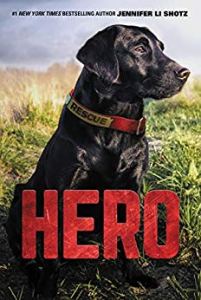
Hero, a retired search-and-rescue dog, is not prepared for a stray puppy to come into his life. But when he and twelve-year-old Ben find Scout injured and afraid, the new addition leads them down an unexpected and dangerous path.

When Scout goes missing, it’s up to Hero to use his search-and-rescue skills to find Scout and bring him home.

Get ready for a canine adventure full of danger, loyalty, and the unbreakable bond between a boy and his best friend.

(and don’t miss the other titles in this ongoing series!)


Rules of the Ruff, by Heidi Lang

Twelve-year-old Jessie is in for a long summer at her aunt and uncle’s house. Her cousin Ann has a snotty new best friend, which leaves Jessie all alone. But Jessie is industrious, and—not content with being ignored all summer—she convinces Wes, a grouchy neighborhood dog walker, to take her on as his apprentice.

Sure, dog walking turns out to be harder than she expected, but she has Wes’s dog-walking code, the Rules of the Ruff, to guide her, and soon she’s wrangling her very own pack. But when a charismatic rival dog walker moves to town, she quickly snatches up most of Wes’s business—and Jessie decides she isn’t going to take this defeat with her tail between her legs.


Ruff vs. Fluff, by Spencer Quinn

From the outside, Queenie the cat and Arthur the dog appear to have a lot in common. Both pets live in the charming Blackberry Hill inn. They both love their humans, twins Harmony and Bro. They both have a fondness for sausage.

But that doesn’t change the fact that they are mortal enemies.

Goofy, big-hearted Arthur loves everyone he’s ever met . . . except the snobby, scheming cat who’s devoted her life to ruining his.

Queenie is a bit choosier. And who can blame her? When you’re brilliant AND exquisitely beautiful, you can’t be expected to rub tails with commoners. Especially not slobbery dogs.

But when the twins’ beloved cousin is framed for murder, Queenie and Arthur must work together to clear his name . . . something Queenie finds even more distasteful than inexpensive caviar. Can two enemies put aside their differences long enough to solve the mystery?


Wish, by Barbara O’Conner

Eleven-year-old Charlie Reese has been making the same secret wish every day since fourth grade. She even has a list of all the ways there are to make the wish, such as cutting off the pointed end of a slice of pie and wishing on it as she takes the last bite.

But when she is sent to the Blue Ridge Mountains of North Carolina to live with family she barely knows, it seems unlikely that her wish will ever come true. That is, until she meets Wishbone, a skinny stray dog who captures her heart, and Howard, a neighbor boy who proves surprising in lots of ways. Suddenly Charlie is in serious danger of discovering that what she thought she wanted may not be what she needs at all.

From award-winning author Barbara O’Connor comes a middle-grade novel about a girl who, with the help of a true-blue friend, a big-hearted aunt and uncle, and the dog of her dreams, unexpectedly learns the true meaning of family in the least likely of places.


Good Dog, by Dan Gemeinhart

Brodie was a good dog. And good dogs go to heaven.

Except Brodie can’t move on. Not just yet. As wonderful as his glimpse of the afterlife is, he can’t forget the boy he left behind. The boy he loved, and who loved him in return.

The boy who’s still in danger.

So Brodie breaks the rules of heaven. He returns to Earth as a spirit. With the help of two other lost souls — lovable pitbull Tuck and surly housecat Patsy — he is determined to find his boy and to save him.

Even if it costs him paradise. Even if he loses his eternal soul.

Because it’s what a good dog would do.


Rain Reign, by Ann M. Martin

Rose Howard is obsessed with homonyms. She’s thrilled that her own name is a homonym, and she purposely gave her dog Rain a name with two homonyms (Reign, Rein), which, according to Rose’s rules of homonyms, is very special. Not everyone understands Rose’s obsessions, her rules, and the other things that make her different―not her teachers, not other kids, and not her single father.

When a storm hits their rural town, rivers overflow, the roads are flooded, and Rain goes missing. Rose’s father shouldn’t have let Rain out. Now Rose has to find her dog, even if it means leaving her routines and safe places to search.

STEM Tuesday– Pets — In the Classroom

We all love our pets, from the biggest dogs to the tiniest hamsters. They inspire and amaze us with their crazy antics and incredible abilities. In the classroom, students can delve into their interest in pets and other animals with high-interest activities that explore the science of how and why our pets behave the way they do. In this activity, students will conduct an experiment to see if dogs can tell the difference between colors.

Can Dogs See Color?
To start, learn as a class about how dogs see by reading through Inside of a Dog, Young Readers Edition: What Dogs See, Smell, and Know by Alexandra Horowitz and Dog Science Unleashed by Jodi Wheeler-Toppen.

Support Independent Bookstores - Visit IndieBound.orgInside of a Dog, Young Readers Edition: What Dogs See, Smell, and Know by Alexandra Horowitz, illustrated by Sean Vidal Edgerton
This young readers’ edition of the popular adult nonfiction book gives children a glimpse into understanding a dog’s behavior. A great book for budding animal cognition scientists and dog trainers.


Support Independent Bookstores - Visit IndieBound.orgDog Science Unleashed by Jodi Wheeler-Toppen
This title offers readers fun science-based activities and experiments to do with their pets based on how the animals think, move, drink, and more.


To introduce this activity, explain to students how in animals, including humans, the eye and brain work together to translate light into color. Light receptors in the eye send messages to the brain. The brain processes this information and tells us the color we see. In the human eye, there are three types of color receptors called cone cells. Cone cells detect red, blue, and greenish yellow. Together, these cone cells allow us to see the full spectrum of colors.

What about dogs? What colors, if any, can they see? Unlike humans, dogs have only two types of cone cells which detect greenish blue and yellow. Explain to students that they will perform an experiment to test a dog’s ability to see color.

Materials
• Construction paper in different colors – red, green, and blue
• Two glass jars or cups of the same size
• Tape
• Dog treats

Procedure
Because most schools do not allow pets in class, explain to students that they will be conducting fieldwork at home and then analyzing their results as a class. You may assign students to small groups so that every group has a dog for fieldwork. Explain to students the procedures that they will follow at home to conduct their fieldwork.

Fieldwork Steps
1. To begin, students will cover each jar with one color of construction paper.

2. With the dog out of the room, place the blue and red jars on the floor. Bring the dog into the room and tell him to come. When the dog comes to the blue jar, give him a treat. If he goes to the red jar, do not give him a treat. Repeat the process several times and switch the position of the jars. Continue to give the dog a treat every time he chooses the blue jar over the red jar.

3. Take the dog out of the room. Add the green jar to the red and blue jars. Call the dog into the room and tell him to come. Which jar did the dog choose? Continue to give him treats for choosing the blue jar. Repeat 10 times, moving the positions of the jars each time. How many times did the dog choose the blue jar? Record the results.

Back in the Classroom
Have students organize the results of their fieldwork. They can create graphs, charts, or other visual displays of their data. Have each group present their data and discuss their results.

To encourage classroom discussion, have students discuss the following questions:
1. Based on the data, do you think dogs can see color? Which color(s)? How do your results support your answer?
2. Did the breed of dog affect the results? Why or why not?
3. Did any other factors affect your fieldwork and results? How?
4. What other experiment could you design to test if dogs can see color?

Need more ideas for teaching middle-school students about pets and other animals? Check out these resources:

************
Carla Mooney loves to explore the world around us and discover the details about how it works. An award-winning author of numerous nonfiction science books for kids and teens, she hopes to spark a healthy curiosity and love of science in today’s young people. Find her at http://www.carlamooney.com

Go Visual-Spatial with Maps and Middle Grade Books

I came across the phrase “carto-literate” in an article last week. The author was referring to geography skills, but it made me think of all the cool map-based activities one can offer readers of middle grade books. Maps, globes, and online mapping tools maintain a strong role in the study of history, geography, science, and math; however, the great benefits of using maps as learning tools can be extended to the reading experience, as well.  If you haven’t thought about utilizing map activities for literature selections in your classroom, home school, or library, consider these awesome benefits:

  • Maps immediately call up the use of Visual-Spatial skills, and might engage readers who are not quite as Verbal-Linguistic as others.
  • Maps promote flexible, creative thinking through the use of to-scale renderings and symbols.
  • Maps directly connect to math, science, technology, and research skills, and they promote discussions on cultural topics of inclusivity and acceptance. They also encourage an understanding of history, as borders and place names change over time due to migration, conflict, and political transition.
  • Maps also inspire the imagination with the notion of travel and adventure; after all, it’s easy to envision yourself as an explorer or treasure-seeker when you have a map in hand!

These activity ideas involving maps might inspire a more fulfilling reading experience, and will promote thinking and discussion on these and other titles.

1. Using a world map, locate and mark the literary settings of books that might be new to your library or books on suggested or curricular reading lists. Settings can be approximate or specific; sometimes, while specific names of roads or towns are fictionalized, the state or region is identified—giving students just enough context to pinpoint the setting on a map. For example, these recent MG books have specific or general settings that are “mappable”:

The Bridge Home by Padma Venkatraman (Chennai, India)

Ghosts by Raina Telgemeier (Northern CA)

The Book of Boy by Catherine Gilbert Murdock (Medieval France)

Finding Langston by Lesa Cline-Ransome (Chicago, IL)

North to Benjamin by Alan Cumyn (Dawson, Yukon)

Merci Suarez Changes Gears by Meg Medina (South Florida)

2. Use Google Maps to explore a realistic, named setting and discuss plot conflicts in terms of the story’s geography. Students can zoom in on locations, study city layouts, and even “drive around” neighborhoods in Street View. For example, when reading Jewell Parker Rhodes’s Ninth Ward, students can investigate through Google Maps the geography of New Orleans, and make connections to the impact of Hurricane Katrina.

3. Pinpoint the settings of books that share a historical time period on a map, and consider the ways in which location and culture impacted the plot and characters. For example, on a map of the world, mark the literary settings of books like these that take place in the time of WWII:

Milkweed by Jerry Spinelli (Warsaw, Poland)

The War That Saved My Life by Kimberly Brubaker Bradley (London, England and vicinity)

The End of the Line by Sharon E. McKay (Amsterdam, Netherlands)

Lily’s Crossing by Patricia Reilly Giff (Rockaway, NY)


4. Maps can help promote comprehension and increase the emotional value of a story when used in conjunction with the travels of a character. For example, readers can use a world map to trace the journey of Ebo, a refugee from Ghana, in Illegal, a graphic novel by Eoin Colfer and Andrew Donkin and illustrated by Giovanni Rigano.


5. In an exploration of their own world-building skills, readers can create maps for middle grade fiction with geography context clues. For example, readers can use close reading skills, logic, and imagination to draw a map of locations in Erin Entrada Kelly’s Hello, Universe, or for works that have a fantasy or purely fictionalized setting. Many MG fantasies showcase beautiful maps of the story’s settings, like Jaleigh Johnson’s The Door to the Lost. Readers can use these already-created maps to note plot points and trace the paths of characters.

6. A start-of-the-year icebreaker I’ve tried with success involves a world map, displayed in the classroom: each student shares the location farthest from home to which he or she has traveled and pins a marker on the map. Put a literary spin on this idea, and have readers share the book title they’ve read with a setting that is farthest from home. Each student can mark the map with the book title and author. A longer project idea might involve individual student presentations of plot summaries or book reviews.

Perhaps you’ll find a map activity here that suits your reader or students! Good luck to parents, teachers, librarians, writers, and readers of MG as we all head back to the classroom this school year.