
Posts Tagged kidlit

STEM Tuesday– Mixing Science and Poetry/Verse — Book List

April is a time to celebrate poetry so we’ve gathered a list of wonderful STEM titles in verse for you to explore. Enjoy a poem each day. You might find many of these will spark you to write your own STEM poetry this month. From birds to biographies, these titles are sure to please.

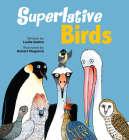
Support Independent Bookstores - Visit IndieBound.org Support Independent Bookstores - Visit IndieBound.org Leaf Litter Critters and Superlative Birds by Leslie Bulion

Leslie Bulion’s titles featuring familiar birds and bugs will spark joy this spring.


Support Independent Bookstores - Visit IndieBound.org National Geographic Book of Nature Poetry: More than 200 Poems With Photographs That Float, Zoom, and Bloom! by J. Patrick Lewis

With over 200 poems about nature by many well-known authors, you are sure to find a favorite.


Support Independent Bookstores - Visit IndieBound.org Carver, A Life in Poems by Marilyn Nelson – A biography of George Washington Carver

Explore the life of agricultural scientist George Washington Carver in these biographical poems by poet, Marilyn Nelson.


Support Independent Bookstores - Visit IndieBound.org The Universe Verse by James Lu Dunbar

Explore this fun comic book in verse about the origin of the universe.


Support Independent Bookstores - Visit IndieBound.org Joyful Noise: Poems for Two Voices by Paul Fleischman and Eric Beddows

This classic book by Paul Fleischman celebrates the insect world. It’s even more fun if you read it with a friend.


The Poetry of Science: The Poetry Friday Anthology for Science compiled by Sylvia Vardell and Janet Wong

This great classroom resource has over 200 STEM poems from 78 authors, including Joyce Sidman, Mary Ann Hoberman, Laura Purdas Salas, Jane Yolen, and Greg Pincus.


Support Independent Bookstores - Visit IndieBound.org Finding Wonders: The Girls Who Changed Science by Jeannine Atkins

Explore the lives of Maria Merian, Mary Anning, and Maria Mitchell is this beautiful text by poet Jeannine Atkins.


FICTION
Support Independent Bookstores - Visit IndieBound.org Forest World by Margarita Engle

Margarita Engle brings this rainforest to life in this book in verse that is a perfect accompaniment to habitat lessons.


Support Independent Bookstores - Visit IndieBound.org Ringside: 1925 – Views from the Scopes Trial by Jen Bryant

This title is a bit older but is worth searching out to open up a discussion of the Scopes Trial with a middle school class. Perhaps pair it with Charles and Emma by Deborah Heiligman.


Lastly, we don’t usually include picture books on STEM Tuesday lists, but this classic title by one of our contributors is worth breaking the rules:

Support Independent Bookstores - Visit IndieBound.org Big Bang! The Tongue-Tickling Tale of a Speck That Became Spectacular by Carolyn Cinami DeCristofano

Pair DeCristofano’s alliterative verse with The Universe Verse listed above. Both titles deal with the creation of the birth of our cosmos. How are they the same or different?


STEM Tuesday book lists prepared by:

Nancy Castaldo has written books about our planet for over 20 years including, THE STORY OF SEEDS: From Mendel’s Garden to Your Plate, and How There’s More of Less To Eat Around The World, which earned the Green Earth Book Award, Junior Library Guild Selection, and other honors. Nancy’s research has taken her all over the world from the Galapagos to Russia.  She strives to inform, inspire, and educate her readers. Nancy also serves as the Regional Advisor of the Eastern NY SCBWI region. Her 2018 multi-starred title is BACK FROM THE BRINK: Saving Animals from Extinction. Visit her at www.nancycastaldo.com

Patricia Newman writes middle-grade nonfiction that inspires kids to seek connections between science, literacy, and the environment. The recipient of a Sibert Honor for Sea Otter Heroes and the Green Earth Book Award for Plastic, Ahoy!, her books have received starred reviews, been honored as Junior Library Guild Selections, and included on Bank Street College’s Best Books lists. New:  Eavesdropping on Elephants: How Listening Helps Conservation, an NSTA Outstanding Science Trade Book. During author visits, she demonstrates how her writing skills give a voice to our beleaguered environment. Visit her at www.patriciamnewman.com.


Shop your local indie bookstore

STEM Tuesday– Celebrating Women’s History Month– Writing Tips and Resources

Begin at the End

Support Independent Bookstores - Visit IndieBound.orgTwo-time Pulitzer prize winner Jon Franklin, author of Writing for Story: Craft Secrets of Dramatic Nonfiction, writes “The story doesn’t pivot on the beginning, it pivots on the ending – so write that first.” I’ve discovered that the same trick works when I need to read like a writer.

Narrative, expository, opinion pieces – no matter the approach – informational texts are written to convey something. Be it a concept, a scientific process, personal growth, an abstract theme, a historical truth, whatever, the entire text builds towards it. So, if I want to understand the building blocks an author uses, it makes sense to read the conclusion first to know were the book is going.

Try it.

The books in this month’s list provide a perfect opportunity; they are all about women’s history and offer great comparison opportunities.

Pick up one of the books and read the final chapter – not the author’s note, or any of the back matter, but the chapter intended as the official conclusion. Ask yourself: What do I notice? Who are the characters? What is the tone?

Ask: What is the point of this book? List some questions that reading the conclusion first brings up.

Support Independent Bookstores - Visit IndieBound.orgI picked up Hidden Figures Young Readers’ Edition, by Margo Lee Shetterly. I knew that the book was about multiple women who had an impact on space exploration, so what struck me was how the ending focused on one of the characters, Katherine Johnson. Why? I leafed through the rest of the book and saw that, although mentioned earlier, Katherine’ story doesn’t really begin until page 93. Why? This had me charging back to the beginning of the book to read straight through to figure out just how and why Shetterly built to that particular conclusion.

When thinking about the structure of a text, I try to sketch shapes as representations. In Hidden Figures would I find a triangular structure, pointing to Johnson? A chain of interlocked links? A circle where the conclusion brings us back to the beginning?

This is inquiry.

This is close reading!

Support Independent Bookstores - Visit IndieBound.orgWith this shape idea in mind, I flipped to the end of Finding Wonders: Three Girls Who Changed Science by Jeannine Atkins. The book is written in verse. The title of the last one was “The Wider World” which sounded like a conclusion, but as I read, I realized the entire verse was about one character. Where were the other two girls? How could this be a conclusion for the entire book?

Driven by that question, I read the book. I sketch three pillars; one for each story. Each stands independently, illustrating the life of one girl. But together those pillars support a bigger idea, a universal idea that the last verse just happens to illustrate perfectly. Now that’s skill: conveying a universal truth that a reader laps up before they even realize it!

Speaking of universal truths, Jon Franklin instructs “if those truths seem like clichés . . . so much the better.” That surprised me at first, but then I compare a few of the books and it starts to make sense. Universal truths are eternal truths, messages we have all heard before but still need to hear again and again.

Support Independent Bookstores - Visit IndieBound.orgSupport Independent Bookstores - Visit IndieBound.orgI figured this collection of women’s history books will all hit on the same universal truths and might use very similar approaches. Again, those conclusions had something to teach me. In Almost Astronauts: 13 Women Who Dared To Dream, Tanya Lee Stone uses a brand new character and open ended questions to shine a light into the future of women in math and science. In Pure Grit: How American World War II Nurses Survived Battle and Prison Camp in the Pacific, Mary Cronk Farrell uses reflection and a character who we met on the first page of the book.

When I picked up Girls Think of Everything: Stories of Ingenious Inventions by Women by Catherine Thimmesh, I was intrigued to find the book concluded with “Your Turn.” This segment uses direct address and includes specifics on how to apply for a patent. An indirect challenge to the reader to get busy inventing!

Support Independent Bookstores - Visit IndieBound.org

It wasn’t till I skimmed through the rest of the book, though, that I realized another gem of the conclusion. It took the book’s premise (female inventors) up a notch. It highlighted an inventor who was not only female, but also a young female. By that point I was totally jazzed to dig into the intro to see how Thimmesh set up the book for this romp through chocolate chip cookies, Liquid Paper, and space bumpers, leading us to the universal truth of the power of girls as inventors.

So, I challenge you. Pick up a book and begin at the end. You might be amazed at where I takes you!

Heather L. Montgomery writes books for kids who are wild about animals. How does she conclude her books? With a story of a kid who discovered a new species, an insect who eats his sister and her own close encounter with the skin of a skunk!

Learn more at www.HeatherLMontgomery.com


O.O.L.F

Some authoritative works on crafting nonfiction:

Writing for Story: Craft Secrets of Dramatic Nonfiction by a Two-Time Pulitzer Prize Winner, by Jon Franklin, which focuses on crafting an effective structure for narrative nonfiction

The Art of Creative Nonfiction: Writing and Selling the Literature of Reality, by Lee Gutkind, in which the guru of creative nonfiction looks at the genre, immersion techniques, framing devices, essays, and more

Storycraft: The Complete Guide to Writing Narrative Nonfiction, by Jack Hart, which provides a balanced look at topics such as structure, character, dialog, reporting and ethics

Anatomy of Nonfiction: Writing True Stories for Children, by Margery Facklam and Peggy Thomas, which dissects the research process and provides guidance on submitting to the children’s market


STEM Tuesday– Celebrating Women’s History Month– Book List

STEM TUESDAY from the mixed up files

Hurrah for Women’s History Month! In this book list, we showcase some of our favorite biographies about past female pioneers who blazed a trail in science, technology, engineering, or math. But biographies only scratch the surface. We encourage you to also dig into STEM titles that feature contemporary women working in STEM fields. Your children might discover a new role model or career!

Support Independent Bookstores - Visit IndieBound.org Girls Think of Everything: Stories of Ingenious Inventions by Women by Catherine Thimmesh

This updated collective biography has some new inventors to inspire young readers including,  Alissa Chavez, a Latinx teen who invented the Hot Seat to prevent infant deaths in hot cars; Azza Abdelhamid Faiad, an Egyptian teen who devised a method of turning recycled plastic into fuel; and Kiara Nirghin, a South African teen who came up with a way to fight drought using the absorbency of orange peels.

Support Independent Bookstores - Visit IndieBound.org Super Women: Six Scientists Who Changed the World by Laurie Lawlor

Read about six extraordinary scientists, including an ichthyologist, a cartographer, an anthropologist, a pharmacologist, and an astrophysicist in this informative collective biography.


Support Independent Bookstores - Visit IndieBound.org Women in Science: 50 Fearless pioneers Who Changed The World by Rachel Ignotofsky

Check out this popular collective biography if you haven’t already. It is a great addition to your classroom science shelf and a wonderful resource.


Support Independent Bookstores - Visit IndieBound.org

Finding Wonders: Three Girls Who Changed Science by Jeannine Atkins

Jeannine Atkins beautifully tells the tales of Maria Merian, Mary Anning, and Maria Mitchell through verse.


Support Independent Bookstores - Visit IndieBound.org The Girl Who Drew Butterflies: How Maria Merian’s Art Changed Science by Joyce Sidman

This multi-award winning title of Maria Merian’s life is exceptionally crafted with words and illustrations.  A must read!


Support Independent Bookstores - Visit IndieBound.org Hidden Figures Young Readers’ Edition by Margot Lee Shetterly

This edition brings an important story to young readers. A great selection for parent/child book clubs!


Support Independent Bookstores - Visit IndieBound.org Pure Grit: How American World War II Nurses Survived Battle and Prison Camp in the Pacific by Mary Cronk Farrell

Mary Cronk Farrell shines a light on the important World War II nurses in this biography. Exceptionally researched and well told.


Support Independent Bookstores - Visit IndieBound.org Radioactive: How Irene Curie and Lise Meitner Revolutionized Science and Changed the World by Winifred Conkling

Learn more about these two groundbreaking physicists contributed to the creation of the atomic bomb. This is a great companion book to Steve Sheinkin’s BOMB.


Support Independent Bookstores - Visit IndieBound.org Marie Curie for Kids: Her Life and Scientific Discoveries, with 21 Activities and Experiments by Amy O’Quinn

This terrific hands-on biography brings Marie Curie’s life and science to young readers.


For a selection of titles that feature today’s female scientists, be sure to check out the following:

  • Scientists in the Field titles, including
    • Emi and the Rhino Scientist by Mary Kay Carson and Tom Uhlman
    • The Elephant Scientist by Caitlin O’Connell and Donna M. Jackson
    • The Hyena Scientist by Sy Montgomery
    • Sea Turtle Scientist by Stephen R. Swinburne
  • Zoology: Cool Women Who Work With Animals by Jennifer Swanson
  • Astronaut-Aquanaut: How Space Science and Sea Science Interact by Jennifer Swanson
  • Beastly Brains: Exploring How Animals Think, Talk, and Feel by Nancy Castaldo
  • The Plant Hunters by Anita Silvey
  • Three Patricia Newman titles: 
    • Plastic, Ahoy! Investigating the Great Pacific Garbage Patch (with Annie Crawley)
    • Eavesdropping on Elephants: How Listening Helps Conservation
    • Zoo Scientists to the Rescue (with Annie Crawley)
  • Temple Grandin: How the Girl Who Loved Cows Embraced Autism and Changed the World by Sy Montgomery
  • Something Rotten: A Fresh Look at Roadkill by Heather L. Montgomery and Kevin O’Malley

STEM Tuesday book lists prepared by:

Nancy Castaldo has written books about our planet for over 20 years including, THE STORY OF SEEDS: From Mendel’s Garden to Your Plate, and How There’s More of Less To Eat Around The World, which earned the Green Earth Book Award, Junior Library Guild Selection, and other honors. Nancy’s research has taken her all over the world from the Galapagos to Russia.  She strives to inform, inspire, and educate her readers. Nancy also serves as the Regional Advisor of the Eastern NY SCBWI region. Her 2018 multi-starred title is BACK FROM THE BRINK: Saving Animals from Extinction. Visit her at www.nancycastaldo.com

Patricia Newman writes middle-grade nonfiction that inspires kids to seek connections between science, literacy, and the environment. The recipient of a Sibert Honor for Sea Otter Heroes and the Green Earth Book Award for Plastic, Ahoy!, her books have received starred reviews, been honored as Junior Library Guild Selections, and included on Bank Street College’s Best Books lists. New:  Eavesdropping on Elephants: How Listening Helps Conservation, an NSTA Outstanding Science Trade Book. During author visits, she demonstrates how her writing skills give a voice to our beleaguered environment. Visit her at www.patriciamnewman.com.


Shop your local indie bookstore