
Posts Tagged fiction

Would your favorite childhood books get published today?

Writer friends often gripe that classic and modern classic children’s literature is rife with so many of the no-nos we are counseled to avoid. So much exposition! Too much description or flowery language! So episodic. Too much showing not telling. Not to mention the subtle or not so subtle references to dads reading Playboy magazine that I keep finding as I re-read some of my childhood favorites. (Although I’m sure they were all the kinds of dads who subscribed to the magazine because the articles were really good.)

As anyone who has been following my previous posts might guess, I have been caught up in the theme of old-fashioned vs modern and what still feels fresh no matter the decade or era. Continuing in this vein, this time the question I am asking is: would classics that are still in print and greatly enjoyed by young people today, actually get published today?

I posed the question to many different kinds of people in the children’s book publishing industry and in the writing community, both in the US and the UK, and have been having some really interesting conversations. Because my personal taste tends toward the character-driven quieter dramas of everyday life rather than the big action, adventure etc., and those are the kinds of books I want to write, I asked about mid-to-late-century books from authors like Beverly Cleary or Judy Blume, or older ones like Ballet Shoes and Anne of Green Gables, as well as ‘modern classic’ UK favorites like Enid Blyton and Roald Dahl.

I realized that this is a large question and might only be answerable on a case by case basis. And that one could think about it as both a philosophical exercise and as the basic question of ‘if x manuscript landed on an editor’s desk today would it be published?’ But I invited people to take the question in any direction that felt interesting to them and now I would like to share a few answers.

In Short: the answer is NO. And YES.

Kendra Levin, Editorial Director at Simon & Schuster Books for Young Readers, said: “Here’s the thing about this question, which is a good one: it’s very hard to imagine an alternate world where those classics you mentioned– Beverly Cleary’s Ramona books, Judy Blume’s Fudge books, Roald Dahl, et al– weren’t already published in the past. …one reason I feel books like those don’t get published as much today is that these classics already exist, and are so enduring that anything similar will feel like an also-ran when compared with them.”

This answer both stopped me in my tracks and finally answered what has been bothering me enough to keep exploring it. It seems obvious now and perhaps I have been dense or obtuse because I so love some of these books of the past I was depressed that I couldn’t set out to write one myself. (Never mind personal talent or ability!) But Kendra’s answer reminded me of seeing Pulp Fiction when it first came out. I went to see it three times! I had never seen or experienced anything like it. But if it came out today it wouldn’t be so astounding and beloved because so many movies now look like it or have used its structure. It’s simply the difference between something being an original, done for the first time, and something being derivative. Indeed, we already have Judy Blume.

Wanted: More Mirrors

But Kendra added something that shifted the question and reframed it in an important way:

“What I think more and more people are recognizing is that, while we have many books that do live alongside Ramona, Fudge, and the Dahl catalog, the vast majority of those books continue to represent children who already have the privilege of seeing themselves and their lives reflected in many, many books. There are very few, if any, books about a black (or Latinx or indigenous or Asian-American or…or…or…) girl who does all the things Ramona does, in her own way that’s unique to her life and world– fight with her sister, worry about being creative enough, mishear song lyrics, get into trouble, and so on. Writers and publishers and booksellers have a responsibility to work together to present far more books reflecting the many experiences that have been held outside the gates of published literature, and those are the books that can become the classics of the next hundred years. And many writers and publishers and booksellers are working on this very project as we speak– and I predict that more will commit to it more deeply in the years to come.”

So Kendra thinks that on one hand, something exactly like Ramona or Fudge would not necessarily be published today, but on the other hand, a new Ramona or Fudge can–it just might not look like what some people may picture when they say “a book like Ramona” or “a book like Fudge.” To her, it’s about redefining what you consider a potential classic and expanding the way you create comparisons; resisting putting books into the same boxes they have been put into for the past decades. She said, “The books of Cleary and Blume and Dahl are often called ‘universal’ and we have to recognize that they are not truly universal– and also that a book about a character who is living a different experience than Ramona’s or Fudge’s or Matilda’s can be just as ‘universal’ as these characters are said to be.”

Clever…But Racist

Indeed, I hope the paths toward books published today that will be tomorrow’s classics are wide and infinite. Candy Gourlay, a British-Filipina author, whose Costa-shortlisted book BONE TALK has just been released in the US, and who often speaks about how growing up she didn’t know that characters who looked like her could also be in books, responded to my question like this:

“My books at home as a child were not very contemporary as my parents bought those ‘Children’s classics’ collections sold by door to door salesmen and only discovered Enid Blyton when I moved schools. Nevertheless I loved Tom Sawyer and Heidi and Black Beauty etc. Recently someone on Twitter called me out when I mentioned how much I loved Tom Sawyer on a blog. Why, she asked, do you recommend a racist book? First of all I was not recommending it … I was just stating that this was a book I loved … but I guess she was right in that, saying I loved it was a recommendation. I was stung and terrified that she was right. I re-read Tom Sawyer. It was every bit as clever and well written as I remembered it. But yes, it was racist. Not about black people but about Native Americans. I wrote a blog about it.”

Recently, Candy was tagged on Twitter by teachers discussing how Bone Talk would be a good companion to studying Robinson Crusoe. She said: “I realised they would be studying it on the basis of the primitivism of my heroes, which seems dangerous to me. So I created resources for my website that responded to these issues.”

I highly recommend reading Candy’s thought-provoking and soul-searching post as she grapples with the complicated legacy of the books she loved as a child, and also watching the video she includes of Grace Lin’s PBS video about what to do when your beloved books are racist. Also check out the classroom resources she created for teaching today’s children a classic story alongside her own novel.

Separating the Author from the Book

Then there are the problems with the authors themselves. In 2018 there were several news stories revealing that plans to commemorate Roald Dahl in the UK with a special edition coin a couple of years before had been scrapped over concerns about his anti-semitic views. But during his lifetime, in both the UK and the US, Roald Dahl’s anti-semitic views were known but unremarked on in a way that I cannot imagine an author getting away with today without having their career shattered. Or perhaps I am being naive. Either way, the Dahl books are still staples in libraries, bookstores and homes—including ours—and they are still adored by both old and new generations of readers.

Conclusion: La-di-da-di, We Likes to Party

Doug E. Fresh and Slick Rick: their 1984 song La-di-da-di has been sampled over 500 times

Fashions and styles change, but enduring stories do not. Reading Anne of Green Gables today, I am tempted to skip large swathes of description that might bog down or bore (fairly or unfairly) a child of today. It is also largely episodic. Then there is the uncomfortable bit where the bad guy who sells Anne the hair dye that turns her hair green is a German Jewish peddler. But the story itself, about an orphan with spunk who loves beauty and tugs on everyone’s heartstrings—characters’ and readers’ alike—is evergreen. Beyond the classic book that is still in print after more than a century, the story keeps undergoing artistic iterations in the form of plays, movies, graphic novels and TV series, including the latest one on Netflix Anne with an E.

For me personally, Kendra’s answer finally made me see that I was on a path that was taking me in the wrong direction. But also that all is not lost for future Ramonas and Fudges—as well as Toms and Annes—whatever they might look like, whatever their names might be, whatever their small and large dramas, and whatever is unique to their particular world.

Recently I have been obsessed by a TED Talk on originality given by famed musician, DJ, and producer Mark Ronson. He explains that when sampling first started 30 years ago, artists didn’t do it to “cash in on the familiarity.” But rather because they heard something in that music that spoke to them and “they instantly wanted to inject themselves into the narrative of that music.” He shows how one song, La-di-da-di by Doug E. Fresh and Slick Rick has been sampled over 500 times, by musicians as various as the Notorious B.I.G. to Miley Cyrus. But it’s not derivative because each time it is reimagined and used in a different way. Each musician, or creator, takes an idea—a sample—but makes it their own. He gives the example of Amy Winehouse’s Back to Black album, which captures a long-lost sound, but without the very 21st century personality and firebrand that was Amy Winehouse, the project would have risked being pastiche. Instead, she brought the ingredients that made it urgent and of the time. Mark Ronson’s take is that you can’t “hijack nostalgia wholesale” because it leaves the listener feeling sickly. You have to take an element of those things and bring something fresh and new to it.

I love this idea and would argue that this is a good metaphor for any art or artist. And in particular for children’s book writers. For me it is personally a productive way to think about the classics, and what we—any of us, from any background—might choose to create for the children of today, and the future. What do you think?

 

Beyond the Dog Day’s of Summer

I just going to say it. I’m a cat person. Their aloof disdain for my humanness and the general consensus that they are just using me for food and a few scratches behind the ears just makes me love them all the more. They are not needy in the least, at a time in my life when I often feel my nurturing resources are close to depleted.

Despite my cat person-ness, I am a complete and total sucker for dog books. A Dog’s Purpose tied me up in knots and I read The Art of Racing in the Rain in one sitting. With the dog days of summer behind us, why not a cool dog reading list for your middle grade reader? These are some of my favorites. They range from heart pounding to heart breaking to laugh out loud funny.

Take your pick and happy tails, friends.


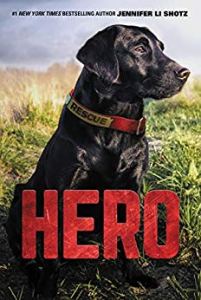
Hero, by Jennifer Li Shotz

Hero, a retired search-and-rescue dog, is not prepared for a stray puppy to come into his life. But when he and twelve-year-old Ben find Scout injured and afraid, the new addition leads them down an unexpected and dangerous path.

When Scout goes missing, it’s up to Hero to use his search-and-rescue skills to find Scout and bring him home.

Get ready for a canine adventure full of danger, loyalty, and the unbreakable bond between a boy and his best friend.

(and don’t miss the other titles in this ongoing series!)


Rules of the Ruff, by Heidi Lang

Twelve-year-old Jessie is in for a long summer at her aunt and uncle’s house. Her cousin Ann has a snotty new best friend, which leaves Jessie all alone. But Jessie is industrious, and—not content with being ignored all summer—she convinces Wes, a grouchy neighborhood dog walker, to take her on as his apprentice.

Sure, dog walking turns out to be harder than she expected, but she has Wes’s dog-walking code, the Rules of the Ruff, to guide her, and soon she’s wrangling her very own pack. But when a charismatic rival dog walker moves to town, she quickly snatches up most of Wes’s business—and Jessie decides she isn’t going to take this defeat with her tail between her legs.


Ruff vs. Fluff, by Spencer Quinn

From the outside, Queenie the cat and Arthur the dog appear to have a lot in common. Both pets live in the charming Blackberry Hill inn. They both love their humans, twins Harmony and Bro. They both have a fondness for sausage.

But that doesn’t change the fact that they are mortal enemies.

Goofy, big-hearted Arthur loves everyone he’s ever met . . . except the snobby, scheming cat who’s devoted her life to ruining his.

Queenie is a bit choosier. And who can blame her? When you’re brilliant AND exquisitely beautiful, you can’t be expected to rub tails with commoners. Especially not slobbery dogs.

But when the twins’ beloved cousin is framed for murder, Queenie and Arthur must work together to clear his name . . . something Queenie finds even more distasteful than inexpensive caviar. Can two enemies put aside their differences long enough to solve the mystery?


Wish, by Barbara O’Conner

Eleven-year-old Charlie Reese has been making the same secret wish every day since fourth grade. She even has a list of all the ways there are to make the wish, such as cutting off the pointed end of a slice of pie and wishing on it as she takes the last bite.

But when she is sent to the Blue Ridge Mountains of North Carolina to live with family she barely knows, it seems unlikely that her wish will ever come true. That is, until she meets Wishbone, a skinny stray dog who captures her heart, and Howard, a neighbor boy who proves surprising in lots of ways. Suddenly Charlie is in serious danger of discovering that what she thought she wanted may not be what she needs at all.

From award-winning author Barbara O’Connor comes a middle-grade novel about a girl who, with the help of a true-blue friend, a big-hearted aunt and uncle, and the dog of her dreams, unexpectedly learns the true meaning of family in the least likely of places.


Good Dog, by Dan Gemeinhart

Brodie was a good dog. And good dogs go to heaven.

Except Brodie can’t move on. Not just yet. As wonderful as his glimpse of the afterlife is, he can’t forget the boy he left behind. The boy he loved, and who loved him in return.

The boy who’s still in danger.

So Brodie breaks the rules of heaven. He returns to Earth as a spirit. With the help of two other lost souls — lovable pitbull Tuck and surly housecat Patsy — he is determined to find his boy and to save him.

Even if it costs him paradise. Even if he loses his eternal soul.

Because it’s what a good dog would do.


Rain Reign, by Ann M. Martin

Rose Howard is obsessed with homonyms. She’s thrilled that her own name is a homonym, and she purposely gave her dog Rain a name with two homonyms (Reign, Rein), which, according to Rose’s rules of homonyms, is very special. Not everyone understands Rose’s obsessions, her rules, and the other things that make her different―not her teachers, not other kids, and not her single father.

When a storm hits their rural town, rivers overflow, the roads are flooded, and Rain goes missing. Rose’s father shouldn’t have let Rain out. Now Rose has to find her dog, even if it means leaving her routines and safe places to search.

THE ODDMIRE: Book I Changeling & All Sorts of Magic!

We have another amazing author visit today here on The Mixed-Up Files!

Despite being a debut author in the middle grade arena, this author might already be familiar to you. It’s William Ritter, the author of the New York Times bestselling Jackaby series, which deserves a major round of applause. But he’s here to share his intriguing #mglit tale of vanishing magic, the Wild Woods, goblins, and more! And to top all this newness off, William shared with me that this is the first time his own illustrations are being used in one of his books. Super cool!

Hi William, it’s such a pleasure to speak with you again. We’re very excited to have you here. Tell us, what books did you find most memorable as you were growing up?

I loved so many books growing up. As a teen, I liked the witty language of PG Wodehouse and the silly situations of Douglas Adams. When I was a middle-grade reader, the standout was probably Patricia Wrede’s fantastical Dealing with Dragons.

Do you think they’ve influenced you as an adult? As a writer?

The stories I loved as a kid are deep in my bones now—and they definitely influence the books I write. Wrede’s series, set in the Enchanted Forest, borrows all manner of classic folktale tropes, turning them on their head and reimagining them in clever, playful ways. My MG debut, The Oddmire, is set in the Wild Wood, and it is absolutely following in Wrede’s literary footsteps.

Speaking of THE ODDMIRE, let’s show the readers your book.

Magic is fading from the Wild Wood. To renew it, goblins must perform an ancient ritual involving the rarest of their kind—a newborn changeling. But when the fateful night arrives to trade a human baby for a goblin one, something goes terribly wrong. After laying the changeling in a human infant’s crib, the goblin Kull is briefly distracted from his task. By the time he turns back, the changeling has already perfectly mimicked the human child. Too perfectly: Kull cannot tell them apart. Not knowing which to bring back, he leaves both babies behind.

Tinn and Cole are raised as human twins, neither knowing what secrets may be buried deep inside one of them. Then when they are twelve years old, a mysterious message arrives, calling the brothers to be heroes and protectors of magic. The boys must leave behind their sleepy town of Endsborough and risk their lives in the Wild Wood, crossing the perilous Oddmire swamp and journeying through the Deep Dark to reach the goblin horde and discover who they truly are.

In this first book in a new fantasy-adventure series, New York Times bestselling author William Ritter takes readers on a journey of monsters, magic, and discovery.


Love this cover! And the story sounds like a non-stop race and adventure. What was your favorite part of writing this story?

Making my own kids laugh. I have two boys (the inspiration for the Burton twins in The Oddmire). MG readers are a very discerning audience with little patience for boring prose—so when I read my drafts to my boys and they laugh at the funny bits or demand to hear the next chapter, it makes my heart happy.

Okay, this answer just made my heart all squishy. Was there anything that surprised you while writing The Oddmire?

There are always tiny ideas that grow into huge elements as a book evolves. The character of Fable wasn’t even in my earliest outlines, and I can’t imagine the story without her now. The Queen of the Deep Dark similarly began as a simple boogeyman, but the more I explored her character, the more depth I found.

*Note future writers: this is a teeny peek into what it’s really like to develop characters. And it is so much fun! What do you hope readers find within the pages of this story?

Having a family that looks different or comes together in an unconventional was is not a bad thing. Family can be messy & difficult, but real family is about love, not about clean, simple genealogy.

Gosh, this is truth and such a wonderful message for kids to grasp. Okay, we know this is a series. Any sneak peeks into what’s to come?

Changeling is centered around the Burton twins. They meet many fun characters along the way, but in the end, it’s their story. The Unready Queen bring the twins back, but turns its focus toward the enigmatic Fable, a girl from the Wild Woods. It’s her turn.

*flails Kermet arms* This is very exciting! It will be great to get to know Fable even more.

For our reading writers, what’s the most valuable writing advice you’ve ever received?

E.B. White (Charlotte’s Web) once said: “A writer who waits for ideal conditions under which to work will die without putting a word on paper.” Truth! Sometimes you’ll feel truly inspired—other times you’ll have to drag each word out. Sometimes you’ll write in a clean, tidy office—other times you’ll be sitting on the back seat of a city bus. Sometimes you’ll write in the quiet morning light on a vintage typewriter with a steamy cup of tea beside you—other times you’ll poke letters into a cell phone notepad in the middle of the night because you woke up to a screaming baby and then got an idea for a new story. Readers will never know which passages were written under “ideal” circumstances and which you scraped out of the muck. Just let yourself write.

Such wonderful advice, William. Thank you for sharing your wisdom and your work with us. Looking forward the The Oddmire’s release on July 16! Your friends at The Mixed-Up Files will be cheering you on.

Reports of William Ritter’s birthplace are unreliable and varied, placing his hometown either in a series of mysterious Catacombs in Malta or in a quiet town in Oregon. His parents, it can be confirmed, raised him to value intelligence, creativity, and individuality. When reading aloud, they always did the voices.

At the University of Oregon, William made questionable choices, including willfully selecting classes for the interesting stories they promised, rather than for any practical application. When he wasn’t frivolously playing with words, he earned credits in such meaningful courses as Trampoline, Juggling, and Seventeenth Century Italian Longsword. These dubious decisions notwithstanding, he regrets nothing and now holds degrees in English and education with certificates in creative writing and folklore.

He currently teaches high school language arts, including reading and writing, mythology and heroes. He is a proud husband and father. When reading aloud, he always does the voices. Find out more about William – WEBSITE | TWITTER

Readers, do you like fantasy middle grade like The Oddmire? If so, what do you like about fantasy?