Posts Tagged diversity

STEM Tuesday – Diseases and Pandemics — In the Classroom

Throughout history, infectious diseases have impacted humans around the world. Whenever a strange new disease emerges, scientists called epidemiologists study it to learn how it spreads, its effects on humans, and how to stop it.

The books we’re highlighting this month focus on some of the most infamous and deadly infectious diseases in history and the scientific work to study and contain them. They are a great starting point for different sciences activities and discussions in the classroom. Here are a few to try:

Outbreak! Plagues That Changed History by Bryn Barnard

Here’s an extensive evaluation of the causes and human reactions and interactions (from the 1300s to the present) to bubonic plague, smallpox, yellow fever, cholera, tuberculosis, and the 1918 influenza pandemic. This book examines how these diseases changed societies and what it will ultimately take to eliminate cholera worldwide. It also looks at how wealth, bias, and prejudice continue to affect governmental reactions to microbial evolution.

Classroom activity: Divide the class into small groups and assign each an infectious disease to study. Have them answer the following questions: What type of disease is this – virus or bacteria? How does it enter the human body? How does it spread? What effect did this disease have on people around the world? Have scientists been able to stop the spread of this disease? If so, how? If not, why not? Have each group present what they have learned to the class.

An American Plague: The True and Terrifying Story of the Yellow Fever Epidemic of 1793 by Jim Murphy

This book dramatically examines another “invisible stalker.” Using both first-hand witness and medical accounts, newspaper clippings, and contemporary images, it follows yellow fever’s arrival and spread throughout Philadelphia. Detailing the social, political, and medical conditions and struggles to combat this disease, this book examines the changes that the plague brought to modern medicine and the fear that it could reappear.

Classroom activity: Compare the historical yellow fever epidemic to the current Covid-19 pandemic. How would you document today’s pandemic for future generations? Have students create their own modern-day pandemic documentation – using first-hand witness accounts, newspaper articles, photographs, and other primary sources. What do they hope future generations will learn from their work?

Fatal Fever: Tracking Down Typhoid Mary, by Gail Jarrow

When typhoid fever breaks out in New York, medical detective George Soper traces the outbreak to Mary Mallon. His job: to prevent her from infecting others. But Mary refuses to comply with quarantine and other medical directives. After all, she isn’t sick. So she continues cooking and passing on the disease. Personal freedom versus public health questions are once again relevant as we deliberate quarantines, lockdowns, and contact tracing.

Classroom activity: When an infectious disease is spreading through a community, should public health take priority over personal rights and freedoms? What are the pros and cons of each point of view? Divide students into two groups – one that prioritizes public health and one that prioritizes individual rights. Have each group prepare arguments that support their assigned point of view and debate the issue.

Fever Year- The Killer Flu of 1918: A Tragedy in Three Acts by Don Brown

Presented in a graphic novel format, this book tracks the course of the 1918 flu from Camp Funston, Kansas around the world. Many images look eerily familiar – empty streets and masks. A very accessible examination of the politics and science involved in battling the spread and ultimate containment of this flu. Additionally, it comments on current scientist’s desire to discover why this flu was so deadly by recreating it.

Classroom activity: The lessons we can learn from history are invaluable. After reading about the 1918 flu pandemic, ask students what they have learned about the spread of the flu virus and the effectiveness of different prevention methods taken in 1918. How have people applied these lessons learned from history to today’s Covid-19 pandemic? In what ways could we do better? What have you learned that you can use to help stop the spread of infectious disease?

*************************************

Carla Mooney loves to explore the world around us and discover the details about how it works. An award-winning author of numerous nonfiction science books for kids and teens, she hopes to spark a healthy curiosity and love of science in today’s young people. She lives in Pennsylvania with her husband, three kids, and her dog. When not writing, she can often be spotted at a hockey rink for one of her kids’ games. Find her at http://www.carlamooney.com, on Facebook @carlamooneyauthor, or on Twitter @carlawrites.

STEM Tuesday – Diseases and Pandemics — Book List

From the first sneeze to the last wheeze, these books explore diseases and the scientists who study them.


All in a Drop: How Antony van Leeuwenhoek Discovered an Invisible World by Lori Alexander; illus by Vivien Mildenberger

When Antony van Leeuwenhoek read a book showing plants and insects as seen through a microscope, he decided to build his own. Antony is considered the “father of microbiology” and his work with microscopes laid the foundation for (100 years later) understanding that microscopic germs were responsible for disease.


Science Comics: Plagues: The Microscopic Battlefield by Falynn Koch

Imagine Jules Verne meets Miss Frizzle. In this book, a scientist uses interactive technology to communicate with bubonic plague and yellow fever germs. Readers learn how bacteria and viruses invade our bodies, elude our defenses, and how immunity works. There’s a good explanation of vaccinations and virus mutation (why we need a flu shot every year…).


Outbreak: Disease Detectives at Work by Mark P. Friedlander, Jr.

What happens when a strange new illness affects entire swaths of people all at once? You call on the “disease detectives” – epidemiologists – to investigate. In this book you’ll learn about the history of plagues, ancient and modern, as well as how epidemiologists study diseases such as Lyme disease, SARS, and AIDS. This book has already been updated twice; I predict in another couple years we’ll see a newer edition that includes Covid-19.


Outbreak! Plagues That Changed History by Bryn Barnard

Here’s an extensive evaluation of the causes and human reactions and interactions (from the 1300’s to the present) to bubonic plague, smallpox, yellow fever, cholera, tuberculosis, and the 1918 influenza pandemic. This book examines how these diseases changed societies and what it will ultimately take to eliminate cholera worldwide. It also looks at how wealth, bias, and prejudice continue to affect governmental reactions to microbial evolution.


Plagues, Pox, and Pestilence by Richard Platt, illus by John Kelly

In an ironic twist, a lab-coated rat, Professor Ratticus, and his cockroach and mosquito assistants lead the reader through a comprehensive look at diseases and epidemics. Comic-like illustrations (like war rooms mapping the spread of germs) and a browseable nonfiction format combine with entertaining graphics, facts, and history to provide a great overview of the world’s worst epidemics and illnesses.


Bubonic Plague & Yellow Fever


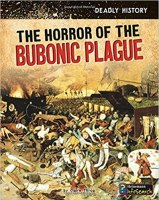
The Horror of the Bubonic Plague (Deadly History series) by Claire Throp

This book provides a concise overview of the history of bubonic plague from the Sixth century to present. Readers learn about causes and cures and some historical context. Some things will sound familiar: the use of quarantine and lockdowns, wearing masks and protective clothing, peddling fake cures, and suffering economic losses. It ends with mention of where plague still exists, but forgets to include the U.S.


The Plague (Deadliest Diseases of All Time) by Lawrence Andrews

Andrews provides a straightforward examination of the origin of the bubonic plague, methods of transmission, historic effect around the world, and its continued existence. He explains why the plague still affects 1,000 to 2,000 people a year, including within the U.S., and the race to limit its spread and find a way to eliminate the disease.


Bubonic Panic: When Plague Invaded America by Gail Jarrow

Written as a gripping medical “who-done-it,” this book introduces the ‘phantom killer” and explores the earliest plague pandemics through 1722. When this menace resurfaces in China, India, and Honolulu in the late 1890’s and then San Francisco in 1900, scientists scramble to identify the cause and find a cure, public health officials fight to finish it, and politicians hurry to hide it. This fascinating tale of how the plague settled into American and continues to infect a handful of people each year, includes a “frequently asked questions” section, timeline, and author’s note.


An American Plague: The True and Terrifying Story of the Yellow Fever Epidemic of 1793 by Jim Murphy

This book dramatically examines another “invisible stalker.” Using both first-hand witness and medical accounts, newspaper clippings, and contemporary images, it follows yellow fever’s arrival and spread throughout Philadelphia. Detailing the social, political, and medical conditions and struggles to combat this disease, this book examines the changes that the plague brought to modern medicine and the fear that it could reappear.


Typhoid Fever 


Terrible Typhoid Mary: A True Story of the Deadliest Cook in America, by Susan Campbell Bartoletti

This book is not for the squeamish – but if you don’t wash your hands after using the toilet and eat cookies that fell to the floor (5-second rule!) then you should be OK. Mary Mallon cooked for some of the wealthiest families in New York and was well- known for her hand-cranked ice cream topped with fresh fruit. Somehow, her families came down with typhoid fever. George Soper was the epidemic detective on the hunt to find the person making people sick. At the center of it all the question of civil rights and asymptomatic carriers.


Fatal Fever: Tracking Down Typhoid Mary, by Gail Jarrow

When typhoid fever breaks out in New York, medical detective George Soper traces the outbreak to Mary Mallon. His job: to prevent her from infecting others. But Mary refuses to comply with quarantine and other medical directives. After all, she isn’t sick. So she continues cooking and passing on the disease. Questions of personal freedom versus public health are once again relevant as we deliberate quarantines, lockdowns, and contact tracing.


Flu Pandemic


Influenza: How the Flu Changed History, by Barbara Krasner

In 1918, people didn’t know the exact cause of the flu. But they knew the germs spread through the air. Some families sealed up their windows, and public health officials ordered people to wear masks. From initial outbreak to development of a vaccine to future epidemics, this book provides a good overview of the flu.


The 1918 Flu Pandemic: Core Events of a Worldwide Outbreak (What Went Wrong?) by John Joseph Micklos Jr.

Tracking the spread and undulation of the three waves of the 1918 Flu, from March 1918 to June 1919, this book explores the potential causes, actions that facilitated its expansion (such as WWI, armistice celebrations, and soldier’s returns), and lack of a cure that resulted in over 40 million deaths worldwide. Published in 2016, one of the critical thinking questions at the end asks how well the world may be prepared for another flu pandemic.


Fever Year- The Killer Flu of 1918 : A Tragedy in Three Acts by Brown, Don

Presented in a graphic novel format, this book tracks the course of the 1918 flu from Camp Funston, Kansas around the world. Many images look eerily familiar – empty streets and masks. A very accessible examination of the politics and science involved in battling the spread and ultimate containment of this flu. Additionally, it comments on current scientist’s desire to discover why this flu was so deadly, by recreating it.


STEM Tuesday book list prepared by:


Sue Heavenrich writes about science for children and their families, from space to backyard ecology. A long line of ants marching across the kitchen counter inspired her first article for kids. When not writing, she’s committing acts of citizen science in the garden. She blogs about science for kids and families at archimedesnotebook.blogspot.com.


Maria Marshall is a children’s author, blogger, and poet passionate about making nature and reading fun for children. She’s been a judge for the Cybils Awards from 2017 to present. Her poems are published in The Best Of Today’s Little Ditty 2017-2018, 2016, and 2014-2015 anthologies. When not writing, critiquing, or reading, she bird watches, travels the world, bakes, and hikes. Visit her at www.mariacmarshall.com/blog.


STEM Tuesday — Sustainable Living– Writing Tips & Resources


Aphoria, Brachylogia, Chriea: It Sounds Greek to me!

Ever since Aristotle, humans have been using rhetorical devices to strengthen their communication. Shakespeare used them. Modern movies use them. And, sneaky science writers use them, too!

Rhetoric is an art. Most frequently we think of rhetoric as speaking or writing for persuasive purposes, but it can also be used to inform. Rhetoric includes logic, motivation, and speaking techniques, plus it includes figures of rhetoric. Figures that fiddle with the structure of sentences. Figures that string words together in a striking way. Figures that focus the attention of the reader.

Nonfiction writers can use some of that.

Rhetorical figures or devices provide formulas that have been tested and tried since the time of the Ancient Greeks. There’s an entire alphabet of effective rhetorical devices out there. Today, we don’t have time to work our way all the way to Zeugma, but we can peak into this world of word wisdom by starting with “A.”


Alliteration:

the repetition of the same sound at the beginning of words that are in close proximity

When Shakespeare wrote The Tragedie of Anthonie and Cleopatra, he borrowed a paragraph almost word-for-word from Lives of the Noble Greeks and Romans. Note that word “almost.” What change did the great bard make to this history that might have sounded a wee bit stodgy?

Alliteration.

“The barge she sat in like a burnished throne,

Burned on the water: the poop was beaten gold;

Purple the sales and so perfumed that. . .”

I bet you spotted all those b’s and a few p’s. Now, let’s look at how a modern book, We Are All Greta: Be Inspired by Greta  Thunberg to Save the World  by Valentina Gianella and illustrated by Manuela Marazzi, puts alliteration to work:

“My daughter’s school chat room has been buzzing since dawn: dozens of colorful cartoons have appeared, with slogans sent out by #FridaysForFuture sites. Today is the day of the great global student strike organized by Greta Thunberg. . .”


Try this: Replace every other alliterative word with a synonym. Re-read the passage. How did those changes affect the reading? Practice yourself by selecting a stodgy sentence from this blog and give it some bounce by adding alliteration.


Anaphora:

the repetition of entire words or phrases at the beginning of successive clauses

Anaphora adds rhythm. Anaphora adds cadence. Anaphora adds emotional pull to key content. The result is emphasis on a particular piece of text, often making it memorable. Is that something you’d like to do with your writing?

A tip for using this rhetorical device: use active sentences and use anaphora when you wish to emphasize the subject of the sentence.

Try this: Put your hand on the closest book to you. Select a line from that book, a subject in that book, or a character within that book as the starting place, and write something short using anaphora for emphasis.


Aphoria:

an expression of doubt or uncertainty

Adding uncertainty to your writing couldn’t be useful to science writers, could it? Aphoria provides the reader an opportunity to evaluate, analyze, or judge the situation for themselves. The doubt

expressed may be genuine, sincere, or feigned. If feigned, the effect may be to guide the reader towards a specific point. If sincere, the effect may be to convey humility. If genuine, the effect may be to encourage critical thinking in the reader’s mind.

Here’s an example of aphoria from Diet for a Changing Climate, by Christy Mihaly and Sue Heavenrich.

“Pulling weeds and invasive kudzu vines from the garden and . . . eating them?”

Try this: Decide if this doubt is genuine or feigned. What effect might this use of aphoria have on a reader? Can you think of more than one?


Assonance:

the repetition of internal vowel sounds

Can you ascertain the assonance in this passage from Jodi Wheeler-Toppen’s Recycled Science: Bring Out Your work Science Genius? Bonus points if you find alliteration as well.

“Test out a physics fact, and have a blast at the same time!”

Assonance can be put to good use creating a mood and rhythm within prose. Writers who pay attention to the sounds of letters can maximize the impact of a rhetorical device such as assonance. Consider how assonance affects the mood of “Good night, sleep tight, don’t let the bedbugs bite.”

Try this: Search for assonance in another book and ferret out the effect on the mood of the text.


26 More Letters to Go!

One list of rhetorical figures includes 108 that begin with “A!” We will stop here, but you can dive into the rest of the alphabet with resources at the end of this post.

Figures of rhetoric can infuse your writing with passion and power. Now that you have easy-peazy formulas, you can just toss in some words and have a masterpiece, right? Maybe not. A gifted writer selects devices purposefully.


Try this: Flip through several books, and flag the use of rhetorical devices. Work your way through the book a second time, making note of the frequency per page or absence of these tools. Do you see any trends? When might it be wise to avoid using a rhetorical device?

When you’re ready to level up to the next challenge, compare the figures from several books. Try a textbook, a nonfiction book from a series, and a trade book on the same topic. What differences do you notice?

O.O.L.F. (Out of Left Field)

Resources in Rhetoric

The Elements of Eloquence: Secrets of the Perfect Turn of Phrase, Mark Forsyth

Literary Devices, a list of commonly used rhetorical devices with in-depth explanation and examples, https://literarydevices.net/

The Forest of Rhetoric, a more complete list of rhetorical devices with brief definitions, http://rhetoric.byu.edu/


Rhyme Zone, for help with alliteration, plug a word into the synonym search and then sort alphabetically, https://www.rhymezone.com/

Heather L. Montgomery enjoys finding a fun turn of phrase while writing about wild and wacky wildlife. You might even spot a few rhetorical devices in her recent nonfiction: Who Gives a Poop? Surprising Science from One End to the Other.