
This STEM Tuesday, Jodi and Carolyn are teaming up and tackling it all–well, almost! Literacy, science practices and a cross-cutting concept, technology tie-ins, and gender and general equity in STEM. It goes to show you what a couple of great books can do to stimulate learning–our own and, we hope, your students! So let’s get going…
Literacy Connection: Writing Prompts!
It’s March, which means that it is Women’s History Month. In schools, March is also the time when teachers of all subjects are especially pressured to give writing assignments that will help prepare students for upcoming writing assessments. You can “celebrate” both with Women in Science: 50 fearless pioneers who changed the world, by Rachel Ignotofsky.
This book contains an excellent collection of 1-page descriptions of female scientists’ lives and careers. Let’s look at how you can use them to quickly pull together writing prompts.
Rachel Ignotofsky’s opening pages (p. 6-7) provide an excellent introduction for the prompt:
Next, pivot to the actual prompt:

Finally, add in your question. Here are some suggestions you might consider, based on your area of science:

That’s all there is to it! Strong texts on an important subject, and writing practice for all.
STEM Connections: Patterns and Practices
The Girl Who Drew Butte rflies offers wonder-full opportunities to connect kids to NGSS disciplinary core ideas (e.g., heredity). But its value goes beyond DCIs. Together with carefully paired experiences, this inspirational book promises to stimulate learning in the areas of science practices and the cross-cutting concept of patterns. It also suggests strong connections to technology and engineering, art, and fostering gender (and general) equity in STEM. Doesn’t that paint a powerful picture? (Just like Maria Merian!)
Bring Up “Baby” (Eggs, Instars, etc.) for Pattern Recognition
 Of course, the focal points of Merian’s scientific studies–body forms and regular, predictable repetition of life cycles of insects, and these animals’ relationships to specific plants– offer key examples of patterns.
An obvious—and engaging–learning link: Nurture butterflies from eggs (or instars, AKA caterpillars)! Choose painted lady butterflies or monarchs.
Better yet…
Make a Menagerie of Metamorphosis!
Raise multiple species! For example, rear painted ladies, monarchs, and add in “brassica butterfly” eggs , various moths, and the mealworms (which are neither butterflies nor moths).
Add Power and Punch with Plants
Echo Merian’s emphasis on ecological relationships by providing plants that your particular classroom specimens rely on. For example, raise the “brassica butterfly” on the quick-growing Wisconsin FastPlants® variety of brassica, which allows students to examine a complete plant life cycle. Free lesson and activity guides are available. (The plants won high marks with teachers in one of my recent curriculum-based professional development programs.)
Outward Bound
Are you fiscally and philosophically motivated to follow Maria Merian’s lead and head outdoors for your specimen? Missouri Botanical Garden offers user-friendly suggestions.
Exploring Patterns with Your Classroom Zoo (and a Garden, Too)
Observing the live specimens can foster awareness and understanding of patterns. Explicitly use the term while prompting students to reflect on their daily observations and data.
Exploring Patterns: Questions to Ask
-
For each individual species, what is the body pattern (the way the parts look and relate to each other, the basic template or form)? What differences, or variations, do we notice across individuals of the same species?
-
Investigate each species’ development, or life cycle, pattern: How many days do individuals spend in each phase of development? Is there a wide variation or a narrow range of time from one phase to another? (Can we tell without banding or marking individuals)?
-
Over each species’ life stages, what predictable relationships between the animal’s behavior and its stage do you see? Do these patterns make sense? What questions do they raise?
-
Across species: Compare and contrast the life cycle stages in different species. Are there any general patterns of development across species? What variations across different species do we see?
-
How do the animals’ and plants’ life cycles resemble and differ from each other?
-
What are the relationships between the species and the plants they rely on? Are their cycles synced in any way you can see?
Science Practices Make Perfect Connections!
You can foster development and understanding of science practices while interweaving The Girl Who Drew Butterflies and classroom studies of animals (and their plant hosts).
While reading about Merian’s habit of hoarding insects for study, ask students to list the questions they think she had in mind; post them. (Although understanding the curiosity that drove her may be straightforward, articulating questions might be challenging.) Ask students which they think are most interesting.
Take students on a walkabout in a suitable outdoor space. Look for butterflies, moths, and other insects at various stages. (Remember to check out water insects if you can!) Begin preparations by encourage students to look with the eyes and questioning mind of Maria:
- What questions do students have that relate to her curiosity? Which of these do students think they can investigate simply by going outside and carefully observing?
- Plan to bring notebooks/sketch pads, trowels, rakes, nets, magnifying lenses, and small containers (such as salad dressing cups or baby food jars) to help unearth, collect for observation, and examine what students find.
Over time, as students get into a rhythm of recording data (including their observations), discuss their observations, questions, and any “wonderings” that are coming up for them. Keep a running list of questions on cards that you post. Eventually, classify questions according to those that someone could/could not investigate by running an experiment or planned observation. Consider trying some student-suggested investigations in your classroom, possibly guiding students to adapt and simplify questions as needed.
This practice stems from and leads to the practice of asking questions. To deepen this connection, explicitly involve students in identifying ways to collect and record data.
-
What will help us compare and contrast what they see across individual animals within a species, and across species?
-
As we try different approaches, what are the benefits and disadvantages of each?
-
What type of numerical data might be interesting and important to track? (Suggestions: numbers of individuals within a species population that survive to adult form, growth of individuals at, weight of food offered and consumed, numbers of certain features (spots, sensory organs, etc.).
- Sketch the specimens but also keep notes of daily observations of change and constancy. Compare and contrast classroom records with information from other sources about other species.

- Students might try making watercolor sketches the way Merian did!
- Encourage students to think about the relationships of art, science, and technology in relation to this practice:
-
How does making sketches help you as a scientist?
-
How does being a scientist help you as an artist?
-
Maria made prints and books for sale. How did printing technology contribute to scientific knowledge and Maria’s ability to continue studying insects?
Add photography and videography to expand this opportunity for students to reflect on how technology helps us in scientific inquiry.
- Compare and contrast the benefits and drawbacks of using pencil, watercolor, still photography, and video to document, enhance, and communicate observations.
- What differences do we see among the drawings created by different individuals? How might such differences impact a scientific community?
Technology Tie-Ins: Use Insect Info to Solve Agricultural Problems
Two free lessons from the Cape Cod Cranberry Growers Association engage students in practical applications of understanding insects life cycles and ecological relationships. Bugs on the Bog is an Integrated Pest Management problem-solving activity. Students rely on knowledge of pest insect stages to manage a model cranberry bog. How Do You Bee? focuses on ecological relationships between pollinators and plants at different plant stages.
Mind the (Gender, SES, Racial, etc.) Gap: All Students as Scientists
Maybe these ideas and resources will bring about a full-scale metamorphosis in any beliefs that threaten your students’ pursuit of STEM:
- Prominently post pictures of students that provide evidence that they are already scientists. Have students take and/or caption the pictures.
- Discuss the book’s claims and evidence that Merian’s culture constrained, but didn’t stop, her.
-
Today, what beliefs might hinder or help you and others thrive as scientists?
These materials might support student exploration of this question.
We–Jodi and Carolyn–have had our say about this week’s featured books and connections to the classroom. But we’re most interested in hearing from you.
- Have you read the books?
- …Used them to foster science learning and engagement on the part of learners?
- Do you want to recommend any additional resources or share a great lesson idea?
- Share your thoughts; leave a comment!
(And Happy Pi Day!)
 Jodi Wheeler-Toppen is a former science teacher and the author of the Once Upon A Science Book series (NSTA Press) on integrating science, reading, and writing instruction. She also writes for children, with her most recent book being Dog Science Unleashed: Fun Activities to do with Your Canine Companion. Visit https://OnceUponAScienceBook.com for more information on her books and staff development offerings.
 Carolyn Cinami DeCristofano is a STEM education consultant and provides curriculum development and professional development to schools and nonprofits as Blue Heron STEM Education, Inc., which she co-founded. Her books for kids include the popular A Black Hole is NOT a Hole (published in English, Korean, Chinese, and as an audiobook), and her recent Running on Sunshine: How Solar Energy Works. Find her in classrooms providing author visits, on Facebook –and in April 2019 at the National Science Teachers Association conference in St. Louis, where she will co-present on using authentic data in the classroom and participate–along with Jodi and several other STEM Tuesday contributors–in the Linking Literacy Event, which features conversations with authors.



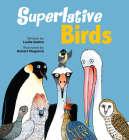 Leaf Litter Critters and Superlative Birds by Leslie Bulion
 National Geographic Book of Nature Poetry: More than 200 Poems With Photographs That Float, Zoom, and Bloom! by J. Patrick Lewis
 Carver, A Life in Poems by Marilyn Nelson – A biography of George Washington Carver
 The Universe Verse by James Lu Dunbar
 Joyful Noise: Poems for Two Voices by Paul Fleischman and Eric Beddows
 The Poetry of Science: The Poetry Friday Anthology for Science compiled by Sylvia Vardell and Janet Wong
 Finding Wonders: The Girls Who Changed Science by Jeannine Atkins
 Forest World by Margarita Engle
 Ringside: 1925 – Views from the Scopes Trial by Jen Bryant
 Big Bang! The Tongue-Tickling Tale of a Speck That Became Spectacular by Carolyn Cinami DeCristofano
 Nancy Castaldo has written books about our planet for over 20 years including, THE STORY OF SEEDS: From Mendel’s Garden to Your Plate, and How There’s More of Less To Eat Around The World, which earned the Green Earth Book Award, Junior Library Guild Selection, and other honors. Nancy’s research has taken her all over the world from the Galapagos to Russia. She strives to inform, inspire, and educate her readers. Nancy also serves as the Regional Advisor of the Eastern NY SCBWI region. Her 2018 multi-starred title is BACK FROM THE BRINK: Saving Animals from Extinction. Visit her at www.nancycastaldo.com
 Patricia Newman writes middle-grade nonfiction that inspires kids to seek connections between science, literacy, and the environment. The recipient of a Sibert Honor for Sea Otter Heroes and the Green Earth Book Award for Plastic, Ahoy!, her books have received starred reviews, been honored as Junior Library Guild Selections, and included on Bank Street College’s Best Books lists. New: Eavesdropping on Elephants: How Listening Helps Conservation, an NSTA Outstanding Science Trade Book. During author visits, she demonstrates how her writing skills give a voice to our beleaguered environment. Visit her at www.patriciamnewman.com.
 Welcome to STEM Tuesday: Author Interview & Book Giveaway, a repeating feature for the fourth Tuesday of every month. Go Science-Tech-Engineering-Math!

 Your host is

