

Bookhoarding: Early and Often
Growing up, a favorite Sunday afternoon outing was to the famed Children’s Bookstore in downtown Toronto. It was the 1980s, the heyday of the bookshop and of me and my siblings piling into the wood-panelled station wagon for squabbling as well as other more-intentional family activities.

A 1980 ad for The Children’s Bookstore in Toronto. Can you believe the talent it attracted!?
When it was time to leave the store my parents would first have to locate me hidden in one of the aisles, deep inside the pages of a book I hadn’t bought yet. I remember the pile of my selections and then their hefty weight in the bags as we walked back to the car. Being obliviously squished in the station wagon (for once unconcerned by who got to sit in the “backy-back”) while reading on the way home. Repeat this experience, perhaps on a different Sunday afternoon, at the Judaica store where I would stock up on Holocaust literature (which as the granddaughter of survivors I was obsessed with and is probably another blog post.) And the thrill of receiving the Scholastic mail order to my classroom. And every once in awhile my mother would bring home used books for me.
I am hard pressed to find any material objects from my childhood—my family moved many times and my mother is a ruthless de-clutterer. But I hereby publicly thank my mom for somehow holding on to my copy of Noel Streatfield’s Ballet Shoes—which she bought for me used and which I then made much use of myself, reading it over and over again; and which now exists in my own home library; and which I have now read twice out loud to various children; and which my eldest has read to herself countless times.

Edition of Ballet Shoes by Noel Streatfeild (published in 1937, this edition in 1979) in our home library, except our cover has disintegrated.
Reading is… Re-reading?
What I loved most about reading was the chance to re-read the books I most loved. It was rare that I would read something only once. The fiendish gobbling down of a new book was also in preparation for the judgment of “is this worthy of re-reading?”
There are many pleasures of re-reading. Because the first read is to find out WHAT HAPPENS. And WHAT HAPPENS NEXT. And HOW DOES IT END. But when you read it again you aren’t flipping the pages compulsively to know all that: you already know it. So in the next reading and any subsequent ones, you are reading to enjoy in a different way—to meander on the path a little more, to take pleasure in the characters and language, to understand better what happens, to laugh at the funny parts like one does at a cult movie—the hilarity often being in knowing exactly what’s going to happen and what will be said, the pleasure in the anticipation and then in getting to experience it all over again. Or the heartbreak. Or the unfairness. The antagonist getting their just desserts. Indeed, the satisfaction of a satisfying ending.
Middle Grade and Re-reading
I now see this with my own children. Most young kids delight in making their parents and caregivers (and any other unsuspecting victims) read their favorite picture books over and over (and over) again. But once children learn to read they often delight in reading their favorite books to themselves over and over again. Usually the middle grade book I am reading out loud to my 9 and 11 year old sons, they will then read to themselves—sometimes reading ahead of where we are together, sometimes taking it to re-read afterward, sometimes both. They will read anything in graphic format, and our collection of Big Nates, Dogmans, Captain Underpants, Hazardous Tales, along with Raina Telgemeirs (both the memoirs and the Babysitter’s Clubs) and other coming-of-age graphic novels such as New Kid, Awkward, Roller-Girl or the beautiful Holocaust-introduction White Bird are thickened and dog-eared.
Agents and editors often say that they will only represent and acquire a manuscript they love enough to see themselves re-reading and re-reading and re-reading. One which will stand up to that amount of scrutiny. In which they love the characters enough to see them through their plot again and again and again. Fair enough!
But middle grade books seem particularly designed to be read over and over again. They are filled with emotion, empathy and adventure. They are where kids can learn about the world, themselves, and each other. And middle grade readers seem uniquely designed to be re-readers. They have the time, the curiosity, the intelligence and the emotional ability to connect deeply and expansively with books and stories that move them, engage them or even just make them giggle.

Bookshelf in my sons’ bedroom, examples of what gets lots of re-reading love.
I’ve written before about the unique pleasure of reading a childhood favorite again as an adult, and the relief of it standing the test of time. Like meeting up with an old friend and immediately connecting once again, the kinship felt both the same and different, and maybe even deeper. But as an adult, I find that it is rare for me to re-read something. I am inundated by what’s new and what’s next—it always feels like there’s something else I should be reading, I should have read already, that I need to consume. Or the book I bought as part of a haul from a bookstore visit suddenly doesn’t seem compelling at the exact moment I’m ready to start something new, but I hear of something else—on Twitter, a book review in the paper, something jogs my memory, a friend’s recommendation—that does and order it immediately.
Panic-buying books
When my kids’ schools announced they were closing six weeks ago, and threats of a lockdown were looming, I found myself not only stocking up on toilet paper and canned food, but on books. Bookstores would close, libraries too, and what if Amazon stopped delivering? It was (AND IS) so scary to think about getting sick, people dying, the uncertainty of anything beyond each day. And so—as a further manifestation of stockpiling mentality or as way of sidestepping the things too scary to contemplate— I panicked about how we would manage without something new to read. How would I nourish my soul in a lockdown? How would I nourish my children’s? It felt like it might be the difference between keeping sane and coping with whatever came our way, and not.
Small graces in a difficult time
Over these lockdown weeks, however, I have watched my older daughter, 14, work her way through the new books I bought her that had been piling up, unread for lack of time due to being a teenager (read: school, friends, Snapchat, Instagram, TikTok, Netflix.) Now there is suddenly LOTS of time. And when she finished the new ones she started reaching in her bookshelf for all the old ones. The ones she loved when she was 7, 8, 9, 10 and 11. (12 being the beginning of her literary teenage wasteland.) In one of the many surprising twists of lockdown and life in the time of the new Coronavirus, this is one of the positive ones for me, and her.

My new TBRR (To Be Re-Read) pile. I’ve started with Possession by AS Byatt.
So I have taken the lead from my children and have started re-reading again as a general practice.
For now my pantry is (thank goodness) well-stocked – and I’ve realized that I have an even better-stocked home library. I have almost every book I’ve bought or been given since college. (Unless I’ve loaned it to you and you haven’t returned it. It’s ok, I don’t mind.) From picture book to middle grade to adult fiction, non-fiction and plays, all genres are gamely and lovingly represented (Lonely Planet Ireland circa late 1990s anyone?) Not only is self-isolation and lockdown a chance to work my way through my TBR stack, but it is also a wonderful chance to re-read the books that pleased me as an adult. Or on the cusp of adulthood. Great works that deserve more careful reading. Or which I don’t think I understood as fully in my twenties as I might now.
Indeed, with each re-reading we understand something different. The words remain the same, but we—whether it is our age or our stage or our mental place—are different each time. What new knowledge, understanding, satisfaction and joy will each reading bring?

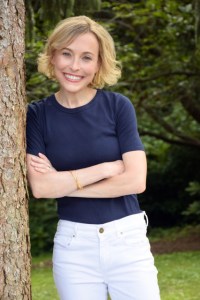 Eileen Moskowitz-Palma and I first crossed paths more than a decade ago, at the Backspace Writers Conference, in New York. I can’t remember which panels I attended, but one thing stands out: meeting Eileen. We were sitting in a large, well-lit room, waiting for the keynote to begin, when she turned around and smiled at me. It was the warmest, friendliest smile I had ever seen, and naturally I wanted to bask in her… Eileen-ness.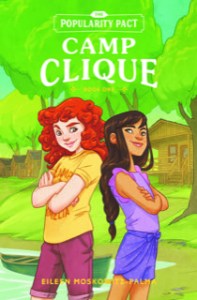
 MR: Camp Amelia is an adventure camp, with the focus on team spirit and athletic ability. There’s even a camp-wide sports competition (“the Cup”), where winning is everything. Were you sporty like Bea, or anxious like Maisy? Perhaps an amalgam of both?


 Christine Taylor-Butler: Tanya, you are one of the most accomplished authors in the field with more than 100 books under your belt. One of your superpowers seems to be telling compelling stories of lesser known historical figures whose contributions have left an indelible mark on society. For example, you wrote about Ilan Ramon, the first and only Israeli astronaut to date. What lead you to his story?
  Tanya: Yes. It was in doing the research for the Ilan Ramon book that I discovered a snippet of information about Jerrie Cobb–and that led me to write Almost Astronauts. That happens to me a lot. I’ll get lost in the library, immersed in research, and uncover all kinds of fascinating things that plant seeds in my brain for future books. I think I was writing about Elizabeth Blackwell (
 Tanya: What surprised me most is what still surprises me–that these women, who paved the way for every woman in the space industry today, are still not household names. I hope this book gets made into a film someday so it will have a much wider audience. Can’t you just see Reese Witherspoon as Jerrie Cobb?
 CTB: Randolph Lovelace, the scientist conducting the tests, noted women were lighter and would take up less space on a mission. He calculated the difference in cost at $1,000 per pound compared to men if women were sent to space. That’s significant savings in 1960’s dollars. And yet NASA didn’t find it a compelling reason to open the program to women?
 CTB: Nineteen women were tested. Thirteen successfully completed the testing, in many cases performing better than their male counterparts. Despite their proven skills, women were shut out of the astronaut program until 1978. You’re careful to explain the era in which these events occurred. Still, did it surprise that both John Glenn and Scott Carpenter both testified in Congress against having women in the program?
 Tanya Lee Stone is an Assistant Professor at Champlain College in Burlington, Vermont, teaching in the Professional Writing Program. She started her career as an editor in New York. After moving to Vermont in the late 90s, she started writing. She is best known for telling true stories of unsung heroines, with themes of empowering girls and women threaded throughout her work, such as Girl Rising, Almost Astronauts, Who Says Women Can’t Be Doctors?! and Who Says Women Can’t Be Computer Programmers?! Her articles, essays, and reviews have appeared in The Horn Book, The New York Times, School Library Journal, and Publishers Weekly.
 Your host is