Posts Tagged children’s books

STEM Tuesday– Math– Writing Tips and Resources


Paradigm Shift

Did you see it? The National Council of Teachers of English recently issued the “Position Statement on the Role of Nonfiction Literature (K–12).” I’ll be honest and say that when I was growing up, I never thought of nonfiction as literature. To me, nonfiction was an encyclopedia, a text book, or one of those really dry library books that you checked out when you had to do a report on a cheetah. Sure the cheetah was cool, but the book about it? I had to crawl my way through all of the dusty dry to find the fascinating facts.

Look how far we have come… This month we are looking at the literary craft of not just nonfiction, but math nonfiction! And that’s because the world of publishing has opened their arms to cool, crafty, creative presentations of information. And I for one am giddy over it. In fact, NCTE, this group of professional English teachers is proposing “a paradigm shift for teaching and learning with nonfiction literature in K–12 education.”

Drop the mic! Nonfiction is coming into its own!

So, how exactly do we spur on this paradigm shift? We can start by studying the craft of informational books. We can articulate new language to help us describe unique attributes of nonfiction. We can search out the devices used by nonfiction authors. We can compare/contrast, discuss/evaluate, and weigh the pros and cons. In other words, we can have informed opinions.

One Way to Start

Melissa Stewart (author of over 100 nonfiction books for children) and Dr. Marlene Correia (an educator of 30 years) have written a book entitled 5 Kinds of Nonfiction: Enriching Reading and writing Instruction with Children’s Books. Check out this article (https://www.melissa-stewart.com/img2018/pdfs/5_Kinds_of_Nonfiction_SLJ_May_2018.pdf) in the School Library Journal and Melissa’s blog post (http://celebratescience.blogspot.com/2020/02/5-kinds-of-nonfiction-update.html).  They propose that much of today’s nonfiction can be categorized as one of the following:

  • Active – books that get kids doing something, i.e, Klutz Books for Kids
  • Browseable – open to any page and find chunks of facts, i.e., Nat Geo Weird But True World
  • Traditional – provide a broad survey of a topic, i.e. Rattlesnakes
  • Narrative – provide a narrative arc, i.e.  Radiant Child The Story of Young Artists Jean-Michel Basquiat
  • Expository Literature – non-narrative books that present a narrow topic in a creative or unique way, i.e. Summertime Sleepers: Animals that Estivate!

To become more comfortable with this idea, open a math book and check out a spread. Which category might each fit into? Try these:


The Kitchen Pantry Scientist Math for Kids: Fun Math Games and Activities Inspired by Awesome Mathematicians, Past and Present; with 20+ Illustrated, by Rebecca Rapoport and Allanna Chung.


Just a Second, by Steve Jenkins
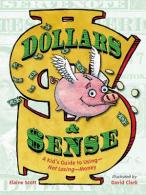


Dollars & Sense: A Kid’s Guide to Using–Not Losing, written by Elaine Scott, illustrated by David Clark.


Sir Cumference and the First Round Table , written by Cindy Neuschwander, illustrated by Wayne Geehan (you’re right, this one is not nonfiction!)


Just as all novels books do not fit neatly into one genre, nonfiction books don’t all fit neatly into these categories, but I bet you know a reader who LOVES one of these categories. What if we recommended books to readers based on this? What if we encouraged all readers to sample books from all of these categories?

This is a powerful new way to understand and nudge forward this paradigm shift for teaching and learning nonfiction!

________________________________________________

Prepared by:


Heather L. Montgomery, author of 17 nonfiction books for kids.

www.HeatherLMontgomery.com

Some thoughts on Writing and RITUALS

Writers are known to have rituals. Light a candle, sit in your favourite chair, arrange your paperclips at right angles, and only then can/will the the magic at the keyboard begin.

I’m not exactly kidding. Patricia Highsmith apparently started her writing sessions off with a stiff drink; Truman Capote claimed he could only write when horizontal, coffee and a cigarette in hand; Haruki Murakami has said that when he is writing a novel he wakes at 4 am and works for five or six hours straights, runs or swims in the afternoon, and goes to bed by 9 pm. 


I do have a Pavlovian response when I hear the opening bars of Mozart’s Sonata for Piano and Violin in G, K.301:2. Allegro

As a mother of four kids running a busy home, however, I can’t really afford to get too picky about a lot of that stuff. Mostly I need to do whatever I can to carve out time, and try and use it to the best of my ability. That includes: not peeking at the myriad tabs open as I compare ballet tights, dog food, birthday gifts, name labels on sale, other items on sale; ignoring pinging from any number of WhatsApp groups re: carpools, playdates, football training; not scheduling doctor/dentist/hairdresser appointments; and not checking something else off the endless to-do list. I do have music that I like to listen to when I write. With Honey and Me I basically listened to a Mozart for Morning Coffee CD I had from my kids until eventually technology advanced but I was still slogging away and I switched to Mozart for Study playlists on Spotify. I don’t actually know anything about classical music, but when I hear the opening bars of Sonata for Piano and Violin in G, K.301:2. Allegro my mind jumps to my characters Milla and Honey and their world. 

But I can also write in cafes, on airplanes and anywhere there’s white noise rather than the mom-specific noise of someone asking me what’s for dinner or have I seen their shin pads. 

There is one ritual I do have though. It’s not exclusive, meaning I can write without it and otherwise go about my day. But it does bring me joy and internal structure—an expectation of what I’m meant to be doing— and there’s something to be said for that. 

My ritual is: mugs.

The first thing to know is that I drink tea all day long. Green tea until 2 pm. And then chamomile, and sometimes rooibos or mint. But that’s not really the important part. The important ritualistic part is which mug I am drinking said tea in. I used to have two. One has Elvis Presley on it. It comes from an Elvis-themed truck stop on the road between Jerusalem and Tel Aviv. It was purchased for me by a taxi driver who took me from Tel Aviv to the cemetery just outside Jerusalem where my friend had buried her son; waited for me during the service, standing on the outskirts with a kippa from his glove compartment; and then took me back to my children waiting for me at a hotel in Tel Aviv before we returned to London later that day. But first he wanted to show me the Elvis truck stop and bought me a cup of tea with the mug as a souvenir. 

 The Elvis mug

This is the mug I use when it is family time. When I’m using that mug I am not wishing that I could be sitting at my computer. I am counting my blessings for my family and their health— mental and physical. Even when I’m making four different dinners. Even in the depths of lockdown where boundaries in general did not seem to exist. When I take out that mug it’s a choice and a statement that I will try to be in the moment with my family and whatever needs doing for them, and not trying to split my time between my writing and them, giving not enough to either.

The writing mugs (Parts I and II)

My second mug used to be a Society of Children’s Book Writers & Illustrators mug. Purchased by me, for me, at an SCBWI British Isles conference many years ago, this was my work mode mug. When I was using that mug it meant that I did not want to be called by school to come get my sick child. Alas, sometimes that was the case. Because that’s life. But taking out that mug was a choice and a gesture that this writing part of me was important and deserved space. 


Unfortunately, a few months ago this mug broke. Don’t ask me how, no one will tell me. My husband glued the handle back on but a chunk was missing. I was going through a Harry Styles thing (I mean, who wasn’t?) and my older daughter, both mortified and milking it for laugh-at-mom value bought me a “You’re So Golden” mug as a replacement work mug. It’s a good one, although it’s a bit more irreverent and less earnest than the SCBWI one. I use it for work, but also sometimes when I need a bit of pep. It should also be said that since my book was published, I have found the definition of work to be different. Rather than just going into my home office to write, I am suddenly running another small business — essentially a marketing and PR firm for my book. It is such different and unexpected work. But perhaps that’s another blog post.

The author mode mug

The point is the lines have been blurred a bit and luckily I now have a THIRD mug which is taking its ritualistic place in my life. Just before Honey and Me was published I got a mystery package in the mail, with handwriting that was extremely familiar but too out of context to place, especially because it had been so long since I’d last seen it. To my shock and utter delight, it was a mug made into the jacket cover of Honey and Me, sent from my oldest best friend Stephanie. I still can’t get over it. It’s hard to say how much this mug means to me. Having the love and support of my friends for one thing. Having a friend who has known me since I was four. Having written a book about friendship and to feel this support from my own friend. Seeing the jacket cover on a mug and feeling OMG this is real, I am about to be a published author. There’s probably more to it that I can’t even harness and pick out the strands of what and how much it means to me, but basically I suspect I have written this whole blog post as an excuse to show off this mug!

So the Honey and Me mug I use when I am in what I think I will call “author mode.” Sometimes I am afraid to take it out lest I drop it and break it. Say what you will about the fragility with which I consider this new mode of being for me: “author.” Other times I sip from it proudly or at least try to own it. The book is published and I am proud of it. I love how people are connecting to it. I love talking to kids who have read it! And it’s been an added surprise and bonus to talk to all the  adults who have read it and related to it, no matter their background.

All I know is, I hope my mugs don’t break. I hope that people everywhere love my book. I hope I have more books in me. I hope my family stays safe. Even without my mugs these are my hopes and fears. 

Ritual shmitual. 

STEM Tuesday– Math– In the Classroom


What’s the story of math? It’s more than logical equations, patterns, and exact answers. These STEM Tuesday books tell of math’s history, its use, and how it integrates into the lives of fictional characters. Bring the story of math into the classroom with these fun activities.


A Quick History of Math

by Clive Gifford, illustrated by Michael Young

This book chronicles the history of math, beginning with the Lebombo bone (the very first mathematical object in the world) all the way to the present day. Readers will learn how to count like an Egyptian using hieroglyphs and how to do matha-magic with magic squares. It’s fun and engaging, and also packed with jokes, graphics, and activities.


Classroom activity: Reenact the history of math with micro-performances in the classroom. Have students research a moment of math history from the book. Then ask them to create a little skit to act out that moment. Some examples could be:

  • An Ancient Egyptian store where the cashier adds up purchases using heiroglyphs
  • Be a Babylonian math teacher and teach the class to add
  • Host a Chinese magic squares game show
  • Stage a short counting story play using Mayan math

Encourage students to create visuals, add math jokes, and interact with their audience. See how creative they can be!


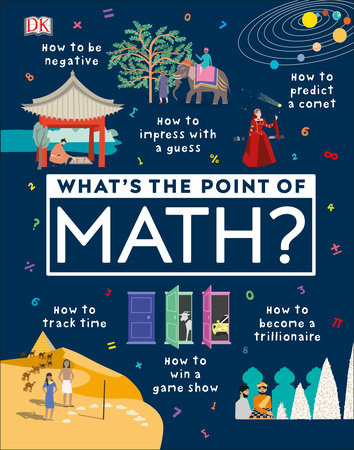
What’s the Point of Math? What's the Point of Math? by DK

by DK

What’s the Point of Math? not only highlights how math is all around us, but also,that math is fun. Through a slew of fun facts, magic tricks, and mathematical brainteasers, readers will be entertained while they learn. The book also touches on the history of math as well as bios of famous mathematicians.


Classroom activity: Pick a famous mathematician from the book to write about. Have students research their mathematician and write a short biography of that person. Ask them to find photos or images to go along with parts of their bios. Encourage students to write interesting hooks at the beginning of their bios and titles for their biographies.


Much Ado About Baseball

Much Ado about Baseball

by Rajani Larocca

Although this is fiction, Much Ado about Baseball is a stellar book. To be clear, it doesn’t specifically teach readers about mathematical concepts, but the narrative connects to math in many ways. For example, twelve-year-old protagonist Trish is able to solve tough math problems and loves baseball. When she moves and joins a new baseball team, they must solve a difficult puzzle or there will be tragic consequences.


Classroom activity: Part of writing fiction is developing characters. Ask students to develop a math-loving character. They should write descriptions of the character and how math is part of their lives. Pose these prompts: What kind of personality does this person have? What do they look like? What kind of math goals do they have? What are their strengths and weaknesses? Have students create posters with an image of their character, their character’s name, and a description of what they are like.


Karen Latchana Kenney loves to write books about animals, and looks for them wherever she goes—from leafcutter ants trailing through the Amazon rain forest in Guyana, where she was born, to puffins in cliff-side burrows on the Irish island of Skellig Michael. She especially enjoys creating books about nature, biodiversity, conservation, and groundbreaking scientific discoveries—but also writes about civil rights, astronomy, historical moments, and many other topics. Visit her at https://latchanakenney.wordpress.com