
 MUF: We’re speaking today with Dianne Edmonds, co-owner of Linden Tree Books (“Where Imaginations Grow”) a lively, mostly-children’s bookstore in Los Altos, California (www.lindentreebooks.com)
Diane, your shop has undergone interesting changes from the past, not only in location but transitioning from children’s recordings to books. What is the atmosphere you’ve created as a bookshop, and what are your goals for the future?
Dianne: Linden Tree has had many positive changes in the last 6 years. We’ve centered our brand and logo around the message: “Where imaginations grow”. By dropping the word children from our store name,  we can emphasize the notion that any person of any age can let their imagination grow. We will always be known as a specialty children’s store but we didn’t want our name limiting how customers view us. In addition, we foster a sense of creativity and enlightenment in all aspects of our store. The layout of the store transitions from one section to the next with bright orange signage; our displays capture thematic topics and seasonal happenings. We have small chairs and ottomans in the picture book area and larger chairs in the teen and adult sections. Multi generations can come into the store together and find a plethora of books and accessories to allow their imaginations to grow.
Our goals for the future include an on-line web store, continuing our vast assortment of events and public outreach as well as continuing to foster the love of reading within our community.

MUF: Your staff has been described as “literary matchmakers.” How do they go about helping customers find the next, best book?
Dianne: Our literary matchmakers are the best in the industry! We have a phenomenal staff that is recognized by customer’s near and far. Being a “Matchmaker” requires two things: first, you need to know what books are available, their content and audience. This requires spending a LOT of time reading and listening to the opinions of fellow coworkers. Linden Tree Books is blessed with staff that are sincerely interested in what we recommend to our clients, so this is pretty fun and educational. We dedicate time at staff meetings for book talks, all our staff attends our local fall trade show, and everyone joins our team with the desire to let their imagination grow.  Second, every staff member is trained to be well versed in the art of the interview: asking short, easy questions and understanding the responses. We also have to understand reading levels, comprehension/appropriateness level (i.e., a 10-year-old might read at an 18-year old’s level but they won’t be able to understand nearly as much, and most books at that level will be very inappropriate), what the book(s) are needed for and why, and what the parent is comfortable with. It all starts with the first and best question along the lines of “What have you read recently and enjoyed? Why?” Treating each customer as an individual and not type casting while listening for intonations in their voice or body language is also very critical.
All of this can only be learned by people who like people, and by spending time with the customers. It’s a bit like solving a mystery in a detective novel. Solving the match making mystery in 4 minutes can be really hard; however, there is NOTHING like witnessing a customer discover a book you love and recommend.
MUF: An independent bookstore’s collection has to be curated. How do you decide what books to carry in your shop?
Dianne: First, Jill Curcio, Co-owner, vets every title as she meets with publishing reps and reviews front list titles. Then we carefully manage the number of inventory turns within the year of all titles. If customers continue to buy specific titles on a regular basis, we will carry the book. If the metrics fall below our minimum, even if it’s near and dear to our heart, we have to let it go. Our customers dictate what they want, we listen to those purchasing habits and respond according.
MUF: As middle-grade authors, we’d love to know what titles, new or old, fiction or non-fiction, you find yourselves recommending to readers ages 8-12 these days?
Diane: How many pages can we fill on your blog? Seriously, we could provide you with pages of titles that are the go-tos for this age group. 
 The Inquisitor’s Tale, (Adam Gidwitz), Spy School (Stuart Gibbs) et al, Books of Elsewhere by Jacqueline West,
 Fish in a Tree (Lynda Hunt),
 Ms Rapscott’s Girls (Elise Primavera), and The Unwanteds by Lisa McMann usually make the cut. I’m also super partial to the Ramona books, the Little House books, and The Witch of Blackbird Pond by Elizabeth Speare.
More from our Matchmakers:

–The Boy Who Saved Baseball-John Ritter
–Every Soul a Star– Wendy Mass
–A Wrinkle in Time-Madeline L’Engle
–Harry Potter-J K Rowling
–Hoot- Carl Hiassen
–The Blackthorn Key – Kevin Sands
–Three Times Lucky – Sheila Turnage
–Connect the Stars – Marisa de los Santos
–Jackie Haha – Robert Patterson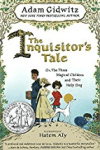
–Dragon Rider – Cornelia Funke
 —Frogkisser! – Garth Nix
–Princess Academy – Shannon Hale
–The Lightning Thief – Rick Riordan

–Escape from Mr Lemoncello’s Library-Chris Grabenstein
–The Girl Who Drank the Moon-Kelly Barnhill
–Pax-Sara Pennypacker
–Charlotte’s Web -E.B. White
Jennifer Bertman’s The Book Scavenger and The Unbreakable Code (forthcoming) and The Defiant (M. Quint),  because of the local connection to San Francisco locations. Chris Grabenstein’s books, especially Mr. Lemoncello’s Library, because of the tech/game connection.
–The Wild Robot -Peter Brown
–Mrs. Bixby’s Last Day-John D. Anderson
–Some Kind of Courage -Dan Gemeinhart
–Hello Stranger-Steadman
–Summerlost-Ally Condie
–The Warden’s Daughter-Jerry Spinelli
–The Real Boy-Anne Ursu
 An upcoming book that we’ll be sure to put into everyone’s hands is Lemons by Melissa Savage, about a girl who has lost her mother and has to get used to a whole new town with a grandfather she’s never met. Another favorite is Full Cicada
  Moon, set during 1969 and the moon landing, about a girl who’s half black and half Japanese who wants to be an astronaut, and the mindset of the time that she has to overcome.
MUF: When the middle-graders turn thirteen, they’re eligible for a very special book group at your store. Please tell us about it.
Dianne: Linden Tree hosts a special program called the Linden Tree Teen Advisory Board for kids aged 13 through 18. Currently the program has nineteen kids from ten different schools who volunteer their time to attend Board meetings, help set up our in-store events and run events of their own. Just recently, the Teen Board hosted a Harry Potter Trivia event.  They also get the opportunity to read pre-release books and meet authors. It’s been invigorating and fun! When we decided to start this program, we were hoping for at least 12 applications for 10 volunteers spots; for the first round, we had 50+ applications! It was amazing and showed us that there is such a need for these young, avid readers to have a place with their “people” to feel comfortable and be with like-minded readers. Being around this talented group really provides hope for the future of literature.
MUF: Do you have any events or activities coming up that would be of special interest to middle-graders?
Dianne: We have just started a program for 7 to 12-year olds we call the Linden Tree Page Turners. We have an RSVP list of 50 readers who come to the store to be interviewed about what they love to read! They share their favorite books, give us their thoughts, and we turn them around into a newsletter for adults who want to know what kids are reading. We are really looking forward to seeing what sort of information they share with us.
 MUF: I believe you also carry puppets, games, and other book-related items at Linden Tree What are some favorites?
Dianne: The puppets and stuff animals are very popular, especially those with a tie-in with a book, like: the new -Knuffle Bunny, Uni the Unicorn, etc- o the classic -Lyle, the kid from Snowy Day. Madeline- to the glorious mix of both: Max and Ruby, and all the Boynton stuffies. The Folkmanis brand of puppets sell very well at our store. Also, puzzles, coloring books, origami and magic trick sets are popular. Harry Potter themed sidelines always have a customer base.
MUF: If a family came to Los Altos to visit your store, would there be family-friendly places for them to have lunch or a snack after shopping? And if they could stay a little longer, are there unique family activities or sights nearby they shouldn’t miss?
Dianne: Los Altos has a very inviting downtown. To start with, we are next door to a fabulous bakery, Manresa that features a seasonal selection of handmade breads and pastries as well as a full expresso and tea shop. There is also a unique family friendly restaurant called Bumble. Bumble is a local organic restaurant created for locals and families to gather and enjoy a healthy meal and relax with friends over coffee or a glass of wine while children can check in a bright, sunny Playroom. Their menu serves brunch and midday cafe offerings and changes seasonally to make the most of locally sourced, organic ingredients. Also within a block of our store is a skateboard store (Skateworks) several outdoor art sculptures and plenty of sidewalk benches and two ice-cream establishments.
MUF: Thanks, Diane for telling us about your shop and for sharing so many of your favorite titles!  Readers, why not celebrate National Independent Book Store Day this Saturday by visiting Linden Tree Books (or, if you live too far away, your nearest independent shop) and picking up some of these books?



 To this day I read and write about spies and spying and how things are never quite as they appear. And lucky for us, middle grade is chock full of spectacular spy writing. In no particular order, some of my current favorites. They’re not top secret so feel free to share.