Posts Tagged children’s books

WNDMG Author Interview with Meg Eden Kuyatt

WNDMG Author Interview with Meg Eden Kuyatt

When I fell in love with the prose in Meg Eden Kuyatt’s first novel, Good Different, then learned she was writing a ghost story of sorts, I. COULD. NOT. WAIT!
I had the esteemed pleasure of sitting down to interview Meg. Here’s the inside scoop on both the author and her book…

KATE: Our Mixed-Up-Files readers would love the inside scoop on your latest novel-in-verse, The Girl in the Walls. Can you tell us a bit about where the idea for this story came from?

MEG: I tend to start my stories in a feeling. This one started when I saw something very upsetting happen to someone I cared about. I tried to write about it directly, but when that didn’t work and felt a little too real, I knew I needed to try another angle (like Emily Dickinson, to tell it slant). I started asking what if questions, like: what if V could time travel? What if she met a ghost? The ghost helped bring this magic wonderland world of the walls, giving me distance. It also gave me an outlet for me to process all my feelings, giving an option for what I could be like if I held onto them forever and didn’t try to work through them. That warning made me really want to work through my feelings all the more and find healing on the other end.

KATE: I love that you write books which make me cry (I’m looking at you too, Good Different). And by this, I don’t mean you write emotional books, I mean you write books with big emotions. How easy is it for you to tap into a young character’s emotions while creating universal connections to your readers?

MEG: Thank you so much, Kate! That’s the part I feel like is my strength. As an autistic person, I feel things so big, and so channeling those feelings into my characters is easy. I just write what I’m feeling now, and what I felt at that age (often they’re very similar things, just maybe wearing different outfits). When I ask things like: what am I struggling with now? What did I struggle with then?, I try to be as specific as possible, and ironically, the more specific we are, the more universal we get because we’re tapping into the human experience.

KATE: In discussing some of those emotions just a bit further, I think many readers will be able to relate to Valeria, a girl who has been hurt by the actions and comments of others. Afterall, who hasn’t wished someone else a taste of their own medicine? How did you decide this would be her driving force?

MEG: I write what I’m feeling and struggling with in the moment. I knew I needed to write this book when, like V, I was hurt and angry at someone else. I knew I needed to try to see them with more empathy. But to get there, I knew I needed to be honest with where I was in my feelings and let that fuel the story.

KATE: You have two characters giving Valeria art guidance – one who says to draw art as you see it. Another who says to draw art as you feel it. When you write, which advice registers closest for you?

MEG: I think there’s truth to both, for V and for my writing. We need to be informed by what we feel, but also what is true. Sometimes these intersect, but sometimes feelings are unreliable narrators, so we need to open our eyes to get perspective and ask, what is true?

KATE: There’s a great parallel in your novel between ghosting someone and being a ghost oneself. Talk to us about how you wove in the concept of being seen.

MEG: I think as the story progresses, V realizes she’s been holding in feelings, but so has the house—to embody how the family has been holding in hurt from generational trauma and ableism. When we’re ghosted, it hurts, and if we don’t acknowledge those feelings, if we don’t move forward, we can become ghosts in a sense, trapped in a cul de sac of looping feelings. We can also give that as an inheritance to the next generation. And if we don’t acknowledge those feelings, they build and fester and get worse. They wound, and can create really malignant patterns for the generations to come. In a few ways, this becomes a literal threat V has to deal with, because as things escalate, they can become real obstacles. I wanted V to break those generational patterns and pave forward another option.

KATE: We often hear about family curses. How important was it for you to make this story generational?

MEG: That was the main thing I wanted to explore here: generations. What do we inherit from our families? The people who dig at us the most, is it in part because we see ourselves in them? What legacy do we want to leave forward? How can we take the good and oppose the evil in the legacies we inherit?

KATE: It’s often fun to read about the baddies of a book, and your baddie is certainly up there on that list! How fun was it for you to write this antagonist?

MEG: Not fun! 😉 But very healing. Sometimes you have to write very real things, that aren’t necessarily fun, because they hit a little too close to home. But it’s really important. It was fun, in a sense, exploring the complexities of the antagonist: the yes, but what if…?

KATE: You and Valeria share many things in common, I’m sure, one in particular is being neurodivergent. Can you tell MUF readers about neurodivergence and how this connection to Valeria helped you in your story development?

MEG: I’m neurodivergent and I don’t know what it’s like to not be ND. I used to try to write neurotypical leads to satisfy a previous agent, but I learned I’m a bad actor, and don’t know what it’s like to be neurotypical! So I write what I know, and my best writing is what I know. For V, I particularly wanted to channel my insecurities as a neurodivergent person in a neurotypical world, how I have so much joy in who I was created to be until something happens and someone makes me doubt myself.

Especially because in Good Different, Selah grows to love her autism, I wanted to show the other end, because it’s not always that simple. Usually there’s a mix of joy and internalized ableism. I don’t want people to stop at Selah’s story and think we’ve “fixed ableism.” It’s still there, all the more obvious by RFK Jr’s recent disturbing comments. There is joy, but there’s also a lot of hurt, and for kids struggling with that, I wanted them to see themselves in V’s story, and see it doesn’t have to end there.

KATE: Can you describe your writing process and, can you give us an example of something you cut, changed, or reworked from draft to publication?

MEG: Goodness, so much changed. The basic bones of the emotional arc have always been there, but there were pranks that had to get cut, lots of conversations between the ghost and V, a lot of internal poems..I was really challenged by my editor to focus, to escalate, and keep things active, since I can get so lost in my head sometimes.

KATE: Thank you for taking the time to share the inside scoop on The Girl in the Walls. Is there something beyond Valeria’s world you can hint at? Perhaps a new project in the works?

MEG: I’m so excited to have a Good Different companion novel in the works currently called PERFECT ENOUGH, and a YA with two autistic leads (that I’ve been working on for over ten years now, so it’s such a joy to know it’s coming out into the world)! Being undiagnosed for most of my life, I’m really enjoying exploring what it means to be autistic and how to be a healthy autistic person in a neurotypical, often ableist world. So we’ll see where that leads me as I play with future ideas!

KATE: Where can readers best find you if they want to reach out?

MEG: megedenbooks.com! I love hearing from readers!


Lightning Round


And….no MUF interview is complete without a lightning round, so…

Favorite place to write? – patio, or Chick-fil-a

Dark chocolate or milk chocolate? – dark chocolate all the way

Superpower? – flying! or timetravel.

Rollerblades or bike? – bike!

Dream job when you were a kid? – being an artist or a manga-ka

House pet? – cat

Favorite piece of advice for writers? – persist!

Summer Camp Capers: 10 Middle Grade Books About Camps

Cover of "Be Prepared" by Vera Brosgol features anxious looking child camper in the woods.

Who could forget their summer camp experience?

For many children, sleep-away camps or day-camps can be both exciting and anxiety-producing. I remember going to a sleep-away camp when I was in middle school. It lasted a week. It felt like two months. Also, someone very close to me once received a disconcerting drawing from an eleven-year-old at a week-long camp:

Child's self portrait and text "Oh! How I want to go home!"

It should be noted, the child ultimately decided it was “good to get out of my comfort zone.”

How can you help your child or student anticipate or reflect on camp experiences?

1. Journaling

2. Writing stories about camp (whether it be real or imagined)

3. Talking about their feelings

4. Reading books about camps! Whether or not a child plans to attend a summer camp, middle grade books about young protagonists triumphing in challenging, scary or even hilariously over-the-top camp situations can be both inspiring and entertaining.

Listed below are ten wonderful middle grade books that feature summer camps:

Be Prepared by Vera Brosgol

In Be Prepared, all Vera wants to do is fit in—but that’s not easy for a Russian girl in the suburbs. Her friends live in fancy houses and their parents can afford to send them to the best summer camps. Vera’s single mother can’t afford that sort of luxury, but there’s one summer camp in her price range—Russian summer camp.
Vera is sure she’s found the one place she can fit in, but camp is far from what she imagined. And nothing could prepare her for all the “cool girl” drama, endless Russian history lessons, and outhouses straight out of nightmares!


Here in the Real World by Sara Pennypacker

Ware can’t wait to spend summer “off in his own world”—dreaming of knights in the Middle Ages and generally being left alone. But then his parents sign him up for dreaded Rec camp, where he must endure Meaningful Social Interaction and whatever activities so-called “normal” kids do.

On his first day Ware meets Jolene, a tough, secretive girl planting a garden in the rubble of an abandoned church next to the camp. Soon he starts skipping Rec, creating a castle-like space of his own in the church lot.

Jolene scoffs, calling him a dreamer—he doesn’t live in the “real world” like she does. As different as Ware and Jolene are, though, they have one thing in common: for them, the lot is a refuge.

But when their sanctuary is threatened, Ware looks to the knights’ Code of Chivalry: Thou shalt do battle against unfairness wherever faced with it. Thou shalt be always the champion of the Right and Good—and vows to save the lot.

But what does a hero look like in real life? And what can two misfit kids do?


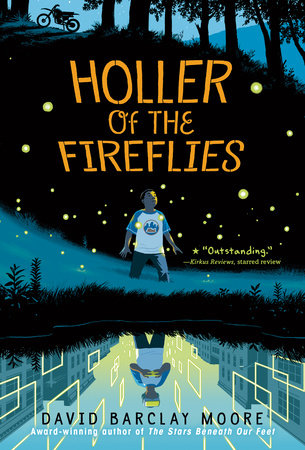
Holler of the Fireflies by David Barclay Moore

Javari knew that West Virginia would be different from his home in Bushwick, Brooklyn. But his first day at STEM Camp in a little Appalachian town is still a shock. Though run-ins with the police are just the same here. Not good.

Javari will learn a lot about science, tech, engineering, and math at camp. And also about rich people, racism, and hidden agendas. But it’s Cricket, a local boy, budding activist, and occasional thief, who will show him a different side of the holler—and blow his mind wide open.

Javari is about to have that summer. Where everything gets messy and complicated and confusing . . . and you wouldn’t want it any other way.

J + C + summer = ∞


Lions and Liars by Kate Beasley

Frederick Frederickson has a food-chain theory about life. There are lions, like the school bully. Gazelles, like the bullied kids. There are meerkats, and the fleas that live on the butts of meerkats. Frederick’s a flea.

Fifth grade is off to a terrible start when Frederick is sent to a disciplinary camp for troublesome boys. His fellow troop mates—Nosebleed, Specs, The Professor, and little-yet-lethal Ant Bite—are terrifying. But in between trust-building exercises and midnight escape attempts, a tenuous friendship grows between them. Which is lucky, because a Category 5 hurricane is coming and everyone will have to work together—lions and fleas alike—to survive!


Mirror to Mirror by Rajani LaRocca

Maya is the pragmatic twin, but her secret anxiety threatens to overwhelm her.

Chaya is the outgoing twin. When she sees her beloved sister suffering, she wants to tell their parents—which makes Maya feel completely betrayed. With Maya shutting her out, Chaya makes a dramatic change to give her twin the space she seems to need. But that’s the last thing Maya wants, and the girls just drift further apart.

The once-close sisters can’t seem to find their rhythm, so they make a bet: they’ll switch places at their summer camp, and whoever can keep the ruse going longer will get to decide where they both attend high school—the source of frequent arguments. But stepping into each other’s shoes comes with its own difficulties, and the girls don’t know how they’re going to make it.


Stella Díaz Never Gives Up by Angela Dominguez


Stella gets a big surprise when her mom plans a trip to visit their family in Mexico! Stella loves marine animals, and she can’t wait to see the ocean for the first time . . . until she arrives and learns that the sea and its life forms are in danger due to pollution.

Stella wants to save the ocean, but she knows she can’t do it alone. It’s going to take a lot of work and help from old and new friends to make a difference, but Stella Díaz never gives up!


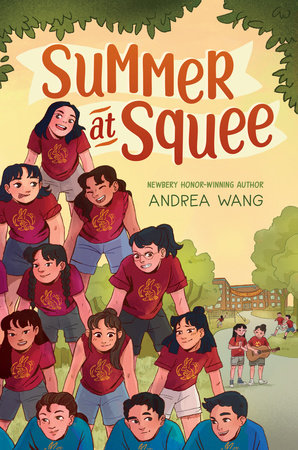
Summer at Squee by Andrea Wang

Phoenny Fang plans to have the best summer ever. She’s returning to Summertime Chinese Culture, Wellness, and Enrichment Experience (SCCWEE for short and “Squee” to campers in the know), and this year she’s a senior camper. That means she; her best friend, Lyrica Chu; and her whole Squad will have the most influence. It almost doesn’t matter that her brother is a CIT (counselor-in-training) and that her mom and auntie are the camp directors. Time spent at Squee is sacred, glorious, and free.

On the day Phoenny arrives, though, she learns that the Squad has been split up, and there’s an influx of new campers this year. Phoenny is determined to be welcoming and to share all the things she loves about camp—who doesn’t love spending hours talking about and engaging in cultural activities? But she quickly learns how out of touch she is with others’ experiences, particularly of the campers who are adoptees. The same things that make her feel connected to her culture and community make some of the other campers feel excluded.

Summer at Squee turns out to be even more transformative than Phoenny could’ve imagined, with new friendships, her first crush, an epic show, and a bigger love for and understanding of her community.


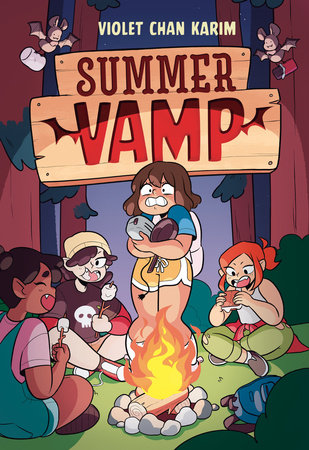
Summer Vamp by Violet Chan Karim

After a lackluster school year, Maya anticipates an even more disappointing summer. The only thing she’s looking forward to is cooking and mixing ingredients in the kitchen, which these days brings her more joy than mingling with her peers . . . that is until her dad’s girlfriend registers her for culinary summer camp! Maya’s summer is saved! . . . or not.

What was meant to be a summer filled with baking pastries and cooking pasta is suddenly looking a lot . . . paler?! Why do all of the kids have pointy fangs? And hate garlic? Turns out that Maya isn’t at culinary camp—she’s at a camp for VAMPIRES! Maya has a lot to learn if she’s going to survive this summer . . . and if she’s lucky, she might even make some friends along the way.


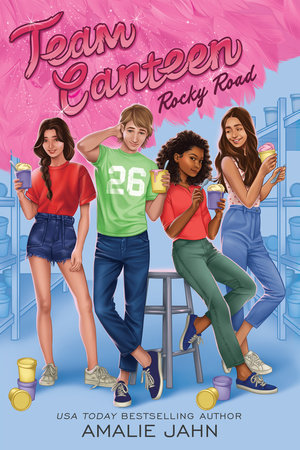
Teen Canteen: Rocky Road by Amalie Jahn

On the final night of summer camp, Tasha, Raelynn, Claire, and Billie get busted stuffing themselves with ice cream in the mess hall’s walk-in freezer. But when they slip away without being punished, they’re convinced the pink feather boa Billie put on to stay warm is magic.

Back at home, each member of Team Canteen tests the boa’s powers as they face their own challenges. When her little cousin moves in with her destructive dog, Tasha struggles to find her place inside her adoptive family. Claire’s scared the kids at school will find out how hard life’s gotten since her dad lost his job. Raelynn longs to be someone other than her sister’s twin. And with a hockey-obsessed family charting his every move, Billie’s worried he’ll never be able share his dream of becoming a figure skater.

It’s going to be a rocky road from the start of the school year back to Camp Happy Hollow. Will the boa continue to protect Team Canteen, or will their friendship end up being the most magical find of all?

Alternating among the friends, Rocky Road is a smart, soaring celebration of the highs and lows of middle school, and the unbreakable friendships that see you through, no matter what comes next.


Twelfth by Janet Key

Twelve-year-old Maren is sure theater camp isn’t for her. Theater camp is for loud, confident, artsy people: people like her older sister, Hadley–the last person Maren wants to think about–and her cinema-obsessed, nonbinary bunkmate, Theo. But when a prank goes wrong, Maren gets drawn into the hunt for a diamond ring that, legend has it, is linked to the camp’s namesake, Charlotte “Charlie” Goodman, a promising director in Blacklist Era Hollywood.

When Maren connects the clues to Shakespeare’s Twelfth Night, she and her new friends are off searching through lighting booths, orchestra pits and costume storages, discovering the trail and dodging camp counselors. But they’re not the only ones searching for the ring, and with the growing threat of camp closing forever, they’re almost out of time.


Let me know below other great middle grade reads that feature summer camp!


STEM Tuesday– Natural Disasters– In the Classroom


While this month’s theme is natural disasters, I focused on just one: wildfires. The books I read all had a lot of overlap. They were:

Cover shows deer and other animals running and flying against a background of red and yellow with silhouettes of trees.Fire Escape: How Animals and Plants Survive Wildfires
by Jessica Stremer, illustrated by Michael Garland

Of the books I read this month, Fire Escape covers the most material and has the highest word count. Topics include how plants and animals survive wildfires, how animals are treated after being injured in a fire, how goats act as a fire prevention tool, and much more. I suspect everyone will find at least one topic that interests them in this book. The numerous Fire Fact! factoids provide lots of interesting tidbits for trivia-minded readers.


Book cover shows three firefighters on a green hill with a red and yellow sky above. The lead firefighter holds a yellow hose, out of which bluish-gray water is streaming.They Hold the Line: Wildfires, Wildlands, and the Firefighters Who Brave Them
by Dan Paley, illustrated by Molly Mendoza

They Hold the Line packs a lot of information in a relatively low word count. It’s a great book for visual learners. I really loved reading the illustrator’s notes about how they chose the colors to use for the illustrations.


I also read two other books about wildfires that were not on the monthly theme list.

Book cover shows several pine trees silhouetted against the yellow and red of a wildfire burning behind them. Grayish smoke rises above the flames.Wildfires
by Georgia Beth

Of the books I read this month, Wildfires has the most in-depth coverage of the chemistry of fire. It packs a lot of information into a relatively short format.


Book title overlays a raging wildfire - trees silhouetted against bright orange and red flames with sparks flying overhead. Inset pictures show a campfire, a firefighter preparing to repel out of a helicopter, and a plane dumping a red substance onto a forest near a fire.

All About Wildfires
by Alessandra Potenza

All About Wildfires does a great job of combining text with visuals to get points across. There are quite a few graphic representations that are great for illustrating how to communicate information or data in different ways. There is a nice experiment at the end to explore the relationship between trees/vegetation and landslides.


Over the past year, wildfires have been rather prominent in my life. New Jersey – where I live – had a near record drought last year. This brought on almost daily wildfires, all over the state. Recently, a fire burned along the Jersey Shore, making its way onto the state’s most destructive fires list. This “Jones Road” fire was spotted April 22 and reached 100% containment just before I started writing this post on May 12. This fire was one of many around the U.S. that have garnered lots of attention in the news due to their severity.

So, on to activities that can connect readers with these books.

Explore Fire Science

In addition to activities given in some of the books, there are some great science experiments that explore fire. Here are a few.

See first-hand the role oxygen plays in fire using tealight candles and different sized jars. Here’s one version of this activity on Education.com: https://www.education.com/activity/article/candle-snuffing-contest

Fire Extinguisher Experiment from Science Explorers:  https://scienceexplorers.com/diy-fire-extinguisher-experiment-for-kids

There is a lesson plan, including links to videos and other resources, along with a matchstick forest fire demonstration on the Headwaters Science Institute web site: https://headwatersscienceinstitute.org/wildfire-science

Explore Fire Data

Fire data is provided in the books in different ways. Look into data that’s available and consider creating your own.

Check out the National Risk Index from FEMA: https://hazards.fema.gov/nri/wildfire – explore the map to determine what the fire risk is in your area.

If you want to do a deep dive, the USDA has a website called Wildfire Risk to Communities (https://www.fs.usda.gov/managing-land/fire/wildfirerisk). You can put in your state or other community name and explore different wildfire risks, like the risk to homes. This website describes how it calculated risk, as well as ways to reduce that risk.

If you want to create some graphs, here’s one source of data. You can graph the number of fires and/or the number of acres burned in the U.S. over time using data from the National Interagency Fire Center: https://www.nifc.gov/fire-information/statistics/wildfires. You could also do some calculations, like figuring out the average number of acres each fire burned each year.

Explore Stewardship

Many of the books discuss stewardship of the land. This year, I enrolled in the Rutgers Environmental Steward program (https://envirostewards.rutgers.edu), so this is something I’ve thought a lot about lately.

What does land stewardship mean? You could explore this topic individually, in small groups, or as a larger group. It might work best to do a combination of all three. A good place to start might be to read a definition of stewardship. Then think about what this means in relation to land. How does land stewardship impact natural disasters like wildfires? What is each individual’s role in the stewardship of our shared lands?

Explore More

There are other places where you can explore wildfire topics in more depth. One is a website from the National Park Service: https://www.nps.gov/subjects/fire/fire-in-depth.htm, which is part of an even broader topic: https://www.nps.gov/subjects/fire/wildland-fire-subject.htm. This is an incredible rabbit hole you could dive into, learning about wildland fire careers, fire ecology, fire behavior, and much more.

If you want to learn more about the different causes of wildfires, check out this page from the National Interagency Fire Center: https://www.nifc.gov/fire-information/fire-prevention-education-mitigation/wildfire-investigation. If you want a real challenge, see if you can find out the causes of the past year’s wildfires in your state. Then think about how you can present that information using graphs and charts.

Explore headlines and other news sources to see what wildfires are making the news today.

There are lots of other resources out there. Pick a topic and see where the exploration takes you.


There are endless activities that could be tied into this topic. Hopefully the few listed here inspire you to explore more.


Janet Slingerland has written over 2 dozen books for young readers. To find out more about Janet and her books, check out her website: http://janetsbooks.com