Posts Tagged books

Middle Grade Voice: Speaking the Joyous/Painful/Ironic/Perfect Truth

Happy almost-summer to everyone! I love writing May posts for From the Mixed-Up Files of Middle Grade Authors because it calls to mind the excitement and fulfillment of the end of the school year. For teachers, parents, students, public or school librarians, and MG writers alike, the advent of summer is a time heady with the potential adventure, change, and insights of the coming months. New, thrilling stories are practically a guarantee. Whether you read them, write them, offer them to readers, or watch them inspire your own kids on breezy summer days, middle grade works can add a lot to  your summer season.

We often discuss on this site how various elements of a story impact readers in different ways. For example, a historical setting teaches readers about an era or event. Sci-fi and fantasy genre scenarios engage the imagination in a rigorous workout. A coming-of-age theme offers a hook almost all readers can relate to. Another important, impactful fiction factor is voice.

Voice is an element of fiction that can impact readers in several ways. So much more than point of view or perspective, a character’s voice ticks many boxes: It indirectly characterizes. It engages readers and controls the mood and pace. And it delivers thematic messages about life in ways that connect to our experiences and emotions—in other words, the truth.

Strong voice is particularly effective in MG fiction. There’s this interesting paradox that occurs with MG characters in “voicey” works: Though their world view may be limited by young age and lack of independence and experience, MG characters are often highly effective at revealing the truth. They might comment as an afterthought or make a passing observance… and ironically, that offhand remark is both significant and revelatory. Or, they share a just-learned lesson in their coming-of-age, but as it is communicated by their voice, additional ideas and truths are conveyed.

Summer, with its reduced emphasis on structured lessons, is the perfect time to think about this somewhat nebulous story trait. Gathered below are some examples of voice in MG fiction, a few writing projects for students experimenting with voice in their own writing, and (for writers of MG) a brief list of tips for “turning up” your story’s voice.

Middle Grade Voice Examples

Strong voice can seem like a you-know-it-when-you-read-it element. For practice in recognizing voice, study some examples before assigning yourself a search-and-find mission in some favorite and some brand-new titles. Here are a few handy examples of MG voice:

  • Jessica Vitalis’s self-assured protagonist Fud in Coyote Queen:

“That doesn’t mean I sat around crying about how things were, because I didn’t. And I certainly didn’t think twice about magic. I was too practical for that.”

  • Jennifer L. Holm’s witty main character Beans in Full of Beans:

“When someone says they’re gonna help you, they’re just waiting to stick their hand in your pocket and take your last penny. I should know. I got relatives.”

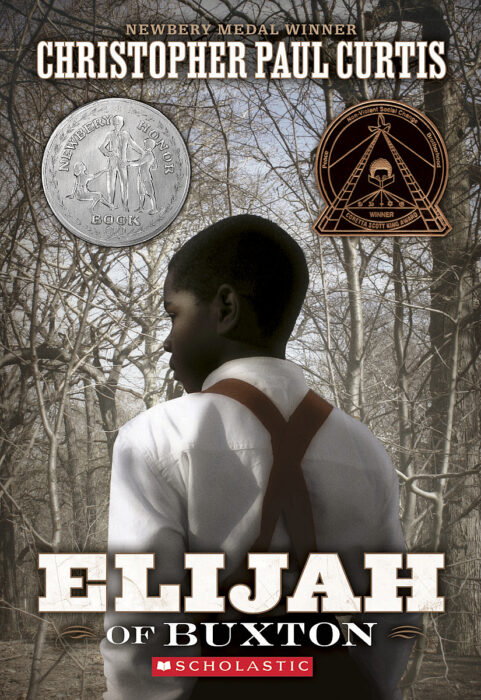
  • Any characters from Christopher Paul Curtis. Here’s Elijah speaking certain truth in Elijah of Buxton

“But classroom learning just don’t work the same as when something happens to you personal.”

Voice Activities in the Classroom

As the school year winds down, consider having your MG students experiment with the concept of voice in their own writing. You might begin by having readers search for examples in novels they read throughout the year. Introduce the idea of voice with some focusing questions: What line or lines have vocabulary, word choice, and phrasing that tell you right away what kind of a person this character is? What line would be spoken only by this protagonist? Where is a question or an exclamatory remark that highlights the voice?

With some examples at their side, students can then try their hand at voice by writing a real-time scene from the viewpoint of a selected, existing protagonist.  Writers already may be savvy with writing from a character’s perspective; try to direct their focus on the voice of the character through word choice, vocabulary, cadence, pace, and sentence length. For a scenario that also boosts excitement for the end of the school year, students might place their protagonist in a “summer vacation” scenario.

How Writers of MG Achieve Voice

These are some common strategies for practicing and assessing voice in your MG writing.

  • While middle grade characters certainly keep secrets and remain private about some things, they typically are more open with emotion than teen characters.
  • Defy stereotypes. Offer your characters traits that conflict with common assumptions.
  • Focus on the foundational blocks of a good story: themes, plot, detail, description, characterization. Voice is the conveyance system that communicates the story to the reader in the most effective, most “hearable” way.
  • Don’t allow the writer’s goals for sharing pithy truths to become the character’s goals. The character’s goal is to pursue their objective and resolve their conflict.
  • Stick with on-level vocabulary choices.
  • Who are your beta readers? Have a few middle graders in the mix to comment on MG characters’ believability.

Thanks for reading, and have a story-filled summer!

Three Cheers for the STEM Tuesday Team!

Save the Polar Bears


As we come up on our seventh anniversary of STEM Tuesday (yes – SEVEN years!) I thought it would be a great time to remind you of the AMAZING authors who make STEM Tuesday possible.

The STEM Tuesday blog posts are written by a group of award-winning children’s authors, teachers, and writers who are passionate about presenting STEM/STEAM topics in a way that kids of all ages will find exciting, inspiring, and engaging.

You can find more information about each of them by visiting their websites, purchasing some of their books, and also inviting them to your schools and conferences.


And now….. Three Cheers for the STEM Tuesday TEAM!

Week 1: Book List 

Author Sue HeavenrichSue Heavenrich

Sue Heavenrich is an independent environmental journalist and children’s writer. She has written for a variety of magazines including Ranger Rick, Highlights, Cobblestone, and Organic Gardening as well as local and regional newspapers. When not writing, she’s either in the garden or tromping through the woods. www.sueheavenrich.com

13 Ways to Eat a Fly


Writer Maria Marshall

Maria Marshall

@MariaMarshall_

For as long as anyone can remember, Maria had a book in her hands. During the summer of herthird grade year, she read every book in the Library’s children’s section A to Z. She loved to write, make up stories, and create elaborate treasure hunts and maps for my brother and sister. So she went to college and wrote for four years to earn a degree in English and Political Science. Then she took my love of writing and telling stories to Law School. Maria is passionate about using picture and chapter books to make reading and nature fun for children. Check out her Picture Book Buzz Blog


Shruthi Rao authorShruthi Rao

Shruthi was that kid who actually enjoyed writing essays in school! She wrote her first novel when she was eleven. It was an Enid Blyton rip-off. It was terrible (so she says). She didn’t write stories for a long time after that. Instead, Shruthi got a Master’s degree in Energy Engineering from one of the top schools of India, and worked in the IT industry for four years.

And then, in the 2000s, she rediscovered her love for writing. Shruthi blogged at Hallucinations! and wrote short stories and essays for a number of publications. She now writes books for children of all ages, both fiction and non-fiction. www.shruthi-rao.com

KadooBoo! book


Susan SummersSusan Summers

Susan started her career as a zookeeper and enjoyed working with polar bears, wolves, and owls – to name just a few of her favorite animals. Interest in science and nature firmly took hold and she followed that career by becoming a wildlife biologist. In this engaging field, she was able to participate in research on a variety of wildlife, including bears, bats, and fabulous birds! She wanted to share her interest in nature with children, so she got a Master’s in Education, and went on to teach ecology as a museum educator. She had this rewarding career for over 20 years. Currently, she is focused on becoming an author, writing about science and nature among other things. In the meantime, she lives happily with her husband of 30 years and with two fur children that she’d love to tell you about. She’s thrilled to be part of STEM Tuesday [and looks forward to sharing her enjoyment of this topic with you].

Science magazine

Science Scope


Callie DeanCallie Dean

Callie Dean is a musician, writer, educator, and program evaluator. She teaches applied research at Eastern University and is passionate about the role of the arts in effecting community transformation. She lives in Shreveport, La., with her husband and two sons.  She is the director of CYBER.ORG, a STEM education organization with a national network of more than 25,000 K-12 teachers. Callie has written a wide variety of K-12 STEM curriculum materials, including nine cybersecurity badges for the Girl Scouts of the USA. She’s an aspiring PB/MG author, a member of SCBWI, and a 2022 PBParty finalist. Her  areas of interest include technology, cybersecurity, citizen science, and the intersection of science with art.  www.sojo.net/biography/callie-dean


Author Lydia LukidisLydia Lukidis

Lydia Lukidis is the author of 48 trade and educational books, as well as 31 e-Books. Her latest STEM book, THE BROKEN BEES’ NEST (Kane Press, 2019), was nominated for a CYBILS Award, and her forthcoming STEM book, DEEP, DEEP, DOWN: The Secret Underwater Poetry of the Mariana Trench will be published by Capstone in 2023. Lydia writes for children aged 3-12, and her artistic mandate is to inspire and enlighten. A science enthusiast from a young age, she now incorporates her studies in science and everlasting curiosity into her books. For more information, please visit www.lydialukidis.com.

broken Bees nest bookThe Space Rock Mystery


Week 2:  In the Classroom 

JAnet Slingerland authorAtoms and Molecules Book
Janet Slingerland is the author of more than 20 books for readers in grades K through 12. Her favorite subjects include STEM, history, and the history of STEM.

Janet grew up reading, writing, and conducting science experiments. After working for 15 years writing computer programs, She started writing books.


Author Carla MooneyBook The Human Genome Carla Mooney 

@Carlawrites

Carla Mooney is an award-winning children’s author from Pittsburgh, Pennsylvania.

She is the author of numerous nonfiction and fiction books and magazine articles for children and teens. She has won several nonfiction awards for her books.


author Karen Latchana Kenney

book Folding Tech   Karen Latchana Kenney

@KLatchanaKenney

Karen writes books about animals, and she looks for them wherever she  goes—from leafcutter ants trailing through the Amazon rain forest in Guyana, where she was born, to puffins in cliff-side burrows on the Irish island of Skellig Michael. She especially enjoys creating books about nature, biodiversity, conservation, and groundbreaking scientific discoveries—but also  civil rights, astronomy, historical moments, and many other topics.


Jenna GrodzikiJenna Grodinski

Jenna Grodzicki is the author of more than twenty fiction and nonfiction children’s books. Her books include Wild Style: Amazing Animal Adornments (Millbrook Press 2020) and I See Sea Food: Sea Creatures That Look Like Food (Millbrook Press 2019), the winner of the 2020 Connecticut Book Award in the Young Readers Nonfiction Category. Jenna lives near the beach with her husband and two children. In addition to being a writer, she is also a library media specialist at a K-4 school. To learn more, visit her website at www.jennagrodzicki.com.

I See Seafood book

Wild Style book


Week 3: Writing Tips & Resources


Writer Mike HaysMike Hays

@coachhays64

Mike Hays has worked hard from a young age to be a well-rounded individual. A well-rounded, equal opportunity sports enthusiasts, that is. If they keep a score, he’ll either watch it, play it, or coach it. He also is a history fanatic, especially regional history. A molecular microbiologist by day, middle-grade author, sports coach, and general good citizen by night.


Margo LemieuxMargo Lemieux

A recently retired professor of art, Margo is devoted to seeing that the A stays in STEAM. Science & technology need the heart that comes with art. It was lack of heart that led to the ecological crisis we have today. The process of creativity is closely related to that of scientific inquiry.

She is a  published picture book writer and illustrator, editor, poet, and amateur ukulele player. In her art projects, she often included science concepts as a way of connecting learning.


Week 4: Author Interviews

author christine Taylor-butler

Save the Polar Bears
Christine  has written more than 80 books including The Lost Tribe series. She has been an advocate for diversity in character representations and led by example.

Taylor-Butler majored in civil engineering and architecture at the Massachusetts Institute of Technology, graduating in 1981. She has written nonfiction for Scholastic, including for their True Book educational series.


Andi DiehnAndi Diehn

Andi Diehn grew up near the ocean chatting with horseshoe crabs and now lives in the mountains surrounded by dogs, cats, lizards, chickens, ducks, moose, deer, and bobcats, some of which help themselves to whatever she manages to grow in the garden. You are most likely to find her reading a book, talking about books, writing a book, or discussing politics with her sons. She has 18 children’s nonfiction books published or forthcoming. www.andidiehn.com


Space Adventurer Book Cool Women in Technology


And me,

author jennifer swanson

The Lost Forest book  Jennifer Swanson

@JenSwanBooks

Jennifer Swanson is the award winning author of over 40+ nonfiction books for children, mostly about science and technology. Jennifer’s love of STEM began when she started a science club in her garage at the age of 7. While no longer working from the garage, Jennifer’s passion for science and technology resonates in all her books but especially, BRAIN GAMES (NGKids) and SUPER GEAR: Nanotechnology and Sports Team Up (Charlesbridge), Astronaut-Aquanaut, and Parents’ Choice Gold Award Winner, Save the Crash-test Dummies. Her  BRAIN GAMES book was even #13 on the The Planets.org 50 Best Science books Ever Written.


We hope you are enjoying our STEM Tuesday blog. If you use it in your classroom or homeschool, please let us know. And if you have a topic that you would like us to cover that we haven’t yet, leave your suggestion in the comments below.  GO STEM!!


A Reading Journey Across the United States with Read Across America

Happy National Reading Month!  

In celebration of National Reading Month, The Week Junior collaborated with Read Across America (RAA) to create a list of middle-grade titles with one book set in each state. There are some familiar names on that list. (see below)

The National Education Association’s Read Across America project is a year-round celebration of reading that introduces readers to diverse books with characters to whom they can relate and to worlds that are different from their own. I was thrilled to see my book Smack Dab in the Middle of Maybe named as the Mississippi selection and The Turn of the Tide, by fellow Mixed Up Files contributor Rosanne Parry, named as the Oregon selection. The list is full of amazing books and equally amazing authors and interviews with many of the authors can be found in our Mixed Up Files (see below for links).  

Below are ten activities to help celebrate reading across America all year long. These activities can help readers connect with diverse characters and dive into stories set across our nation. 

Visiting the Setting  

Invite readers to create a visitors’ guide to the book’s setting. Before they begin, discuss the setting’s geography, climate, culture, economy, history, landmarks, attractions, and other unique features. Encourage readers to research elements about which they are curious. Next, identify points of interest and significant places within the story. Readers can use this information to create their visitor’s guide with detailed descriptions and interesting facts about each location. For bonus points, invite readers to illustrate their visitors’ guides with artwork and photos.  

Charting the Course  

Invite readers to create a map based on the book’s setting that highlights the impact that the setting has on the book’s main character(s). Which locations are important? Why? What landmarks or features define these locations? How has the history of the setting shaped the main character(s)? Readers can use symbols, labels, and colors to create a map key to represent different elements.  

Creating News  

Invite readers to create a “hometown newspaper” from the perspective of leaders in a community that serves as a significant setting in the book. What would the community’s slogan be? Challenge readers to write at least three articles describing the story’s action and include illustrations of significant events in the book. Invite readers to consider where the main character(s) fit in the overall societal structure of that community. Would the main character(s) agree or disagree with the newspaper’s version of events? If the answer is “no,” challenge readers to write a “letter to the editor” providing the perspective of the main character(s).  

Creating a Character Scrapbook 

Invite readers to choose a character from the story and create a scrapbook for that character describing their daily life and story adventures. The scrapbook can include drawings, quotes, receipts, tickets, and other items that the character would have encountered along their journey. For bonus points, invite readers to write a reflection about the things they have in common with the character they chose, and to create a list of three things from the main character’s culture about which they would like to learn more. 

Sell It!  

Invite readers to create a persuasive sales pitch for the book. To begin, readers can identify themes, characters, and plot elements to highlight. Invite readers to brainstorm ideas and plan their pitch, being sure to include features they think will most appeal to other readers. Readers can then present their pitch to an audience in any form they choose, including an article, podcast, or video. 

Nature Scavenger Hunt 

Go on a nature scavenger hunt. Invite readers to search for at least five items from the natural world of the RAA book selection. Readers can search until they find all the items or for an allotted amount of time. When they’re finished, invite readers to share their items. For bonus points, use non-fiction resources to look up at least three interesting facts about each item.  

Create a Nature Journal from the Point of View of the Main Character(s) in the RAA book  

Readers can create their own journals using art supplies. When their journals are ready, invite them to research the natural world in which the story is set, including the geography, plant and animal life in the area, and the time(s) of the year in which the action takes place. Readers can use this research as inspiration for the nature journal from the perspective of the book’s main character(s). Invite readers to make notes in their journals of the details that would be important to the story’s character(s) on each day of the story’s action. Each entry should include the time, date, place, natural elements, including flora and fauna, and weather, plus any additional information the reader believes is important. Journals can include a narration about what the character(s) did while outside and drawings of things the character(s) saw, heard, smelled, touched, or tasted. The journal also can include nature-inspired poems, quotes, questions to research later, pressed leaves or flowers, or all of the above. For bonus points, invite readers outside to observe their own natural setting. Are there any elements in the reader’s own world that are also found in the natural setting of the book they are reading? If so, list and illustrate them. 

Vibing with Verses 

Host a poetry slam for your class or group of friends. Invite readers to create their own original poems from the point of view of the book’s main character(s). Invite readers to recite their poems in poetry-slam fashion for the rest of the group. Readers will learn about poetry, performance, and how to be a supportive audience member. 

Taste Across America  

Invite the readers in your life to pick out at least one food mentioned in the RAA title they are reading. Invite them to create a tasting menu including that food, with additional items inspired by the culture of the book’s main character(s). Need ideas? You can check out a sample Southern tasting menu here. 

Listen Across America 

Divide the readers in your life into groups. Invite each group to research the music of the state and the time period in which a RAA title is set. Invite them to create a playlist featuring artists and songs from that setting and time period. The playlist may be chapter-by-chapter or section-by-section (beginning, middle, and end). Either way, it should reflect the story’s action and the mood of the main character(s) in response to what is happening in the story. Need ideas? You can check out a sample playlist here. 


Below are links (listed alphabetically by the state represented) to some recent Mixed Up Files interviews with RAA authors.  

  • James Ponti’s book City Spies: Golden Gate was chosen as the California title. You can read Patricia Bailey’s interview with him here. 
  • Avi’s The Secret Sisters was chosen as the Colorado pick. You can read Amber Keyser’s interview with him here. 
  • Caroline Starr Rose’s book May B. is the Kansas pick. You can read Kate Hillyer’s interview with her here. 
  • The Minnesota selection is Erin Soderberg Downing’s Just Keep Walking. You can read her interview with Natalie Rompella here.  
  • The Nevada selection is Julie Buxbaum’s The Area 51 Files (illustrated by Lavanya Naidu). You can read her interview with Ines Lozano here.  
  • Dan Gutman’s Dorks in New York! is the (you guessed it!) New York selection. For writing tips from Dan, read his Mixed Up Files interview here. 
  • The North Carolina selection is Sheila Turnage’s most recent release, Island of Spies. You can learn more about the book and Sheila here. 
  • Roll With It by Jamie Sumner is the Oklahoma pick. To learn more about Jamie and Roll With It, check out her interview with Andrea Pyros here.  
  • Varian Johnson’s historical fiction novel The Parker Inheritance is the South Carolina selection. You can find Jacqueline Houtman’s interview with him here 


I hope you’ll pick up some of these RAA titles for yourself and the young readers in your life. For the full list, follow this link. I’m wishing you many fun reading adventures exploring diverse settings and characters as you read across America.