


http://www.basicbook.org, GPL <http://www.gnu.org/licenses/gpl.html>, via Wikimedia Commons
05 REM I used to think of coding (programming, as we called it back in the day.) and writing as two separate things. Polar opposites.
10 REM Now, I’ve come to realize the two are not as different as they may appear.
20 PRINT “If you want to learn more about my coding past, press “Y”.”
30 INPUT (N)
40 IF N = “Y” THEN GOTO 150 ELSE 50
50 REM Writing code and writing stories both involve accomplishing a goal through a series of operations.
60 REM To achieve one’s goal with writing, one uses language and word operations to convey ideas.
70 IF (THIS HAPPENS) THEN…
80 REM The story flows and the plot develops.
90 REM To achieve a goal in coding, one uses a programming language’s set of operations to implement ideas in a functional manner.
95 PRINT “On a scale of 1 to 10, enter your level of excitement for writing like a coder.”
100 INPUT (X)
110 IF X >=1, THEN GOTO 200
150 REM After my sophomore year, a huge change happened at my high school. The computer programming class moved from punch card programming to actual work on computer stations connected to the school district’s mainframe. Game on!

Pete Birkinshaw from Manchester, UK, CC BY 2.0 <https://creativecommons.org/licenses/by/2.0>, via Wikimedia Commons
160 REM BASIC programming was the name of the game back in the day. For some reason, unlike most of my family and friends, coding came naturally to me. The logic, oh the logic, drew me in like a tractor beam. I was hooked.
170 REM Several years later, probably around 1984, I scraped enough money ($100!) from odd jobs and such to walk proudly into our local Dolgins store and purchase a Texas Instruments 99. I hooked it up to a blue, plastic 13” black and white television we had sitting around in the basement. I was in heaven.

Ron Reuter, CC BY-SA 3.0 DE <https://creativecommons.org/licenses/by-sa/3.0/de/deed.en>, via Wikimedia Commons
180 REM My parents and siblings worried about my sanity, a 19-year-old sitting in the dark basement for hours, writing a primitive electronic football game or a program to show an animated smiley face graphic saying “Hello” over the 2” speaker and scaring the crap out of my mother as she walked by. Heaven.
190 REM Sometimes, one gets run through the wringer by siblings and friends for buying a freaking computer instead of spending that money on a real video game console, like ATARI or INTELLIVISION, that ordinary people actually want to play. When this happens, one learns to code simple, low-graphic games to show aforementioned siblings and friends that coding can be fun. A football simulator, PONG(!), craps, blackjack, etc. were all in the output of my TI99 and me. My friends and siblings, however, were not as impressed as I was.
195 GO TO 50
200 REM Coding also runs in a similar vein to writing in the aspect of trial and error. One simple mistake, a glitch in syntax or in logic, can stop a program or a paragraph dead in its tracks. Writers and coders both run into walls, fall off cliffs, or get lost at times. That’s when the true creator’s heart and soul kick in. Analyze, problem-solve, take a step back, and then try again. Instead of getting stuck in a loop, a coder or writer changes the subroutine, reformats, and changes the inputs to get better outputs.
210 REM There is a difference between writing and coding, though. In coding, a programming language allows many creators to communicate the story through that single voice of the code. In writing, the opposite is true. The writer uses the tools of language and individual experiences (see Creative Braining) to create their unique voice.
220 REM Finally, a friend recently told me that throughout high school, their child was intent on majoring in computer programming. However, once the student spent a year in programming classes at college, they changed majors. The student figured out that writing code for games was not nearly as fun as playing games. I laughed and said that sounded like the 20+ years I wanted to be a writer before I accepted it was hard work and found the discipline to actually sit down and write.
230 PRINT “Thanks for reading!”
240 END

Ron Reuter, CC BY-SA 3.0 <https://creativecommons.org/licenses/by-sa/3.0>, via Wikimedia Commons
My apologies to you, dear reader, for putting you through a rusty and mistake-ridden use of a 1980s version of BASIC programming for this STEM Tuesday Writing Craft & Resources post. Memory fades, as does the free time to go online and review the proper syntax of BASIC.
On a positive note, writing this post did trigger a desire to jump into contemporary programming languages and learn Python or another modern coding language. It also made me dig into the storage boxes to find one of the greatest coding-themed computer games ever written, The Island of Dr. Brain. When my kids were young, we would play Dr. Brain for hours and they had little to no idea they were learning how to think and manage like coders. They probably still don’t since their main memory is probably of Dad hogging the family PC while playing Dr. Brain “with” them.

Mike Hays has worked hard from a young age to be a well-rounded individual. A well-rounded, equal-opportunity sports enthusiast, that is. If they keep a score, he’ll either watch it, play it, or coach it. A molecular microbiologist by day, middle-grade author, sports coach, and general good citizen by night, he blogs about sports/training-related topics at www.coachhays.com and writer stuff at www.mikehaysbooks.com. Two of his science essays, The Science of Jurassic Park and Zombie Microbiology 101, are included in the Putting the Science in Fiction collection from Writer’s Digest Books. He can be found roaming around the Twitter-sphere under the guise of @coachhays64 and on Instagram at @mikehays64.
The O.O.L.F Files
This month’s version of the O.O.L.F.(Out of Left Field) Files explores
Steve’s Old Computer Museum (Warning! This site is a rabbit hole for computer nerds, especially us who sport more than a few gray hairs. I need to go in and see how many of these I’ve had the pleasure of working on.)
The Texas Instruments TI-99
BASIC, how I loved thee!
FORTRAN was, and still is, the language of science and mathematics.
- The FORTRAN Site
- FORTRAN in 100 Seconds
Bill Gates Just Revealed The Best Programming Language for 2023!
Dr.Brain!


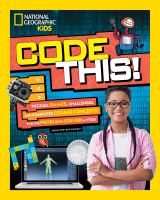


 Kids Get Coding
  Gamer Girls: 25 Women Who Built the Video Game Industry
  My Life as a Coder
  Girls Who Code: Learn to Code and Change the World
  Coding Games in Scratch: A Step-by-Step Visual Guide to Building Your Own Computer Games
 Get Coding! Learn HTML, CSS & JavaScript and Build a Website, App, and Game
 Python for Kids, 2nd Edition: A Playful Introduction to Programming
 Callie Dean is a researcher, writer, and musician living in Shreveport, LA. She writes stories that spark curiosity and encourage kids to explore their world. For more information, please visit https://www.calliebdean.com.


 Carla Mooney loves to explore the world around us and discover the details about how it works. An award-winning author of numerous nonfiction science books for kids and teens, she hopes to spark a healthy curiosity and love of science in today’s young people. She lives in Pennsylvania with her husband, three kids, and dog. When not writing, she can often be spotted at a hockey rink for one of her kids’ games. Find her at