

Releases April 5, 2016
Mixed-Up Files contributor Hillary Homzie is joining us today to talk about her latest release, QUEEN OF LIKES. We’re so glad to have her here.
Welcome, Hillary! And here are the questions we have for you…
As a child, what did you want to be when you grew up?
As a child I wanted to be a writer. For as along as I can remember I’ve loved to make up stories. Whether it was let’s pretend with my stuffed animals, or playing with my Barbies, or making my paper dolls (sometimes I’d draw them or, other times, I’d make them from photos of models in the Sears catalogue) or play-acting I was a lost orphan with my best friend Claire in the woods behind our house, stories ruled my world. Sometimes they even got me in trouble. Once my mother gave me an antique china doll with this beautiful wedding dress. The other dolls decided she was much too snobby, and so they all decided to drop her from the top of the staircase. Let’s just say that story didn’t end well!
Oh, my! I can only imagine. So with all that storytelling ability, when did you start writing down your stories?

Hillary, age 7, with sister, Leslie, age 4
Well, my second grade teacher, Mrs. McCrone, had weekly creative writing assignments, so I definitely enjoyed writing stories then, but I didn’t actually start to write entire novels until I was about 23. It was after I took a children’s writing course up at City University in New York with author and poet Pam Laskin.
What made you write Karma’s story?
Probably because I have a house full of teens (and one tween). And I see how much they are on their phones and how much they anticipate and live for the number of LIKES they get after a post. My older boys sometimes even compete with each other in terms of who gets more LIKES. And I just thought it would be interesting to write about a tween who calculated her sense of self-worth by the number of LIKES on her social media account. And what would happen if that social media account got shut down by parents! Ouch!
Yes that definitely was a big OUCH for Karma, and it would be for most people (including adults) who are tied to their phones. Karma’s parents taking away her cell phone is possibly the worst punishment ever for an online social media diva like she was. Speaking of punishments, what was your worst punishment ever?
I was what my mother-in-law calls a goody-goody. I never really received a punishment. Just maybe a talking to (if my sister and I were fighting) and maybe sent to my room. Even when I got called down the principal’s office in seventh grade, the principal himself only spoke with me for five minutes and didn’t call my parents. He was my swim coach, and he knew that I never got in trouble and figured that the teacher had somehow gotten things wrong.
Hmm… well, I won’t ask you if the teacher really had gotten things wrong. Maybe we should go back to talking about QUEEN OF LIKES. So… how are you and Karma (love that name, BTW!) alike and different?

Hillary with her labradoodle
Karma and I are alike in that, yes, we both live on the West Coast. I live in California, however, and Karma lives in the suburbs of Oregon. We’re both Jewish and attend reform synagogues. We both own giant labradoodles. [That’s interesting! I’m glad you sent a picture so we can see what labradoodles look like.] We both check how many LIKES we get on social media far too much. We are different in that Karma has a little brother (I have one younger sister). She had one event that made her social media popularity blow up. That hasn’t happened to me. My number of followers on Twitter, for example, has been slowly growing but there hasn’t been one blow-up event. Karma lives for her LIKES. I’d like to think that I’m a bit more balanced.
Karma ends up in some embarrassing situations. What was your most embarrassing moment?
Probably when a boy stopped to talk to me, and I had a tampon in my hand that I stupidly pulled out of my purse. Sometimes common sense and Hillary don’t go together.
What was middle school like for you?
Oh, gosh. In each grade, I feel like I was very different. In sixth grade, I was very happy, had close friends and a teacher that I loved, Ms. Casey. My friends were the brainy set, but I was also connected with an assortment of kids.

Hillary, age 13
In seventh grade, my best friend was no longer in my classes, and in my core class, all of the girls were paired up with their besties. My core teacher was an odd duck who refused to be photographed unless it was in profile. She didn’t like me too much, and I once got into a roll-on-the floor fight and was sent to the office. My language arts teacher couldn’t write very well, and I didn’t respect her. It was a very blah year.
In eighth grade, I moved for a year to Menlo Park, California, where my dad was a scholar-in-residence at Stanford University. It was hard to be the new eighth grader. Lots of the kids were spoiled, directly aggressive, and even racist. I hated it until halfway through the year when I met an amazing group of girls with whom I’m friends with to this very day. Your greater environment can be icky—but if you have close friends, life is very manageable. At least, it was for me!
Sometimes it’s not easy to make friends when you’re the new kid at school. I’m glad you found friends who helped you feel at home. With all that experience behind you, what advice do you wish you could give to your younger self?
Do what you love to do, and those with similar interests will gravitate towards you. Be friends with the kids who make you feel good and supported, even if they are outsiders. Don’t look at the so-called popular kids and imagine if only you could be them or with them, life would be rosy. During one of my high school reunions, one of those so-called popular girls told me that she wished she was me!
What is one thing you hope readers will take away from your book?
Follow your passions, do what you like. Don’t worry about what others think of you. Don’t live for the approval of others.
What are you working on now? Are there any more Karma books in the works?
I’m a multi-tasker when it comes to writing. I just finished a chapter book, and I’m toggling between a contemporary tween middle grade with a dash of magic and a middle grade science fantasy.
Both of those sound like fun, but since you mentioned fantasy, let’s talk about magic. If you had three wishes, what would you wish for?
That love not hate would bring the world together, the end of racial oppression, world peace.
What wonderful wishes! I hope they all come true. I’m sorry this interview is almost over, but I always like to ask authors one last question, because most of them have lived such fascinating lives. What is something most people don’t know about you?
I used to be a sketch comedian. In my twenties, I performed with the HA! Comedy Duo and Rubber Feet at clubs and theaters all over NYC. I’m a fairly even-keeled person in real life, but up on stage, I can get crazy!
Wow! I’m impressed. No wonder QUEEN OF LIKES is filled with humor. I’m lucky that I had a sneak peek at the book, and I’m sure everyone else will want to buy the book, which is available for preorder now from Aladdin M!X and Amazon. Or you can find it at your local bookstore on April 5, 2016.
ABOUT QUEEN OF LIKES
Karma Cooper is a seventh grader with thousands of followers on SnappyPic. Before Karma became a social media celebrity, she wasn’t part of the in-crowd at Merton Middle School. But thanks to one serendipitous photo, Karma has become a very popular poster on SnappyPic. Besides keeping up with all of her followers, like most kids at MMS, her smartphone—a bejeweled pink number Karma nicknamed Floyd—is like a body part she could never live without.
But after breaking some basic phone rules, Karma’s cruel, cruel parents take Floyd away, and for Karma, her world comes to a screeching halt. Can Karma—who can text, post photos, play soccer, and chew gum all at the same time—learn to go cold turkey and live her life fully unplugged?
ABOUT HILLARY HOMZIE
Hillary is the author of the tween novel, THE HOT LIST (Simon & Schuster/M!X), THINGS ARE GONNA GET UGLY (Simon & Schuster/M!X), a Justice Book-of-the-Month, which was just optioned by Priority Pictures, and the forthcoming QUEEN OF LIKES (Simon & Schuster/Aladdin M!X, April 2016), as well as the humorous chapter book series, ALIEN CLONES FROM OUTER SPACE (Simon & Schuster/Aladdin), which was developed to become an animated television series and was sold to ABC Australia. Hillary holds a master’s degree in education from Temple University and a master’s of arts degree from Hollins University in children’s literature and writing. Currently, she’s a visiting professor of children’s literature and writing at Hollins University.
Thanks for such a fun interview, Hillary. I’m sure readers would love to know where they can find out more about you.
I’m on Facebook, Twitter, and they can check out my website. On my website, there’s info about school visits and speaking at conferences, which I love doing. (And I’m sure you’re educational as well as entertaining, with your comedy background.)
ABOUT THE BLOG AUTHOR
Laurie J. Edwards is the author of more than 2300 articles and 25 books in print or forthcoming. In addition to being a freelance editor and illustrator, she also writes under the pseudonyms Erin Johnson and Rachel J. Good. She is lucky enough to be in the MFA program for Children’s Writing and Illustrating at Hollins University, where she has the privilege of working with Hillary Homzie.




 THE LAND OF FORGOTTEN GIRLS
 DREAMBENDER
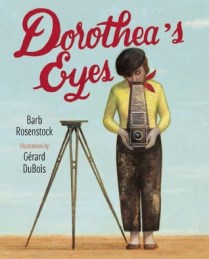 DOROTHEA’S EYES: DOROTHEA LANGE PHOTOGRAPHS THE TRUTH
 THE MIDNIGHT WAR OF MATEO MARTINEZ
  ISABEL FEENEY, STAR REPORTER
 EGYPTWORLD: DISCOVER THE WONDERS OF THE ANCIENT LAND OF TUTANKHAMUN AND CLEOPATRA
 MUTT’S PROMISE
 THE EYE OF MIDNIGHT
 EVERYDAY HERO
 THE EXTRAORDINARY SUZY WRIGHT: A COLONIAL WOMAN ON THE FRONTIER
  THE CHARMED CHILDREN OF ROOKSKILL CASTLE
