Author Interviews

THE WOLF’S CURSE ~ Interview with Author Jessica Vitalis + #Giveaway

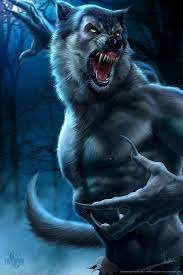
Welcome to my interview with author Jessica Vitalis, where we chat about her debut middle grade fantasy THE WOLF’S CURSE.

In what Booklist calls a “striking debut,” Vitalis’ novel is a vivid, literary tale focusing on family, friendship, belonging, and grief, wrapped up in the compelling narration of the sly, crafty Wolf. Fans of award-winning titles like “The Girl Who Drank the Moon” and “A Wish in the Dark” are sure to be captivated by “The Wolf’s Curse.”

One intriguing side note about Jessica before we begin. Jessica’s journey to publication is an inspiration to readers, to writers, and to anyone working towards reaching a goal. This is taken directly from her press release: “After 13 years writing, debut author Jessica Vitalis lands six-figure, two-book deal.” 👏👏👏

THE BOOK

THE WOLF’S CURSE by Jessica Vitalis

The Wolf is not bound by the same rules as you are.

The Great White Wolf is very, very old. And she is very, very tired. For hundreds of winters, she has searched for someone to take her place. But she is invisible to most people. In all those years, only three have seen her. One died young. One said no. One is still alive — a 12-year-old boy named Gauge. Everyone in the village thinks Gauge is a witch. He’s been in hiding half his life, all because he once saw the Wolf — and right after that, the Lord Mayor’s wife died. Now his only protector, his beloved grandpapá, is dead, too. The Wolf visits the boy again, this time with an offer. She can save him the pain of growing up. Now that he’s all alone in the world, it may be the only way to escape the bounty on his head. If only his grandpapá’s last words hadn’t been, “Stay away from the Wolf.”

“Thoughtful, creative, and engaging. … Accessible and intriguing worldbuilding, particularly around the Wolf’s backstory, will pique readers’ interests, as will larger questions about life, death, truth, and tradition.” — Kirkus Reviews

“A lyrical tale of loss and survival, tradition and belief, in which tension and secrets build like a towering wave. The Wolf’s Curse is a story of many layers. Young readers will treasure this beautiful debut and hold it close to their hearts.”  — Diane Magras, author of “The Mad Wolf’s Daughter”


THE INTERVIEW

Hi Jessica! It’s wonderful to have you drop by. I have to tell you that I’m so excited for this book! Care to give our readers a quick peek inside THE WOLF’S CURSE? Maybe five words to give us an inside view?

Macabre, sweet Grim Reaper retelling

🖤💀🖤💀🖤

CHARACTER

The boy Gauge’s beginnings surely tug at the heart. If you would, share a thought or two from his heart with our readers.

Hello, readers––I’m a boy of twelve winters who would like nothing more than to invite you into the living quarters behind my grandpapá’s shop; there, we can sit by his feet in front of the fire as he whittles and tells stories of his travels far and wide.

Oh wow! Now that sounds intriguing and peaceful, yet adventurous.

Tell us. What about Gauge makes him unique and relatable to young readers?

I think part of Gauge’s appeal is that, despite his young age, he already possesses an impressive skill set in terms of his carpentry and whittling. At the same time, he’s relatable because he’s uncertain about the world and his place in it; young readers will recognize his longing to live up to his grandpapá’s expectations and make the old man proud.

What do you hope young readers of Gauge’s story take with them about death and the process of grief?

Childhood can be a frustrating time; kids want to have agency but sometimes feel trapped or like they don’t have a say in their own lives. This is especially true of kids living with or experiencing trauma; without the foresight that age and maturity brings, it can feel like things will never change. My hope they’ll walk away from this story with the sense that no matter how bad things feel, there’s always room for hope and healing.

A very important take-away.💚

Portraying the Grim Reaper as a Great White Wolf is clever. 🐺  Share how you capitalized on the darkness of a reaper contrasting with the ‘lightness’ of a white wolf to create such a wonderful character.

I’m glad she resonated with you! When I started writing the story, I didn’t have any sense of what kind of character she might turn out to be, so I was delighted when she revealed herself as something other than pure evil. That said, I knew before I started writing that she wouldn’t want to be doing her job––giving her a tangible and relatable personal goal helped create a nuanced and compelling character rather than a stereotypical Reaper. As to her coloring, I was troubled by the trope that Reapers are typically represented by black—this drove me to create a Great White Wolf, which doesn’t actually exist in nature (the closest thing is the Artic wolf, which are sometimes referred to as white wolves).

Interesting fact about wolves.🔍

If the Great White Wolf had a life (or death) quote, what would it be?

Follow your heart. It’s as true as any compass out there.

Which character from the book do you see yourself in most?

I’m 1/3 the Wolf’s snark, 1/3 Gauge’s sweetness, and 1/3 Roux’s practicality!

WRITER’S CORNER📝

You share in your press release how writing the Wolf as an omniscient narrator kind of just happened, evolved as you wrote and edited. How different was it writing in this POV for you? What pitfalls should writers who would like to try it for themselves look out for?

I was having so much fun writing that I didn’t worry about the POV as I drafted; it wasn’t until the revision process that I realized how big of a risk I’d taken. Writing an omniscient, first person, present tense narrator presented some unique challenges in that I needed an explanation for how and why the Wolf knew what was going on when she wasn’t around. The biggest challenge in writing an omniscient voice (especially one that often dips into close third) is to avoid head-hopping; that is, to only switch when you have a compelling reason and to clearly signal when you’re switching characters (usually by using their name at the beginning of the transition).

 Writers go from one idea to another, gathering them until they eventually take shape into a story. But there’s usually material that doesn’t make it into the final cut. Would you share one thing about the story that didn’t make it into the book, but the readers might find intriguing?

I threw out the entire first draft of this book—other than a Wolf, a boy, and a girl, the second draft shared almost no similarities with the first. In fact, Gauge was named Kipling and Roux was named Nyx, and instead of living in Gatineau, they lived in a non-descript country called Bantym. (Early readers said these names didn’t fit with the French-inspired feel of the rest of the story, hence the changes.)

READER’S NOOK📖

For our reading educators: what advice could you share for encouraging reluctant readers? For our reading writers: what writing or life advice has been the most valuable to you?

Educators already do such tremendous work, I’m not sure they need my advice. But if I had one thing to share, it would be to examine any preconceived notions of what reading might look like—picture books, comics, and graphic novels are all great as long as they foster a love of stories. For the writers out there, the advice that has been most valuable on my journey came from Chris Grabenstein, who reminded me that our first job is to entertain readers––if they aren’t engaged in the story, they won’t stick around.

Thank you!

Thank you for having me!

Oh gosh, you’re welcome. But honestly, thanks goes to you for sharing this beautiful story with the world. It’s been such a pleasure chatting with you, Jessica! Much congratulations to you!

ABOUT THE AUTHOR

Jessica VitalisJESSICA VITALIS is a Columbia MBA-wielding writer. After leaving home at 16, Vitalis explored several careers before turning her talents to middle grade literature. She brings her experience growing up in a non-traditional childhood to her stories, exploring themes such as death and grief, domestic violence, and socio-economic disparities. With a mission to write entertaining and thought-provoking literature, she often includes magic and fantastical settings. As an active volunteer in the kidlit community, she’s also passionate about using her privilege to lift up other voices. In addition to volunteering with We Need Diverse Books and Pitch Wars, she founded Magic in the Middle, a series of free monthly recorded book talks, to help educators introduce young readers to new stories. She was recently named a 2021 Canada Council of the Arts Grant Recipient. An American expat, she now lives in Canada with her husband and two precocious daughters. She loves traveling, sailing and scuba diving, but when she’s at home, she can usually be found reading a book or changing the batteries in her heated socks. WEBSITE | FACEBOOK | TWITTER | INSTAGRAM | YouTube: MAGIC IN THE MIDDLE

GIVEAWAY

Enter to WIN one of five swag packs for THE WOLF’S CURSE! (US Only.) Ends October 4th. Winner announced via Twitter.

Packs contain: 1 bookmark, 1 postcard, 1 glass bottle w/printed letter from the author, 1 lollipop, & 1 feather

a Rafflecopter giveaway

VIRGINIA HAMILTON: FIVE NOVELS + Giveaway

Today it’s my great pleasure to introduce MUF readers to a brand new collection titled Virginia Hamilton: Five Novels, which will be published by Library of America on September 28. The volume, edited by Mixed-Up Files contributor, Julie K. Rubini, includes five of Hamilton’s best known and most beloved works as well as twenty beautifully restored illustrations, (ten in full color for the first time); a newly researched chronology of Hamilton’s life and career; and a selection of other related writings, such as her Newbery Award Acceptance Speech and an essay titled, “Nonwhite Literature as American Literature: A Proposal for Cultural Democracy.”

The Library of America has generously offered to send one lucky winner a copy of Virginia Hamilton: Five Novels. Click on the Rafflecopter at the bottom of the interview for chance to win. (U.S. only.)


About Virginia Hamilton

Virginia Esther Hamilton (March 12, 1936-February 19, 2002) was the author of forty-one books. Her many achievements include winning The Boston Globe-Horn Book Award in 1974 and a National Book Award and the Newbery Medal in 1975, for her novel, M.C. Higgins, the Great. It was the first book to win all three awards. Not only was she the first African American to win the Newbery Medal, she was also the recipient of the international Hans Christian Andersen Award and the Laura Ingalls Wilder Award (now called the Children’s Literature Legacy Award).

For more on Virginia Hamilton, see our archived post here.

About the Novels Included in the Collection

In Zeely (1967), Geeder Perry and her brother, Toeboy, go to their uncle’s farm for the summer and encounter a six-and-a-half-foot-tall Watusi queen and a mysterious night traveler. (Full color spread of the Zeely interior art, presented in full color in this edition for the first time.)

In the Edgar Award–winning The House of Dies Drear (1968), Thomas Small and his family move to a forbidding former waystation on the Underground Railroad—a house whose secrets Thomas must discover before it’s too late.

Junior Brown, a three-hundred-pound musical prodigy, plays a silent piano in The Planet of Junior Brown (1971), while his homeless friend Buddy Clark draws on all his New York City wit to protect Junior’s disintegrating mind. This novel was adapted for a 1997 film of the same name.

In the National Book Award–winning M.C. Higgins, The Great (1974), Mayo Cornelius Higgins sits atop a forty-foot pole on the side of Sarah’s Mountain and dreams of escape. Poised above his family’s home is a massive spoil heap from strip-mining that could come crashing down at any moment. Can he rescue his family and save his own future? Must he choose?

And in Sweet Whispers, Brother Rush (1982), fifteen-year-old Tree’s life revolves around her ailing brother, Dab, until she sees cool, handsome Brother Rush, an enigmatic figure who may hold the key to unlocking her family’s troubled past.


An Interview With the Publisher and Editor

Interviewed here are: Brian McCarthy, Associate Publisher for Library of America, and Julie K. Rubini, who is the author of Virginia Hamilton: America’s Storyteller as well as the editor of this new collection.


Dorian: Can you tell us a bit about the decision to create this beautiful book at this time and how you all determined which novels to include?

Brian: Virginia Hamilton was a major figure in American children’s literature and a natural for inclusion in the Library of America, which honors the full range of great American writing in authoritative new editions. In framing this volume we looked to her breakthrough novels of the 1960s, 70s, and 80s, which have stood the test of time with readers and critics and continue to inspire and delight some fifty years after they were written. In many ways, the social justice movement of the last year and a half has made these five books more resonant than ever, simply by the way they center African American young people and their families, powerfully underscoring that Black lives matter. (As for the beauty of the Library of America edition, much of the credit goes to star book designer Kimberly Glyder, who created a gorgeous original portrait of Hamilton for the cover.)


Dorian: What was your experience like in re-reading these five works by Virginia Hamilton for the collection?

Julie: In reading Virginia’s works for research purposes for my biography, Virginia Hamilton: America’s Storyteller (Ohio University Press, 2017), I focused more so on Virginia, the writer. I wondered about her process, her life during the time she wrote each novel. I studied where she was living while creating these amazing works, wanting to learn more about her life in both New York City and Yellow Springs. I tried to learn how changes in her life, from meeting and marrying Arnold, to becoming a mother, and ultimately a successful author with many demands for her time, impacted her writing and stories. When I read these five novels in the collection again, I read them as someone who simply wanted to enjoy and get lost in her work. What a joy it was to rediscover her incredible imagination and characters through this process. I can’t wait to receive my author copies to enjoy yet again in this wonderful collection!


Dorian: Can you tell us a little bit about what you discovered about Virginia Hamilton the person through your research?

Julie: Everyone I spoke with described Virginia as kind, loving, always willing to give of her time, and yet always keeping Arnold and their two children as her priority. Virginia was naturally shy, but rose to the occasion for the hundreds of speeches and presentations she shared through her career. She loved sharing coffee with Arnold throughout the day, comparing notes on their work, Arnold’s homemade marinara sauce bubbling away in the kitchen. Virginia embraced technology, graduating from her portable Olivetti typewriter to marveling over the ease of rewriting on personal computers. Virginia’s favorite animal was the jaguar, and she had a collection of frog figurines from her extensive travels!


Personal Favorites

Dorian: I’m sure you both love all of Virginia Hamilton’s novels, but which is your personal favorite and why? 

Julie: I have a special place in my heart for The House of Dies Drear. I hadn’t read the novel before beginning my research for my biography. After my first meeting with Virginia’s husband, the late (and great!) Arnold Adoff, I learned it was his favorite of all of her works. Arnold became a friend through the process of sharing her life journey with younger readers, so although difficult to choose a favorite, Virginia’s mystery set in a home that was part of the Underground Railroad has my vote, in honor of their epic love story.

Brian: I do love all these novels, but my favorite is Sweet Whispers, Brother Rush, from 1982, a deeply unsettling story of a family haunted (literally, as it happens) by abuse. Through the painful journey of fifteen-year-old Teresa, or Tree as she is known, Hamilton crafts an inspiring portrait of the power of forgiveness. I defy any reader not to be completely won over by Tree.


Dorian: Why do you think Virginia Hamilton’s work has so much staying power? 

Julie: Virginia often stated that her work always began with the central character, and eventually the story revealed itself to her. Virginia had the most incredible imagination, bringing us characters such as M.C. Higgins, who sits on top of a 40-foot pole watching over his beloved Sarah’s Mountain, the regal and mysterious Zeely, curious Thomas Small, and the streetwise and witty Buddy. Virginia’s characters remain some of the most unique characters in children’s literature.

Brian: I agree that character is key with Hamilton. She had a matchless gift for dialogue, for capturing the way that young people think and speak, that makes her novels feel profoundly true. And she had tremendous faith in her readers. While these books are great fun, full of wonder and imagination, as Julie says, they are also very serious in the themes they explore—from the legacy of slavery and environmental depredation to homelessness and mental illness—never shying from addressing the harder aspects of coming of age. They take us to the places where compassion begins.


Dorian: Virginia Hamilton is known as the most honored author of children’s literature of all time, yet her work is not as widely read as it should be. How do you hope Virginia Hamilton: Five Novels will change this?

Julie: The book is absolutely beautiful, inside, and out. It is my hope that through this recognition and exposure of her work in the Library of America collection, that educators will once again embrace her work and include it within their curriculums. Ultimately, hopefully more children will discover Virginia’s incredible writing voice and get caught up in her amazing work.

Brian: Hard as it is to imagine, a new generation has come of age in the nearly twenty years since Hamilton’s untimely death. All of us at Library of America hope that this volume will serve as an occasion for readers and reviewers to rediscover her work, to admire anew its range and fearless truth-telling.


Library of America Online Speaker Series

Dorian: The Library of Congress, home of Virginia Hamilton’s papers, is collaborating in the promotion of Virginia Hamilton: Five Novels. Could you elaborate on this?

Brian: Yes, we’re thrilled to announce that on October 6 Carla Hayden, the Librarian of Congress, will sit down with acclaimed author Jacqueline Woodson to discuss Hamilton and her legacy as part of Library of America’s free online speaker series, LOA Live. Please visit www.loa.org/events for more information.

Thanks so much Brian and Julie for carrying on Virginia Hamilton’s legacy and for taking the time to talk to us about this wonderful new book.

For a chance to win a copy of the book, click on the Rafflecopter link before Monday, Sept. 27 at 11:59 PM (U.S. Only). 


a Rafflecopter giveaway

BAREFOOT DREAMS OF PETRA LUNA~Interview With Author Alda Dobbs + #Giveaway!

Thrilled to share my interview with Author Alda Dobbs and her recent middle grade release BAREFOOT DREAMS OF PETRA LUNA – an inspired story about the Mexican Revolution and how one girl is set to keep her promise.

THE BOOK

Barefoot Dreams of Petra Luna

BOOKSHOP | WEBSITE to other purchase links.


BAREFOOT DREAMS OF PETRA LUNA by Alda Dobbs

Release Date: September 14, 2021

It is 1913, and twelve-year-old Petra Luna’s mama has died while the Revolution rages in Mexico. Before her papa is dragged away by soldiers, Petra vows to him that she will care for the family she has left―her abuelita, little sister Amelia, and baby brother Luisito―until they can be reunited. They flee north through the unforgiving desert as their town burns, searching for safe harbor in a world that offers none.

Each night when Petra closes her eyes, she holds her dreams close, especially her long-held desire to learn to read. Abuelita calls these barefoot dreams: “They’re like us barefoot peasants and indios―they’re not meant to go far.” But Petra refuses to listen. Through battlefields and deserts, hunger and fear, Petra will stop at nothing to keep her family safe and lead them to a better life across the U.S. border―a life where her barefoot dreams could finally become reality.

Barefoot Dreams of Petra Luna was inspired by the experiences the author’s great-grandmother endured during the Mexican Revolution.


THE INTERVIEW

From the moment I read about this story, I knew I wanted to share it. It’s wonderful to have you visit us, Alda. Tell our readers a little about your main character Petra Luna.

Petra Luna is a twelve-year old girl who makes it her purpose to keep her family safe in the middle of war and chaos. Despite the turmoil and suffering around her, she remains faithful to her dreams of learning to read and write and to a promise she made to her father before he was forced to fight in the war.

💚💚💚

Why will young readers relate to Petra?

Petra’s dreams and her way of seeing the world are often at odds with her grandmother’s views. Young readers will see how differences in perspectives between generations is a universal theme that transcends time. Readers can also see how Petra’s journey to escape violence in her homeland and reach the safety of the United States is something that is relevant to today’s times or might have happened in their own ancestor’s pasts.

If Petra could pick three things to take with her on a deserted island, what would they be?

Petra would likely take her hatchet, her black rock, and maybe a pencil and slate?

What about you?

I would take pen & paper, my laptop, and an espresso machine. Not sure where I’d get the coffee, milk, and chocolate syrup for my mochas, though.

BAREFOOT DREAMS OF PETRA LUNA is inspired by your great-grandmother’s experiences during the Mexican Revolution of 1913. How did it feel learning this information from real-life family experience?

I had always enjoyed listening to family stories but took them lightly most of the times. For one particular story, my favorite one, I embarked on a long research journey, and after many months, the day I found out that this family story had been true and accurate all along, is a day I will forever remember. Ever since, I became much more grateful for my family stories, knowing they were not exaggerations. Also, through the many photographs I came across in my research, I saw, learned, and appreciated all that my family had gone through – the harsh poverty, the prejudices, the violence – and the enormous effort and sacrifice they made to give me a better life. After completing my book, I felt closer to them than ever before.

Such a vital story and piece of human history to share with younger generations, but also because it’s so close to your heart.

Did you do much outside research for the book as well?

Yes, I researched many things, even the most mundane, and some never made it into the book but it allowed me to know the characters and setting intimately.

Ooh, that’s a super important fact of writing: Lots of researched information doesn’t make it into the book, yet it influences the writer.

I researched the Mexican Revolution, desert plants, curanderismo, Aztec mythology, Náhuatl, music from that era, etc. I also printed out segments of Sanborn maps and assembled them together like puzzle pieces to let me know what streets Petra Luna had walked on. When I cross-referenced the map with old photographs, I could see buildings she came across and even walked into. I kept a timeline handy that followed actual dates chronicled in newspapers to help weave in the fiction.

Why do you believe this story is important to tell?

The history of the Mexican Revolution is complex, but I believe young readers should be exposed to it in a way that they get a sense of its causes, its consequences and, most important, of what women and children went through. This is a part of history that isn’t taught in schools nor mentioned in books, yet it changed the landscape of both Mexico and the United States forever and still resonates in our current world.

What do you hope middle school readers take with them after they’ve read the book?

I hope that they learn that they too have the power and determination to be a leader like Petra. Sometimes we adults don’t give children enough credit yet they are capable of so much if we give them the space and confidence to grow and figure things out on their own. I also want them to realize that no matter the circumstances, they can look to their dreams for guidance and strength during dire times.

WRITER’S CORNER

For our writing readers, what is your writing routine like? And what is one piece of advice you can offer?

I’ve never really had a writing routine (after 10 years of writing, I’m still striving to find one!). Ever since signing my publishing contract, I’ve been more conscientious about writing time since I now have real deadlines. I’ve always been a night owl and tend to be more creative at night, but as a mother of two young kids, I’ve had to adjust my times. One piece of advice I’d say is to try to write every day, read books of fiction or on craft, listen to audio books, take workshops, attend conferences, in other words, always keep yourself immersed in words or on learning how to best put them together.

Are you working on a new project? If so, care to share?

I am! Right now, I’m working on Book 2, the follow-up to Barefoot Dreams of Petra Luna. This story will follow Petra and her family to a refugee camp in Eagles Pass, Texas and then to San Antonio where 30,000 refugees settled during that time. I’m also working on the Spanish translation of Barefoot Dreams of Petra Luna and will soon record the Author’s Note for the audio book. I’m also kicking the idea of a picture book and a historical YA. Stay tuned!

Wow! A picture book and historical YA . . . sounds great. Make sure you let us know so we can share it with everyone. All the best with this. Thank you so much for sharing this important story of history, hope, and resilience.

Author Alda DobbsABOUT THE AUTHOR

Alda P. Dobbs is the author of the upcoming novel Barefoot Dreams of Petra Luna. She was born in a small town in northern Mexico but moved to San Antonio, Texas as a child. Alda studied physics and worked as an engineer before pursuing her love of storytelling. She’s as passionate about connecting children to their past, their communities, different cultures and nature as she is about writing. Alda lives with her husband and two children outside Houston, Texas. WEBSITE | FACEBOOK | INSTAGRAM


GIVEAWAY

Enter for your chance to WIN a signed copy of BAREFOOT DREAMS OF PETRA LUNA and some book swag! Ends 09/26/2021; US only. Winner announced via Twitter.

a Rafflecopter giveaway