Author Interviews

Interview with Claire Eamer

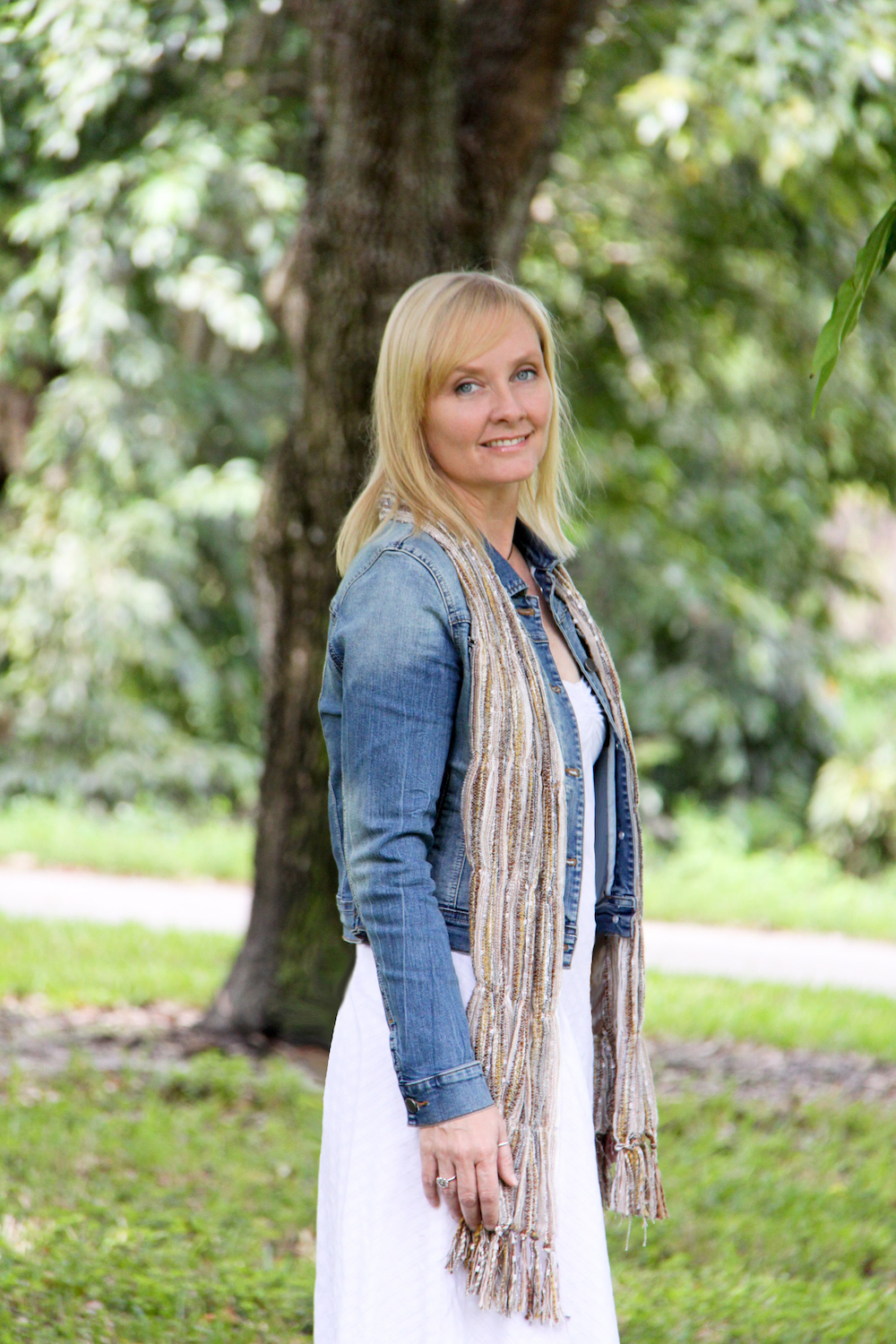
clairee1Why didn’t I think of that?  This was my first thought when I finally got my hands on Claire Eamer’s amazing new book, Before the World Was Ready.

My second thought?  I wish I could write like that!  Because even if I had come up with the idea first, it never would have turned out as good as it has in Claire’s capable hands.

Claire Eamer is the author of many non-fiction books for middle graders, including the award winning The World in Your Lunch Box: The Wacky History and Weird Science of Everyday Foods and Lizards in the Sky: Animals Where You Least Expect Them. She is an expert at presenting science to kids in a way that is creative and irresistible. I am grateful to her for taking time out of her busy schedule at the When Words Collide conference (three panels and a book launch!) to answer a few questions.

BeforeWidgetMost of your books are a collection of topics, bound by a common theme like Before the World Was Ready: Stories of Daring Genius in Science which covers lots of ground from the shape of the solar system to insecticides. Where do you get your ideas?

That particular idea came from the publisher. They’d done some research on candidates for the theme, then turned it over to me when I said the topic interested me. I did more research (with the help of my son, Patrick, who prowled the University of Victoria library on my behalf) and came up with the final list of candidates and the approach.

That’s a fairly common approach with publishers these days, but it accounts for only two of my books –Before the World Was Ready and Traitors’ Gate and Other Doorways to the Past. The others were my ideas. I never seem to have much trouble with non-fiction ideas, mainly because I really like to understand how things work and why. Super Crocs and Monster Wings grew out of my curiosity about the relationship between giant ground sloths and tree sloths, which – in turn – grew out of my fascination with a giant ground sloth skeleton in a local Whitehorse natural history museum, the Beringia Interpretive Centre. Lizards in the Sky – I read about flying snakes (really!!!) and got fascinated about extreme kinds of adaptation to habitat. The World in Your Lunch Box came about because I wanted to know exactly how yeast works and because I was amazed when I started reading about all the foods that were developed in the Americas and have spread around the world. I have a lot of questions. Writing books gives me an excuse to dig up the answers.

Before the World Was Ready includes a page of “further reading” and a three page “selected biography” That’s a lot of sources! How do you approach research?

I could happily lose myself in research. I love learning things and get bored with a job easily if I’m not constantly learning. Which is why I’ve been a freelance writer, of some sort or other, for most of my working life. For my kids’ books, I start with books and, often, televison documentaries to give me an overview, but I do a lot of online research using scientific and academic journals. Concordia University College in Edmonton has very kindly appointed me Adjunct Professor of Education. That allows me to use their online library resources, which is a huge benefit. I also can go up to Yukon College (it’s on top of a hill in the midst of Whitehorse, hence “up”) and use the library there, both physical and online. The journals can be a bit of a slog, but that’s where the up-to-date information is. When I write a book, I want it to reflect the latest research, not just regurgitate dated material from older existing books.

Once I’ve done all that research, I look at the questions or puzzles that remain and go in search of experts who can help me answer them. Usually it’s someone whose journal article I have read. I do most of that research by web search and email, although I always give the person I’m asking questions of the option of talking on the phone. Since I live in Whitehorse, an in-person interview only works for a few topics (including giant ground sloths and some other neat beasties that used to live here). Scientists and academics are amazingly helpful when you explain that you want to tell children about their favourite topic, the research they spend their lives on. I once had a three-day email exchange with a couple of scientists in England who were helping me explain — in kid terms and less than a page — the latest research into the relationships between extinct giant sea scorpions, living scorpions, and spiders. It’s complicated and only partly understood, but new techniques are changing the field so fast that I figured we’d better stop and get the book out before it was obsolete! (That’s in Spiked Scorpions and Walking Whales, if you’re interested.)

The Further Reading sections in the book are something Annick Press insists on (and I agree). If kids get interested in a topic, they usually want to know more, so some pointers toward more information are good. Usually the books cover different or related angles that haven’t really been featured in my book. 

The bibliography (always “selected bibliography” because I do a LOT of research) serves several purposes. It gives the book credibility. We can’t footnote a kids’ book as one might an adult book, but we can show that the information is solid and provide enough information that it can be checked. Also, it implicitly shows kids how an author works by showing the scale of research behind a topic. Finally, the bibliography reassures teachers and librarians that they are putting good, well-researched information in kids’ hands. The books also always have a decent and useful index so kids can find the information they need (and learn how to use an index in the process). I think all of that is an important part of showing respect for your reader. My readers might be short, but they deserve solid, up-to-date information and a guarantee that they can check my facts and sources if they choose.

MedalBookYou have two degrees in English (which helps explain your excellent writing skills!) but no formal training in science.  Is that an advantage or disadvantage?  Do you get “experts” to review your work prior to publication?

I took English because I love reading and learning, and that seemed to be a good way to keep reading and learning. Also, I am very much a generalist by nature, so I didn’t want to restrict the subjects I was reading and learning about. I think I actually learned to write first by reading and later by working as a reporter in a variety of media. When you’re shifting between newspaper style, various magazine styles, spoken word (for radio), informational DVDs and websites, and the occasional bit of fiction, you become very aware of tailoring style to audience and medium – and you learn a lot about how to play with words in the process.

The science stuff has always been a fascination of mine. I actually have taken several university courses in biology and ecology, although not enough for a degree. But I’ve learned a lot from interviewing scientists, editing their work, hanging out with them, reading, going to scientific talks, watching documentaries by people like David Attenborough (my science-communications hero!), and asking lots of questions. The advantage of not being a scientist is that I have no investment in the jargon of any subject. My specialty is translating the jargon into language the rest of us can understand so that we can all enjoy the excitement of science.

And yes, I always get experts to fact-check my work. It’s a responsibility in my book contracts, but I would do it anyway. I really want my writing to be accurate. Really!

You also write about history and science fiction.  How does the market for science non-fiction compare to the market for middle grade sci-fi?

I don’t actually know since I’ve written very little science fiction and not for that age group. However, I know that several publishers are currently looking for middle-grade science fiction – although I’m not sure exactly what they expect. Middle grade science non-fiction is in a bit of a transition stage, I think. Publishers want to publish it, but they are struggling with how to get it out to readers. If you look in the kids’ non-fiction department of any big bookstore, you’ll see why. It’s usualy jammed into a few shelves in a back corner, with nothing on display and very little sensible organization. My personal experience, from visiting schools and libraries, is that kids love knowing stuff – all kinds of stuff, not just science – but that’s often not the books that their grown-ups are buying for them.

The new education standards in the United States, which influence the supply and type of books available in Canada too, might make a difference, since they emphasize non-fiction reading very heavily. However, I don’t know if that impact is being felt here yet. Best ask a publisher, I think.

wildflowers_roseopenYou live in a relatively remote area of northern Canada.  Does this have any impact on your writing?  In what way?

I’m not sure that it has much impact. When I started writing for kids, it was mainly a nuisance because I was trying to do the research from a place that had no easy access to a lot of the journals I need, but that has changed in the past few years. Now I can get at most of the information I need from here, via the Internet – which makes working from Whitehorse possible. We also have an excellent interlibrary loan system, by the way, and it has proved very helpful.

Where the location does affect me is in school and library presentations, which are a significant part of many kids’ writers’ incomes. Although Whitehorse isn’t terribly expensive to fly into and out of by northern standards, it still adds a significant extra cost to any book presentation tour that makes it hard to justify.

On the other hand, there are a lot of very knowledgeable, well-educated, and well-travelled people in the Yukon, including some excellent scientists, and many of them have been significant resources in researching my books. Because it’s a small community, it’s pretty easy to corner my local palaeontologist or biologist and get some answers to questions – often over a nice locally-roasted latte. The North is alarmingly civilized these days! This is a very good place to start building a network of contacts.

I would love to visit Whitehorse one day – what a beautiful part of the world. Thank you for your thoughtful responses to my questions.  Is there anything else you like to add?  

I guess the one thing to add is that my isolation can be overstated. Apart from the fact that there is a thriving arts and literary community in the Yukon, the Internet has changed what a community is or can be. My on-line communities include a Canada-wide network of kids’ writers and publishers, a BC-based kids’-writer network, a nation-wide network of science writers, another of science fiction and fantasy writers, and a few other bits and bobs of colleagues – all of them located anywhere from a few hundred to thousands of kilometres away, but right there in my in-box when I need them. It’s amazing, and I appreciate it enormously.

To find out more about Claire please visit her website. My review of Before the World was Ready  is available here. And in case that is not enough, you can also join Claire and other Canadian kids’ science writers at their blog, Sci/Why.

Yolanda Ridge is the author of Trouble in the Trees (Orca Book Publishers, 2011) and Road Block (Orca Book Publishers, 2012).  She also lives in a remote part of Canada with ski hills and bike trails right at her door step!

Lu Lu in LaLa Land by Elisabeth Wolf

Lights! Camera! ACTION!

Lulu in LA LA Land

A screenplay by Lulu Harrison 

Scene 1: 

ZOOM IN on Hollywood mega stars LINC and FIONA HARRISON singing happy birthday to their daughter LULU. Lulu blows out the candles, and they all gather for a group hug— 

CUT! 

If only real life were like the movies. Instead, Lulu Harrison’s massively important eleventh birthday is just three weeks away—and her parents still haven’t RSVPed! 

Lulu’s not like the rest of her glamorous Hollywood family. She likes tamales and they like tofu. She likes gardening and they like grooming. But all she wants for her birthday is for her whole family to be there. Together. So this year she’s planning a super fabulous SPA-tacular party. But what if trying to fit in leaves Lulu feeling even more like she was cast in the wrong family?

LuLu in LaLa Land

Me: Welcome Elisabeth! So glad to have you join us here on The Mixed-Up Files.  I love that LuLu is in a play format! What inspired you to write the book this way?

Elisabeth: When my daughter, Emmeline, was ten, she visited the TV set of Sonny with a Chance, watched the taping, and met the actors. The director gave her a copy of the teleplay that was just shot. Afterward, rather than chat about the young actors or cool set, Emmeline read and re-read that script.  Prying the soon dog-eared pages from her hands night after night, I decided how to write my book, Lulu in LA LA Land.   Why not have Lulu tell her story of life in Los Angeles in a screenplay format?  I decided to take the complaint that “kids don’t read enough because they watch too many television shows and movies” and turn it upside down.  Why not have kids read what a movie looks like before it’s shot?  Read what the actors read? So, I guess my “inspiration” came from TV!

Me:  What a great way to get kids interested in reading! Do you think LuLu is at all like you?

Elisabeth:  Yes! I am quite Lulu.  Like my main character, I grew up in Los Angeles and didn’t fit into the style and fashion centric universe.  I rode an old orange bicycle to school.  Well, that meant I always had to wear sensible outfits.  No heels or wedges.  No clingy clothing or fancy hair-dos. I certainly couldn’t juggle any designer purse!  Like Lulu’s parents, my mother and father were always busy.  I wished they would spend more time with me but I didn’t know how to ask them.   I’ve always been crazy in love with my dogs and interested in interesting people.   Watching birds and worrying about trash washing into the oceans are traits I was born with – like my brown hair and eyes.  Lulu, my character, however, is braver than I ever was growing up. I would only daydream about doing things Lulu does.

Me: I think as writers we’re allowed to develop characters that are braver than we are. It’s a way of showing a side of us we wish we could be. What would LuLu do if she was faced with choosing between chocolate or bacon?

Elisabeth:  Easy.  CHOCOLATE!  Examples of Lulu’s sweet tooth are spread throughout the book.  She’s crazy for cupcakes and dessert in all its glory!

Me: I wonder if this is another trait that you and LuLu share.  🙂 One last question…would you rather dance with a skeleton or eat dinner with a zombie?

Elisabeth:  Punch my dance card with “skeleton.”  Would love that.  Keeping the beat like they’ve got an inner rhythm, drummers are so cool.   Dancing with a skeleton could kinda be like dancing with a drummer. Their rattling limbs could be awesome percussion.  Perfect partner.

Me: Good choice! Thanks for the fun interview, Elisabeth!


Elisabeth Wolf

Elisabeth Wolf is a bit Lulu. She lives in Los Angeles where she grows fruits, vegetables, and native flowers. Every so often, she loves a good shopping trip and pedicure. Lulu in LA LA Land is her first book. She can be found on Facebook, Twitter, Pinterest and Instagram.

Would you like to win a copy of this fun book? Just fill out the rafflecopter form below and you’re entered!

a Rafflecopter giveaway

Amie Borst would dance with a skeleton, too. After all, her main character is one! Cinderskella, (co-authored by her middle-grade daughter) debuts October 2013! You can find Amie on her blog and on facebook.

An Interview with Colby Sharp

I’d like to welcome Colby Sharp to the Mixed-Up Files. He’s a fourth-grade teacher, children’s book blogger, the father of three, and an avid reader. Welcome Colby, we’re so glad you could visit today!

Colby Sharp: It is an honor to be here. Crazy thing happened in the few weeks since you wrote up these questions. I got a new job! Click here to read about it. Now I’m a third-grade teacher.

Michele Weber Hurwitz for the Mixed-Up Files: Let’s talk first about your years of teaching fourth-graders. Tell us about your reading philosophy and what you do in the classroom to get students excited about books. I know you’ve had book exchanges, and students have even guest-posted on your blog.

CS: I think that the most important thing I do to get kids excited about reading is give them time to read books of their own choosing. Without time and choice it wouldn’t matter what I did to get kids excited about reading. Those two things are key. With that being said, I try to do a lot of fun things to get kids excited about reading: book speed dating, author Skype visits, author visits, and sharing my own reading life.

MUF: What are some favorite, well-read books on your classroom shelf, and what do you think is the magic quality of those books that resonates with students?

CS: The One and Only Ivan by Katherine Applegate and Wonder by R.J. Palacio jump out at me as the two newer books that kids are crazy about. I think that one of the things that makes these two books so special is that they really tug at the heartstrings of young readers.

colby-sharp

MUF: Has there been a particularly memorable author visit at your school? What do you think are the ingredients for a successful author visit?

CS: All of the author visits that my students and I have hosted have gone really well. Our last visit of 2012-2013 was with Liesl Shurtliff. I think that the most important thing in making an author visit successful is preparation. My students spend a ton of time getting ready for author visits. We decorate the school. My students spend time studying about the author. We read all of their books, and we do everything we can to make them feel welcome while they are in our building.

MUF: Do you find that your fourth-graders read more e-books or print?

CS: Print. I’m not sure if this has to do with access, or if they truly prefer print books. Many of my students end up getting an e-reader for Christmas. They are crazy about the thing for the first couple of weeks after winter break, but their interest quickly cools as they realize they don’t have access to the books they want to read on their e-reader. I have 2,500 books in my classroom library. Kids usually have 3-5 books on their e-reader. They almost always abandon the e-reader by the end of January.

MUF: What prompted you to start a blog about children’s books? Give us a picture of what your blog is all about.

CS: This is a terrible reason, but it seemed like everyone else had a blog, so I figured I needed one too. I like to think of my blog as a place where I celebrate and honor the books that my students and I fall in love with. It is also a great place for me to reflect on my teaching practice.

MUF: You’re a passionate supporter of children’s authors, and you write very down-to-earth, heartfelt reviews, which are now followed by several thousand readers. Did you envision this when you started the blog?

CS: Ha! When I started my blog, I didn’t even think about who would read it or how many readers it would have. I just wanted to fit in.

MUF: What is the Nerdy Book Club, and who is the mysterious Mr. Schu?

CS: The Nerdy Book Club is a way of life. If you are a reader, you are a member (if you want to be). It is a place where teaching literacy and books are celebrated every single day. Mr. Schu is an amazing librarian, a children’s literature advocate, and one of my best friends in the entire world.

MUF: Tell us about your 2013 personal challenge involving running and reading. Where are you at in your journey and what is your goal? What made you want to take on this challenge?

CS: I’m trying to run 1006 miles and read 1007 books in 2013. I have set a reading goal the last couple of years, and that goal had really helped me push myself as a reader. I thought that adding running to the mix would be a healthy way to help me keep a little more balance in my life. I’m currently at just over 600 miles ran and 550 books read.

colby-sharp 2MUF: What were you like as a fourth-grader? What kind of books did you like to read? Didn’t your mom work at your school? Was that cool or embarrassing?

CS: I was a sports nut. Every recess of every elementary school day was spent playing basketball, baseball, or football. Girls terrified me, so I didn’t spend a lot of time talking with them. Fourth grade was the year that I fell in love with Gary Paulsen’s Hatchet, which is still one of my all-time favorite books. My mom didn’t work at my school until I was in middle school. Having a lunch lady mom was a little embarrassing at first, but I quickly realized that always getting the biggest slice of pizza was pretty darn awesome.

MUF: What do you like to do in your downtime, when you’re not teaching, blogging, running, reading, or being a dad? Where would we find you on a Sunday afternoon?

CS: I really enjoy spending one-on-one time with my wife. She is the most amazing person that I have ever met, and every moment we spend together is precious.

MUF: What’s your next challenge?

CS: Moving to third grade will be a huge challenge. I’m excited to see how they compare to my fourth-graders.

Thank you so much, Colby, for being a guest on the Mixed-Up Files today! Be sure to check out Colby’s book reviews on his blog.

Michele Weber Hurwitz is the author of Calli Be Gold (Wendy Lamb Books 2011) and The Summer I Saved the World…in 65 Days (Wendy Lamb Books, coming spring 2014). Visit her at www.micheleweberhurwitz.com.