The winner of a signed copy of MOONPENNY ISLAND is
Marilyn Underwood
Congratulations, and thanks so hard to everyone for helping me celebrate my new book!
xo,
Tricia

The winner of a signed copy of MOONPENNY ISLAND is
Marilyn Underwood
Congratulations, and thanks so hard to everyone for helping me celebrate my new book!
xo,
Tricia

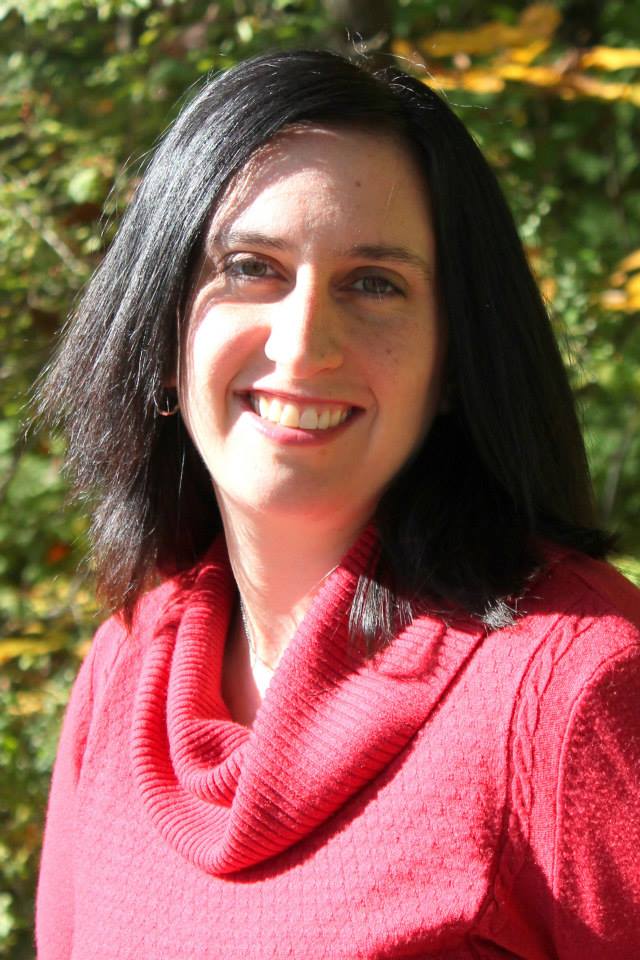 I’m thrilled to welcome Gail Nall to the Mixed-Up Files! Gail lives in Louisville, Kentucky with her family and more cats than necessary. She once drove a Zamboni, has camped in the snow in June, and almost got trampled in Paris. Gail’s middle grade debut, BREAKING THE ICE (Aladdin/Simon & Schuster), is available now. She is also the co-author of the upcoming YOU’RE INVITED with Jen Malone (Aladdin/S&S, May 19, 2015), and the author of the upcoming YA novel, EXIT STAGE LEFT (HarperTeen Impulse, Summer 2015). She’s represented by literary agent Julia A. Weber.
Thank you for joining us at the Mixed-Up Files, Gail. Breaking the Ice really helped me experience what life would be like as a competitive ice skater. How did you learn so much about ice skating?
I lived it! 🙂 I started skating at age three, and while I was never really competitive the way Kaitlin is, I took lessons and went to local competitions for years and years. I pretty much lived at the rink as a preteen and young teenager. I still skate, and even teach kids in the beginner classes once a week. My three-year-old just got her first pair of skates, so I think I’ll be at the rink for many years to come!
Since you’re spending so much time in the rink, I have a feeling we’ll see more ice skating stories from you in the future. 🙂 Do you remember the moment when you were first inspired to write Breaking the Ice? How long did it take from idea to publication?
I grew up figure skating, and I really wanted to write a book set in that world. One day, while watching a skater receive horrible scores at a competition, I wondered what would happen if she showed how she really felt. So that’s how the idea for BREAKING THE ICE was born! I think I started writing it in January 2011 . . . so almost exactly four years from idea to publication. It was the third manuscript I’d written.
I love Kaitlin’s spunk! Is she (or any other character) based on a real person, and what helped you create such a believable, multi-dimensional character?
Kaitlin is completely made up. Although I think, as authors, we all put at least a little of ourselves into our characters, so there are a few small parts of Kaitlin that are definitely me. But mostly, I had to think my way through how a girl who’s very reserved would act after she finally breaks through that wall she’s built around herself. Would she try to backpedal? Definitely. But would she also find herself jumping into situations she might not have tried before? Probably. And then how would all of that affect her skating?
Can you share a writing exercise with our readers?
My favorite writing trick is one that helps with preparation and (ideally) keeps you from wasting time once you’ve jumped into your writing session. It’s pretty simple too – you take ten minutes and simply freewrite your way through your next scene or chapter. Basically, you ask yourself what you want to happen next and write it down. No dialogue (unless you think of something crazy clever that you don’t want to forget), no thinking about structure or using interesting language or following writing rules. It’s more like this: Kaitlin gets of the ice. She’s really nervous about getting her scores. Her coach thinks she did well. Then the scores go up and – oops! – not so good. Kaitlin’s stunned. Then she gets mad. And then… Then, when you sit down to write, you’ve got something of an outline. This works especially well for pantsers and semi-pantsers (like me!).
Ooh, I love this idea! I’ve jotted down notes like that before spending a timed hour of fast-paced writing with friends (we call it a word war). I never thought to do it before each writing session, and can’t wait to try it. Thanks for sharing that great exercise!
What are some of your favorite middle grade books?
My all-time favorite is the Little House series, by Laura Ingalls Wilder. I must’ve read each of those a hundred times growing up. Anne of Green Gables is another classic favorite. The All-Of-A-Kind-Family books by Sydney Taylor made me want to be a Jewish kid in New York at the turn-of-the-century. And then, of course, I adored contemporary series such as The Baby-sitters Club and Sleepover Friends.
I’ve been lucky enough to read some amazing ARCs of upcoming 2015 middle grade books. A few of the many I love include The Honest Truth by Dan Gemeinhart (heart-breaking and beautiful), Dr. Critchlore’s School for Minions by Sheila Grau (funny with great world-building), My Near-Death Adventures (99% True!) by Alison DeCamp (a humorous historical – hilarious!), and Monstrous by MarcyKate Connolly (exciting and such a fascinating concept). Lots of great MG coming out this year!
Wow, what a fantastic list. I especially can’t wait to dive into the 2015 books. It’s always great to know which books to keep an eye out for! I’d love to know more about your upcoming books, and what it’s like to work with a co-author.
Up first, in May, is You’re Invited, which I co-wrote with Jen Malone. There will be a sequel in February 2016, which we’re working on now. The books are about four girls who live in a North Carolina beach town and start a party planning business. The parties never turn out exactly the way the girls plan, but they rely on each other to get through and make each one a success. We’ve had so much fun writing together! We were friends and critique partners before we started this project, so we knew we had similar writing styles. It’s great to have someone else pushing you to write better and better, and it doesn’t hurt to know that someone is waiting on you to finish that chapter already! We’ve just meshed so well on this, and I hope that’s evident in the books.
Later this summer, my debut young adult novel, EXIT STAGE LEFT, will be out through HarperTeen Impulse. I’m really excited about this one, because it’s a book I’ve been working on for a long time, and it has a really special place in my heart. It’s about a teenage girl whose entire life and future is theater, but when she loses a pivotal role to her best friend, she decides to reinvent herself. It’s light and funny, and I hope readers love it as much as I do!
Congrats on your debut novel, Gail. And thank you so much for visiting the Mixed-Up Files. I loved learning more about you, Breaking the Ice, and your upcoming novels.
You can find out more about Gail on her website, Twitter, or on Facebook. Enter using the Rafflecopter widget below, and one lucky winner will receive a signed copy of Breaking the Ice. The winner will be announced on Thursday, January 29. Good luck!
*You must live in the United States or Canada to enter the giveaway.
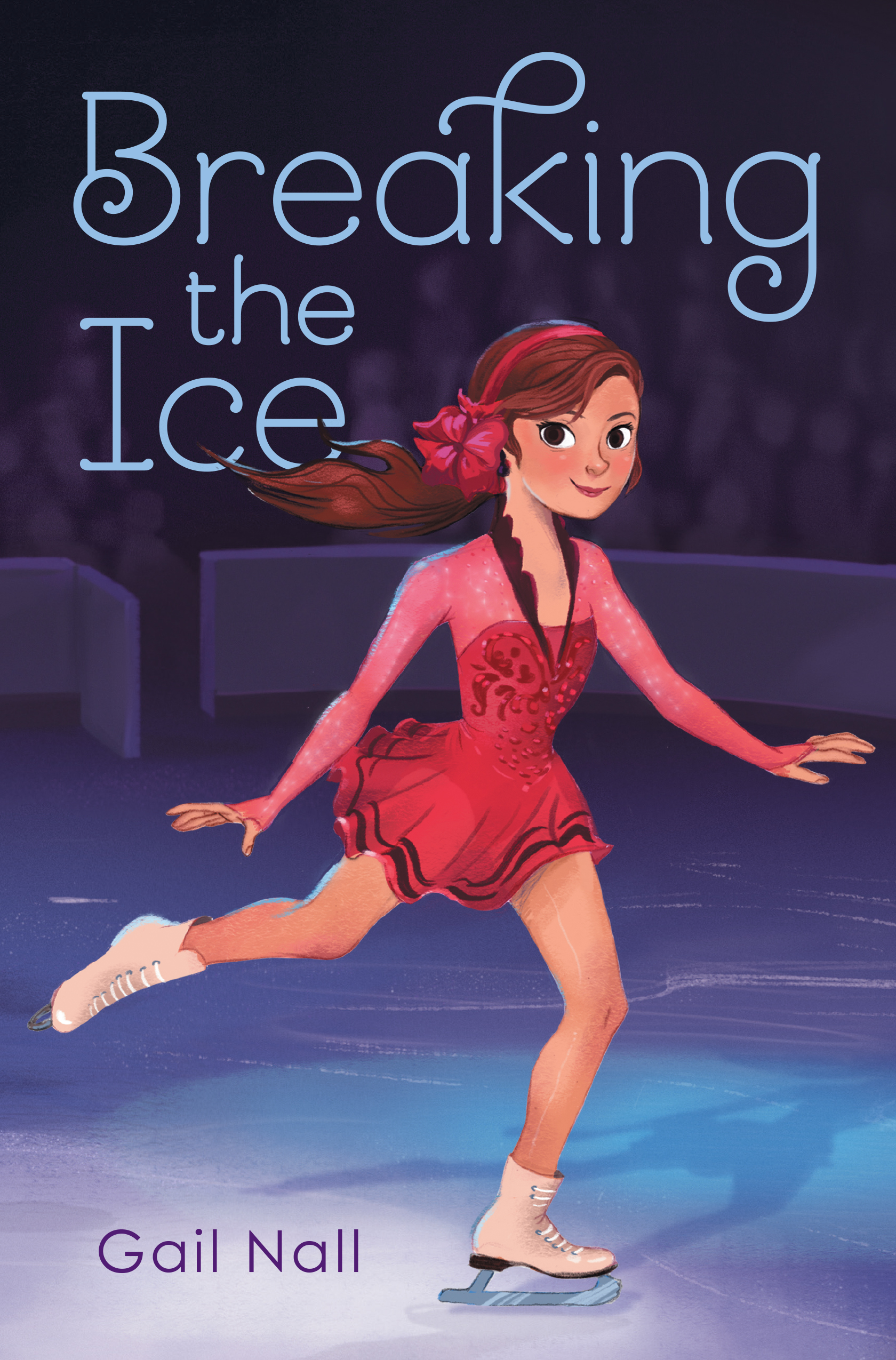
Kaitlin has always dreamed of being a champion figure skater, and she’s given up a lot to pursue her passion. But after she has a totally uncharacteristic tantrum at a major competition, she’s dropped by her coach and her prestigious skating club. When no other club will have her, she’s forced to join the ridiculed and run-down Fallton Club, jokingly referred to as the “Fall Down Club.” At first Kaitlin thinks this is a complete disaster, but after meeting some of the other skaters—including a boy who happens to have the most perfect hair she’s ever seen—she realizes it might not actually be so bad.
Yet learning a whole new program right before regionals is a huge challenge, and when she realizes that all the other area skaters target Fallton for pranks, she begins to wonder if joining the Fall Down Club has any upsides.
a Rafflecopter giveaway
Mindy Alyse Weiss writes humorous middle grade novels with heart and quirky picture books. She’s constantly inspired by her two daughters, an adventurous Bullmasador adopted from The Humane Society, and an adorable Beagle/Pointer mix who was rescued from the Everglades. Visit Mindy’s Twitter, Facebook, or blog to read more about her writing life, conference experiences, and writing tips.

If you take children to a Natural History Museum, will they:
You know the answer.
Should the museum have a case of trilobite fossils, it will be forlorn and dusty. Poor trilobites. Those homely little guys resembled a cross between a roach and an armored car, skulked around the ancient sea, and curled into a terrified ball whenever a predator neared.

And yet! These fellows dominated the oceans for a quarter of a billion years, surviving far longer than dinosaurs. They went along for the ride with Continental Drift, and their fossils have been found everywhere from Canada to China to Bolivia to Australia. Those fossils have allowed scientists to formulate new theories on speciation (how new species develop) and–what especially interests me–how creatures first developed sight.
But do they get the respect they deserve? Like most humble heroes, who exist everywhere, the answer is no. I’m hoping my new novel, “Moonpenny Island”, will change that, at least a little.

There’s a real Lake Erie island, a short ferry ride away, that I’ve visited for years. It’s mostly limestone, perfect for growing lilacs and finding fossils. People like me go there to indulge the delicious fantasy of leaving the world behind. There’s a rocky back shore, an abandoned quarry, a single store, a K-12 school with maybe twenty students. Every time I leave the place, I feel a pang. What would it be like to stay, to be a sturdy, self-sufficient year-rounder? I asked myself the question so many times, I finally had to write a book to find out.
I shrank my island, and pushed it further out into the lake. “Moonpenny” begins just as winter clamps down. The ferries stop running. Fewer than 200 creatures, and that includes Flossie the gangster cat and crazy Violet’s three-legged dog, live there then. Perfect setting for a mystery, I was sure. The real island is a stopping-off place for migrating birds, and in my first drafts the scientist who arrived to do research was an ornithologist. Because so much of the novel is about staying or leaving, this seemed like a brilliant idea.
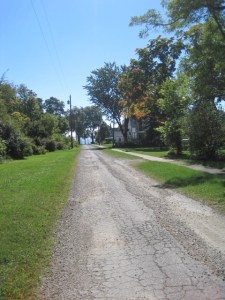
But then I went to visit again, this time in early March. It was bitter cold, the wind on the open ferocious. The line between lake and air was so fine it was almost non-existent. As I trudged around, head down, I couldn’t think any thought bigger than, Wind. Water. Rock. That’s when I knew–my scientist had to be a geologist/paleontologist.
Growing up on the island, my main character didn’t view fossils as a big deal–like every island kid, she had a shoe-box-ful under her bed. It wasn’t till that geologist showed up that she started to reconsider the ground beneath her own two feet. At this point, I was still trying to write a mystery, though my doubts were as deep as the quarry swim hole. I dreamed up one goofy crime after another. I either made the bad guy way too obvious or ridiculously improbable. It turns out that, just as loving to eat gourmet cuisine doesn’t make you a chef, adoring mysteries doesn’t make you able to write one. On and on I bungled, one miserable draft after another.

It was the trilobites who saved me. They almost literally opened my eyes. While doing research on fossils of Ohio, I stumbled on the magnificent “Trilobite! Eyewitness to History”, by Richard Fortey, an exuberant cheerleader for the little bugs. Besides all the impressive facts already mentioned, I discovered that trilobites were among the very first critters to see. Because their fossil record is so abundant, and because their eyes were formed from durable calcite, scientists have been able to trace this evolution in a way that’s rare and incredibly valuable.
What struck me–what strikes my hero Flor–is the idea that sight was not always a given. Not only that. Some trilobites who developed sight evolved to lose it again. That got me wondering about how I’d assumed that evolution always goes in the direction of biggest, fastest, strongest, and how wrong I was. It got me thinking about how, throughout our lives, we continue learning how to see, and how maybe the real, ultimate trick is being able to see through another person’s eyes. (By the way, isn’t that also what reading lets us do?) And at last I came to realize that here, in the natural order of things, in the act of changing and growing, lay mystery enough.
To win a signed copy of “Moonpenny Island”, please leave a comment below. And next time you go to the Natural History Museum, please visit the lonely, gallant trilobites!
****
“Moonpenny Island”, publishing on February 10 with HarperCollins, is a Junior Library Guild selection and has received starred reviews from Kirkus and Publishers Weekly. Tricia is also the author of “Cody and the Fountain of Happiness”, first book in a new series for younger middle grade readers, publishing this April with Candlewick.
