During my seven-plus years as a Mixed-Up Files contributor, I’ve read dozens (and dozens) of middle-grade novels. But never in my reading life have I encountered a book of such inventiveness and mind-blowing creativity that I needed my heart rate to return to normal when reaching “The End.”
In short, my mind was blown.
I’m talking, of course, about Thomas Wheeler’s MG debut, The Doomsday Vault, the first installment in the Everwhen School of Time Travel series. Lauded by Kirkus as a “…hilarious time-travel romp (that) bursts with creativity and heartfelt messages,” the book is out now from Simon & Schuster.
But first, a bit about the author:
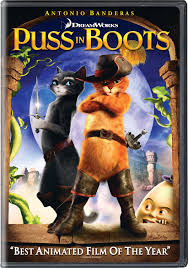
Thomas Wheeler is a screenwriter, producer, showrunner, and the author of The Arcanum. He was the executive producer and creator of Empire for ABC and The Cape for NBC. In feature animation he wrote the Academy Award–nominated Puss in Boots, as well as The Lego Ninjago Movie. Together with Frank Miller, he is cocreator and executive producer of Cursed, based upon the YA novel of the same name.
About the Doomsday Vault
MR: A hearty welcome to the Mixed-Up Files, Thomas! (Or do you prefer Tom? I don’t want to be presumptuous.) As I stated in the intro, The Doomsday Vault blew me away. It was like an acid trip, but in the best way possible. 🙂 Can you give our readers a brief summary?
TW: Hey there, Melissa! Thanks for having me, and Tom or Thomas works for me. I also answer to ‘Hey you!’ And so appreciate the trippy review! Now then, a summary? Let’s see… A famous phrase from the Everwhen school charter states: “No child should be denied an education simply by virtue of the time they were born into.”
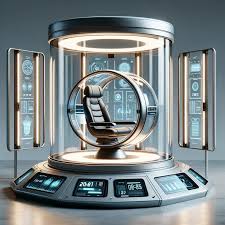
Everwhen is both a school of time travel and a time machine itself that allows special students from throughout the time stream to learn about exotic sciences from the past and future and apply them to our planet’s most pressing issues. Our first adventure follows a trio of students: a young English boy from the 1800s named Bertie Wells, a prodigal mathematician from 2025 named Zoe Fuentes, and a young inventor from the middle ages named Millie Da Vinci (and yes, her big brother is Leonardo!) as they get to know their new school, deal with a missing headmaster and try to crack the mystery of the Doomsday Vault. It’s a story about that moment where inspiration meets imagination and the miracles that can result.
Character Study
MR: As you said, the book is set in a time-traveling boarding school, where the protagonist Bertie Wells—the future H.G. Wells, of The Time Machine fame—encounters legendary figures from past and future eras, including Genghis Khan, King Arthur, Franklin D. Roosevelt, Steve Jobs, and more. His schoolmates are from different historical eras as well. How did you go about choosing which figures to feature, and why?
TW: Well, I knew I wanted Bertie Wells from the earliest stages because of who he grows up to be and how that would tie so importantly to the ending (no spoilers!) ((actually, spoilers are fine…)) H.G. Wells is also a historical figure who represents that perfect bridge between the worlds of science and imagination. As for Millie Da Vinci, I drew inspiration from my own kids and their big brother/little sister dynamic. I like characters with a chip on their shoulder, and I figured growing up in the shadow of Leonardo Da Vinci might make even the most brilliant scientist a touch defensive. And I knew I wanted a trio of friends from not only different times but different backgrounds and cultures.
At the same time, it was important our present day was represented, which brought me to Zoe. In the initial stages of writing Everwhen, my daughter was a slime-making-lunatic, and I marveled at all of the wild ingredients that were going into her creations; and so, of course, being my weird self, I imagined it coming to life and causing all sorts of issues. Zoe’s journey took the longest to unfold in my mind and went through a lot of revisions, but it was worth the effort. Each character’s journey cooks differently. Overall, this felt like a great way to illustrate that despite our differences there is far more that unites us than divides us, and kids all tend to worry about the same things: Am I good enough? Am I valuable? Do people like me? I figured the same worries applied, even if you were born in the 1300s.
World Building: Breaking the Rules
MR: What advice would you give to writers in terms of world building?
TW: I don’t have any one approach that works every time. For some context, I spend a lot of my life screenwriting in fantasy worlds and jousting with studio executives who are ALWAYS hammering you on the ‘rules.’ They want the ‘rules’ for everything, and it can really suck the fun out of a story. I don’t think readers care about the rules as much as studio executives (actually, I’m certain of it). So for Everwhen, I just wanted to throw caution to the wind and let my inner science nerd unleash. My spirit animal for this novel was the late, great Douglas Adams, who wasn’t a big rules guy himself yet managed to conjure the most imaginative and thrilling worlds.
Also, I think tone matters. Everwhen obviously flirts with chaos and absurdities that allow for more latitude than, say, the world-building of Game of Thrones, which aims for a grounded realism. One practical strategy I use in my world-building is to simply ask myself fifty questions and FORCE myself to answer them. They can be about anything: geography, religion, how does this work, how does that work, what’s the history, who founded this world, mythology, ghost stories, types of buildings, and on and on and on. It’s labor intensive but also freeing.
First of all, you’ll make terrific discoveries about your world when you try to objectively answer these questions. Try not to contradict yourself but otherwise have fun. This is why it’s different from making the ‘rules’! This exercise should be all about invention. When you get into your story, you’ll find a lot of the architecture and infrastructure has been built in advance, and it will give your world a deeper sense of place and dimension, and your characters will have a history to draw upon that will give them additional layers as well.
Gerbil Piping and Primordial Black Holes
MR: In addition to the historical luminaries mentioned above, you’ve included several off-the-wall characters, including Skippy the Cockroach who has an IQ of 378 and “sociopathic tendencies”; Zelda, who’s dating a brain she keeps in a jar (aka “Jar Brain”); and Raul, Bertie’s flirtatious roommate who greets female schoolmates with: “Nice boots.” (:)) There are also vindictive ghosts, mechanical monsters, sentient mold spores, and lots and lots of slime. Tom—and I mean this sincerely: How does your mind work?
TW: Ha! I don’t know. It’s scary in there. Lots of gerbil piping and primordial black holes floating around.
H.G. Wells, Jack the Ripper, and Time After Time
MR: As above, we discover that Bertie is the future H.G. Wells, whose groundbreaking 1895 novel The Time Machine is the inspiration behind your book. I’m guessing you were a huge H.G. Wells fan as a kid?
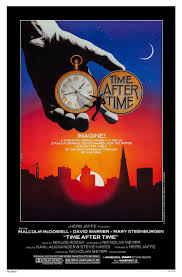
TW: I think my first exposure to H.G. Wells was this super scary time-travel thriller called Time After Time, where H.G. Wells (played by Malcolm McDowell) chases Jack the Ripper to modern-day San Francisco. Such a cool idea, but I was WAY too young to see this movie and my dad dragged me out of there, because I was terrified (and probably crying). But maybe H.G. burrowed into my imagination then? Of course, through the years I’ve come to appreciate his magnificent genius as an author and prescience as a futurist. And how do you tell a time travel school story without H.G. Wells??
MR: While we’re on the subject of Bertie, at school he forms a close bond with two of his classmates, Zoe Fuentes, a Harvard-obsessed math genius from 2025, and Amelia “Millie” Da Vinci, Leonardo’s inventive but overlooked little sister. What were you trying to say about the nature of friendship, especially in trying—and highly unusual—circumstances?
TW: Like I said, I don’t care where you’re from, and I don’t care WHEN you’re from; inside we all worry about the same things. And while we try to present this certain face to the world, our true friends love us for our imperfections. They see us at our worst, at our silliest, and at our most anxious. Friends pick us up when we fall.
MR: Another important theme in your book is feeling “less than.” Bertie feels inferior because of his poor grades, clumsy blunders, and fractured relationship with his dad. Zoe feels “less than” because she was ostracized in middle school, and Millie feels overshadowed by her famous brother. What’s the takeaway here?
TW: I think it’s hard to be creative in any realm, and in any endeavor, and not have to wrestle with this feeling from time to time. It comes with the territory. I deal with this theme in my own creative life. I see it with my kids, and my friends and peers.
Bertie, Zoe, and Millie are all creators in their own way and, for various reasons, feel outside pressure that gives them doubts. In the novel, they support each other in their inventive pursuits, in ways no one else in their lives ever has. Millie encourages Bertie’s imagination, Zoe and Bertie support Millie’s invention of Gurgy, and Bertie counsels Zoe on the necessity of failure to achieve great things. They really need each other, and grow to rely on each other, as they navigate the mayhem of Everwhen. We all need that. We all need each other to accomplish great things.
Funnily enough, just as I was writing this, my daughter texted me about doubts she’s having concerning a writing project she’s working on. I gently encouraged her to keep moving forward with it. Her idea is a great one, but she got scared–and that’s so normal. What I tell my kids is that if you feel ‘fear’ during the creative process, then you’re probably on the right track. But it’s difficult to do this work in a vacuum. We need people we trust to encourage us, support us, and guide us.
It’s About Time
MR: One more theme to unpack: the construct of time. To steal a quote from the book: “Time is not fixed. It’s not a straight line. Time is more like a clay we can mold.” Can you elaborate?
TW: (checks notes) I have no idea. Kidding! Although I think you may be quoting Dr. Kind there, and he has some rather controversial ideas about the use of time travel.
I don’t know about you, but I’ve spent many a night before bed pondering, ‘What would have happened if I had done X? Or if I’d chosen Y? Or if I’d turned left instead of right? If I’d said this instead of that.’ There is no more bewitching power than the power to travel through time and ‘fix’ things. At Everwhen, the professors deal with this temptation in a very real and explicit way, and so do the students. At the end of the day, we are the sum total of our choices. I thought it was interesting to watch kids wrestle with that moral dilemma, and to be tempted by that moral dilemma. And then to see the results of what happens when you DO try to fix things. In a school where the past, present and future all co-exist, it creates fascinating problems for your characters to contend with.
The Secret of Success
MR: Switching gears, like Leonardo Da Vinci you’re a true Renaissance man, having written and produced critically acclaimed films for Hollywood, and for TV. You’ve also written two best-selling novels, and now, a middle-grade book. What’s the secret to having such a successful and varied career?
TW: I have an amazing partner in life; my wife, Christina. Her wisdom and guidance through the years has been invaluable. My family is my secret weapon. I would add that I like to embrace new creative challenges. If I haven’t done something before, then I’m intrigued. If it gives me that ‘fear’ we were talking about earlier, so much the better.
Bringing Your A-Game to Kids
MR: As a follow-up, what made you turn your attention to writing for a younger audience? Was it something you always wanted to do, or did your kids talk you into it? Also, were there any specific challenges you faced?
TW: True, this is my first middle-grade-novel, but I’ve been writing for families in feature animation since Puss in Boots, and what I’ve found is that kids are the smartest audience of all. I feel an obligation to bring my A-game when I’m writing for a family audience. There is a misconception in Hollywood that younger audiences can’t handle emotional complexity; that you have to simplify things, soften things. But I totally disagree. Kids love big stakes, big problems, and big emotions. Publishers and studios tend to scissor up the audience into ages, etc., but hopefully adults and kids alike can enjoy the happy chaos of Everwhen.
Hooray for Hollywood!
MR: Rumor has it that The Doomsday Vault has been optioned by Paramount and you’ll be writing the script. Can you tell us more about the project? Also: will you have a cameo? (It’s only fair.)
TW: Lol, we’ll see! Maybe I can play Jar Brain! What I can say is that we have an amazing creative team, with producers Lorenzo Di Bonaventura and Mark Vahradian (Transformers), and Scott Mosier (Illumination’s The Grinch) attached to direct. Fingers crossed!
Write This Way…
MR: What does your writing routine look like, Tom? Do you have any particular rituals?
TW: Comfort is important. I have a new favorite cozy sweater that has turned into my Linus blanket. I am also surrounded by WAY too many toys. It’s bordering on a hoarder situation. After coffee and a little hanging out with my wife, I’ll write from 10 a.m. to 6 p.m. every day, with a little gym and dog walking mixed in. If I’m writing a screenplay, a good day is four to six pages; a great day is any more than that. Novels are a different animal.
When writing Everwhen, I just tried to empty my brain onto the page. I wanted the reader to find something new and incredible or ridiculous or funny around every corner, so those pages came a bit slower. But I love these characters and this world, so it was a joy to come to work every day. My general feeling about writing is your job is to open the shop every day, and your customers are your ideas. Some days you’ll have a lot of customers, some days it’s kind of quiet. Either way, the shop has to stay open.
MR: What’s your best piece of writing advice?
TW: No matter what genre or tone you’re writing in, always try to bleed on the page. Bring something honest and specific and meaningful from your life into the work. It will give your writing a more specific voice.
Up Next in Everwhen
MR: When can we expect the next installment in the Everwhen School of Time Travel series? And how many books are planned?
TW: It will be a minute before we see the sequel because I have a few feature obligations, but I’m quite excited to introduce some new characters from the future that I expect will be reader favorites. Still tinkering with the plot. Hopefully, by summertime I can get into the main writing. No plans beyond the sequel at the moment, but if there is demand there are endless stories to tell in the Everwhen universe!
Lightning Round!
MR: Finally, no MUF interview is complete without a lightning round, so…
Preferred writing snack?
I’m not a writing snacker because I get sleepy. I might have a banana or a protein bar, so I’m pretty hungry by dinner!
Coffee or tea?
Coffee. Peet’s. 2% milk.
Plotter or Pantser?
I am embarrassed to admit that I had to look up ‘pantser.’ But I’ll say this: Every writer should work from an outline. Screenplays are structure. Novels offer a little bit more freedom, but you can get a real sinking feeling if you start wandering around the middle of a novel without a map. It may feel like eating your vegetables, but an outline will spare you a lot of pain. In reality, I probably drift somewhere in the middle, although I’ve had the greatest success from working off a very detailed outline. (Sorry, that was not a lightning round answer!)
If you could hop into a time machine, where would you go?
Oof. To be honest, I’d go back and spend a few more minutes with my mom, who passed a few years ago. The less loaded and equally honest answer is that I’d like to go spend a few days as a dinosaur field biologist.
Superpower? (Besides avoiding black holes)
Flight, or the ability to make people less mean online.
Favorite place on earth?
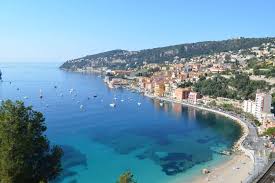
The south of France does not suck.
If you were stranded on a desert island with only three things, what would they be?
- A popcorn maker.
- My wife (we need a vacay!)
- Fritz, our Yorkie.
MR: Thanks so much for taking the time to chat with me today, Tom. Wishing you much success with the Everwhen School of Time Travel series!
TW: Melissa, it was an absolute pleasure! Thank you so much for inviting me!
Like this:
Like Loading...