Posts Tagged teachers.

STEM Tuesday– Electricity — Writing Tips and Resources

Writing tips & more!

Electricity

Activities with electricity can be dangerous, of course, but there is the old standby – static electricity. While under some circumstances, static electricity can be extremely hazardous, small amounts are fun for kid activities. Many people will remember rubbing a balloon on your head and then watching your hair stand up straight.

Static Electricity

Static electricity is an imbalance of electric charges within or on the surface of a material. The charge remains until it can move away as an electric current or by electrical discharge. The word “static” is used to differentiate it from current electricity, where an electric charge flows through an electrical conductor. (from Wikipedia)

For youngsters, there is nothing like music to make learning a concept exciting. Composer Sherri Boekweg is a singer/songwriter from Utah, and this video gives a great and catchy explanation.

From the Minnesota Children’s Museum comes Three Fun Static Electricity Experiments to Do at Home. Bending water, separating pepper and salt, and can races are like magic – educational and entertaining.

Etch-A-Sketch

One toy that has been around for 60 years is based on static electricity. According to the Strong National Museum of Play, it was invented in the 1950s by French electrical technician André Cassagnes. The silvery screen is aluminum particles and plastic beads that are removed by a stylus to make marks. Static charges hold the mixture of aluminum powder and tiny plastic beads to the screen and shaking it erases the lines.

Science journal

I am a huge advocate for science journals for all ages. The journals really bring in the STEAM concepts that can include writing, art, and design. Journal keeping involves planning, observation, communication, research and referencing, and much more, especially if children construct their own journals. I have included book making in past posts.

For older students, The California Academy of Sciences offers a step-by-step guide to setting up a science notebook, including Strategies for Reflection and Notebook Stories. Being flexible with content makes it more meaningful to students. Let them express opinions and observations.

https://www.calacademy.org/educators/setting-up-your-science-notebooks

Teacher Lessons

One of my favorite sites for teachers is Teachers Pay Teachers. Here are some offerings.

https://www.teacherspayteachers.com/Product/Bill-Nye-STATIC-ELECTRICITY-Video-Guide-Quiz-Sub-Plan-Worksheets-Lesson-4397449

Designing an electrical safety poster.

Some rules for designing posters. This page is about designing environmental posters but it has practical information about target audience, visuals, and text.

https://www.niehs.nih.gov/health/kids/activities/be-a-scientist/design-a-poster

https://www.twinkl.com/resource/design-an-electrical-safety-poster-activity-t-sc-1711982676

Twinkl is a new site for me. The website says:

Experienced educators, professional graphic designers, and market-leading illustrators creating award-winning K-12 resources for use at school and home.

A basic membership is free but you can subscribe to a Premium Account. I don’t know anyone who is a member so I am not recommending, simply making readers aware of its existence. Like anything online, take care.

Margo Lemieux – is an author, illustrator, former art professor, and, even though retired, still does all those things and more.

Interview with Author Karen Latchana Kenney and her book: Fascinating Fungi and a Giveaway!

Fascinating Fungi book

I am delighted to welcome one of our very own Mixed-up Files and STEM Tuesday members for her new release!

A huge welcome to Karen Latchana Kenney!


Karen Latchana Kenney


Karen Latchana Kenney is an Indian-Irish children’s author, born near the equator in Guyana, and raised far north in Minnesota. She writes both fiction and nonfiction stories about immigrant and biracial experiences, scientific wonders and discoveries, momentous historical events, and civil rights struggles.

Her books have received several starred reviews and have been named a 2025 Minnesota Book Awards Finalist, 2025 Pedro and Daniel Intersectionality Book Awards Finalist, 2023 Mathical Book Prize Honor, YALSA Quick Pick for Reluctant Readers, and a Book of Note from the TriState Review Committee. She lives in Minnetonka, Minnesota, with her family, where they explore all the wild places they can find.


Her newest book is a star-studded look at… FUNGI!

(The book received THREE stars from major reviewers. Congrats, Karen!!)

Fascinating Fungi book


Kirkus (starred review): An extraordinarily well-researched, well-presented, and visually appealing book on a fascinating subject.

Booklist (starred review) : Highly recommended to seasoned “fungi-philes” and those unfamiliar with the threading marvels.— Sharon Rawlins

School Library Journal (starred review): VERDICT A thoroughly researched, visually appealing, and reader-friendly title that brings the hidden world of fungi to life—highly recommended for all collections. –Jenna LaBollita


Thanks so much for joining us here today to talk about your awesome new STEM book for kids, Karen!

JS: What drew you to writing about fungi? 

KK: It was a really strange mushroom I found in my garden—one I’d never seen before. One day there was a giant puffball growing on its own, all of a sudden it was there. So, I started investigating and learning more about this mushroom that puffs clouds of spores into the air and I wanted to know more and more. I watched some incredible documentaries too, like Fantastic Fungi, and then I knew I wanted to write a book about these fascinating organisms.


JS: How did you figure out the organization of this topic? 

KK: There was so much to tell that it was hard to whittle down the topics, but I really wanted to showcase all of the amazing qualities of different kinds of fungi. I thought it was important to start off with a biological background and then move into different aspects of how they look, what they can do for people, and then what they can do within nature. Two chapters, “The Beauties” and “The Oddities,” were especially fun to write. They highlight all the beautiful and unusual forms fungi can take, including the terrifying Bleeding Tooth fungus that oozes a red liquid to the brilliant green Parrot Waxcap covered in slime.


JS: It seems like this is something many people don’t know, but how important are fungi to our world? 

KK: They are incredibly important. I don’t think we even know yet how important and pervasive they are yet. They nourish the soil, connect plants, provide food for all kinds of creatures, and decompose all kinds of materials. Without fungi, leaf litter and plant debris would pile up to make a thick layer covering our planet. Scientists are discovering different ways they can restore our planet as well—from breaking down plastics to cleaning toxic sites and water, and much more.


JS: Can you give us three intriguing fun facts that you learned while writing this book? 

KK:

  1. A bioluminescent fungus was used to illuminate the controls in America’s first combat submarine, called the Turtle, during the Revolutionary War.
  2. That fungi are genetically and biologically more like people and other animals than they are like plants.
  3. The concept of “wet computing” or wetware, which uses biological components along with hardware to create living, adaptable computers. A researcher I interviewed in England, Dr. Adam Adamatzky, is experimenting with fungi to create these kind of computing devices.


JS: What would you like readers to get out of this book?

KK: A sense of wonder about these organisms they may never have really thought about before, and a respect for the complexity and beauty of the natural world.


JS: How would you like teachers/librarians to use this book?

KK: I think this book would be perfect for science research or kids interested in ecology or biology.


JS: Can you give any tips to writers who want to break into nonfiction children’s books?

KK: Read the top nonfiction books out there and study how writers craft trade nonfiction. It’s filled with fictional elements that add so much interest. Having a great, high-interest angle is important. Also talk to experts in the area you are writing about. I often get the best research tips from the experts I interview.


JS: What are you working on now? 

KK: I’m working on a really exciting, top-secret STEM picture book right now!

That sounds fabulous, Karen. We can’t wait to read that one. Thanks for sharing about your new STEM book. Everyone go check out Karen’s website HERE for more of her fabulous books!


Want a chance to WIN a Copy of Karen’s New Book? She is doing a giveaway at Goodreads. Click HERE to enter!


STEM Tuesday– Zombies (Real and Otherwise)– Book List

Zombies, monsters, and mummies – oh my! These are the stuff of nightmares… or of awesome Halloween costumes! But are they real? Let’s use science to find out.

Zombie Makers: True Stories of Nature’s Undead by Rebecca L. Johnson

Zombies are real … but so far, the zombie-makers don’t attack humans. Yet. They do take over the brains and bodies of spiders and ants, flies and snails, and even rats. Not only that, some of these zombies are too small to avoid, until it’s too late. Like the teeny tiny wasps and fungal spores, and the totally invisible viruses. And then there are the brain worms! A must-read for anyone planning to hunt for zombies in their backyard!

Monster Science: Could Monsters Survive (and Thrive!) in the Real World? by Helaine Becker

Monsters aren’t real… are they? For the most part, no – although there ARE zombies among us. This book shows the real science relating to the monsters of myth and legend: genetics and electricity, for Frankenstein’s monster, and hybrids and genetic engineering for possible werewolves. And (as in the case of zombies) sometimes we’re surprised when the real monsters do show up!

Frightlopedia: An encyclopedia of Everything Scary, Creepy, and Spine-Chilling, from Arachnids to Zombies by Julie Winterbottom

An encyclopedia of scary stuff with horrifying hands-on activities. From bird-eating tarantulas to vampire bats and zombies this book will definitely make you shiver. Learn how to make fake blood and send coded messages to aliens. Tucked amongst the science are a handful of ghost stories and mythology and some bits about killer bees, stonefish, and Komodo dragons.

Animal Zombies! And Other Bloodsucking Beasts, Creepy Creatures, and Real-Life Monsters by Chana Stiefel

Full of eye-catching, vividly detailed, photographs which delve into the living dead, bloodsuckers, creeps from the deep, animal aliens, and animal monsters. Each chapter also profiles a “Mad Scientist” offering insights into how they got started, their research, and interesting or unique things to know about their field. It also includes a look at pop culture and myths surrounding zombies, vampires, kraken, aliens, and werewolves.

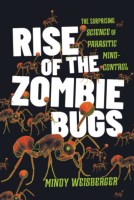
Rise of the Zombie Bugs: The Surprising Science of Parasitic Mind-Control by Mindy Weisberger

This is for older readers or those looking for additional information on insect zombification. Using an engaging conversational voice, pop culture references, vivid descriptions, and a dose of the macabre, the book explores the horror and science of zombie ants, flies, beetles, cicadas, spiders, roaches, and ladybugs from around the world. And shines a light on the responsible fungi, viruses, wasps, flies, and worms.

Secrets of the Dead : Mummies and Other Human Remains From Around the World by Matt Ralphs

In most environments, when someone dies their flesh decays, leaving only bones. But not mummies. With mummified remains, we can learn about the person and their culture, the foods they ate, diseases they suffered from. This book brings nearly 20 mummies to life – so to speak.

Mysterious Mummies by Ron Knapp

Some mummies are the result of mindful preservation: the drying and wrapping of bodies as a way to honor the dead. Other mummies resulted from accidental freezing, being tossed into a bog, or burial by volcanic ash. Dive into the mysteries behind these mummies.

Catching Cryptids: The Scientific Search for Mysterious Creatures by Kim Long

The Loch Ness monster. Kracken. Giant turtles. What some people call monsters, others call cryptids: an animal whose existence is not yet substantiated by science. The emergence of DNA technology, SONAR, bioacoustics and more has allowed cryptozoologists of every stripe to seek – and sometimes discover – the species behind the monster myth.

What Do We Know About The Kraken? by Ben Hubbard

Before orcas battered yachts, the kraken terrorized sailors. This book fills in the details of how seafarers and scientists hunted for, and studied the giant squid they thought to be the kraken of mythology. But in the vast and still unexplored depths of the ocean, nothing can be certain…

Here There Be Monsters: The Legendary Kraken and the Giant Squid by HP Newquist

This book is divided into three parts. The first section celebrates tales of the sea serpents – the monsters at the edges of the maps. In part two, we follow the scientists who start to find bits of giant squid, and begin wondering: is this a kraken? The final section focuses on the search for the giant squid, and the research on cephalopods.


Sue Heavenrich is an award-winning author, blogger, and bug-watcher. A long line of ants marching across the kitchen counter inspired her first article for kids. When not writing, she’s either in the garden or tromping through the woods. Her books for middle-grade readers include Funky Fungi: 30 Activities for Exploring Molds, Mushrooms, Lichens, and More and Diet for a Changing Climate. Visit her at www.sueheavenrich.com

Maria Marshall is a children’s author, blogger, and poet who is passionate about making nature and reading fun for children. She is a judge for the Cybils Awards and the #50PreciousWords. Four of her poems are published in The Best of Today’s Little Ditty 2017, 2016, and 2014-2015 anthologies. When not writing, critiquing, or reading, she bird watches, travels the world, bakes, and hikes. Visit her at www.mariacmarshall.com.