

As I write this post, my community is still under a Stay-At-Home order, and has been for several weeks. There has been a lot of debate about when and how we should open up different areas of the country. Communities are trying to balance the health of businesses and the economy with the health of people. In a way, the two interests are intertwined in a close and long-term relationship. Which is a lot like this month’s topic – symbiosis.
Symbiosis is when two dissimilar organisms are closely associated with each other. Sometimes both benefit from the relationship. Other times, only one benefits. The books we’re highlighting this month dive into how symbiosis works. They are a great starting point for different sciences activities and discussions in the classroom.

Natural Attraction: A Field Guide to Friends, Frenemies, and Other Symbiotic Animal, by Iris Gottlieb
Watercolor illustrations combine with a humorous, scientific text to examine thirty-five odd and unusual symbiotic animal, plant, and bacteria relationships. It includes statistics, graphs, takeaways, and fun additional facts about mutualism, commensalism, and parasitism.

Symbiosis, by Alvin Silverstein
Photographs and a sprinkling of fun fact sidebars enhance the examination of plants, animals and fungi partnerships (both beneficial and necessary), symbiosis of numerous parasites and microorganisms (including Ebola and SARS), and the possibility of symbionts from space. The engaging text is supplemented with scientific terms, a glossary, and further research suggestions.

Partners in the Sea, by Mary Jo Rhodes and David Hall
You’ve probably heard about cleaner fish, but there are so many more undersea partnerships. There are fish that hang out in anemones, tiny crabs and shrimps that live inside sponges, and a bunch of animals that partner up with algae.

There’s A Zoo on You! by Kathy Darling
You share your body with more than a thousand microscopic species of bacteria, fungi, and other too-small to see organisms. Some are beneficial, such as tooth amoebas that eat bacteria. Others, like some fungi, take advantage of the relationship by benefiting at our expense.

It’s a Fungus Among Us: The Good, the Bad & the Downright Scary, by Carla Billups and Dawn Cusick
Most land plants live in a symbiotic relationship with fungi, and use the fungal web to share information with their plant buddies in the garden, field, and woods. Some animals develop beneficial partnerships with fungi, too – but others are attacked by fungal parasites.

Things That Make You Go Yuck! Odd Couples, by Jenn Dlugos & Charlie Hatton
Everything on earth is involved in a symbiotic relationship, some good and some bad. Amazing close-up photographs coupled with trivia questions, humor, sidebars, and a dash of gross-out facts makes this book on animal, plant, and microorganism adaptation and survival an entertaining and educational read about some unusual and creepy relationships.

Forest Talk: How Trees Communicate, by Melissa Koch
Trees are talking all around us, using an underground network of fungi and roots to communicate with one another. They also share chemical messages from their leaves, sending defense signals to other plants when pests attack.
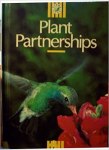
Plant Partnerships, by Joyce Pope
An examination of the dependence of numerous plants and lichen on other plants and animals for their habitat or survival. Covers instances of symbiosis, parasitism, gardening, and pollination by insects and mammals.
Even if your school and library are closed for the rest of the school year, you can still try some activities to explore symbiosis.
Explore Online
Use the Internet to learn about symbiosis. What are the three general types of symbiosis? How can you describe each type of symbiotic relationship and how do the organisms interact in each? Make a poster or PowerPoint presentation to compare and contrast the three types of symbiosis. Make sure to include at least two examples of organisms that use each type of symbiotic relationship. How is each relationship the same or different than the other relationships? Why would an organism want to be in a symbiotic relationship? You can also include any interesting information that you learned in your research.
Create a Game
Using what you have learned about symbiosis and the Internet, make a list of pairs of organisms in symbiotic relationships. With this information, you can create a card game, board game, or trivia game that involves matching organisms in symbiotic relationships. You’ll need to develop the rules of the game, instructions on how to play, and determine how players win the game.
Draw What You’ve Learned
Use your artistic skills to create a drawing, painting, or other artistic creation that shows a symbiotic relationship. What organisms did you portray in your art? Where are the organisms? How are they interacting? Is the relationship positive or negative? How does your art show this? What can someone learn about this relationship from the art?
Write About It
Write a short story or poem that involves symbiosis. Get creative! What characters will you create? How will they illustrate a symbiotic relationship in your story or poem? How does their relationship impact the plot or themes of your writing? What other information can you include in your writing?
*************************************
 Carla Mooney loves to explore the world around us and discover the details about how it works. An award-winning author of numerous nonfiction science books for kids and teens, she hopes to spark a healthy curiosity and love of science in today’s young people. She lives in Pennsylvania with her husband, three kids, and dog. When not writing, she can often be spotted at a hockey rink for one of her kids’ games. Find her at http://www.carlamooney.com, on Facebook @carlamooneyauthor, or on Twitter @carlawrites.


 Maria is a children’s author, blogger, and poet passionate about making nature and reading fun for children. She’s been a judge for the Cybils Awards from 2017 to present. And a judge for the #50PreciousWords competition since its inception. Her poems are published in The Best Of Today’s Little Ditty 2017-2018, 2016, and 2014-2015 anthologies. When not writing, critiquing, or reading, she bird watches, travels the world, bakes, and hikes. Visit her at


 Begin by putting your pencil down in the middle of your paper; after that, do not look at your paper. You will be creating a wandering scribble — not a drawing of the item. Resist the temptation to look at your paper! As you watch your imaginary ant explore, trace his trail on the paper, basically creating a map of his route. Keep your ant going. Keep your dominant hand tracing. Make your ant go around the corner, over the edge, into the hole.
 Now, let’s take this exercise a bit further. We won’t try to find a universal truth here (although you might try that too), but instead practice with a simpler task, creating mood. Skim your list for descriptors that convey a common mood. In my list, several feel kind of ominous. Using a highlighter, crayon or symbol, mark the details that match the mood. I’ve chosen yellow for ominous ones. Next, search your list for a different mood and mark that with a different color. Can you find a third?
