January. The time of year when things slow down. The holidays are over. School is back in session. Sometimes all you want to do is snuggle up with a cup of cocoa and watch television.
As a school librarian, I sometimes noticed a lull in book enthusiasm at this time of year. So to pep things up, I would pair a fiction reading with a nonfiction reading. For example, I paired Turtle in Paradise with an informational book on Key West (the setting) and followed through with a mapping activity of Conch Town.
Below are some fun pairings you can try at home or in the classroom. The nonfiction selections include books with fun information as well as cooking, creating, and art activities.
Clear Skies by Jessica Scott Kerrin (2019) – 144 Pages
 In the summer of 1961, eleven-year-old Arno Creelman wants nothing more than to be an astronomer. His claustrophobia rules out flying in a cramped space capsule. Instead, Arno dreams of exploring the galaxies with powerful telescopes on Earth.
Arno enters a local radio contest in hopes of winning a visit to a new observatory that’s opening near his town. The ribbon will be cut by Arno’s idol, Jean Slayter-Appleton, a renowned astronomer whose weekly columns Arno clips for his own notebooks. When he finally manages to phone in and correctly answer the skill-testing astronomy question, Arno is thrilled.
Then Robert moves to the neighborhood. He seems to challenge Arno in every way. He even believes in astrology, which Arno argues is not a science at all. Before long, Arno is feeling left behind, on the outs with his friends, and even abandoned by his beloved dog, Comet. How did Arno’s astronomical dream become a cosmic nightmare?
PAIR IT WITH
Can’t Get Enough Space Stuff: Fun Facts, Awesome Info, Cool Games, Silly Jokes, and More! by Stephanie Warren Drimmer (2022)
This book has everything to captivate space enthusiasts: Tons of fun facts, exciting games, hands-on activities, hilarious space jokes, stories from experts, and tidbits about the latest info on black holes, the International Space Station, and what life on Mars could look like. Key features include a glossary game for learning key space terms, stunning illustrations and photographs, diagrams and infographics, hilarious space jokes, articles by experts on outer space research, hands-on activities to try at home or school, and quizzes and games to test your knowledge.
Love astronomy? Try a few of these books.
No Vacancy by Tziporah Cohen (2021) – 144 pages
 Buying and moving into the run-down Jewel Motor Inn in upstate New York wasn’t eleven-year-old Miriam Brockman’s dream, but at least it’s an adventure. Miriam befriends Kate, whose grandmother owns the diner next door, and finds comfort in the company of Maria, the motel’s housekeeper, and her Uncle Mordy, who helps out for the summer. She spends her free time helping Kate’s grandmother make her famous grape pies and begins to face her fears by taking swimming lessons in the motel’s pool.
But when it becomes clear that only a miracle is going to save the Jewel from bankruptcy, Jewish Miriam and Catholic Kate decide to create their own. Otherwise, the No Vacancy sign will come down for good, and Miriam will lose the life she’s worked so hard to build.
PAIR IT WITH
Bake It: More Than 150 Recipes for Kids from Simple Cookies to Creative Cakes! by DK Publishing (2019)
If you are a pie aficionado like Miriam, try a recipe or two from this baking cookbook. It’s perfect for young bakers aged 9-12, whether you’re a baking novice or you can ice cupcakes in your sleep. It covers the basics as well as the latest cooking trends, from pinata cakes and edible flowers to drizzle icing and painted cake. Explore mouth-watering recipes including cookies, bread, pies, tarts, meringues and so much more. Accompanied by beautiful photographs of the baked items that are sure to engage and inspire budding young bakers.
Find more pie recipes here.
The Startup Squad by Brian Weisfeld (2019) – 176 Pages
 All the great leaders had to start somewhere. And Teresa (“Resa” for short) is starting with the lemonade stand competition her teacher assigned to the class―but making it a success is going to be a lot harder than Resa thinks.
The prize: line-skipping tickets to Adventure Central. The competition: Val, Resa’s middle school nemesis. And the biggest obstacle to success: Resa’s own teammates. Harriet is the class clown, Amelia is the new girl who thinks she knows best, and Didi is Resa’s steadfast friend―who doesn’t know the first thing about making or selling lemonade. The four of them quickly realize that the recipe for success is tough to perfect―but listening to each other is the first step. And making new friends might be the most important one.
PAIR IT WITH
Kid Start-Up: How YOU Can Become an Entrepreneur by Mark Cuban (2018)
Do you think it would be cool to run your own business? Do you want to help people with everyday problems? Do you want to make money?
Then you could be an entrepreneur like Resa and her friends. You don’t have to be a grownup to launch your start-up. This book shows you how to discover a great business idea and get it off the ground. You can try one of our ten kid-friendly businesses, including timeless ventures like starting a lemonade stand to more modern-day endeavors like launching an Etsy art store or creating your own. Because every billionaire was once a kid with great ideas―just like you!
Gossamer Summer by H.M. Bouwman (2023) – 192 pages
 It all started when Jojo saw a fairy but said she didn’t. After all, fairies aren’t real–and if they were, they wouldn’t look like that! No, Jojo did not see a small, green, muddy person. Her sisters have no problem believing, though. They beg Jojo to finish the story she started telling long ago, but since the death of their beloved grandmother, Jojo hasn’t felt like talking about magic, even if her sisters still believe.
Instead, her sisters decide to make fairy gardens to entice Theo, the new kid across the street, to come play. Their plan works, but it also catches the attention of creatures that bear an uncanny resemblance to the bedraggled fairies Jojo invented. Stories can’t come to life, though–can they? Yet the danger is real enough. With the questionable help of a self-important cat, the sisters and Theo, set off on an adventure to save the fairies from a flock of terrifying birds made of bones.
PAIR IT WITH
Enchanted Gardening: Growing Miniature Gardens, Fairy Gardens, and More by Lisa Amstutz (2016)
Not only do fairy gardens spark the imagination, they are tons of fun to make. Perhaps you can build a fairy house/garden just like Jojo’s sisters did. Readers of all ages will enjoy creating these charming gardens. Includes various projects for miniature and fairy gardens as well as other magically inspired gardens.
Find more ideas here as well as books on gardening.
The Remarkable Rescue of Milkweed Meadow by Elaine Dimopoulos (2023) – 192 pages
 Butternut lives in the burrows of Milkweed Meadow with her nine rabbit brothers and sisters. Together they practice survival skills and tell stories. With dangerous scenarios blooming in her mind, Butternut always follows the lesson of her family’s stories: stick to your own kind … rabbits. But after befriending an unruly robin and a wounded deer, Butternut begins to question the lesson she’s been taught.
When the three new friends discover other animals in trouble, Butternut must decide whether she can help, rally her friends and family, and be as brave as the heroes in the stories she tells.
Beautiful black-and-white illustrations bring the animals to life in this heartwarming story about friendship, community, and doing what is right.
PAIR IT WITH
Learn to Draw Forest Animals: Step-by-Step Instructions for More Than 25 Woodland Creatures by Robbin Cuddy (2015)
If you love the animals in Milkweed Meadow, why not try to recreate them. Learn to Draw Forest Animals offers a comprehensive drawing experience that includes step-by-step lessons, as well as full-color photographs, fun facts, trivia, quizzes, and much more. Sixty-four pages of drawing instruction include animals such as a grizzly bear, a wolf, a red fox, and an antelope. The book opens with brief information for getting started and the most popular breeds, the tools and materials needed, and some sample drawing exercises to warm up. Perfect for young artists-in-training.
Read some interesting facts about woodland animals in the United Kingdom.
Rosetown by Cynthia Rylant (2018) – 160 pages
 For nine-year-old Flora, the Indiana village of Rosetown is full of surprises, many of which happen at the Wing and a Chair Used Book Shop. She loves reading vintage children’s books after school in the faded purple chair by the shop window.
But lately, those surprises haven’t been so great. Her dear old dog, Laurence, recently passed away. And not long after, her parents decided to take a breather from their marriage. Now Flora has to move back and forth between their two houses. Plus, she’s just begun fourth grade, and it is so much different than third.
Luckily Flora has two wonderful friends—one old and one new. And with them around to share thoughts and laughs and adventures big and small, life in Rosetown still has happy surprises!
PAIR IT WITH
Indiana (A True Book) by Tamra B. Orr (2018)
How much do you know about Flora’s state of Indiana? For example, did you know its state bird is the cardinal? This book will give you so many facts, you’ll become an Indiana expert. Get to know its history, geography, wildlife, and future outlook. Tour this Midwestern state and see everything it has to offer.
Read more fun facts about Indiana.
Haru Zombie Dog Hero by Ellen Oh (2023) – 176 pages
 Eleven-year-old Luke and his dog, Haru, are best friends. Totally inseparable. But when their nasty landlord falsely accuses Haru of biting her, Haru is kidnapped!
Luke and his friends go on a serious mission to find and bring Haru home again. They discover mysterious experiments happening at the old laboratory at Painted Lake, owned by an evil multibillionaire named Mr. Thomas Sinclair. Luke and his friends soon fear that Sinclair’s scientists could be doing illegal testing that may endanger Haru and their whole town. As more strange clues emerge, the boys realize their world is changing fast, and soon Painted Lake is plagued by zombie attacks. But the love between Luke and Haru endures, ultimately helping to save them all.
Other novels with dogs as main characters can be found here.
PAIR IT WITH
Should Animal Testing Be Banned? (Points of View) by Riley Lawrence (2018)
Animal testing is a controversial practice, and many people have strong feelings about it. How do you think Luke and Haru feel about it? The scientists? Why not have a debate.
Understanding both sides of an issue is crucial for the development of an informed opinion about how you feel. Through unbiased main text and fact boxes, readers are presented with information and statistics used by those who support and oppose animal testing, and they are encouraged to use what they learn to decide where they stand.
Here are more topics to debate.
If you enjoyed this post, try some Pairings of your own. What nonfiction book might you pair with one of these popular novels?


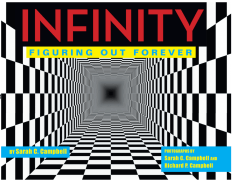


 One Saturday we got up at 4 in the morning and it was about 90 minute drive. We took a stepladder with us. There was not much traffic, but there was some. We put the stepladder in the middle of the road, then a car would come down and I’d have to climb down. I wanted to get as clear as possible. I was waiting for the cars to stop. and Sarah would yell “There’s a truck coming!”