
Posts Tagged reading

Celebrating Spring with Outdoor and Reading Activities

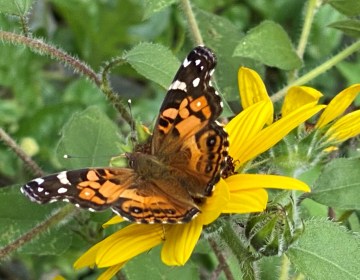
Spring is officially here, the days are getting longer, and there’s no better time than now to start spending more time outdoors. The Child Mind Institute has compiled a list of benefits to children of getting outside. These include an increase in confidence and creativity and a decrease in stress. Below are five easy ways for you and the students in your life to get in more sunshine time. In addition, below you can find some books to explore while you’re outdoors.


Five Easy Ways to Spend More Time Outdoors

  • Create an outdoor reading space. This can be as simple or elaborate as you’d like. You can use anything from a quilt or pillow laid out on the grass to a vine-covered arbor with a comfortable bench.
  • Invite students to take homework outdoors. Outdoorosity.org has five easy steps to start studying outdoors. Leaving electronic devices indoors while working on homework outdoors also helps to increase focus.
  • Jot observations in a nature journal. Writing in a nature journal during a break from reading or schoolwork helps students to tune into the details around them. What animals and plants do they notice?  What questions do they have? Students can use some of the books below to help find answers.
  • Take up birdwatching. As students read, study or explore outdoors, they will most likely see and hear plenty of birds. Why not learn more about them? Students can track sightings in their nature journal. At Audubon.org, you and the students in your life can learn more about birds in your area and connect with local birders. In addition, you can find a field guide specific to your region to help identify the birds you find.
  • Plan a visit to a park. Visit a local, state or national park. There you can explore how the history of your area has been shaped by the availability of water, dirt for growing crops, and other natural resources.

Books to Help Explore Your Natural World

The students in your life and you can use the books below to learn more about your natural world:

Book Beastly Bionics


Beastly Bionics: Rad Robots, Brilliant Biomimicry, and Incredible Inventions Inspired by Nature Paperback by Jennifer Swanson. This book takes readers on a journey to explore how the natural world inspires innovation in science and technology. The inspiration for the next great discovery just might be in your own backyard.


Cover of Beastly Brains: Exploring How Animals Think, Talk, and Feel


Beastly Brains: Exploring How Animals Think, Talk and Feel by Nancy Castaldo. This book provides insight into animal intelligence. Readers can explore how animals communicate, show empathy, use tools, and interact in social societies.


Insects and Spiders


Insects and Spiders by Christine Taylor-Butler. This book provides readers with an up-close look at insects and spiders including their habitats and unique abilities. In addition, the book provides insight into dangers facing these creatures and how humans can help keep these species alive.


butterfly guide


National Audubon Society Pocket Guide: Familiar Butterflies of North America by the National Audubon Society. This guide is small enough to carry almost everywhere, but it is packed full of information to help readers identify 80 of the most common butterflies .


are ants like plants


Super Science: Are Ants Like Plants?  by Sue Heavenrich. This book takes readers deeper into the world of ants and plants and introduces students to fascinating facts about how these living things access food, grow, and communicate with their friends.


kid's Guide to Exploring nature


The Kid’s Guide to Exploring Nature (BBG Guides for a Greener Planet) by Brooklyn Botanic Garden Educators (Author) and László Veres (Illustrator). This guide provides readers with information on how to observe their natural world as a naturalist does. In addition, it leads them on 24 adventures to explore the complex ecosystems of plants and animals in the woods, at the beach, and in a city park.


Rocking Book of Rocks


The Rocking Book of Rocks: An Illustrated Guide to Everything Rocks, Gems, and Minerals by Florence Bullough (Author), Amy Ball (Author) and Anna Alanko (Illustrator). This book helps students explore the diverse world of rocks, gems and minerals. As a result, they just might become budding geologists.


trees leaves flowers and seeds


Trees, Leaves, Flowers and Seeds: A Visual Encyclopedia of the Plant Kingdom by DK with contribution by the Smithsonian Institution. This book helps readers explore the diverse and intriguing world of plants. It features more than 1,000 images and interesting facts to take readers into the botanical world, from tiny seeds to giant trees.


ultimate bug-opedia


Ultimate Bugopedia: The Most Complete Bug Reference Ever by Nancy Honovich and Darlyne A. Murawski. This book invites readers to explore the hidden world of the most popular bugs on the planet.


who gives a poop


Who Gives a Poop?: Surprising Science from One End to the Other by Heather L. Montgomery (Author) and Iris Gottlieb (Illustrator). This book  invites readers to explore the interesting science behind poop and to discover how poop has a purpose. In addition, readers will learn about the role that poop has played in history.


wildlife ranger action guide


Wildlife Ranger Action Guide: Track, Spot & Provide Healthy Habitat for Creatures Close to Home by Mary Kay Carson. This book helps students become citizen-scientists with dozens of hands-on activities and habitat-creation projects.


For more information to help explore the natural world of the students in your life and you, please check out our STEM Tuesday section.

Mini-Museums for Middle Grade Favorites

Hello, fans of Middle Grade! I hope the school year is running smoothly for your students, your readers, or your own kids, whether they are learning in-person, remotely, independently, or in a hybrid or homeschool environment. While online learning and the use of technology are certainly helpful in this time of Covid, I know my own kids sometimes grow weary of screens and keyboards in their current environments. So I wanted to share a fun and engaging reading activity that can work equally well in both the home and classroom: A Mini-Museum display based on a great Middle Grade read.

As a teacher, librarian, or homeschooling parent, you can pose this idea before readers start or finish a book, or encourage readers to choose a favorite story with which they are already familiar. The Mini-Museum employs reading, writing, and creative/critical thinking skills, and culminates in a hands-on and 3-D product. You can include teamwork and presentation/delivery skills if you choose. The steps are simple and the supplies minimal—and the search for objects gets a reader out of his or her chair and away from the screen.

Step One – After (or while) reading a novel, the reader lists notable and important physical objects mentioned in the book that have some significant relevance and/or symbolic value to the plot, characters, theme, point-of-view, or setting. Eight to ten objects make a nice-sized museum collection, but the suggested or required number would be determined by your readers’ abilities, your environment, your time, and the book choice.

Step Two – Readers gather household, three-dimensional objects that are the real thing, a replica, or a constructed facsimile of each object on his or her list.

Step Three – Readers choose and prepare a display space. This can be a shelf, tabletop, or windowsill in the classroom, or a table or empty corner at home. Use cardboard boxes, recyclables, or piles of books to create museum stands and exhibit spaces. A variety of sizes and levels makes the overall look of the display more interesting and easier to see. Readers can cover these items with plain fabric or paper for a clean “museum look.”

Step Four – Readers fill the museum with their objects. Objects of greatest significance get the choicest spots in the display.

Step Five – Readers write brief descriptive captions to display near each object, like you’d see in a real museum. These can include the object name, the date of use (setting of book), the materials that form the object, and a few sentences on the object’s significance to one or more story elements in the book. Mount the typed and printed (or handwritten) captions on folded index cards and place each free-standing description near its object.

Step Six –Optional share and tell with the class! Thanks to smart phones and cameras, most readers can find a way to show their display distantly to their teacher and classmates.

If you’ve read or taught the excellent Stella by Starlight by Sharon M. Draper, you’ll recognize how these real objects make great representations of the novel’s important character and plot points:

  • Notebook (Stella uses one to practice writing late at night.)
  • Cigar box (Stella keeps her collection of inspirational newspaper articles in one.)
  • An edition of the Star Sentinel (This is the newspaper Stella creates.)
  • Small, unmarked bottle (Stella buys medicine for her sick brother Jojo.)
  • Clean rags torn into strips (Stella tends to her mother’s snakebite.)

Students can manufacture some objects when necessary, like Stella’s original newspaper the Star Sentinel, which she types on a donated typewriter. A description for the torn rags might be something like: “Extra wound dressings, circa early 1930s; wool and cotton. Stella uses dressings like these to help treat her mother’s snakebite. When she finds Mama unconscious in the woods, Stella brings water, whiskey, and dressings to clean and wrap the wound. Mama survives in part due to Stella’s quick actions.”

Benefits of a Mini-Museum Display:

  • It’s highly flexible with strong potential for individualization.
  • Visual-spatial learners will enjoy creating the display space.
  • Readers can work in groups or independently, depending on their situation and capabilities.

Thanks for reading and sharing this idea! Enjoy the holidays, keep safe, and stay well.

Author Spotlight: Beth McMullen

Today I’m thrilled to interview fellow Mixed-Up Files member Beth McMullen, author of the best-selling middle-grade adventure series, Mrs. Smith’s Spy School for Girls. Her latest book, Lola Benko, Treasure Hunter—the first in a series—is out from Aladdin on August 25, and I was lucky enough to snag a copy. (Spoiler alert: It’s really good.) Here’s a brief summary:

“Having a world-traversing archaeologist dad means twelve-year-old Lola Benko is used to moving around not putting down roots anywhere. But then her father disappears. The official story is that he was caught in a flash flood, but Lola’s research shows the day in question was perfectly pleasant. And it will take more than empty reassurances from suspect strangers for Lola to give up on her dad. She has a feeling his disappearance has to do with a mythical stone he was studying—a stone so powerful, it could control the world. But in the wrong hands, it could end it, too…”

And now, without further ado… heeeere’s Beth McMullen!

MR: Beth! I have so many questions for you. May I start with a confession?

BMcM: Haha! Of course!

MR: I loved Mrs. Smith’s Spy School for Girls and wish I’d written it myself. Kidding aside (okay, I wasn’t really joking), how did you come up with the concept? A 12-year girl who’s drafted into an elite spy ring at a fancy-schmancy Connecticut boarding school is an entirely original idea.

BMcM: I went to boarding school as a kid and always wanted to use the setting because….come on…who thought putting 600 teenagers together day and night with minimal adult supervision was a good idea?? It felt ripe for ridiculous adventures! At the time, I was writing mysteries for adults and made a few attempts to work in the boarding school angle but…no go. I just couldn’t get it to snap. I even tired a young adult version but that, too, felt flat (like, pancake flat). It wasn’t until I landed on Abby Hunter, twelve years old, that it started to come together. The spy idea just naturally followed as I always suspected the school I went to was up to something other than attempting to educate us. Plus, I love spy stories and can’t seem to stop writing them.

MR: Mrs. Smith’s plucky protagonist, Abby Hunter, has a delightfully distinctive voice. In fact, you could teach a master class on MG voice using Abby as an example. What’s the secret?

BMcM: I didn’t want Abby to be a superhero. I wanted her to be real, to be scared of things but walk through them anyway, to rise to the challenges as they appeared even when the result was messy or awkward. Part of the reason I wrote this series in first person present is so I could show the dialog in Abby’s head, how she convinces herself to do something that might otherwise feel overwhelming. To show a girl being brave despite uncertainty was appealing to me on so many levels.

When I’m writing, I keep a list of the main character’s defining traits and keep that close at hand. And then I start working out the details and fine tuning as I move through the plot points. It always takes me about fifty pages to find the ‘voice’ but when it clicks I know it. The key to Abby was her dry sense of humor and sardonic leaning take on the world. Once I figured that out, I was in.

MR: Another secret I’m dying to know: What’s it like to write a series? Did you have the plots for all three books planned out in advance—or did you wing it? Also, how do you keep the enthusiasm going from book #1 to book #3?

BMcM: Oh boy. Series!! I am never prepared! It took me a long time to show Mrs. Smith’s #1 to my agent (I didn’t write for kids and was pretty sure it was a complete disaster) but when I did, she said we had to pitch it as a series. Well…great! Right?! So I went back and rewrote the last quarter to give it series potential but that was the extent of my thought. When the offer to write three Smith’s books came, well..again…great!  The panic didn’t set in until I sat down at my laptop to a blank page and thought, so what is book two about anyway??

The great thing about writing a series is that you’ve done a lot of the hard character work already. On the flip side, you are locked into things that maybe you’d have done differently if you’d known where you were going. I’m hugely envious of authors who plot out an entire series arc before writing a single word. However, I am not one of those people. So I start with plot and additional secondary characters and a destination that hopefully lets the characters learn something new and different about themselves along the way.  And I keep my fingers crossed it works. 🙂

MR: Lola Benko, Treasure Hunter is your second series with a plucky preteen protagonist. How is Lola similar to Abby? How is she different? Also, how did you ensure that Lola’s voice was entirely different from Abby’s? Considering that you’ve had Abby’s voice in your head for so many years, it couldn’t have been easy.

BMcM: That is a great question! Both characters are single minded in their determination and discover that good friends and a team make a world of difference in reaching goals. But Lola is a bit more cavalier, a little more likely to step over the line, very comfortable justifying the means with the end. She believes need is the mother of invention so is constantly tinkering and creating things that will help her in her quest to find her missing father. Lola is worldly in many ways but also clueless about a lot of regular things, like how to make friends. I really enjoyed watching her realize how nice it was to no longer be so alone.

MR: In terms of your writing routine, how has it changed since the pandemic? What have been the biggest obstacles you’ve had to face? Any unexpected positives?

BMcM: This pandemic…wow…didn’t see that one coming. It’s hard to write fiction when real life is so unbelievable, isn’t it? When the shelter in place order came in California I was just finishing up Lola #2 and suddenly I could no longer go to my office and the only reason I have an office is because I am terrible at working from home. TERRIBLE. I had to really discipline myself to finish the draft and also keep it from going too dark because I was absorbing all the horror that was happening in the world. That was pretty tough. And as soon as I turned in that draft in May, I had to launch right into my third series for Simon & Schuster, a more fantasy oriented story which is due in December. That was brutal. But I returned to my office two weeks ago and I’m pleased to say things are improving. Pandemic positives? Working in my bunny slippers, no question.

MR: Finally, Beth, you’ve extremely prolific, having written novels for both children and adults. Not to be repetitive, but what’s your secret? Also, what advice would you give to aspiring writers?

BMcM: I spend a lot of time noodling ideas before I put anything down on paper. Like, years. (And if an idea can survive years in my head, I like to think it has staying power.) This means by the time I sit down to actually write, I’ve worked out quite a bit of what a character is like already. For example, right now I have a middle grade idea that first occurred to me last summer. I keep coming back to it in idle moments. I keep adding things to it, pushing out the edges, and I know at some point I’ll start writing it, if only to free up the space in my head for something new.

The advice I always give to aspiring authors is that you just can’t quit. If you do, you are absolutely guaranteed that nothing will happen. But if you keep at it, keep pushing, who knows where things will go? I’m a firm believer in possibilities. They are limitless.

MR: Oh, one more thing. As you know, no MUF interview is complete without a lightning round, so…

Preferred writing snack? Anything with sugar! Lots of sugar! So much sugar! (Sorry, clearly I’m unhinged.)

Coffee or tea? Coffee. If I could hook up an IV, I would.

Cat or dog? Cat!

Favorite song? Oh boy. This is hard!  “Vienna” by Billy Joel

Zombie apocalypse: Yea or nay? Definitely. It’s 2020. Expect it any minute now.

Superpower? If I drink caffeine I can stay awake forever.

Favorite place on Earth? New Zealand

Hidden talent? I’m a total Type A but no one knows it.

If you were stranded on a desert island with only three things, what would they be? Three tubes of chapstick.

James Bond or Harriet the Spy? (Okay, this was a setup. 🙂 ) I feel like I exist to blend (shaken not stirred) those two together and put them on the page.

MR: Thank you for chatting, Beth—and congratulations on the upcoming publication of Lola Benko, Treasure Hunter! I really enjoyed it, and I know MUF readers will too!

BETH McMULLEN is best known for the Mrs. Smith’s Spy School for Girls trilogy (Aladdin/S&S), middle-grade spy thrillers, packed with action, adventure and humor. She is also the author of the forthcoming Lola Benko, Treasure Hunter series (Aladdin/S&S) about a globetrotting 12-year-old searching for her father, a famous archeologist who has gone missing. And in March 2022, look for Cats & Dragons (Aladdin/S&S), a middle-grade action/adventure series packed with friendship, fantasy, whiskers and wings. Beth lives in Northern California with her husband, kids, cats and a very tolerant parakeet named Zeus. Visit her website and follow her on Twitter and Instagram.