
Posts Tagged parents

STEM Tuesday– Astronauts and Space Travel — Book List

STEM Tuesday CoSTEM Costume Contest

So you want to be an astronaut! What’s next? According to Chris Hadfield, who spent two tours aboard the International Space Station, you need to get a good education. Learn new things. Fortunately, we’ve got a list of books for that.

ASTRONAUTS:

Cutting-edge Astronaut Training, by Karen Latchana Kenney

This book shows how astronauts train for space missions, what type of gear they need, and the technology they use. Readers visit the Neutral Buoyancy Lab in Houston and learn how astronauts aboard the International Space Station used a 3-D printer to manufacture a wrench needed for urgent repairs.
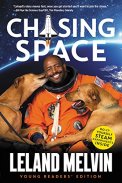
 

Chasing Space Young Readers’ Edition, by Leland Melvin

Astronaut Leland Melvin knows how to solve problems, whether on the football field or aboard the space shuttle. He shares a personal and realistic journey through astronaut training and space travel. Includes hands-on STEAM experiments at the back.


Lost in Outer Space: The Incredible Journey of Apollo 13, by Tod Olson

Written like an adventure novel, this is a true story about the mission to the moon that nearly ended in tragedy. Two hundred thousand miles from Earth, an explosion rips through the spacecraft. Readers follow along with astronauts in space and mission control on the ground as they race to fix the problem.


From Farmworker to Astronaut: My Path to the Stars, by José M. Hernandez

When he was ten years old, José M. Hernandez watched astronauts walk on the moon. From that point, he knew he wanted to go to space. Encouraged by his father (You can do this, m’ijo!), José made a plan for school, college, and beyond. Rejected 11 times from the astronaut program, he didn’t give up and finally made it aboard the Space Shuttle.

NASA:

Countdown: 2979 Days to the Moon, by Suzanne Slade; illustrated by Thomas Gonzalez

Getting to the moon began with a dream – an outrageous idea – that we could land a man on the moon and bring him safely back to Earth. The challenge: to do this in a decade. Written in verse, this book documents the Apollo program, providing full spreads to highlight the astronauts for each mission.

Above and Beyond: NASA’s Journey to Tomorrow, by Olugbemisola Rhuday-Perkovich

NASA was established in 1958, and in that time it has launched spaceships, shuttles, telescopes, and space probes. It’s landed men on the moon and rovers on planets. Packed with photos and profiles of lesser-known contributors to the space program.


The Apollo Missions for Kids: The People and Engineering Behind the Race to the Moon, with 21 Activities, by Jerome Pohlen

Each of the seven chapters focuses on a specific aspect of rocket science. Sidebars profile scientists, engineers, and mathematicians involved in the Apollo missions. Hands-on activities include orbital mechanics, engineering the lunar lander skin, and replicating an experiment done on the moon.

Moon Mission: The Epic 400-year Journey to Apollo 11, by Sigmund Brouwer

Relive the Apollo mission as one of the astronauts. Experience all of the life-or-death challenges and near disasters, that occurred or were predicted, in the centuries long quest to walk on the moon. Each chapter is broken into three stages (like a rocket) and is chock full of history, STEM, and a science mystery to solve.

WOMEN IN SPACE:

Reaching for the Moon: The Autobiography of NASA Mathematician Katherine Johnson, by Katherine Johnson

Written in an engaging, authentic voice, 100-year-old Katherine Johnson weaves history, segregation, civil rights, and African American culture into a conversational discussion of her life as a mathematical prodigy and computer at NASA.


Galaxy Girls: 50 Amazing Stories of Women in Space, by Libby Jackson; illustrated by students from the London College of Communication

Fifty stories of amazing women around the world essential to our missions to the moon and space. Includes female astronauts, mathematicians, engineers, physicists, test pilots, and aerospace psychophysiologists. As well as a timeline and “your own mission” plan.


To Fly Among the Stars: The Hidden Story of the Fight for Women Astronauts, by Rebecca Siegel

History remembers the Mercury 7 as America’s first space heroes. But there were 13 female pilots (air racers, test pilots, and flight instructors) who secretly completed the same astronaut tests. A look at the systemic sexism they battled to prove their right to become astronauts. Includes historic photos, glossary, and notes.


STEM Tuesday book list prepared by:

Sue Heavenrich writes about science for children and their families, from space to backyard ecology. Bees, flies, squirrel behavior—things she observes in her neighborhood and around her home—inspire her writing. A long line of ants marching across the kitchen counter generated one of her first articles for kids. When not writing, you can find her committing acts of science from counting native pollinators to monitoring water quality of the local watershed.


Maria is a children’s author, blogger, and poet passionate about making nature and reading fun for children. She’s been a judge for the Cybils Awards from 2017 to present. And a judge for the #50PreciousWords competition since its inception. Her poems are published in The Best Of Today’s Little Ditty 2017-2018, 2016, and 2014-2015 anthologies. When not writing, critiquing, or reading, she bird watches, travels the world, bakes, and hikes. Visit her at www.mariacmarshall.com

Zatanna and the House of Secrets Interview and Giveaway

Support Independent Bookstores - Visit IndieBound.orgHi Mixed-Up Filers!

Today, I have the privilege to be talking to both Matthew Cody and Yoshi Yoshitani, whose graphic novel, Zatanna and the House of Secrets,  is available now from DC Comics.

Hi Matthew and Yoshi. Thank you for joining us today.

My first question is for both of you. Can you tell us a little bit about Zatanna and the House of Secrets?

Matthew: Zatanna and the House of Secrets is about a normal tween girl, Zatanna, who discovers that just about nothing in her life is what it appears to be – not her dad, not the house she grew up in, not even the family pet rabbit. There are magical secrets afoot, and more to Zatanna than she ever imagined!

YoshiIt’s a story of a girl growing up and trying to figure out her identity as the world and people around her change—figuratively and literally! And of course, lots of magic

Matthew, you’re books are, for the most part, a mix of fantasy and superheros. So, Zatanna’s story seems like a natural fit for you. Did you choose the character?

Matthew: I did. When this opportunity to work with DC came along, they asked me to pitch them three or four characters I’d like to write. Zatanna was a no-brainer, because she’s never been your typical superhero. She’s a magician! The story of how she became a magician – how she discovered her powers – was such a joy to conjure up (see what I did there?)

Not gonna lie, Zatanna is one of my favorite DC characters, and my go-to for cosplay. Yoshi, I love the new character design. I’m already planning on rocking this as my next cosplay. How did you approach the character design?

Yoshi: Yes! Zatanna is one of my absolute favorites too! Zatanna’s fully grown costume is over the top and confident, so it was fun to work backwards and consider what her pre-evolution outfits would be. Maybe some vintage finds, maybe her dad’s old shirts – she has a style but has yet to nail down her look. I really wanted to capture that transition.

One of the things that I really liked about this story is how it explored the relationship between Zatanna and her father and the idea that our parents aren’t always the heroes we expect them to be. Matthew, was that something that you wanted to focus on early on?

Matthew: Definitely. Middle school is hard for a lot of reasons, but one of the toughest aspects of it is that push/pull between still needing your parents tremendously, while at the same time feeling like you need to separate yourself in some ways. So, we took fantasy and did what the genre does best – we externalized that conflict. At its heart, this is a very family focused story about the mistakes we make both as kids and adults. And how we deal with them.

Another thing that I particularly loved was that the House of Secrets is like a character itself in the story. So, another question for both of you: How did you approach the world-building?

Matthew: The House of Secrets has been around in DC Comics lore for a long, long time. It’s been interpreted and reinterpreted in a many different ways, so I kind of took that meta-fact and applied it to the house in our story. Our House of Secrets has been passed down from Caretaker to Caretaker for centuries, and each one left their mark. Poor Yoshi then had to being all that to life on the page (btw, she knocked it out of the park)

Yoshi: Matthew had the idea that the House of Secrets had been passed through many different owners in different parts of the world and different eras. I absolutely loved that, and I personally relish any opportunity to kit-bash multiple cultural influences. Plus those huge stylistic changes really gave the impression of a magical unpredictable house—one you were just dying to run around yourself!

We see Teekl throughout the illustrations before we’re ever introduced to the character. Yoshi, was this an easter egg or is Teekl spying on the Zataras?

Yoshi: I was hoping someone would notice! And yes, Teekl is definitely a warning that Klarion and his mother are nearby, not that Zatanna understands that at the time. Its an Easter egg that’s fun on the reread.

Are there any other easter eggs that fans should keep an eye out for?

Matthew: Oh yeah! Yoshi’s art has a ton of clever hints and nods, but if you want to look for one in particular that might excite old school DC fans, pay special attention to the stone busts and portraits throughout the house to get a glimpse of the house’s original “caretakers”.

Yoshi: There are a few visual Easter Eggs for those who are familiar with the DC universe. I won’t give anything away, but definitely check out the school dance. Also, those in the know will recognize the Witch Queen’s assistants for what they are.

Speaking of fans, I’m going to geek out for a little bit here. In DC canon, Zatanna was the caretaker of the House of Mystery, which is similar to, the House of Secrets. Can we expect to see another story featuring the House of Mystery, perhaps a different caretaker?

Matthew: Huh. That’s a great idea! 😉

Is there anything else about the story that either of you would like to share?

Matthew: It’s really, really good!

What’s the best piece of creative advice that both of you have received and would like to pass on to other writers and artists?

Matthew: For writers, read more than you write – but write a lot.

Yoshi: Breaks are important to creative flow, and pursue a creative process that brings you joy.

What is something that people would be surprised to learn about you?

Matthew: I tried to break into comics as a writer before I became a published novelist.

Yoshi: I’m allergic to coconut.

What are you working on next?

Matthew: I’m finishing up a novel for older readers and am working on a couple of kids comics projects that I’m really excited about.

Yoshi: Something else with DC!

How can people follow you on social media?

Matthew: On twitter I’m at @mattcodywrites. I tweet rarely but always respond!

Yoshi: Twitter @yoshisquared. Insta @yoshiyoshitani  Website Yoshiyoshitani.com

Thank you so much for the interview!

Zatanna and the House of Secrets is out now, and here at The Mixed-Up Files, we’re giving away a copy. Enter our giveaway below.

a Rafflecopter giveaway

The winner will be contacted  via email and asked to provide a mailing address (US/Canada only) to receive the book.

STEM Tuesday– The Human Body — Interview with Author Sara Latta

Welcome to STEM Tuesday: Author Interview & Book Giveaway, a repeating feature for the fourth Tuesday of every month. Go Science-Tech-Engineering-Math!


photgraph of author Sara LattaToday we’re interviewing Sara Latta, author of Body 2.0: The Engineering Revolution in Medicine, among several other titles. The book features modern biomedical engineering challenges, some of the STEM professionals who do it, and people who have benefited from it. (Check out the Kirkus review here! If you subscribe to SLJ or Booklist, you can see additional reviews at those sites.)

Carolyn Cinami DeCristofano: What’s the book about—and what was most important to you in deciding to write it?

Image of book cover of Body 2.0 by Sara LattaSara Latta: Thanks for having me on your blog! Body 2.0 explores the ways in which engineering, science, and medicine are coming together to make some remarkable advances in the fields of tissue engineering and regenerative medicine, neuroscience, microbiology, and synthetic biology. I begin the book with a brief history of biomedical engineering—arguably the first known example of which was a wooden toe found on an ancient Egyptian mummy—but primarily the book focuses on cutting-edge research and the scientists at the forefront of the research. That was important to me; much of the work I write about hasn’t even reached clinical trials. I wanted to show readers that they could jump into this research at a very exciting time.


CCD: Did anything about your sense of what was most important change as you developed the manuscript?

SL: I don’t know if it was most important, but at some point during the interviewing process I came to the realization that telling the story of the ways in which the scientists and engineers came to this point in their research would be really interesting to my readers. Several of them said they initially wanted to be medical doctors because they wanted to help people, but they didn’t have the stomach for it. One was an athlete who was inspired by his own injury; another transferred her love of Sherlock Holmes and detective work to scientific sleuthing. So I decided I had to create a separate section telling their stories.

CCD: What in the book most fascinated or surprised you?

 SL: Well, there was a lot! I’d been fascinated by brain-computer interfaces for several years, and even tried writing a sci-fi YA thriller using that technology a while back (it’s still in a folder on my computer). It’s really astounding how quickly work in the field—and other fields in the book as well—has progressed. I think that the work in synthetic biology holds enormous promise, not just in biomedical engineering but in other fields as well. The New York Times recently published an article about using photosynthetic bacteria to make concrete that is alive and can even reproduce.

CCD: I’d like to ask you a bit about your decisions about addressing ethics in Body 2.0. If I counted correctly, you spotlight three particular areas where scientific investigation and technological advancements raise important issues. Can you say a bit about your decision-making process about how much and what to spotlight, and your lasting impressions of the ethics related to this field?

SL: I told my editor going in to this project that I wanted to highlight some important ethical issues that some of this work raises, and she said “yes, absolutely.” It’s important to think about unintended consequences. I use the example that the discovery of petroleum as a cheap and plentiful source of fuel in the 19th century revolutionized the ways we lived, worked and traveled—and now we are paying the price with a global climate crisis. So I asked the question, what does it mean to be a human being when your brain is in a symbiotic relationship with a computer? Will these new technologies be available only to those who can afford them? One of the pioneers of gene editing recounted being jolted awake by a dream in which Adolf Hitler expressed interest in her work. It made her realize that “the ability to refashion the human genome was a truly incredible power, one that could be devastating if it fell into the wrong hands.”

CCD: As an author, what did you find most challenging about completing this book?

SL: Organizing all of the interviews and research I did for the book! I relied heavily on Scrivener and Evernote to bring it all together.

CCD: Can you say something about how you hope this book might impact readers?

SL: Biomedical engineering is all about improving the quality of life for people with diseases or injuries, whether it’s helping a person with quadriplegia become more independent or growing a bladder for a kid with spina bifida. I hoped to inspire idealistic young people interested in science, medicine, or engineering, who are also interested in making a positive difference in the world.


Win a FREE copy of Body 2.0: The Engineering Revolution in Medicine!

Enter the giveaway by leaving a comment below. The randomly-chosen winner will be contacted via email and asked to provide a mailing address (within the U.S. only) to receive the book.

Good luck!

Your host is Carolyn Cinami DeCristofano, author of National Geographic Kids Ultimate Space Atlas, Running on Sunshine, andA Black Hole is NOT a Hole, among several nonfiction books for kids. As a STEM Education Consultant and co-founder of two STEM education organizations, STEM Education Insights and Blue Heron STEM Education, she develops STEM curricula, supports STEM education research, and provides professional development for teachers. Along with several STEM Tuesday contributors and other great authors, she’ll be participating in NSTA’s Science and Literacy event in Boston this spring. She’ll also be co-presenting with author Cheryl Bardoe.  Grab a sneak peek now, but better yet, stop by and say hello!