Posts Tagged parents

Dive Into Summer!

Summer is a magical time. As the weather warms up and the days grow longer, there’s nothing quite like diving into a great book that captures the good vibes of summer. Whether it’s the thrill of swimming, the magic of summer friendships, or the adventure of summer camp, middle grade novels have a special way of bringing these stories to life. Here are five recently published middle grade books that will make you want to grab your swimsuit and dive right in!


Flip Turns by Catherine Arguelles (2022)

Thirteen-year-old Maddie just wants her classmate Lucas to leave her alone. He keeps asking her out—as if she hasn’t already said no a thousand times! Focusing on her competitive swim team, the Electric Eels, Maddie tries to ignore him, hoping he’ll stop harassing her.

But then, when someone starts sabotaging Maddie’s family-owned pool—glass on the deck, ketchup in the pool, followed by a “code brown”—Maddie worries it’s her “admirer” trying to get even. After Maddie’s parents rule the problems at the pool just harmless pranks, Maddie and her best friend, Ez, decide to investigate on their own. Could it be Lucas? And how can Maddie get him to leave her alone once and for all? The future of the Electric Eels and Maddie’s family legacy are on the line.


Barely Floating by Lilliam Rivera (2023)

Natalia De La Cruz Rivera y Santiago, also known as Nat, was swimming neighborhood kids out of their money at the local Inglewood pool when her life changed. The LA Mermaids performed, emerging out of the water with matching sequined swimsuits, and it was then that synchronized swimming stole her heart.

The problem? Her activist mom and professor dad think it’s a sport with too much emphasis on looks–on being thin and white. Nat grew up the youngest in a house full of boys, so she knows how to fight for what she wants, often using her anger to fuel her. People often underestimate her swimming skills when they see her stomach rolls, but she knows better than to worry about what people think. Still, she feels more like a submarine than a mermaid, but she wonders if she might be both.

Barely Floating explores what it means to sparkle in your skin, build community with those who lift you up, and keep floating when waters get rough.


Camp QUILTBAG by Nicole Melleby & A. J. Sass (2023)

Twelve-year-old Abigail (she/her/hers) is so excited to spend her summer at Camp QUILTBAG, an inclusive retreat for queer and trans kids. She can’t wait to find a community where she can be herself—and, she hopes, admit her crush on that one hot older actress to kids who will understand.

Thirteen-year-old Kai (e/em/eir) is not as excited. E just wants to hang out with eir best friend and eir parkour team. And E definitely does not want to think about the incident that left eir arm in a sling—the incident that also made Kai’s parents determined to send em somewhere e can feel like emself.

After a bit of a rocky start at camp, Abigail and Kai make a pact: If Kai helps Abigail make new friends, Abigail will help Kai’s cabin with the all-camp competition. But as they navigate a summer full of crushes, queer identity exploration, and more, they learn what’s really important. Camp QUILTBAG is a heartfelt story full of the joy that comes from being and loving yourself.


The Firefly Summer by Morgan Matson (2024)

For as long as Ryanna Stuart can remember, her summers have been spent with her father and his new wife. Just the three of them, structured, planned, and quiet. But this summer is different. This summer, she’s received a letter from her grandparents—grandparents neither she nor her dad have spoken to since her mom’s death—inviting her to stay with them at an old summer camp in the Poconos.

Ryanna accepts. She wants to learn about her mom. She wants to uncover the mystery of why her father hasn’t spoken to her grandparents all these years. She’s even looking forward to a quiet summer by the lake. But what she finds are relatives…so many relatives! Aunts and uncles and cousins upon cousins—a motley, rambunctious crew of kids and eccentric, unconventional adults. People who have memories of her mom from when she was Ryanna’s age, clues to her past like a treasure map. Ryanna even finds an actual, real-life treasure map!


Camp Famous by Jennifer Blecher (2023)

Eleven-year-old Abby Herman is beyond excited that her parents are letting her go to summer camp for the first time ever. Maybe camp will be the place she’ll finally find what she’s always wanted: a best friend. But—surprise!—she’s not going to just any summer camp, she’s going to Camp Famous, the one exclusively for famous kids escaping the spotlight.

Desperate to fit in with the pop stars, princesses, and geniuses, Abby creates a fake identity as a famous author. Everything goes as planned: the other girls welcome her, she participates in camp activities, and she even inspires a pop star! But as camp comes to a close, Abby finds herself torn between who she has pretended to be and who she truly is.

These five middle grade novels beautifully capture the spirit of summer, the joy of swimming, and the importance of friendship. Whether you’re looking for adventure, inspiration, or just a good story to get lost in, these books are sure to make a splash! Happy reading!


Half Moon Summer by Elaine Vickers (2024)

Drew was never much of a runner. Until his dad’s unexpected diagnosis. Mia has nothing better to do. Until she realizes entering Half Moon Bay’s half-marathon could solve her family’s housing problems.

And just like that they decide to spend their entire summer training to run 13.1 miles. Drew and Mia have very different reasons for running, but these two twelve year olds have one crucial thing in common (besides sharing a birthday): Hope. For the future. For their families. And for each other.


STEM Tuesday — Renewable Energy — Writing Tips & Resources

Renewable Creative Energy

STEM Tuesday friends, I was creatively tired. Drained. The well was dry. Etc., etc., etc. It’s been a wild couple of months in which I feel I’ve been running full tilt on a treadmill not going anywhere. The battery was drained. 

There’s a definition of energy derived from Aristotle and his concept of enérgeia.

Energy is a condition that allows the capacity to do work.

I needed some renewable energy. I need the capacity to do my work.

Energy cannot be created or destroyed; it can only be transformed from one form to another.

This little nugget is the Law of Conservation of Energy. 

Ah, but since energy cannot be created or destroyed, only transformed from one form to another, I couldn’t just wave a magic wand and create the “Best STEM Tuesday Post of All Time” I dreamt of making. 

I needed some renewable energy. But how? There’s no Creative Energy section in any of my local stores, there were a few TikToks that were of no help at all, and, unbelievably, Amazon doesn’t list anything relevant to my problem. 

I was at a loss.

In utter creative despair, I snapped the laptop lid closed, fell to my knees, and reached, like Tim Robbins after his escape in The Shawshank Redemption, to the creative spirits of the universe in a plea for help. Sadly, the creative spirits of the universe did not answer. So I got off the office floor, went outside to fill the bird feeders, and then took the dog for a walk. Signs of early spring were everywhere. Birds, buds, and lilacs. Daffodils, tulips, and a soft breeze. 

The creative battery notched a level up. 

I felt a thaw in the ice floe jamming my creative brain (For a little brain science, here’s a link to my post, Creative Braining). I had an urge to go to the library. I picked up my two grandsons (5 and 3 years old, respectively) and we descended with great enthusiasm to the children’s floor in the basement of our library. Their energy was contagious. I scoured the shelves and found a half dozen awesome picture books to use for illustrator studies. 

With great excitement, we hauled our stacks of books from the library and to the truck to take home. I was fired up to return to my office, read the books I’d checked out, and then add sticky notes to mark the illustrations I wanted to draw for illustrator studies.

With little effort, the creative battery reached an almost full charge. Turns out, all I needed was to take a step back from the work and redirect to a renewable creative energy source. Nature and libraries. Two great sources of renewable creative energy. Bingo!

Energy cannot be created or destroyed; it can only be transformed from one form to another.

The Law of Conservation of Energy. 

It means energy comes at a price, even the forms of renewable energy listed in this month’s fabulous STEM Tuesday Renewable Energy book list. The trick for humanity at this critical point in environmental history is to transition to creating energy that minimizes the negative impact on the environment while still providing the energy to fuel our lifestyles.

We all know it’s important to develop renewable energy strategies for the environment. It’s also vital to develop strategies to renew creative energy. Find what works and when that doesn’t work, try something different. Expand the lens that feeds your creative brain. Be curious. 

As for that Best STEM Tuesday Post of All Time? You might have to wait on that one for a while longer. 


Bellatheblond, CC BY-SA 4.0 <https://creativecommons.org/licenses/by-sa/4.0>, via Wikimedia Commons


Mike Hays has worked hard from a young age to be a well-rounded individual. A well-rounded, equal-opportunity sports enthusiast, that is. If they keep a score, he’ll either watch it, play it, or coach it. A molecular microbiologist by day, middle-grade author, sports coach, and general good citizen by night, he blogs about sports/training-related topics at  www.coachhays.com and writer stuff at  www.mikehaysbooks.comTwo of his science essays, The Science of Jurassic Park and Zombie Microbiology 101, are included in the Putting the Science in Fiction collection from Writer’s Digest Books. He can be found roaming around the X under the guise of @coachhays64 and on Instagram at @mikehays64.


The O.O.L.F Files

This month’s version of the O.O.L.F.(Out of Left Field) Files explores a spectrum of renewable energy information. From DIY to corporate plans to how the word “energy” came to be, you can check it all out at the links below.

Renewable Energy (Office of Energy Efficiency & Renewable Energy)

Microsoft’s Emissions and Water Use Shoot Up As It Goes All In on AI (via Futurism)

What is renewable energy? (kids.earth.org)

The renewable energy movement must have corporate involvement. This may take time and involve the consumer holding them accountable for their promises and PR on renewable energy.

Natural Resource Distribution Video for Kids (GenerationGenius) 

DIY Renewable Energy

The History of the Word “Energy” (Energy Fundamentals from the University of Leipzig)


Florian Gerlach (Nawaro), CC BY-SA 3.0 <https://creativecommons.org/licenses/by-sa/3.0>, via Wikimedia Commons


STEM Tuesday — Renewable Energy — In the Classroom


How will renewable energy be part of our future? These books explore different sources of renewable energy and how they are being used today and in the future. The possibilities are endless for energy-filled classroom discussions and activities!

Energy Lab for Kids: 40 Exciting Experiments to Explore, Create, Harness, and Unleash Energy by Emily Hawbaker, Paperback | Barnes & Noble®

Energy lab for kids: 40 exciting experiments to explore, create, harness, and unleash energy

by Emily Hawbacker

Do you want to know about the different types of energy and how they help us in our everyday lives? Potential, kinetic, chemical, radiant and thermal energy: they affect us daily. This book provides activities that explore the different components of energy: from what it is, to how it’s discovered and used, and how we can save it. If you like hands-on fun, this is the book for you!


Classroom Activity

How much energy do you use? Ask students to track their energy use for 24 hours. Have them write down the activity, type of energy used, time spent using energy, and where they used it. Using this information, have students answer the following questions:

  1. How many minutes of energy did you use in total?
  2. What activities used the most energy?
  3. What surprises you about your energy use?
  4. Why is it important to understand your energy use?

Have students brainstorm three ways they can conserve energy in their daily life. What changes will they have to make? How easy will it be to implement these changes?


See related product detailThe Boy Who Harnessed the Wind, Young Reader’s Edition

written by William Kamkwamba and Bryan Mealer, illustrated by Anna Hymas

An exciting memoir of a boy living in a drought-stricken village in Malawi, who builds a windmill from scrap, with the help of science books at the school library, and brings electricity to his home to pump water for crops.


Classroom Activity

After reading about William Kamkwamba’s windmill, students can harness their creativity to design and built wind-powered cars. A basic wind car design has a base, wheels, and a sail. Have students sketch a design for their wind car. Next, students can brainstorm easy-to-find materials they can use to build their cars. What will they use to build the base? The wheels? The sail? Have students gather the materials and attempt to build their design. What adjustments, if any, do they need to make to the initial design? Once the cars are built, test how well they capture wind power. Which designs perform the best? Why?


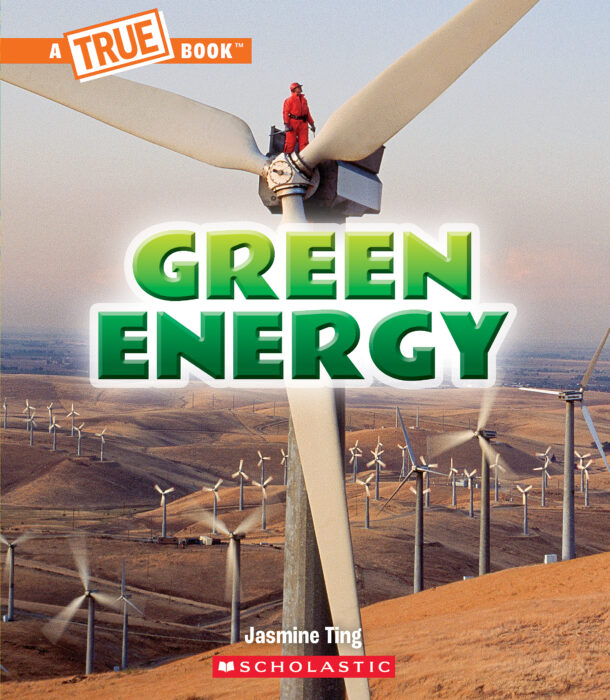
Green Energy

by Jasmine Ting

Have you ever considered the energy we use to power our lives? Our houses, our tablets, our handheld games and phones all require it. That won’t stop anytime soon. What scientists want to do is find sustainable energy that will lead us to a green future. This book explains what green energy is, the types of green energy available to us, and how each is put to work for us through technological innovations.


Classroom Activity

What types of renewable energy are being used in your community? Have students form small groups to research renewable energy use. How could renewable energy sources replace fossil fuels in the community? What types of renewable energy would be the easiest to implement? What types would be the most difficult? How and where would the renewable energy be used? Have each group prepare a presentation that highlights their renewable energy recommendations for the community.


*************************************
Carla Mooney loves to explore the world around us and discover the details about how it works. An award-winning author of numerous nonfiction science books for kids and teens, she hopes to spark a healthy curiosity and love of science in today’s young people. She lives in Pennsylvania with her husband, three kids, and dog. Find her at http://www.carlamooney.com, on Facebook @carlamooneyauthor, or on Twitter @carlawrites.