
A Place for Primary Sources
Reading the books on this month’s booklist, the following quote from Carla Mooney’s HUMAN MOVEMENT: How the Body Walks, Runs, Jumps, and Kicks jumped out at me:
 “Primary sources come from people who were eyewitnesses to events. They might write about the event, take pictures, post short messages to social media or blogs, or record the event for radio or video. Why are primary sources important? Do you learn differently from primary sources than from secondary sources, which come from people who did not directly experience an event?” (p 41)
What a great question! Nonfiction authors typically use a mix of both primary sources and secondary sources (which are created after an event and often summarize and synthesize primary sources) in their books. And this month’s booklist provides fodder for a rich discussion about primary sources and how they are used in narrative and expository nonfiction.
Primary sources in narrative STEM nonfiction
Young writers may have more experience with primary sources in narrative nonfiction. These sources may include government documents, letters, diaries, and newspapers from a specific period.
 For a good example of how authors use primary sources in narrative nonfiction, look at Catherine Reef’s FLORENCE NIGHTINGALE: The Courageous Life of the Legendary Nurse, a biography of Florence Nightingale. The book itself is a secondary source. Reef wasn’t alive more than a hundred years ago when Nightingale lived. Instead, Reef’s book analyzes and synthesizes several sources including primary sources, and she identifies these sources in the bibliography. They include Nightingale’s collected writings, her letters from Egypt, and her notes on hospitals and nursing. Can you find others?
Authors use primary sources in narrative writing for many reasons. First, they reveal a character’s opinions, feelings, and inner thoughts. For example, using Nightingale’s own writings, we hear her say, “Why have women passion, intellect, moral activity – these three – and a place in society where no one of the three can be exercised?” (pp 5-6) You can tell from this quote that Nightingale wasn’t impressed with the typical gender roles assigned to women of the 1800s.
Primary sources also provide sensory details only first-hand observers might know. Reef quotes the cleric Sydney Osborne, who worked with Nightingale in a field hospital saying Nightingale had “‘a face not easily forgotten … pleasing in its smile, with an eye betokening great self possession, and giving when she wishes, a quiet look of firm determination in every feature.’” (Prologue) Unless we had a photograph of Nightingale, this description may give us the only information we have about how she looked. For writers, such detailed descriptions of characters, settings, and events provide the building blocks for writing scenes. And writing in scenes is how we make a book come alive for readers.
Activity
Look at the bibliography of FLORENCE NIGHTINGALE. What primary sources you can identify? The names of the authors, as well as the publication dates, might give you clues. You can look at the notes (just before the bibliography) to get more information.
Primary Sources in Expository STEM Nonfiction
When writing about scientific topics, authors use primary sources too, though their purposes might be different from narrative writers. Primary sources for science books include interviews with scientists, data from experiments, theses, specimens, lab notes, technical reports, patents, and some scientific journal articles if they describe original science research.
Let’s look again at Carla Mooney’s HUMAN MOVEMENT: How the Body Walks, Runs, Jumps, and Kicks again. Now turn to pages 93-94 and look for the PS icon. How does using information from the University of Texas scientists’ research add to your understanding of the topic?
In science writing, primary sources provide the most current information. This is especially critical since new evidence and discoveries in science upend old ideas all the time. When I was growing up, I didn’t learn that dinosaurs had feathers and are related to birds. Imagine if an author used a textbook from my childhood as a source for information about dinosaurs! They’d get things all wrong. Current information is critical.
Fortunately, primary sources like science journals are published several times a year whereas a science textbook may only be updated every few years. For their part, scientists read journals in their field and attend conferences with fellow researchers allowing them to keep up-to-date too. That’s why interviews with scientists can be a wonderful primary source.
 As one of this month’s books puts it: “For now, enjoy learning about what we do know — and by the time you’ve finished reading, scientists may have learned something new!”
— THE BRAIN: The Ultimate Thinking Machine (Science Comics) by Tory Woollcott and Alex Graudins
For more fun, grab some more of this month’s titles, flip to the bibliography, and see what types of sources you can find. Then discuss what you think using primary sources added to the book.
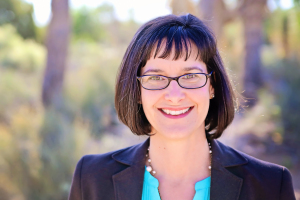 Kirsten W. Larson used to work with rocket scientists at NASA. Now she writes books for curious kids. She’s the author of WOOD, WIRE, WINGS: EMMA LILIAN TODD INVENTS AN AIRPLANE, illustrated by Tracy Subisak (Calkins Creek, 2020), CECILIA PAYNE: MAKING OF A STAR (SCIENTIST), illustrated by Katherine Roy (Chronicle, Fall 2021), along with 25 other nonfiction books for kids. Find her at kirsten-w-larson.com or on Twitter/Instagram @KirstenWLarson.
The O.O.L.F Files
- Identify Primary Sources in the Sciences includes a rundown of primary source types and provides tips for identifying primary sources.
- The George Bush Library has a wonderful toolkit for teaching primary sources.
- The American Library Association provides tips for finding, evaluating, and using primary resources.
- Rob Redmon has a helpful YouTube video to help you distinguish primary and secondary sources.


 Carla Mooney loves to explore the world around us and discover the details about how it works. An award-winning author of numerous nonfiction science books for kids and teens, she hopes to spark a healthy curiosity and love of science in today’s young people. She lives in Pennsylvania with her husband, three kids, and dog. When not writing, she can often be spotted at a hockey rink for one of her kids’ games. Find her at


 Body 2.0: The Engineering Revolution in Medicine by Sara Latta

 Nancy Castaldo
