Posts Tagged middle-grade nonfiction

STEM Tuesday — Robotics and Artificial Intelligence– In the Classroom


Not long ago, robots and artificial intelligence were the imagination of science fiction books and movies. Yet every day, advances in technology, robotics, and engineering are making them a reality! The book suggestions this month put a spotlight on the history of robotics and artificial intelligence and are a great starting point for classroom discussions and activities.


Support Independent Bookstores - Visit IndieBound.orgBots! Robotics Engineering: With Hands-One Makerspace Activities
by Kathy Ceceri and Lena Chandhok

This book explores how robots play a vital role in our world. It details the history and theory of programming and robotics, and includes many hands-on robotics projects that help children learn design, engineering, and coding. It is beautifully formatted and fun to read.

Classroom Activity
This book is full of activities that can be adapted for the classroom. One activity asks students to build a simple tilt sensor with LED lights. It can be made with household objects such as an index card, aluminum foil, tape, 2 LED lights, and a 3-volt battery. Students can build and test the sensor. Then have them decide what, if any, improvements they would make to the sensor design? How could a sensor like this be used in the real world?


Support Independent Bookstores - Visit IndieBound.orgNational Geographic Kids Everything Robotics: All the Photos, Facts, and Fun to Make You Race for Robots
by Jen Swanson

Robots don’t simply occupy the space of fiction these days, as they have infiltrated everyday life. Robots can fix aircrafts, dance, tell jokes, and even clean your carpet! Swanson gives a great history of robotics and adds a section of the future of robotics. Fantastic writing along with eye catching visuals.

Classroom Activity
Many times, scientists have turned to nature to come up with unique robot designs. Now it is your turn. Have students design and sketch their own robot inspired by nature. What part of nature inspired their robot? What problem does it solve or job does it do?


Support Independent Bookstores - Visit IndieBound.orgRobot
by Lucy Rogers

Get up close and personal with more than 100 different robots, from automata to androids. This browsable book from DK is divided into sections based on different jobs the robots perform, like rescuing people after natural disasters, packing food in factories, and taking care of hospital patients. Each spread features captivating, full-color photo illustrations as well as essential statistics and facts about each robot.

Classroom Activity
Robots are all around us. What robots are in your daily life? Have students make a list of the robots they encounter every day – at school, at home, at the mall, and more. What jobs do these robots perform? What are the benefits of these robots? What are the drawbacks? Have students brainstorm ideas for a new robot at school. What would the robot do? What would it look like? How would it help students and teachers?

More Robot Fun

Want to watch a few robots in action? Take a look at these videos:

Warehouse Robots at Work

Robot Ai-Da Creates Art

Robot Dancing

*************************************

Carla Mooney loves to explore the world around us and discover the details about how it works. An award-winning author of numerous nonfiction science books for kids and teens, she hopes to spark a healthy curiosity and love of science in today’s young people. She lives in Pennsylvania with her husband, three kids, and dog. Find her at http://www.carlamooney.com, on Facebook @carlamooneyauthor, or on Twitter @carlawrites.


Back to School with STEM Tuesday!!


Hello Amazing teachers, homeschoolers, and parents. We at STEM Tuesday wish you all a wonderful 2023-2024 school year! We want to remind you that we have SIX  YEARS full of STEM/STEAM resources in our “vault”. And it’s all SEARCHABLE!

All you have to do is to go to the TOP of this page, and click on the STEM Tuesday button. That will take you to a page like the one below. Then just click on the SEARCH by TOPIC button and you’ll see all of the great topics we’ve covered for the last SIX years.

STEM Tuesday blog page


You’ll find….

Book Lists

In the Classroom –> tips for how to use these books in the classroom

Writing Tips and Resources –> Literacy and STEM connections

Interviews with real authors and giveaways of new books (giveaway only available in current month)

We hope you find these resources helpful and useful in your classrooms, whether they be in-person or virtual.


You can also find STEM Tuesday as a PODCAST through Reading With Your Kids HERE

Reading with your kids podcast


STEM Tuesday Spin Off


Our amazing team even did a bunch of blog posts for MG Book Village called STEM Tuesday SPIN OFF! Find those HERE


As you can see, the awesome STEM Tuesday Team LOVES all things STEM/STEAM! As you are planning your author visits this year, please consider checking out our profiles. We all have great presentations that will ENGAGE, EXCITE, and INSPIRE your students.

You can find information about all of us and our websites HERE


Finally, we LOVE FEEDBACK!

IF there is a topic that we haven’t covered, that you’d like to see, please let us know below in the comments.
IF you’ve used one of our activities in your classroom and enjoyed it, please let us know
IF you have suggestions for how to improve STEM Tuesday OR you just love it, let us know.
Wishing you all an AMAZING STEM-FILLED year!


— The STEM Tuesday Team

Worldbuilding for MG Writers

It’s back-to-school time for ELA classrooms soon! While we as teachers, parents, homeschooling families, and librarians might hear occasional moans and groans from students reaching the end of summer break, the advent of the new school term also brings so much eagerness and anticipation for new and different activities. This can be an especially exciting time with middle graders, who have learned some autonomy with their studies, are capable of more decision-making and logical thinking, and who love a creative challenge. Kicking off the school year by providing middle grade writers with some imaginative and unusual writing assignments will inspire them to pursue other reading and writing ventures throughout the year.

As writers, we recognize the importance of establishing a setting and developing it through details. This kind of worldbuilding not only immerses the reader in the time and place of the narrative but also allows the writer to carefully control what the reader sees and hears regarding the story’s location. For the young writer, worldbuilding employs the imagination, promotes pride of authorship, and provides an opportunity for critical thinking and the highest levels of Bloom’s Taxonomy. From a curriculum perspective, worldbuilding as an assignment provides the instructor with a chance to fulfill standards by reviewing or introducing connected literary devices and techniques such as:

  • Description
  • Sensory imagery
  • Metaphor and Simile
  • Personification
  • Atmosphere and Mood
  • Tone and Voice
  • Point of View

Having students review these literary devices and focus on each or on a combination of elements in a piece of their own authored writing makes for a richer, more personalized learning experience. Here are some ideas, prompts, and examples for exploring the worldbuilding concept as an assignment with your MG writers.


Worldbuilding Components for Middle Grade Writers

In reviewing story elements during a short story or novel unit, you might go beyond the typical definitions and examples for setting and instead allow writers to create their own setting. Try a graphic organizer for these and other components (and lots of space for details, brainstorming, and descriptions). Or use poster-sized paper for visual images or maps, and offer this list to inspire connected labels or captions:

Living on the Land: Geography, landscape, weather, climate, ecosystems

Living with Others: People, animals, and creatures; homes, habitats, and shelters; societies, neighborhoods, and cities

Getting Along: Communication; government; laws; technology; social institutions like education; relationships like family and marriage; economy and money systems; transportation and infrastructure (roads, bridges)

Surviving: Food and agriculture, tasks and working, earning wages or trading, keeping healthy, protection

Dangers and Threats (i.e., Conflicts): Enemies, nature, wildlife, discord, war or battle, illness

Don’t Forget the Place Name: Borrowed or original; symbolic meaning, allusion

Once students have had a chance to think through these and other elements of worldbuilding, writing projects on the topic might expand to include prompts and activities.


Prompts for Worldbuilding with MG Writers

Three Characters in Search of a Setting:  Provide students with three character identities, including for each traits, goals, motivations, conflicts, and relationships. The writer’s job is to determine a world that would serve the characters well in terms of suspense, tension, and continued potential for conflict. Student writers can add maps with labels, bulleted descriptions, brief histories, and artwork to convey the setting more fully.

Time Travel: Students choose a real place for the setting for a simple, conflict-rich storyline and detail its basic concerns; then they choose whether to move the time period up (into the future) or push it back (into the past). Pushing a setting back at least 60 years, for example, offers a chance to investigate the history of a place and incorporate its time-period specific details (what were computers like in 1960, anyway?). Moving the time period into the future allows for more speculation based on the location’s current characteristics and needs.

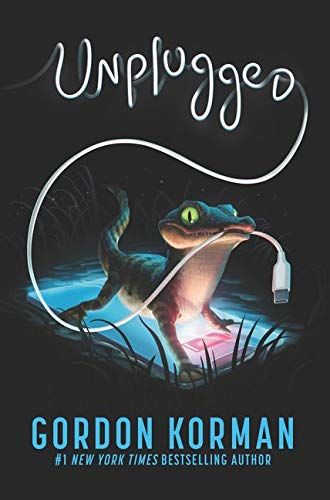
Genre Swapping:  Take a familiar setting from a favorite book or class novel study and re-imagine the time and place by changing the book’s genre. For example, what if a modern comedy like Gordon Korman’s Unplugged was actually a high fantasy? Or if Lauren Wolk’s historical Wolf Hollow was contemporary? Build this “reset” world, keeping premise details in mind.

No Swapping Allowed: Choose a story for which the setting and worldbuilding is inherent to the narrative, and detail the ways in which the plot relies on the setting to hold together.

Narrative Nonfiction Worldbuilding: Apply worldbuilding analysis to a work of narrative nonfiction as a way to glean factual detail and comprehend the setting’s full impact on the tale, especially one in which the setting seems distant or almost otherworldly, like Race to the Bottom of the Earth: Surviving Antarctica by Rebecca E.F. Barone.

I hope an idea or two here suits your classroom goals, and that you find the notion of worldbuilding to be an interesting and useful writing workshop activity! Good luck to everyone this school year.