Posts Tagged middle-grade nonfiction

STEM Tuesday–Peeking into the Mind of a Scientist/Engineer–Interview with Author Heather L. Montgomery

STEM TUESDAY from the mixed up files Welcome to STEM Tuesday: Author Interview & Book Giveaway, a repeating feature for the fourth Tuesday of every month. Go Science-Tech-Engineering-Math!

Today we’re interviewing Heather L. Montgomery, author of SOMETHING ROTTEN: A Fresh Look at Roadkill, a recently-released book that’s stacking up starred reviews. School Library Journal says, “With wry humor, gory detail, and great enthusiasm, . . . this book is not for the faint of heart, but be prepared to laugh along the way and to learn a lot. . . Sure to be a hit among students. A top addition to STEM collections.”

Click the cover for additional information about the book, including research photos and a link to submit your own roadkill stories. www.heatherlmontgomery.com/something-rotten.html


Mary Kay Carson: Why did you write Something Rotten?

Heather L. Montgomery: One day, when I was procrastinating writing a book about rattlesnakes, I went for a run. On my little country lane I came across a rattler who had lost his life to a tire. I had some questions, so I picked him up. No, you probably shouldn’t do that, but I did. And I spent the rest of the day learning from that marvelous guy, his fold-able fangs, his snorkel for when his mouth is crammed full of bunny, his non-existent lung!?! This was research at its best. And then I wondered: who else uses roadkill…

MKC: Care to share a memorable research moment?

Heather: Just about everything about this book has become a favorite moment. From plunging my hands into roadkill compost to talking to a kid who re-builds animal skeletons from roadkill, this research rocked. Another beautiful thing is that the research process became the book.

This might be my favorite part of it all: I had the opportunity to share with readers how questions drove me to slice open a skunk, how one sentence dropped in an interview lead me across the country to meet 400 roadkill professionals, how trusting inquiry carried me right down the road to jaw-dropping discoveries — can you say “contagious cancer”!?!   This book proved it: Inquiry is my life!

Heather L. Montgomery writes for kids who are wild about animals. The weirder, the wackier, the better. An award-winning science educator, Heather uses yuck appeal to engage young minds. During school presentations, petrified animal parts and tree guts inspire reluctant readers and writers. www.HeatherLMontgomery.com

MKC: Why do you write STEM books?

Heather: Um, Inquiry is my life. Once, I tried to kick the habit of asking questions. It made me sick. I do have a B.S. in biology, an M.S. in environmental education, and over 20 years’ experience teaching about nature, but really it’s just that writing, researching, and teaching about science is who I am at my core.

MKC: The book’s unique first-person voice and the clever use of footnotes are courageous style choices. Who was your audience when writing the book? 

Heather: For years at school visits or educator conferences I talked about dissecting that road-killed rattlesnake. Those audiences showed me the power of story. They taught me to play a game, balancing information and story. And, they laughed with me (this quirky lady asking oddball questions), not at me. Those audiences gave me the confidence to write the way I speak. That was a gift. I began to see that readers would follow me down this road, this rollercoaster of research. Thank you listeners, for showing me how to write this book.

MKC: Any suggested titles for fans of Something Rotten?

Heather: Any of the phenomenal nonfiction by authors Sy Montgomery, Sarah Albee, or Georgia Bragg. Page-turning fiction such as: The Evolution of Calpurnia Tate by Jacqueline Kelly and The Thing about Jellyfish by Ali BenjaminAdult readers might like books by Mary Roach. She showed me how to share my quest for information.

Win a FREE copy of SOMETHING ROTTEN: A Fresh Look at Roadkill!

Enter the giveaway by leaving a comment below. The randomly-chosen winner will be contacted via email and asked to provide a mailing address (within the U.S. only) to receive the book.

Good luck!
Your host this week is fellow skull collector Mary Kay Carson, author of Mission to Pluto and other nonfiction books for kids. @marykaycarson

STEM Tuesday–Peeking into the Mind of a Scientist/Engineer — Writing Craft and Resources

STEM TUESDAY from the mixed up files

Peeking in

This month we have been challenged to peek into the mind of scientists and engineers. How do we do that? It seems like such a scary proposition. How could we approach those aloof academics squirreled away in hermetically sealed laboratories, thinking about nothing else but their hypothesis?

Ummm. . .

#Fieldworkfails will give you a whole new perspective on those stuffy scientists. These are everyday folks making everyday mistakes. One researcher accidently glued herself to a crocodile, a field team had baboons steal their last role of toilet paper and string it up in trees, another group managed to get a drugged zebra’s neck stuck in the fork of tree.

This is peeking in!

And guess what – STEM Professionals are eager to share. In fact, many are almost shouting, jumping up and down, waving stadium-sized banners: “COME LEARN FROM US!”

There’s this growing field, science communication, and more and more practicing scientists are themselves becoming all about some SciComm. Go ahead, check out #Fieldwork or #SciComm or one of the bajillion other cool places these STEM nerds are sharing.

As a writer, I’m just as likely as the rest of the world to see scientists – especially those I adore – as remote individuals who don’t have the time for me. Once, I was in awe of this scientist – she gets to dive with manatees for her research – so I put off contacting her for months. When I finally did reach out, she invited me to join her next research trip to Belize! But the trip was in two weeks. I couldn’t get organized that quickly. I missed the opportunity of a lifetime because I had been nervous about contacting her.

Don’t miss out. Don’t let your students miss out.

Do reach out to the STEM community

But first, be prepared.

  1. Visit the scientist’s website. If they have videos, articles in popular magazines, or active social media accounts, they are eager to engage.
  2. Read about the research the scientist is conducting.
  3. Generate a list of your questions and then prioritize those questions.
  4. Contact the individual (I use email), letting them know:
    1. your purpose
    2. how you prepared for talking with them
    3. what exactly you are seeking (a phone interview, answers via email, a video chat)
    4. why you are seeking them out as opposed to another researcher.

Then, once you’ve made contact, let the questions begin. Do let the professional share in a way that is comfortable to them. Some prefer lots of questions; others love to tell stories. Have fun with them and don’t forget to send a thank-you.Support Independent Bookstores - Visit IndieBound.org

Peek Into the Past

But don’t think this peeking in is limited to living folks. Books on this month’s reading list give you prime opportunities to wander around in the world of geniuses such as Charles Darwin. Take a look at Charles and Emma: The Darwin’s Leap of Faith, by Deborah Heiligman. You’ll get a look into the inner workings of his mind:

  • Reading Charles’s list of marriage pros and cons
  • Seeing that after years of work he worried that “all my originality, whatever it may amount to, will be smashed,”
  • Watching him grapple with a child’s death and the realization that natural selection was playing out in his own life.

Support Independent Bookstores - Visit IndieBound.orgFiction can show us the inner scientific mind as well. Consider The Curious World of Calpurnia Tate, by Jacqueline Kelly.  Young Callie Vee posts questions in her notebook, “What shapes the clouds?” She observes a weather vane and documents her ideas. She builds an anemometer, and just like the contributors to #FieldworkFails, she discovers that STEM endeavors aren’t always easy. Her great anemometer blew apart. Fortunately for Callie Vee, she has a mentor eager to share the thrill of design, but wise enough to let her learn through failure.

I encourage you – students, writers, educators – STEM lovers reach out and peek in!


Nonfiction author Heather L. Montgomery peeks into the lives of scientists in her recent book Something Rotten: A Fresh Look at Roadkill. A scientist who pulls parasites from snake lungs? A kid who rebuilds animal bodies bone-by-bone, a researcher who finds contagious cancer? Don’t you want to know how those folks think? Heather also peeks directly into roadkill herself. Dissecting a rattler, skinning a fox, her hands stay busy discovering answers to questions her brain keeps pumping out.  


O.O.L.F (Out of Left Field)

How can students connect with STEM professionals? Here are some good opportunities:

Before they were scientists is an interview series that asks scientists what they were like in middle school.

Skype-a-Scientist matches scientists with classrooms for 30-minute Q & A sessions.

Melissa Stewart’s “Dig Deep” series looks at the inner lives of nonfiction writers who often write on STEM topics.

Diverse MG Lit #4 American Indian Books

November is traditionally the month of focus on American Indian history, and fortunately there is much to celebrate this year. It was my very great pleasure to hear many Indigenous authors and poets reading and discussing their work at the Portland Book Festival. One among them was Tommy Orange the author of the National Book Award nominee THERE, THERE. It’s not a book designed for the MG audience but it is within reach of strong readers who are looking for hard-hitting contemporary realism. I think many seventh and eighth grade readers would find much to love. It is the intertwined story of twelve people on their way to a powwow in Oakland and offers plenty of ideas for the thoughtful reader to absorb and discuss.
It was also my great pleasure to hear a reading and discussion of their poetry from Trevino Brings Plenty, Laura Da’, and Layli Long Soldier. They are all three contributors to the anthology NEW POETS OF NATIVE NATIONS edited by Heid Erdrich. This is also a book published for the adult market. But of all adult writing I think poetry can be the most accessible to younger readers. Here is a snippet of example from a poem called Passive Voice by Laura Da’ a middle school teacher and Eastern Shawnee.

Passive Voice

Laura Da’

I use a trick to teach students
how to avoid passive voice.
Circle the verbs.
Imagine inserting “by zombies”
after each one.
Have the words been claimed
by the flesh-hungry undead?
if so, passive voice
This poem goes on and becomes even more searing and evocative with each line, talking about how the crimes of the past against indigenous people are usually reported in the passive voice. Now there’s a conversation I’d love to have in the classroom. I am beyond excited to read all the poems in this anthology and to follow the literary careers launched there.
On the more traditional side of MG publishing Joseph Bruchac has a new novel TWO ROADS. Much has been written about the abuses of the Indian Boarding Schools and it’s easy, if you don’t live in the west, to think that Indian boarding schools are a thing of the past. Although most of them closed 80 to 100 years ago, some operated much longer and under slightly reformed conditions. Bruchac’s story takes place in 1932 and is about a Creek Indian boy, Cal Black, and his father a WWI veteran who live a transient life. When the father decides to join a protest with other veterans in Washington to demand their wartime bonuses, he decides to leave his son at the Challagi Indian School in Oklahoma. The most brutal practices of the Indian schools are past at the time of this story, still there is much hardship to endure. Even so Cal learns about his own culture and gains the strength of knowing other young men of his tribe.  This resonates with the stories I have heard from elders who attended Indian schools in the 1930s and 40s. They found much hardship there, but they also found their voice as Native people and a community that would go on to become part of many of the movements, AIM and others, that lead to the recent pipeline protests. Two Roads is an important book and one that I hope will be widely read.
Also on the topic of Indian schools but originating in Canada is SPEAKING OUR TRUTH: A Journey of Reconciliation by Monique Gray Smith. It is a larger format, photo illustrated work of non-fiction about the journey of reconciliation addressing Canada’s past, present and future relationship with its First Nations People. Monique Gray Smith asks her readers to leave behind these attitudes
  • I’ve heard this all before
  • Reconciliation doesn’t involve me or my friends or my family
  • History isn’t important
  • I, as one person, can’t make a difference
She organizes her book according to Seven Sacred Teachings: Honesty, Respect, Love, Courage, Truth, Humility, and Wisdom. The book is packed with information. It’s a book to read slowly. Every few pages there is a spot illustration of a drum and an invitation to reflect. Definitions are placed on the page where the words first occur in addition to a glossary in the back. I thought the book would make me feel sad and ashamed but because so much of it is focused on things everyone can do now to make it better I felt much hope by the end. This book is rooted in Canadian history but the issues are so similar to American ones that I think you could use it in the US. But I’d love to see and American version of this concept too.
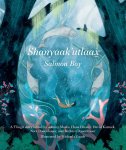
And finally I want to call attention to a group of picture book legends. Many teachers are looking for authentic indigenous legends to use in the curriculum and want to make sure they are using books of the best quality. I think when it comes to traditional tales, the way to get the authentic versions we are looking for is to have the tribes publish themselves. The Sealaska Heritage Institute does just this. Their award winning books are produced from start to finish by professional indigenous storytellers, world-class indigenous artists and indigenous publishers. They have an imprint called Baby Raven Reads which focuses on stories from the Tlingit, Tsimshian, and Haida traditions. There are many beautiful books in this imprint. I’m going to highlight Shanyaak’utlaax—Salmon Boy edited by Johnny Marks, Hans Chester, David Katzeek, Nora Dauenhauer and Richard Dauenhauer and illustrated by Michaela Goade. It is the Tlingit story of a boy who disrespects the salmon his mother gives him and is swept away into the ocean to meet the Salmon People. It is written in Lingít and English with a Lingít audio available on line. Michaela Goade is a Tlingit Raven from the Kiks.ádi clan of Sitka, Alaska. These books are not available through the normal channels but don’t be discouraged you can get them through Taku Graphics in Juneau, AK. Email Katrina Woolford at orders@takugraphics.com for more information. Learn more about Baby Raven Reads at www.sealaskaheritage.org.
If you have a favorite book with Native American characters, please share it in the comments.