Sean McCollum: This is my first blog post for Mixed Up Files, and I couldn’t be happier to be here, as well as an appropriate amount of nervous. What a cool, helpful crew working together to keep creating this website. I’m a long-time writer for youth and educational publishers, and being part of MUF helps keep me current with young readers and the MG universe, even as I live the life of a digital nomad. (House-sitting in Edinburgh, Czech Republic, New York, Phoenix, and Ecuador in the last year—Have Internet, Will Travel.)
I’m also MOST pleased to introduce Tod Olson to MUF-world. Tod and I go back nearly 40 years, to a small liberal arts college—Lawrence University—in the belly of Wisconsin, before working together at Scholastic. So as I considered what my first post might be, an interview with my best bud (having been his Best Man) immediately came to mind. He also happens to be one of the foremost authors of narrative nonfiction working in children’s publishing—so bonus! Hey T, welcome to MUF.
Tod Olson: Thanks, Sean! Wish we were doing this in person, but I’ll settle.
SMc: I loved Into the Clouds and its nuts and pitons description of the first attempts to climb K2, the second highest mountain in the world. How did you first learn about this chapter in mountain-climbing history and what attracted you to it?
TO: So, I really wanted to tell a climbing story, partly because the ethical questions are so primal: What’s your obligation to other humans when you barely have the resources to keep yourself alive? The 1953 expedition to K2 is legendary in climbing circles for the selfless—some would say suicidal—attempt to get a sick comrade home alive. But the story hadn’t yet found a wider audience. Plus, the contrast with the previous expedition to K2, which ended in disaster, raised interesting questions, not just about climbing but about life: What’s important about any endeavor—the summit or how you climb? The product or the process? Your achievement or the bonds you form along the way?
SMc: You and I have both done some expeditioning and climbed non-technical mountains. So why do people undertake such misery-causing forms of recreation?
TO: A lot of climbers talk about the mountains as a world apart from their workaday lives in New York or Peoria. It’s a place where the complications of civilized life are stripped away and your relationship with nature, with other people, with yourself, is somehow more basic, more pure. I think there’s also a mindfulness to climbing. The danger focuses the mind in the moment—the feel of the rock under the fingers; this foothold, then the next one. Besides, the burgers taste that much better when you get home.
SMc: Oh yeah, and the warm bed. Your writing is rich with sensory detail. How much of that is personal suffering and how much is imagination and empathy for your subjects? In other words, do you go out and risk your life as a way of doing primary research?
TO: Ha! Writing is the most exquisite form of suffering ever invented. Why would anyone feel the need to add to the misery? Actually, it does feel like an act of hubris to presume you can capture an experience you haven’t lived. But even if we tried to climb K2, our experience of the mountain wouldn’t match anyone else’s. We still need to find a way into the minds of the people we write about. I think of research as listening, whether I’m actually interviewing people or engaging with written sources.
In large part, I think I look for portals—observations, phrases, or anecdotes that suddenly admit me into the world of the other. For K2, for instance, one of the 1938 climbers talked about his reluctance to read mail from home on the rare occasions when it arrived at Base Camp. For some reason that made it real for me: Conditions on the mountain were so uncomfortable that in order to bear it, he had to block out the fact that some people in the world lived differently, even if it meant cutting himself off from the people he loved most.
SMc: How did you get interested in survival stories, like the four books of the Lost collection?
TO: When I was 11, I read Alive, the story of the Uruguayan rugby team that was stranded in the Andes by a plane crash and had to eat the bodies of friends and family to survive. I barely left my chair for two days, and I think I’ve been trying to recreate that immersive reading experience as a writer. I tell the Alive story on school visits, and it’s amazing how quickly the thought of eating your cousin can focus the attention of a couple hundred 6thgraders.
SMc: Why do you think young readers are so interested in such stories, whether fictional or not?
TO: Survival stories have an interesting history. Eighteenth-century Europeans were entranced by stories of people marooned with cannibals on remote islands. Robinson Crusoe was arguably the first novel in English, and it was a survival story. At that point, European settlers were spreading out around the globe, leaving everything familiar behind, colonizing places that felt alien to them. The stories were a way of working out their fears.
I don’t think it’s a stretch to say that survival stories do something similar for a kid anticipating her own entry into a complicated adult world. Besides, what is middle school but a three-year survival epic with really bad food?
 SMc: I can still taste the liverwurst. In your mind, what distinguishes narrative nonfiction from fiction? And narrative nonfiction from history? What niche in our need for stories does narrative nonfiction fill?
TO: I love thinking about the first part of that question, but we could talk about it for hours and still fall short of an answer. When you really look closely, I think it’s hard to draw a clear line. So much mediates our knowledge of the past—the limitations of memory, cultural gaps, lack of documentation. Narrative nonfiction authors make decisions on every page about the relationship between their sources and the words on the page.
That said, I think we absolutely need to draw a line, and for me it’s that everything needs to be documented. As for the importance of  narrative, I don’t write books primarily to teach, but I do think we learn best through story. We understand people at a deeper level, we empathize, and we retain what we read. If you need evidence, try Say Nothing, which I just finished. It’s an amazing feat of storytelling that made me understand the Troubles in Northern Ireland for the first time.
SMc: Could you describe your research process for Into the Clouds? How much time did you spend researching versus writing?
 TO: Hard to say because the research continued after I started writing, but maybe a year of researching and six months of writing. I reached out to the family members of all the climbers I wrote about, and that can take a while because you’re following leads that lead to other leads, etc.
It’s really all about primary sources, and the turning point for me was when I found Dee Molenaar’s diary. He was one of the climbers on the 1953 expedition, and he wrote with disarming honesty about his struggles with pride and fear and insecurity on the mountain. That kind of  candor was unusual for the era, and it gave me that portal I needed to get inside their experience on K2.
SMc: Tell us about your writing journey up to this point. What literary mountains are you still wanting to climb as a writer?
TO: I’m done with survival stories for a while. As much as I love them, there’s a sameness to the story arc, and after a while you run out of synonyms for cold, hungry, and miserable. I’m trying to write a novel, which is a lot harder than writing nonfiction. At any given moment, there are hundreds of viable choices instead of dozens.
SMc: What is something people would be surprised to learn about you, besides you and your dad once being national tennis champs in father-son doubles?
TO: I hate being cold. (How are things in Ecuador?)
SMc: Living and writing at 8,000 feet … please … send … oxygen. Advice for writers wanting to try their hand at narrative nonfiction?
TO: Be faithful to your sources, but make the story your own. You’re not building a day-by-day, minute-by-minute chronicle of lived experience. You’re telling a story. As you research, pay attention to the pieces that quicken your pulse, raise a lump in your throat, make you think. Those are the peaks in your mountain range; write up to them, down from them, and around them.
SMc: What are you working on now?
TO: That novel, but we don’t need to talk about that. During quarantine I made a really cool (I think) on-line scavenger hunt for Into the Clouds: https://todolson.com/scavenger-hunt/into-the-clouds/. It’s on my website, and anyone who completes it gets a chance to win a book. If the novel doesn’t work, I’m going to be a scavenger hunt writer. Is that a thing?
It is now! Thanks, T, for taking the time to share your adventures—writing and otherwise—with us. The best way to follow Tod is through his website: https://todolson.com/.
And here’s another chance to win Tod’s Into the Clouds—via MUF, thank you Tod. (Sorry, only available for MUF readers in the United States and Canada.)
a Rafflecopter giveaway


 CTB: The graphic novel is filled with fun but factual information about each planet as well as the sun. It might surprise readers to know there is as much science in this book as more traditional nonfiction for kids. How long did it take to do the research? Any fun fact left on the cutting room floor?


 Rosemary: There were so many good presentations at that event! I remember Jerry Wang’s proposal for a naval warship transported by chickens. It had so many sly jokes. This event is wonderfully ridiculous. If I could be a presenter, I’d probably want to present something about urban nature. Maybe I’d argue that pigeons distract city-dwellers from the overwhelming ennui of existence?

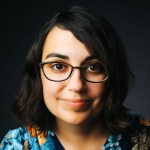 Rosemary Mosco makes books and cartoons that connect people with the natural world. Her Bird and Moon nature comics were the subject of an award-winning museum exhibit and are collected in a book that’s a 2019 ALA Great Graphic Novel for Teens. She speaks at birding festivals and writes for Audubon , Mental Floss and the PBS kids’ show Elinor Wonders Why. You can find her at www.RosemaryMosco.com For fun facts and hilarious nature comics, follow @RosemaryMosco on Twitter.
 Your host is Christine Taylor-Butler, MIT nerd and author of Bathroom Science, Sacred Mountain: Everest, Genetics, and many other nonfiction books for kids. She is also the author of the STEM inspired middle grade sci-fi series The Lost Tribes. Follow @ChristineTB on Twitter and/or @ChristineTaylorButler on Instagram


