
Posts Tagged middle-grade fiction

Middle Grade Books About Friendship

There’s a line that pops up on social media from time to time that says, “People come into your path for a reason, a season, or a lifetime.” It’s been playing in my head this past week, ever since I learned that one of my closest friends is dying. Thinking about our too short friendship has got me thinking about the various other people I have had the fortune to call my friend. It’s also got me thinking about how friendships grow and change over time. Which is why I’ve put together a list of some of my favorite Middle Grade Books about friendship. Consider it a tribute to friendships old and new, long and short, loved and lost.


Support Independent Bookstores - Visit IndieBound.orgThe Last Great Adventure of the PB & J Society
by Janet Sumner Johnson

When her best friend’s house is threatened with foreclosure, young Annie Jenkins is full of ideas to save the home: selling her appendix on eBay, winning the lottery, facing down the bankers . . . anything to keep Jason from moving. But Jason’s out-of-work dad blows up at the smallest things, and he’s not very happy with Annie’s interventions, which always seem to get them into more trouble. But when Annie tracks a lost treasure to Jason’s backyard, she’s sure the booty will be enough to save Jason’s family. Pirate treasure in the Midwest seems far-fetched, even to Annie, but it could be the answer to all their problems. Now all she has to do is convince Jason. As the two hunt for answers and the pressure gets to Jason and his family, Annie discovers that the best-laid plans aren’t always enough and there are worse things than moving away.


Support Independent Bookstores - Visit IndieBound.orgYou Go First by Erin Entrada Kelly

Twelve-year-old Charlotte Lockard and eleven-year-old Ben Boxer are separated by more than a thousand miles. On the surface, their lives seem vastly different—Charlotte lives near Philadelphia, Pennsylvania, while Ben is in the small town of Lanester, Louisiana.

Charlotte wants to be a geologist and keeps a rock collection in her room. Ben is obsessed with Harry Potter, presidential history, and recycling. But the two have more in common than they think. They’re both highly gifted. They’re both experiencing family turmoil. And they both sit alone at lunch.

During the course of one week, Charlotte and Ben—friends connected only by an online Scrabble game—will intersect in unexpected ways as they struggle to navigate the turmoil of middle school. The New York Times-bestselling novel You Go First reminds us that no matter how hard it is to keep our heads above troubled water, we never struggle alone.


Support Independent Bookstores - Visit IndieBound.orgRaymie Nightingale by Kate DiCamillo

Raymie Clarke has come to realize that everything, absolutely everything, depends on her. And she has a plan. If Raymie can win the Little Miss Central Florida Tire competition, then her father, who left town two days ago with a dental hygienist, will see Raymie’s picture in the paper and (maybe) come home. To win, not only does Raymie have to do good deeds and learn how to twirl a baton; she also has to contend with the wispy, frequently fainting Louisiana Elefante, who has a show-business background, and the fiery, stubborn Beverly Tapinski, who’s determined to sabotage the contest. But as the competition approaches, loneliness, loss, and unanswerable questions draw the three girls into an unlikely friendship — and challenge each of them to come to the rescue in unexpected ways.


Support Independent Bookstores - Visit IndieBound.orgThe Season of Styx Malone by Kekla Magoon

Caleb Franklin and his big brother Bobby Gene are excited to have adventures in the woods behind their house. But Caleb dreams of venturing beyond their ordinary small town.

Then Caleb and Bobby Gene meet new neighbor Styx Malone. Styx is sixteen and oozes cool. Styx promises the brothers that together, the three of them can pull off the Great Escalator Trade–exchanging one small thing for something better until they achieve their wildest dream. But as the trades get bigger, the brothers soon find themselves in over their heads. Styx has secrets–secrets so big they could ruin everything.


Support Independent Bookstores - Visit IndieBound.orgRoll by Darcy Miller

When Lauren (but call him “Ren,” pretty please) Hall sees birds falling from the sky, he knows something is wrong. But just as he’s starting to worry, he realizes that the birds are plummeting toward the ground on purpose.

Turns out they’re Birmingham Roller Pigeons, and his new neighbor Sutton is training them for a competition.

Sure, it’s strange, but Ren’s best and only friend Aiden has picked this summer to start hanging with the popular kids. So Ren starts training pigeons with Sutton—what’s the worst that could happen? A bird falls on his head?
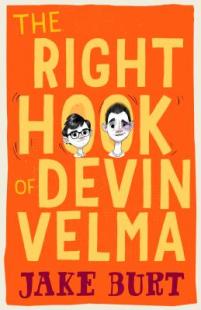


Support Independent Bookstores - Visit IndieBound.orgThe Right Hook of Devin Velma by Jake Burt

Devin wants to hit it big on the internet by pulling a stunt at an NBA game—one the entire nation will be watching. Addison can’t turn Devin down, but he can barely manage talking to his teachers without freezing up. How’s he supposed to handle the possibility of being a viral sensation?

Addi’s not sure why Devin is bent on pulling off this almost-impossible feat. Maybe it has something to do with Devin’s dad’s hospital bills. Maybe it all goes back to the Double-Barreled Monkey Bar Backflip of Doom. Or maybe it’s something else entirely. No matter what, though, it’s risky for both of them, and when the big day finally comes, Devin’s plan threatens more than just their friendship.


Support Independent Bookstores - Visit IndieBound.orgStanley Will Probably Be Fine by Sally J. Pla

Nobody knows comics trivia like Stanley knows comics trivia.

It’s what he takes comfort in when the world around him gets to be too much. And after he faints during a safety assembly, Stanley takes his love of comics up a level by inventing his own imaginary superhero, named John Lockdown, to help him through.

Help is what he needs, because Stanley’s entered Trivia Quest—a giant comics-trivia treasure hunt—to prove he can tackle his worries, score VIP passes to Comic Fest, and win back his ex-best friend. Partnered with his fearless new neighbor Liberty, Stanley faces his most epic, overwhelming, challenging day ever.

What would John Lockdown do?

Stanley’s about to find out.


Support Independent Bookstores - Visit IndieBound.orgWish by Barbara O’Connor

Eleven-year-old Charlie Reese has been making the same secret wish every day since fourth grade. She even has a list of all the ways there are to make the wish, such as cutting off the pointed end of a slice of pie and wishing on it as she takes the last bite.

But when she is sent to the Blue Ridge Mountains of North Carolina to live with family she barely knows, it seems unlikely that her wish will ever come true. That is, until she meets Wishbone, a skinny stray dog who captures her heart, and Howard, a neighbor boy who proves surprising in lots of ways. Suddenly Charlie is in serious danger of discovering that what she thought she wanted may not be what she needs at all.

From award-winning author Barbara O’Connor comes a middle-grade novel about a girl who, with the help of a true-blue friend, a big-hearted aunt and uncle, and the dog of her dreams, unexpectedly learns the true meaning of family in the least likely of places.


What are some of your favorite Middle Grade books about friendship? Please, share in the comments section.

STEM Tuesday– Tiny Worlds (Microscopic/Nanotech)- Writing Tips & Resources


Figuring on Figurative language


“What is it?” A small hand lifts a treasure toward my face. It is brown and round and was found along our rocky trail.

“What does it look like?” I ask as I lower his hand back down to my student’s eye level.

“No, I mean, what is it called?” His earnest eyes plead with me to identify it.

“I suppose it has a name, but I’d rather take a closer look.”

He looks at me like I’m being difficult, which I guess I kind of am. I often sidestep the step of labeling the treasures my students find as we explore outdoors. Instead, I pull out two jeweler’s loupes and hand him one. Holding the magnifier to my eye, I squat and lean over his hand. “Wow! It looks like the surface of the moon!” I lean back to give him a turn. “What does it remind you of?”

Five minutes later, my young friend has a list of 15 analogies (a farmer’s field, skin with pimples, crumpled paper bag, a lonely egg, …) and is drafting a poem based on this natural artifact.

No longer stubbornly stuck on “What is it?” his brain was free to observe and associate, think and create, synthesize and evaluate analogies. Deep thinking, all thanks to looking closely and a few careful probes.

Changing Scale

That trick of changing scale and asking questions works wonders for both scientific and writing work. Something about diving into microscopic worlds allows our mind to operate at a different cognitive level. We are no longer harnessed to the prescribed method of investigation, the expected question, the quantitative answer.

Take a look at some of this month’s highlighted books and you’ll see how “looking little” results in impressive investigations and fantastic language. Stephen Kamer’s Hidden Worlds: Looking Through a Scientist’s Microscope provides a great example. You’ll see stalks of mold described as “a bouquet of exotic flower,” saltwater diatoms which will remind you of a kitchen sponge, a butterfly mouth that looks like a spring.

When I am trying to strengthen figurative language in my writing, I look little and practice by looking at the world through my jeweler’s loupes. It’s not microscopic, but it does the trick. I learned this technique from The Private Eye Project, a program that provides professional development for educators on thinking by analogy. http://www.the-private-eye.com/index.html Once I started seeing analogies in the micro world, I couldn’t stop seeing them in the macro world. Train your brain (and your students’) and whole new worlds will be opened to you.


Try it Yourself

Let’s practice together with this image.

What does it look like?

Maybe:

Hair released from a braid

Waves

Rain drops sliding down windshield – stormy nights

Earthworm trails

The color of mountains, dried cactus, shredded wheat cereal

Chocolate milk

Now you add on to the list.

Keep going! There are no wrong answers here.

Notice how some of my items reminded me of additional, tangential items? That’s great. That means the mind is reaching further.

Be sure to write all of your items down. There are NO WRONG ANSWERS!


Let’s do another:

What does it look like?

Teeth – dentist

Cogs on a machine

Tiny fingers

Bristly like my doormat

Hands – hands coming together in huddle for sports team, the cheer from friends and family

Rows in a farmer’s field

Color of straw

Paint brush tips

Toothpicks – corn on the cob, summers at the lake, Grandpa

Add on to the list. Keep going! There are no wrong answers here.


Now, do this one on your own:

What does it look like?

Keep going! There are no wrong answers here.

Take it Further

  • Get a magnifier. Any magnifier will work but I prefer Private Eye’s loupes because they fit to my eye, blocking out all other distractions.
  • Select an object from nature. The more mysterious the object, the better, but it can be something simple like a leaf.
  • Ask yourself what it looks like. Write at least 10 things. For additional prompts, compare it to objects in the kitchen, your bedroom, sports equipment. Concentrate on the texture, the color, or one section of the object.

Wondering why I avoid identifying these nature treasures? When I label items that closes one door of possibilities to your mind. For developing figurative language, we want our minds as wide open as possible.


Heather L. Montgomery loves to look little. Thinking by analogy helped her write books such as Bugs Don’t Hug: Six-Legged Parents and Their Kids (Charlesbridge), Little Monsters of the Ocean: Metamorphosis Under the Waves (Millbrook Press), Something Rotten: A Fresh Look at Roadkill (Bloomsbury). For more about Heather, her work and her educational programs, visit www.HeatherLMontgomery.com.


THE O.O.L.F. FILES

This month, the Out Of Left Field (O.O.L.F.) Files provide links to amazing images to spark even more analogies. Dive in and enjoy!


Extraordinary Microworld of Dennis Kunkel

https://www.sciencephoto.com/dennis-kunkel-microscopy-collection

Science as Art

https://www.nature.com/news/science-as-art-wellcome-image-awards-2015-1.17118

Nikon’s Small World Photomicrography Contest Winners (From 1944 – present)

https://www.nikonsmallworld.com/galleries/photomicrography-competition

Scanning Electron Microscope Photography of David Scharf

http://www.scharfphoto.com/images

Get to Know Acclaimed Editor and Middle Grade Author Kara LaReau

Kara LaReau is the author of many beloved middle grade, chapter book and picture books. After receiving her Master of Fine Arts degree in Writing, Literature, and Publishing from Emerson College in Boston, Massachusetts, she worked as an editor at Candlewick Press and at Scholastic Press, and via her own creative consulting firm, Bluebird Works. Among other celebrated titles, she edited Kate DiCamillo’s Because of Winn-Dixie (winner of a Newbery Honor), The Tiger Rising (finalist for the National Book Award), The Tale of Despereaux (winner of the Newbery Medal), The Miraculous Journey of Edward Tulane (winner of the Boston Globe Horn Book Award), and the Mercy Watson series. She’s the author of The Infamous Ratsos, a chapter book series illustrated by Matt Myers, and The Unintentional Adventures of the Bland Sisters, a middle grade trilogy illustrated by Jen Hill. Rise of ZomBert, the first in her new illustrated middle grade series, will publish in spring 2020. For more information, visit Karalareau.com

I had the good fortune to get to know Kara when she was the author-in-residence at Hollins University Summer Graduate Program in Children’s Writing, Literature & Illustration
We were roomies in the alumni cottage, where we enjoyed porch sits, her blueberry crumble and many good talks. The students were all wowed by her insightful lectures, one-on-one mentoring, wit, and wisdom about craft.

My interviews for The Mixed Up Files have always been conducted over email. However, this interview was miraculously conducted in person while Kara and I drank coffee and listened to the rumble of the dehumidifier. After all, we were in the Roanoke Valley, where you can swim in the air. But it’s so beautiful–with lush green pastures all hugged by the Blue Ridge Mountains– that you don’t care. Plus, there are bunnies everywhere on campus. It’s easy to see where Alumna Margaret Wise Brown got her idea for The Runaway Bunny. Anyway, I had much to ask Kara. Gosh, it was hard to whittle down my questions since I had admired her for so long.

Why do you write Middle Grade?
I don’t set out to say I’m going to write a chapter book or middle grade. The story comes to me, and that’s when I figure out what it is. That age range was a formative time in my life. When we talk about what is your internal age–that is one of my default ages. And that’s why I enjoyed editing middle grade so much too. It’s kind of like I’m creating the library that I wish that I had had when I was that age.

Do you come up with characters or conceit first?
With the Bland Sisters (Kara’s first middle grade series, The Unintentional Adventures of the Bland Sisters), the characters came first. I wasn’t necessarily intending to write a novel about them. I was just writing a short scene about these two very boring girls. Just for fun. I wrote a little more. They kept speaking to me. In the first book, there’s a moment when there’s a knock at the door. I established they never go outside. This created a moment of extreme tension and curiosity. I wanted to know what could be on the other side of the door to motivate them to open the door. For me, the answer was pirates. And of course, they would have to be lady pirates.

I love it. Why Lady Pirates?
It’s my own feminist sensibility, and I tried to imbue the series with that spirit. I’ve tried to create stories that feature women in roles that are most often attributed to men. In the second the book, The Uncanny Express, they encounter a female magician who has encountered a lot of sexism. In the third book (Flight of the Bluebird), I wanted to parody an Indiana Jones style mystery. I thought it would be a fun to have a female action hero in the vein of Indiana Jones. I’m really interested in subverting gender norms.

Once again, I love it! Why is subverting gender norms important to you?
I’m hoping to portray for boys and girls who are reading these books unsung female heroes. For example, the character of Beatrix in book three is based on Amelia Earhart, Bessie Coleman and Nellie Bly–female pilots, journalists and explorers.

Tell us about your research process.
Each (of the Bland Sister books) was different, and each required more and more research. The first one takes place on pirate ship, and to find out what a ship looked like back then, I looked at books. I also looked at the different roles of pirates, and how they talked to each other. I read Robert Lewis Stevenson, as well as Herman Melville Billy Budd and brushed up on Moby Dick. There are lots of Melville references in the book.

While the first book was a parody of pirate stories and Melville, the second was set on a train and I knew it just had to be a parody of Agathe Christie, particularly Murder on the Oriental Express. I decided to re-read Murder on the Orient Express. While I didn’t have time to re-read all of Christie’s work, I actually watched the entire Poirot BBC series. I watched it over the summer and took notes on all the tropes that I noticed and that I could use. I also researched poisons and disguises. In doing that, I immersed myself in her world and that gave me the confidence to start writing the book.

When I started to writing The Flight of the Blue Bird, I knew that there was going to be an airplane. I watched Casablanca and Indiana Jones films. I was setting the adventure in a real place (Egypt), and there were details about archaeology and the Egyptian culture that I needed to be sensitive to and get right. I found James Allen, a professor of Egyptology at Brown University, and discovered he lived five blocks away from me. He gave me all kinds of fascinating details that inspired me to create the backstory in this book. I also watched documentaries about Howard Carter (the British archaeologist who discovered the intact tomb of Pharaoh Tutankhamun or “King Tut”). To have confidence to move forward, I did all research beforehand so I could immerse myself in it. Jim Allen read my pages, and then gave me suggestions here and there. Then I also decided the airplane would figure prominently in the plot. I found a husband of a friend of mine who is a pilot, and he also read some of my pages to make sure the aeronautical details were correct.

How long do you do research?
About a month or so. Then it usually takes me a month to a month and half to draft and two months to revise.

In addition to your current middle grade series, you have a popular early chapter series, The Infamous Ratsos. Tell us about where you are with that series.

I’m going to start drafting the sixth one. The first three are out in the world. The fourth one comes out next spring. Illustrator Matt Myers is due to start the fifth one next. The sixth one I’m hoping to start at the end of the summer.

Did you originally conceive of The Infamous Ratsos as a series?
After the first book, I knew I had more ideas as adventures. It turned out when my agent sent out the project, Candlewick wanted to know if I had another idea, so they signed up a two-book contract. In each book, Louie and Ralphie Ratso are learning something knew about themselves. They make mistakes just like we all do, but they’re always eager to learn from those mistakes.

Can you describe the books?
In the first book, The Infamous Ratsos, Louie and Ralphie think they need to be tough, and they equate tough with being mean. But that’s not their true nature, and they eventually realize it’s much easier to be kind than tough. The second book, The Infamous Ratsos Are Not Afraid, is about the brothers realizing they are afraid of admitting they’re afraid. They learn that everyone is afraid of something, and that there are a lot of different ways to be brave.

How did you come up with the different themes for the Ratso series?
I ended up watching a documentary about toxic masculinity, The Mask You Live In. The film showed how boys are conditioned at early age by society, by media, even by their own families to adhere to a very oppressive definition of masculinity. My books examine and subvert different characteristics of toxic masculinity: acting like you’re tough, pretending as if you’re not afraid of anything, pretending you don’t have emotions, refusing help, solving conflict through violence, and shunning feminine traits.

You have a new middle grade series. Tell us about it.
The new middle grade series I don’t want to give name since my publisher hasn’t announced it yet. The first book is called The Rise of ZomBert. It’s about a girl and her best friend, who is a boy, and a cat they find, who may or may not be a zombie.

When does it come out?
Spring 2020

What might be familiar to your readers and what might feel different?
There is a lot of humor in it. However, it is very different as the humor is not as on the surface as it is with Bland Sisters, which is very slapstick. It’s for a slightly older audience than the Bland sisters. And it’s darker than the Bland Sisters. It’s definitely has creepy and scary moments.

How are you feeling about it?
I’m excited. I’m starting to see art come in from (Illustrator) Ryan Andrews that’s bringing in moodiness that compliments the text so well.

Can you give a snapshot of the first book?
I describe it as Bunnicula mixed with Stranger Things. It takes place in the suburbs. There is something going on this neighborhood. And the kids slowly figure out what that’s going on. And they seem to be the only ones that know that truth about what is happening.

What is something about you that most people don’t know?
In The Bland Sisters, the running joke is how much that Kale loves to clean. I actually hate cleaning! That was sort of my response to people when people assume that certain characters are based on the author, which Kale is, but only to a degree!

Anything else you want to say?
I want to thank you for taking the time to interview me, and thank my readers for reading my books. I hope they will check out Rise of ZomBert next spring!

Hillary Homzie is the author of Ellie May chapter book series (Charlesbridge, Dec 2018), as well as Apple Pie Promises (Sky Pony/Swirl, October 2018), Pumpkin Spice Secrets (Sky Pony/Swirl, October 2017), Queen of Likes (Simon & Schuster MIX 2016), The Hot List (Simon & Schuster MIX 2011) and Things Are Gonna Be Ugly (Simon & Schuster, 2009) as well as the Alien Clones From Outer Space (Simon & Schuster Aladdin 2002) chapter book series. She teaches at Hollins University Graduate Program in Children’s Literature and Illustration as well as at Sonoma State University, where she directs the Arts & Humanities internships program and teaches communications. Hillary also teaches the Middle Grade Mastery Course and the Chapter Book Alchemist Course at the Children’s Book Academy. She can be found at hillaryhomzie.com and on her Facebook page as well as on Twitter.