
It’s time to explore new book releases for the middle-grade readers in your life! I’m sitting at my desk, in my cozy office with a view of the fresh snow on the banks of the river beyond. The steam from my cup of tea swirls into the air, my Labrador retriever is snuggled back behind my desk. All I need is a great book to enjoy, to complete this perfect winter’s morning. Here are some great titles to enjoy with the younger readers in your life. They make perfect gifts! Ordering through the links on Bookshop.org supports local booksellers. Happy shopping and happy holidays!
Available Now!
A Perilous Journey of Danger and Mayhem: The Final Gambit by Christopher Healy, Walden Pond Press

Buy this book here.
It is 1884, and Molly and Cassandra Pepper, Emmett Lee, and Emmett’s long-lost father are sailing back to New York following their death-defying adventure in Antarctica. Having discovered a subterranean world at the South Pole while saving the world from certain doom once again, surely their accomplishments will finally earn them the recognition they deserve.
Unless, of course . . . well, you know by now.
And so do the Peppers and Lees. They’re used to having their deeds covered up by the government in order to protect powerful men, and frankly, they’re sick of it. And when their return to New York doesn’t go the way they’d planned, they decide that maybe it’s best to go into hiding and accept that, perhaps, the forces aligned against them are just too great.
As the 1884 presidential election approaches, however, our heroes discover a plot against leading candidate Thomas Edison that only they can stop. It’ll be up to them to decide whether to come out of hiding, make the perilous journey to Washington, DC, and do the right thing one last time. Even if it means risking everything they have left.
The Rembrandt Conspiracy by Deron Hicks, HMH Books for Young Readers

Buy this book here.
In this standalone companion to The Van Gogh Deception, Art and Camille team up once again to solve a large museum theft, using one of the biggest heists in history to help them solve the case. Perfect for fans of Dan Brown and the Mr. Lemoncello’s Library and Book Scavenger series.
Something’s brewing at the National Portrait Gallery Museum in Washington, D.C. twelve-year-old Art is sure of it. But his only proof that a grand heist is about to take place is iced mocha, forty-two steps, and a mysterious woman who appears like clockwork in the museum.
When Art convinces his best friend, Camille, that the heist is real, the two begin a thrilling chase through D.C. to uncover a villainous scheme that could be the biggest heist since the Isabelle Stewart Gardner Museum theft in 1990. With a billion dollars’ worth of paintings on the line, the clock is ticking for Art and Camille to solve the conspiracy.
Build It! Make It! Become a Super Engineer by Rob Ives, Beetle Press

Buy this book here.
Have fun powering up tiny versions of real-life vehicles and robots. Step-by-step, clear instructions are combined with cool illustrations to show you how to make all kinds of aircraft, boats, cars and robots – safely. Simple household items can be transformed into 36 awesome MAKERSPACE MODELS.
. Launch a rocket with air and water power
. Build a soda bottle submarine
. Make an insect-droid with wire legs
. Explore eco-friendly solar power and more.
Unplug and become a super engineer and learn the science behind each project. Building your own stuff is inspiring for the budding engineers of the future. With hands-on fun learning, using high interest, brightly presented photographs of the finished result for guidance, it’s a cool way to spend time.
A Wolf for a Spell by Karah Sutton, Knopf Books for Young Readers

Buy this book here.
The Girl Who Drank the Moon meets Pax in this fantastical tale of a wolf who forms an unlikely alliance with Baba Yaga to save the forest from a wicked tsar.
Since she was a pup, Zima has been taught to fear humans–especially witches–but when her family is threatened, she has no choice but to seek help from the witch Baba Yaga.
Baba Yaga never does magic for free, but it just so happens that she needs a wolf’s keen nose for a secret plan she’s brewing . . . Before Zima knows what’s happening, the witch has cast a switching spell and run off into the woods, while Zima is left behind in Baba Yaga’s hut–and Baba Yaga’s body!
Meanwhile, a young village girl named Nadya is also seeking the witch’s help, and when she meets Zima (in Baba Yaga’s form), they discover that they face a common enemy. With danger closing in, Zima must unite the wolves, the witches and the villagers against an evil that threatens them all.
Never After: The Thirteenth Fairy by Melissa De La Cruz, Roaring Brook Press

Buy this book here.
Real life and fairy tales collide in Never After: The Thirteenth Fairy, book one in the new middle-grade Never After series from the #1 New York Times bestselling author of The Descendants series, Melissa de la Cruz.
Nothing ever happens in Filomena Jefferson-Cho’s sleepy little suburban town of North Pasadena. The sun shines every day, the grass is always a perfect green, and while her progressive school swears there’s no such thing as bullying, she still feels bummed out. But one day, when Filomena is walking home on her own, something strange happens.
Filomena is being followed by Jack Stalker, one of the heroes in the Thirteenth Fairy, a series of books she loves about a brave girl and her ragtag group of friends who save their world from an evil enchantress. She must be dreaming, or still reading a book. But Jack is insistent–he’s real, the stories are real, and Filomena must come with him at once!
Soon, Filomena is thrust into the world of evil fairies and beautiful princesses, sorcerers and slayers, where an evil queen drives her ruthless armies to destroy what is left of the Fairy tribes. To save herself and the kingdom of Westphalia, Filomena must find the truth behind the fairytales and set the world back to rights before the cycle of sleep and destruction begins once more.
Hatch The Overthrow by Kenneth Oppel, Knopf Books for Young Readers

Buy this book here.
Fans left desperate for more at the end of Bloom will dive into this second book of the Overthrow trilogy–where the danger mounts and alien creatures begin to hatch.
First the rain brought seeds. Seeds that grew into alien plants that burrowed and strangled and fed.
Seth, Anaya, and Petra are strangely immune to the plants’ toxins and found a way to combat them. But just as they have their first success, the rain begins again. This rain brings eggs. That hatch into insects. Not small insects. Bird-sized mosquitos that carry disease. Borer worms that can eat through the foundation of a house. Boat-sized water striders that carry away their prey.
But our heroes aren’t able to help this time–they’ve been locked away in a government lab with other kids who are also immune. What is their secret? Could they be…part alien themselves? Whose side are they on?
Kenneth Oppel expertly escalates the threats and ratchets up the tension in this can’t-read-it-fast-enough adventure with an alien twist. Readers will be gasping for the next book as soon as they turn the last page…
Week of December 7
Exploring the White House: Inside America’s Most Famous Home by Kate Andersen Brower, HarperCollins Publishers

Buy this book here.
Have you ever wondered what exactly goes on inside 1600 Pennsylvania Avenue? Sure, the president of the United States works and resides there, but do you know who helps keep this historic house running?
It’s no simple task, especially when there are important state events and foreign dignitaries—in addition to presidential pups, mischievous children, and even a couple of ghosts. And its Residence workers and first ladies make sure everything is in check and running smoothly.
Featuring fascinating photos, fun facts, and memorable quotes from the residents and first ladies of the White House, Exploring the White House: Inside America’s Most Famous Home is the perfect read for any curious kid!
The Beast and the Bethany by Jack Meggit-Phillips (author) and Isabelle Follath (illustrator), Aladdin Paperbacks

Buy this book here.
Lemony Snicket meets Roald Dahl in this riotously funny, deliciously macabre, and highly illustrated tale of a hungry beast, a vain immortal man, and a not-so-charming little girl who doesn’t know she’s about to be eaten.
Beauty comes at a price. And no one knows that better than Ebenezer Tweezer, who has stayed beautiful for 511 years. How, you may wonder? Ebenezer simply has to feed the beast in the attic of his mansion. In return for meals of performing monkeys, statues of Winston Churchill, and the occasional cactus, Ebenezer gets potions that keep him young and beautiful, as well as other presents.
But the beast grows ever greedier with each meal, and one day he announces that he’d like to eat a nice, juicy child next. Ebenezer has never done anything quite this terrible to hold onto his wonderful life. Still, he finds the absolutely snottiest, naughtiest, and most frankly unpleasant child he can and prepares to feed her to the beast.
The child, Bethany, may just be more than Ebenezer bargained for. She’s certainly a really rather rude houseguest, but Ebenezer still finds himself wishing she didn’t have to be gobbled up after all. Could it be Bethany is less meal-worthy and more…friend-worthy?
Week of December 14
Mighty Justice: The Untold Story of Civil Rights Trailblazer Dovey Johnson Lovetree by Katie McAbe Adapted by Jabari Asim Roaring Brook Press

Buy this book here.
A young reader’s adaptation of Mighty Justice: My Life in Civil Rights, the memoir of activist and trailblazer Dovey Johnson Roundtree, by Katie McCabe.
Raised in Charlotte, North Carolina, at the height of Jim Crow, Dovey Johnson Roundtree felt the sting of inequality at an early age and made a point to speak up for justice. She was one of the first Black women to break the racial and gender barriers in the US Army; a fierce attorney in the segregated courtrooms of
Washington, DC; and a minister in the AME church, where women had never before been ordained as clergy. In 1955, Roundtree won a landmark bus desegregation case that eventually helped end “separate but equal” and dismantle Jim Crow laws across the South.
Developed with the full support of the Dovey Johnson Roundtree Educational Trust and adapted from her memoir, this book brings her inspiring, important story and voice to life.
A Junior Library Guild Selection
Week of December 21
The Dog Who Saved the World by Ross Welford, Schwartz & Wade Books

Buy this book here.
In this fast-paced time travel adventure into the future, a girl and her dog set out to save the world from a deadly plague.
He smells terrible. He’ll eat literally anything. And he’s humanity’s only hope….
When 12-year-old Georgie makes friends with an eccentric retired scientist, she becomes the test-subject for a thrilling new experiment: a virtual reality 3-D version of the future. At first, it’s just a game. But when a deadly virus threatens to wipe out every pup on the planet, Georgie and her beloved (and very smelly) dog, Mr. Mash, along with best friend Ramzy, must embark on a desperate quest to save the dogs– and also all of humanity. And they have to do it without actually leaving the room. This high-concept, astonishing new novel from the author of Time Traveling with a Hamster takes us on an epic adventure, and asks the question: is it really possible to alter the future?

 Let’s give a warm Mixed-Up welcome to Christine Kendall, the NAACP Image Award–nominated author of the MG debut, Riding Chance (Scholastic, 2016). Christine’s sophomore novel, also published by Scholastic, The True Definition of Neva Beane, came out in September and was lauded by Lesa Cline-Ransome as “an inter-generational story written with humor, heart, hope—and the power of self-discovery.
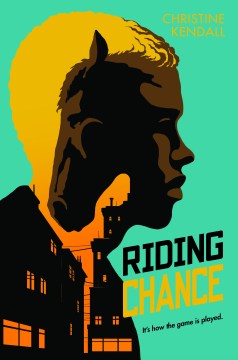 Troy is a kid with a passion. And dreams. And wanting to do the right thing. But after taking a wrong turn, he’s forced to endure something that’s worse than any juvenile detention: He’s “sentenced” to the local city stables, where he’s required to take care of horses. The greatest punishment has been trying to make sense of things since his mom died, but through his work with the horses he discovers a sport totally unknown to him—polo. Troy’s has to figure out which friends have his back, which kids to cut loose, and whether he and Alisha have a true connection.


 Hello, fans of Middle Grade! I hope the school year is running smoothly for your students, your readers, or your own kids, whether they are learning in-person, remotely, independently, or in a hybrid or homeschool environment. While online learning and the use of technology are certainly helpful in this time of Covid, I know my own kids sometimes grow weary of screens and keyboards in their current environments. So I wanted to share a fun and engaging reading activity that can work equally well in both the home and classroom: A Mini-Museum display based on a great Middle Grade read.
 If you’ve read or taught the excellent Stella by Starlight by Sharon M. Draper, you’ll recognize how these real objects make great representations of the novel’s important character and plot points: