Posts Tagged MG books

When the Hammer Builds the House: Grappling with AI in Kidlit

Two years ago I wrote an article about how to utilize AI as a tool in children’s writing. At the time, ChatGPT was still in its first iterations, and many creatives had only the faintest ideas about generative AI. In the middle grade world, authors were mostly just trying to figure out what AI would mean for them, if anything at all. 

I think it’s safe to say things have changed since then, and I wanted to come back to this topic with fresh eyes to see if the undertones of techno-optimism that permeated my first piece on the subject still resonate the way they did back in 2023. There are, after all, some new realities that authors must face head-on.

For one, it’s simply no longer accurate to say that AI writing is cheesy, formulaic, and easy to spot. Large language models like ChatGPT, Claude, and Gemini have become astonishingly good at mimicking human authors in tone, humor, and even complex themes woven through longer pieces. YouTuber and developmental editor Alyssa Matesic recently did a side-by-side of AI writing and short stories written by professional authors, and the two were startlingly difficult to tell apart.

That also begs the question of how AI models have gotten so good. Since 2023, big tech companies have scraped vast libraries of unlicensed and copyrighted material to train their models. It’s a controversial topic, and too intricate to dive into here, but it has forced many authors to divert attention away from the creative process and think carefully about how to protect their work.

Still, the biggest issue probably isn’t about detectability or fair use, but the mere fact that AI writing exists at all. The very possibility of humanlike AI writing has cast a shadow over the legitimate efforts of human writers everywhere. Even the once-loved em dash has become a symbol of AI skepticism, with many authors consciously adjusting their tone and techniques to look less like the AI that used their writing to develop its own voice in the first place. It’s a strangely ironic dance that creators across all fields have been doing since generative AI exploded onto the scene in the last few years. 

So is it really fair to say that AI is “just a tool” the way I described it back in 2023? It would be a bit like a master craftsman returning to his worksite after a lunch break to find that his hammer had come to life and built the rest of the house without him. It sounds nice, but what if the craftsman actually enjoyed building houses? What if he’d spent his whole life learning to do it well? What if everyone then assumed that all his houses – countless hours of work – had been built by the magic hammer? 

So what is a middle grade author to do in this strange new world? Since this post is just around the corner from Thanksgiving, I’m choosing to slant toward gratitude. Even in this weird and sometimes scary landscape of publishing in 2025, there are quite a few things to be thankful for.


Authors are fighting back and winning.

A U.S. federal judge gave preliminary approval to a $1.5 billion settlement between Anthropic PBC and authors who alleged nearly half a million books were pirated to train AI chatbots. It’s a major win for writers wanting more accountability from AI developers.

Readers want human-made books.

As AI writing continues to permeate the book market, consumers are becoming more vocal about their preference for human work. In a recent poll by YouGov, well over half of respondents reported that they’d feel less fulfilled after learning a book they’d read was authored with AI. There are also new projects popping up like the “Human Authored” initiative from the Authors Guild. It’s a promising sign that readers are rediscovering the incredible value of human connection and contribution.


As a tool, AI is only getting better.

In its rightful place, AI continues to be a transformative technology that can untether creators and allow them to make and explore more than ever before. As a research tool, for example, AI cites its sources with more accuracy than it did back in 2023, and it can also summarize and synthesize material extraordinarily well. Even for this piece, which is admittedly a bit skeptical of AI’s prevalence overall, I used AI tools to find sources and make connections. I just had to keep that hammer locked up in the toolbox when it came time to write, design the art, etc. Many have equated this dynamic with letting AI “do the dishes”. Artificial Intelligence can handle the chores so creatives can do the fun stuff (although not all the time, as we learned from NEO — skip to 2:55 for a good laugh).


So have I changed my mind about AI over the last two years? Should you? These are questions worth exploring, but let’s not spend too much time perseverating on a dynamic that changes almost daily. 

After all, we’ve got writing to do.

Space Travel and LEGOs: Interview with Author Jennifer Swanson

Jennifer Swanson authorWe’re excited to have Jennifer Swanson on here today to talk about her two new releases. Let’s start with learning a bit more about her, and then we’ll talk more about both of her books, Spacecare: The Kids Guide to Surviving Space and LEGO: Amazing Earth.
So, Jen, did you love to read as a child? If so, can you tell us some favorite books?

I read EVERYTHING! Every summer my library had a contest to read the most books. I won almost every year. I read so many books. Fiction, nonfiction, science, history, adventure, and more. I think my favorite books are mysteries. They still are. Of course, I read all of the Nancy Drew books, the Hardy Boys, and Trixie Belden as well.

When did you know you wanted to be a writer?

I have been writing my whole life. I used to write books when I was in kindergarten and early elementary school. As I got older, I kept journals. I didn’t fully decide to become a writer until I was much older and a stay-at-home mom with three kids. It was a busy time, but writing was my outlet and I loved it.

Have you had any careers besides writing?

Yes, I’ve been a science teacher for over 14 years. I’ve taught middle school science, forensics science, and high and junior college level chemistry.

That sounds like you have the perfect background to write these science-based books. Is that what drew you to writing nonfiction?

I am a curious person and have lots of questions about how things work. LOTS! One of my mom’s favorite sayings to me when I was a kid was, “Go look it up!”. And I did. I was a totally Jeopardy kid. Because I love facts! And I love learning. So, for me, writing nonfiction is all about making those facts FUN for kids. It’s getting them to be curious, and wanting to imagine, explore, and investigate to learn more.

And now that we know about more about Jennifer, let’s find out about more about her books about space and LEGOs.

book cover Space Carebook cover LEGOs


Jen, what inspired you to write about these topics?

Both of these books were actually work-for-hire projects, so I was given the topics to write about. But, let me tell you, I was THRILLED to be able to write them both.

I have long been a HUGE fan of space, medicine, and LEGOs.

From the time I was 9, I wanted to be a doctor. At first a pediatrician, then a heart surgeon, then an organ-transplant surgeon. When I was in high school, Sally Ride, went up in the space shuttle for the first time. I was hooked. My new goal – the first female astronaut organ-transplant surgeon. (That sounds like an amazing goal!!)

While, clearly none of that happened, writing Spacecare allowed me to share my passions for both topics.

As for LEGOs, well, I’ve been building with them since I was old enough to put them together. My childhood was spent engineering and building many different creations. I’m old enough to have been around when you just bought the blocks and there weren’t instructions, so you designed your own stuff. My kids loved LEGOs, and our house is still filled with them. Taking my love of LEGOs and combining it with science? Yes, please. Writing this book was simply AMAZING!

Can you tell us a little about the books?

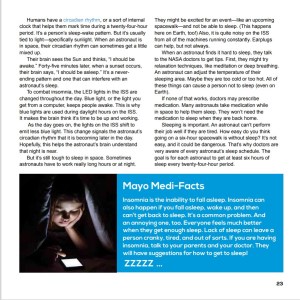
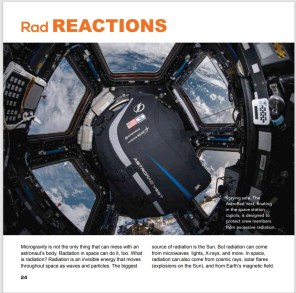
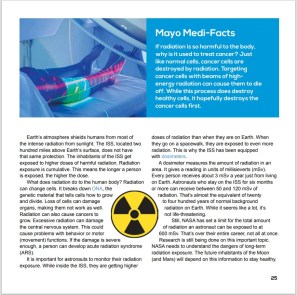
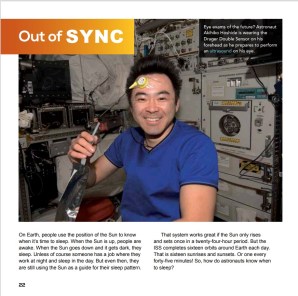
How about I show you. Here are a few spreads from SpaceCare: The Kids Guide to Surviving Space (Mayo Clinic Press/Smithsonian Institution)


page 22pg 23


pg 24

pg 25


I was lucky enough to get a sneak peek at this book, and it’s fascinating. Did you ever wonder how people eat in space or go to the bathroom? Remember they don’t have gravity like we do on Earth. What’s microgravity? How do you keep yourself from floating around when you sleep? Jen covers all this and so much more. The pictures are amazing.

If you’re a LEGO-fan, you won’t want to miss this one:

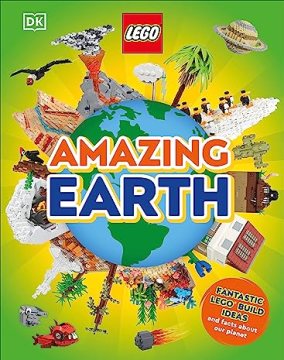
Here are a few spreads from LEGO: Amazing Earth (DK Books)

Lego spread

Lego 2 spread

Not only do you learn to construct many new things with LEGOs, but you’ll also learn fun facts as the sample pages show.

To find all this great information, Jen, where did you go to do your research?

Most of my research for the Spacecare book was done online. NASA has some amazing websites. But I also went to NASA Kennedy’s Space Center, and NASA Johnson’s Space Center, too. I spoke with a few experts, including Dr. Mike Harrison, doctor at the Mayo Clinic and now the Chief Medical Officer for Axiom Space. I was also lucky enough to speak with Astronaut Megan McArthur as well.

Wow! That must have been exciting to go to the space centers and speak to the doctor and an astronaut! And Astronaut Megan McArthur wrote a note at the beginning of the book.

For the LEGO: Amazing Earth book, I did a lot of online research at highly regarded content websites, as well as did some interviews with scientists, too.

With all the unusual information you discovered while researching, what was one of the most interesting facts you learned?

In Spacecare, there were so many facts, it’s hard to pick. I think I would have to say that the fact that when you’re in microgravity, your stomach floats up so that you don’t always feel hungry. That was intriguing to me. (It is to me too.)

For the LEGO book, I’d have to say that seeing how these ecosystems were designed by the LEGO experts was my favorite part. I knew I wanted to include them, but I had no idea what they would look like. (That is fascinating!)

What do you hope readers will take away from your book?

I hope readers will be fascinated by new facts, inspired by the amazing science and technology, and go out and explore the world around them.

I’m sure these books will inspire them! I know they inspired me.

Can you tell us about some of your other books?

I am the author of about 50 books for kids. I love STEM of all kinds, but I also have history and biography books, too. You can find all of my books, free teacher guides, videos, and more on my website https://jenniferswansonbooks.com/

I also have a science podcast for kids (of all ages). Check it out! https://solveitforkids.com/

What are you working on now?

I just completed final edits on my MG NF book, The Lost Forest: An Unexpected Discovery Beneath the Waves (Millbrook Press, April 2024). It follows a group of scientists who were the only ones to investigate an underwater forest.

I am working on edits for a book called Who Owns the Moon? (Margaret Quinlan Books, Jan 2025), cowritten with Cynthia Levinson.

And I’m in edits on the next Atlas Obscura book which releases from Workman Publishing in 2025.

Those all sound like great reads. We’ll look forward to seeing them when they come out.

Thanks so much for having me!

You’re welcome, Jennifer. It’s been a pleasure.

About Jennifer Swanson

Jennifer Swanson is the author of 40+ nonfiction books for kids. She is the creator and cohost of the Solve It! For Kids podcast which, in its two years of being on air, has 40k+ downloads, is ranked in the top 5% of all podcasts Worldwide, and is #1 in the Top 10 Best Podcasts for Learning by All Digital School. Her passion for science and technology resonates in all of her books but especially, Brain Games, named one of the 50 Best Science Books Ever by ThePlanets.org, Astronaut-Aquanaut, BEASTLY Bionics, and Parents’ Choice Gold Award Winner, Save the Crash-test Dummies. Her books have received starred reviews, been on the Booklist ‘Best Tech’ books list, won a Green Earth Book Honor Award, three Florida Book Awards, California Reading Association awards, and multiple National Science Teaching BEST STEM awards. Jennifer’s Outdoor School: Rocks, Fossils, and Shells book was named a 2021 Kirkus Best Books of the Year, and her Save the Crash-test Dummies book received a Parent’s Choice GOLD Award. Jennifer is an accomplished speaker at events and schools around the country, the Highlights Foundation, the National NSTA conferences, the World Science Festival in NYC, and the Library of Congress’ National Book Festival. You can find Jennifer through her website www.JenniferSwansonBooks.com.

The Sound of Violets

Welcome to the Violets Are Blue Blog Tour!

To celebrate the release of Violets Are Blue by Barbara Dee on October 12th, blogs across the web will be featuring exclusive guest posts from Barbara as well as 5 chances to win a signed copy all week long!


The Sounds of Their Voices 
by Barbara Dee

I’m an auditory writer, not a visual writer. By that I mean I rarely write descriptions of landscapes, or even the way characters look. I’m much more interested in the way characters sound, especially as they interact with each other in conversation. And as I write dialogue, I keep in mind that adults need to sound like adults, kids need to sound like kids—and that they all need to have distinct voices.

So I ask myself certain questions about the characters’ speaking styles. For example: Do they speak in long sentences, or short ones? Do they ask a lot of questions? Do they interrupt? Do they pause or hesitate or trail off? Do they use slang or formal speech? Do they have favorite expressions, especially those they use in moments of anger, frustration, excitement? What’s their tone—sarcastic, sympathetic, tense, calm? Is their voice hoarse, sharp, quiet, shrill, musical?

To get a grip on my characters, I don’t need to see their faces; I need to hear them speak. Sometimes as I’m writing I’ll read a manuscript aloud to hear how my characters are sounding. What I’m listening for most of all is natural, authentic speech—no elevated diction (unless it’s in character). This is essential, because middle grade readers have sharp ears exquisitely attuned to authenticity.

I remember how, when my daughter was about eight or nine, she abruptly abandoned a popular series, so I asked her why. “Because the characters never use contractions,” she told me. “They say ‘I cannot,” and ‘I do not,’ and that’s not how kids talk.”

If you’re writing middle grade fiction, nothing is more important than sounding like a kid. The challenge is not to overuse kidspeak. You need to keep in mind that certain expressions will sound fresh as you’re drafting your manuscript, but may become passé by the time the book is published. As I learned from my daughter,  if you get the voice even slightly wrong—if you sound dated, or, even worse, if you sound like an adult– you’ll turn off your readers.

And here’s the funny part: Although I know my characters are working when I can hear how they sound, I know my plot is working when I can see where they live. For every book I write, I develop an almost architectural blueprint of the main character’s house. In Violets Are Blue, I have a strong sense of the layout of the townhouse: the door leading into the kitchen, the living room next to it, the staircase, and the two bedrooms, each with its own bathroom. All of this detail is significant to the plot, so it’s important to get straight how characters travel from one room to the next.

And of course how you can hear, or overhear, their voices throughout the house.


Amazon | Bookshop | Goodreads

“Barbara Dee has done it AGAIN! She tackles tough topics with such great care. She is to middle schoolers today what Judy Blume was to me in the 80’s. I give Violets Are Blue ALL the stars and thumbs up.”
– Amanda Jones, 2021 School Library Journal Co-Librarian of the Year

“[F]requently poignant… With flawed, realistic characters and dynamics, this reconciliatory novel is a believable balm for young people at the mercy of adult choices and scenarios.”
Publishers Weekly

From the author of the acclaimed My Life in the Fish Tank and Maybe He Just Likes You comes a moving and relatable middle grade novel about secrets, family, and the power of forgiveness.

Twelve-year-old Wren loves makeup—special effect makeup, to be exact. When she is experimenting with new looks, Wren can create a different version of herself. A girl who isn’t in a sort-of-best friendship with someone who seems like she hates her. A girl whose parents aren’t divorced and doesn’t have to learn to like her new stepmom.

So, when Wren and her mom move to a new town for a fresh start, she is cautiously optimistic. And things seem to fall into place when Wren meets potential friends and gets selected as the makeup artist for her school’s upcoming production of Wicked.

Only, Wren’s mom isn’t doing so well. She’s taking a lot of naps, starts snapping at Wren for no reason, and always seems to be sick. And what’s worse, Wren keeps getting hints that things aren’t going well at her new job at the hospital, where her mom is a nurse. And after an opening night disaster leads to a heartbreaking discovery, Wren realizes that her mother has a serious problem—a problem that can’t be wiped away or covered up.

After all the progress she’s made, can Wren start over again with her devastating new normal? And will she ever be able to heal the broken trust with her mom?

Learn how to create the mermaid makeup effect from the cover!:


Follow Barbara: Website | Facebook | Twitter | Instagram

Barbara Dee is the author of twelve middle grade novels published by Simon & Schuster, including Violets Are Blue, My Life in the Fish Tank, Maybe He Just Likes You, Everything I Know About You, Halfway Normal, and Star-Crossed. Her books have earned several starred reviews, have been shortlisted for many state book awards, and have been named to best-of lists including the The Washington Post’s Best Children’s Books, the ALA Notable Children’s Books, the ALA Rise: A Feminist Book Project List, the NCSS-CBC Notable Social Studies Trade Books for Young People, and the ALA Rainbow List Top Ten. Barbara lives with her family, including a naughty cat named Luna and a sweet rescue hound named Ripley, in Westchester County, New York.

GIVEAWAY

a Rafflecopter giveaway
 

  • One (1) winner will receive a hardcover of Violets Are Blue by Barbara Dee with a SIGNED bookplate
  • US/Can only
  • Ends 11:59pm ET on 10/24
  • Enter using the Rafflecopter above
  • Check out the other stops along the tour for more chances to win!


Blog Tour Schedule:

October 11th – Pragmatic Mom
October 12thImagination Soup
October 13thFrom the Mixed-Up Files of Middle-Grade Authors
October 14th – YA Books Central
October 15thGood Choice Reading