
Posts Tagged interview

STEM Tuesday — Oceans — Book List


Oceans are a world of wonder for many. From the animals that live in them to the ecosystems they provide, they fuel the imagination and encourage the adventurous. Students who want to know more about marine biology, research, and conservation are invited to take a look at the list below. They won’t be disappointed!


The Fascinating Ocean Book for Kids: 500 Incredible Facts!

by Bethanie Hestermann and Josh Hestermann

This book is packed with facts about the ocean and the life within it. Filled with pages of full-color pictures, it depicts what the underwater world is like for fish, dolphins and loads of other sea creatures. If you know someone interested in an ocean of cool trivia, this is the book for them.


Ocean Animals and Their Ecosystems: A Nature Reference Book for Kids

by Dr. Erica Colón

The oceans of Earth are swimming with fabulous marine animals. This book introduces you to them and their habitats. From coral reefs to polar regions readers will explore each ecosystem and discover who lives there. Filled with stunning photos and interesting information, this is a great way to explore the ocean with kids.


Marine Science for Kids: Exploring and Protecting Our Watery World, Includes Cool Careers and 21 Activities (66) (For Kids series)


Marine Science for Kids: Exploring and Protecting Our Watery World

by Bethanie Hestermann and Josh Hestermann

A fun guide to the underwater world – to the living things, and to the geology, chemistry and biology of all things marine. Includes insights from marine scientists and lots of hands-on activities.


Deep, Deep Down: The Secret Underwater Poetry of the Mariana Trench


Deep, Deep Down: The Secret Underwater Poetry of the Mariana Trench

by Lydia Lukidis and Juan Calle Velez

Lyrical text and stunning illustrations take readers on a journey deep down into the Mariana Trench. Also includes in-depth scientific information on the vibrant life in the deep oceans.


Superpod

SUPERPOD: Saving the Endangered Orcas of the Pacific Northwest

by Nora Nickum

An depth, immersive book about the playful Southern Resident orcas. The book also speaks about the people working to save them from extinction, and all the different ways they’re trying to do that, from medicine, to technology and activism.
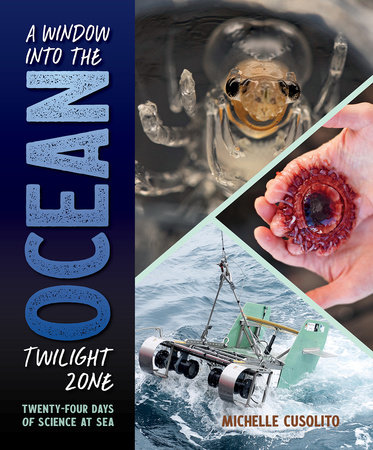


A Window into the Ocean Twilight Zone by Michelle Cusolito


A Window into the Ocean Twilight: Twenty-Four Days of Science at Sea

by Michelle Cusolito

The author goes on a breathtaking real-life adventure with scientists from Woods Hole Oceanographic Institution to study the twilight zone of the ocean using new technologies. Learn details of day-to-day living on a research ship, and all about the animals and the sea.


The Lost Forest: An Unexpected Discovery beneath the Waves


The Lost Forest: An Unexpected Discovery Beneath the Waves

by Jennifer Swanson

An entire cypress forest was found hiding under the ocean in the Gulf of Mexico. This book speaks about the discovery, about how the forest came to be there, and about the scientists trying to uncover the secrets the forest may tell us – from life-saving medicines to climate change.


Life in Hot Water: Wildlife at the Bottom of the Ocean See more


Life in Hot Water: Wildlife at the Bottom of the Ocean

by Mary Batten and Thomas Gonzalez

All about the creatures that live at the bottom of the ocean in permanent darkness and have evolved to thrive in scalding water that gushes from hydrothermal vents.


Marine Biology: Cool Women Who Dive

by Karen Bush Gibson and Lena Chandhok

Marine biology is the study of animal life in saltwater environments. The study includes the tiniest microscopic plankton to the large blue whale! This book takes a look at three women who have this career for a living:  Natalie Arnoldi, Ashanti Johnson, and Lauren Mullineaux. With engaging information and links to primary sources, this book will get readers excited to explore and study the world’s oceans. Dive in and learn more about the ocean!


Eugenie Clark Book for Curious Kids: Diving into the Fascinating Life of the Shark Lady (Great Minds for Curious Kids)

by Eric Lylani

Eugenie Clark is known as the ‘shark lady’; there’s no one better to help readers discover the secrets of the sea! Learn about marine biology, ocean conservation and sharks through the stories of Eugenie’s life and work. Discover her observations and find out how her legacy continues to inspire new marine biologists.


Seashells & Beachcombing for Kids: An Introduction to Beach Life of the Atlantic, Gulf, and Pacific Coasts (Simple Introductions to Science)

by Stephanie Panlasigui and Erika Zambello

Kids young and old are fascinated by the beach and the seashells they find. This book is all they’ll need to learn a bit more about the oceans and their inhabitants. From different beach habitats to beach etiquette, this book is full of great information for aspiring beachcombers as well as fun family activities.


The Forest in the Sea: Seaweed Solutions to Planetary Problems (Books for a Better Earth)

by Anita Sanchez (Author)

Seaweed a climate change hero? You bet, and this book will explain all about it. From a tour of a seaweed forest to activities and recipes, readers will discover how amazing seaweed is. Seaweed can reduce methane emissions, play a role in biofuels as well as medicine, in addition to its role providing a home for marine life. Be prepared to be amazed at what seaweed can do with this fun and inspiring book.


Shruthi Rao is an author. Her home on the web is https://shruthi-rao.com


Susan Summers is a wildlife enthusiast and an author. Contact her at: https://susan-inez-summers.weebly.com/


STEM Tuesday– Deserts –Author Interview

Welcome to STEM Tuesday: Author Interview, a repeating feature for the last Tuesday of every month. Go Science-Tech-Engineering-Math!

Why are author interviews such an important part of STEM Tuesday? For one, it’s fun for kids (and adults!) to read about doing research and writing from the person doing the work. Plus, getting a glimpse into what it’s like to be an author can get kids (again – and adults!) excited about doing their own writing!

Without further ado, let’s meet Lori Alexander, who lives in Arizona and is the award-winning author of several kids’ books. Her most recent book is DESERT QUEEN, which is all about Minerva Hoyt and her advocacy and passion for the desert. Here’s more about the book:book cover for Cactus Queen

“Long before she became known as the Cactus Queen, Minerva Hamilton Hoyt found solace in the unexpected beauty of the Mojave Desert in California. She loved the jackrabbits and coyotes, the prickly cacti, and especially the weird, spiky Joshua trees.

However, in the 1920s, hardly anyone else felt the same way. The desert was being thoughtlessly destroyed by anyone and everyone. Minerva knew she needed to bring attention to the problem. With the help of her gardening club, taxidermists, and friends, she worked to persuade politicians, scientists, teachers, and others to support her cause. And, it worked! Minerva’s efforts led to what came to be known as Joshua Tree National Park in California, and saved hundreds of thousands of plants and animals.”


Andi Diehn: What’s your favorite fact you learned about Minerva Hoyt?

Lori Alexander: I love that Minerva’s path to protect the Mojave desert took many twists and turns. It’s not easy to speak up for change, especially as a woman in the early 1900s. In addition to transporting bits of the desert to the east coast to rally support for her cause, Minerva started a letter writing campaign and even pitched her idea to turn the Joshua tree area of the Mojave into a national park to the president of the United States. My favorite fact was that Minerva made two scrap books to take to the White House. They were packed with beautiful photographs and artwork of the Mojave desert which helped to make her case to President Franklin D. Roosevelt. In 2021, I took a research trip to Joshua Tree National Park and met with the park’s archivist. I was allowed to (carefully) flip through the very same albums Minerva shared with the president in 1933!

AD: I love how you mix in her quotes – what was your intention behind this?
Lori: My first nonfiction editor, Ann Rider, now retired, taught me that quotes from historical figures “bring the text to life.” They were sprinkled throughout our books together: All in a Drop and A Sporting Chance and What’s a Germ, Joseph Lister? While I’m working with different editors and publishers now, I continued to include rich quotes throughout my texts, pulled from primary sources such as letters, interviews, and scientific papers. Cactus Queen begins with these words from Minerva: “This desert possessed me, and I constantly wished that I might find some way to preserve its natural beauty.” A great quote, as it also sets-up the story problem and Minerva’s motivation.


AD: Minerva moves plants native to the west to the east – yet the book is about preserving the native plants in the desert. How is this action considered part of conservancy?

Lori: Minerva transported bits of the desert vegetation, as well as rocks, sand, and taxidermy desert animals, to New York and Boston for their annual flower shows. She set up displays about the size of a classroom to share the beauty of the Mojave. Audiences were captivated, as most had never seen such a landscape before. Minerva believed this was an important step in gaining support for her cause. If people loved the desert, they would want to protect the desert. After the flower shows ended, she donated the displays to local museums so people could continue learning about the desert. Her main goal was to show that the desert is not a barren wasteland, but a beautiful place filled with unique plants and animals worth saving.


AD: The problem of people claiming wild plants as their own and removing them from their native habitat – where can we find examples of this today? What’s being done to fix this?

Lori: I currently live in a desert not far from the Mojave—the Sonoran desert in Arizona. Much as Joshua trees represent the Mojave, the Sonoran desert is known for its towering saguaro cacti. Saguaros can grow to 50 feet tall and live more than 150 years. They are a slow growing cacti, with only a few inches of growth during their first ten years. It can take more than 60 years for a saguaro to grow its first arm. While many people here in Tucson would love to have one of these stately, iconic cacti in their front yard, it is illegal to poach them from the desert floor. Luckily, state-wide laws protect saguaro from theft, vandalism, and unnecessary destruction. If a saguaro interferes with new construction projects, permits are required to move and replant the specimen. Because of such laws, saguaros are highly safeguarded and not currently listed as threatened or endangered, although they may soon face other challenges due to climate change.
 

AD: I love the part about the letter writing campaign! What can children learn from this?

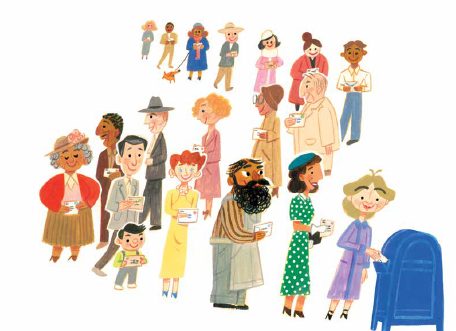
Lori: Minerva hosted an inspection over acres of the Mojave—the last step before the space could be named a national park. But the appointed government official wondered where the lush trees and roaring waterfalls could be found. He reported that the area was not fit for protecting under federal law. After the failed inspection, Minerva began a letter writing campaign. She want the National Park Service (NPS) to send a new inspector, someone who better understood desert landscapes. She called on her friends and neighbors, local scientists, teachers and politicians. They wrote letters to the NPS for five months until a new inspection was scheduled. A second chance for the desert! From this, children can learn that they too have a voice, and that there is power in numbers. If there’s something they want to change in their school, neighborhood, city, or the greater world, they can speak up. Elementary-age kids have families and a network of classmates, teachers, and neighbors who may be willing to help make change. It could begin with something as simple as writing a letter (or email) to a local elected official.


AD: Why are national parks so important to wildlife conservancy?

Lori: They are crucial! In addition to preserving landscapes and protecting ecological biodiversity, national parks inspire wonder and life-long learning by those who visit. The NPS estimates that 325 million people visited the national park system in 2023, which includes 63 national parks and more than 350 historic sites managed by the NPS. These unique places help to educate the public on the importance of conservation. I always feel a bit more connected to the planet after a stay at one of these stunning spots and I encourage you to get out there and explore. Here’s a list of all of the sites managed by the NPS and their rates of attendance over the past ten years. Whether you visit one of the most popular parks or a lesser-known gem, be sure to leave no trace of your stay.


AD: In your author’s note you talk about damage done to the park during a government shutdown. That’s horrifying! Why do you think people hurt the environment so deliberately?

Lori: I’m guessing many people don’t think, and that’s the problem. They’ve traveled a distance to be there and feel entitled to the space. In 2019, during a 35-day government shut-down, Joshua Tree National Park remained open but with a very limited staff to manage the park’s 1200 square miles. Visitors began to ignore the rules. They squabbled over camp sites, scattered garbage, clogged toilets, and spray-painted boulders. They hung holiday lights around delicate Joshua tree branches. Other plants were cut down to make paths for racing off-road vehicles. The destruction took place over just a few days, but scientists estimate it could take up to 200 years for the slow-growing Joshua trees to recover. So while federal laws protect these beautiful spaces, it’s up to all of us to follow the rules and continue to speak up to defend these areas.


AD: Jenn Ely’s illustrations are fantastic – and I love the wildlife on every page. How do beautiful, accurate illustrations enhance a nonfiction picture book?

Lori: As I mentioned earlier about historical quotes bringing a story to life, the same is true for illustrations. Jenn’s artwork is lovely! Many people think “dry wasteland” when they hear the word desert. But Jenn created such a vibrant scene of the Mojave’s varied plants and animals. I adore every page but especially the nighttime spread, where Minerva camps out with the Joshua trees, and the final spread, when Minerva wins her hard-fought battle to protect the region she loved so much.

Bio:

Lori AlexanderIn addition to picture books, LORI ALEXANDER writes chapter books about the fascinating history of science and medicine. She won a Sibert Honor Award for All in a Drop: How Antony van Leeuwenhoek Discovered an Invisible World, and A Sporting Chance: How Ludwig Guttmann Created the Paralympic Games was named a Kirkus Reviews Best Book. Her recent release, What’s a Germ, Joseph Lister?: The Medical Mystery That Forever Changed the Way We Heal, is a Junior Library Guild Gold Standard Selection. Lori resides in Tucson, Arizona, with her scientist husband and two book-loving teens. lorialexanderbooks.com

Lori occasionally posts to IG: @lorialexanderbooks or Twitter: @LoriJAlexander

Peek into or purchase CACTUS QUEEN here.

Meet Literary Agent Kelly Dyksterhouse

Headshot, agent Kelly Dyksterhouse

What a pleasure it has been to get to know Kelly Dyksterhouse, a literary agent with the Tobias
Literary Agency. Kelly has her MFA in Writing for Children and Young Adults and specializes in
building the careers of authors and illustrators who work on a broad range of projects from
picture books to young adult novels, graphic novels, and fascinating nonfiction for the youth
market. I know that all of our Mixed-Up Filers are eager to learn more about Kelly.


SK: Kelly, tell us a little bit about your path to becoming an agent.

KD: While I was pursuing my MFA in Writing for Children and Young Adults, I applied for a
position as a reader at The Bent Agency. At the time, I thought it would be a good
opportunity to learn more about how the business side of publishing worked. In that role,
I read slush and full manuscripts and wrote reader reports on the fulls. That led to an
assistant position for Susan Hawk at Upstart Crow, who was, and remains, a most
fabulous mentor. After working for several years as an assistant, I joined Jacqui Lipton
at her new agency, Raven Quill Literary Agency and began building my own list. In 2022, RQLA
merged with The Tobias Agency.

While every path to becoming an agent is a little unique, this business remains one that
is apprenticeship based, and frankly the relationship-driven part of the industry is a
major part of what I enjoy about it.

SK: What can you tell us about the Tobias Agency?

KD: I love my team at TLA! We work very cohesively and support one another well, and a
win for one of us/our clients is celebrated as a win for all.

The Tobias Literary Agency is a full-service literary representation firm established in
2016. We specialize in shepherding writers and artists from dream to reality. Our literary
agents are nimble and fierce with a collaborative spirit. We take a 360-degree view of
our clients’ intellectual property. Each project receives a targeted plan for execution of
sub rights (film/TV, foreign translations, first serial, graphic novel adaptations, and more).
Authors and artists we represent include debut authors, New York Times and USA
Today bestsellers, multiple Bram Stoker Award winners, distinguished scientists,
Emmy-nominated journalists, Coretta Scott King honored illustrators, LA Times Book
Award winners, and authors selected by Reese Witherspoon Book Club. Our literary
agents represent the gamut of genres, including the finest in horror, children’s,
nonfiction and illustration. Our literary agents and literary managers take pride in investing in
clients’ long-lasting careers.

SK: Here at MUF, we are all about middle grade. What do you love most about middle-grade novels?

KD: I love that they appeal to readers who are on the cusp of independence. Kids who are actively figuring out who they are and where they fit in their world. I think what I love best about middle grade novels is that they really respect this time of life and take it seriously, reflecting all of the beauty and struggle and confusion and joy that are wrapped up in adolescence. Books for younger readers tend to be fairly straight forward, but the middle grade novel wrestles with questions, allowing the reader to ask
questions of themselves. It’s a time in life where readers are forming opinions and can choose their own books to read. We tend to idealize childhood and forget how hard and heavy and very, very immediate and important everything feels at this stage of life. The middle grade novel carries a huge responsibility in this respect—it can open new worlds or offer solace from the real one readers inhabit, creating space to process their own feelings through those of a character, space to dream and ask questions and not be
judged for doing so.

SK: Which middle-grade book(s) influenced you most as a child?

KD: Ah, so many! But the books I return to every couple of years to reread I found in 5th
grade: Robin McKinley’s The Hero and the Crown and Michelle Magorian’s Goodnight,
Mr. Tom. As a younger reader, I plowed through C.S. Lewis’s The Chronicles of Narnia,
Madeleine L’Engle’s A Wrinkle in Time books, all of Walter Farley’s Black Stallion
books, and of course Marguerite Henry’s Misty of Chincoteague.

SK: What are some of your favorite current middle-grade novels?

KD: Aside from those of my own clients, of course, I’ve really enjoyed Alyssa Wishingrad’s
The Verdigris Pawn and Between Monsters and Marvels. I love how she uses fantasy to
probe readers to ask questions about their own world, which I think is the genre’s
superpower.

I also really loved Dan Gemeinhart’s The Midnight Children—It was brilliantly structured,
written with so much respect for the reader, and it was a surprise to read. (I love books
that surprise.) I never would have suspected that a book that wrestled such heavy
subject matter would have me laughing out loud on an airplane at the climax. (I also
love books that make me laugh!)

Finally, I recently read Erin Entrada Kelly’s We Dream of Space and was really blown
away. Perhaps because it recalled so much of my own childhood—I was the same age
as the protagonist when the Challenger exploded and vividly remember watching it live
in our school auditorium, so the book hit home in that regard. But the character work in
that book is spectacular, and it’s a wonderful study for anyone who is seeking to deepen
their craft in terms of writing character.

SK: You seem to enjoy your work, but we know it has its tough parts. What would you say are the best and worst parts of being an agent?

KD: There are so many best parts! Every day, depending on what I am doing that day, my
answer will be different. I love the excitement of finding a new project that I can’t wait to
gush about. I love that no day is the same. I can start a day working on a picture book,
break to meet with clients and editors, and then end the day working on a novel, or a
nonfiction proposal. I love, love, love getting to call a client and tell them we have an
offer! And it is just amazing to hold a book in my hands that I helped shepherd into
existence.

So in a nutshell the best part of the job is working with creative people to bring fantastic
stories into the hands of children.

The worst part is easy—waiting and rejection. It’s part of the business, but that doesn’t
mean that it ever gets easy.

SK: What do you look for in a query?

KD: A strong query tells me what the book is about (who the character is, what they want,
and what the stakes are if they can’t get it, so the major dramatic question), with strong
comps to tell me where it will sit in the market, and does so clearly and succinctly in an
engaging tone or voice.

A query is a first impression, which I liken to an initial handshake in a job interview. It
needs to be professional, confident and show the writer’s competence and
understanding of their work and craft. The primary job of the query is to make me want
to read the book!

SK: What are the top reasons you pass on a submission?

KD: The number one reason I pass is that the writing is not ready. The concept and story
may be great, but it is clear that the writer sent it off before revising deeply or taking the
time to really refine their writing craft.

Another common reason I pass on projects is that the concept feels overly familiar—not
a fresh enough take to be able to stand out in the market.

SK: What is your best guess on where the middle-grade market is headed?

KD: I am seeing a lot of calls for books that could fill the audience “gaps”—younger middle
grade and older middle grade. Shorter, illustrated books that appeal to the 8-9 year old
reader, and then books whose subject matter appeals to the older middle grade reader
who is not quite ready for YA. (Some would call those books young YA, but I’ve been
seeing them announced as middle grade—books with characters as old as 15, yet
whose story might feel younger.) And there is still a great need for books that reflect a
diversity of experience and representation.

SK: Before you go, let’s have some fun with a lightning round. Please name your favorites!

Dessert: bread pudding with vanilla ice cream

Type of weather: a crisp, clear spring or fall day

Genre of music: depends on what I’m doing. Editing, I listen to classical instrumentals,
when writing I listen to movie soundtracks (instrumental), and when running I listen to
classic 80’s rock.

Season: Spring or Fall.

Game: I am enjoying a board game called Azul right now—it’s a fun strategy game with
tiles, and it’s really pretty. I also enjoy playing Hearts and Spades and Rummikub.

SK: I know that our MUF readers are going to want to learn more about you. Where can we do that?

KD:
● @kellydhouse is my SM handle for Instagram, Threads and Twitter.
● Kellydhouse@bsky.social.com
● Website: www.KellyDyksterhouse.com
● MSWL: Kelly Dyksterhouse

Thanks so much for sharing your time and wisdom with us, Kelly. We wish you great success in
your career as an agent. I’m sure a lot of new queries are about to head your way!