
Posts Tagged homeschooling

STEM Tuesday– National Parks– Book List


This month’s book list will take you on a tour of the 63 national parks of the United States. Along the way you’ll encounter amazing wildlife, breathtaking landscapes, important cultural traditions, and fascinating projects in science and conservation!
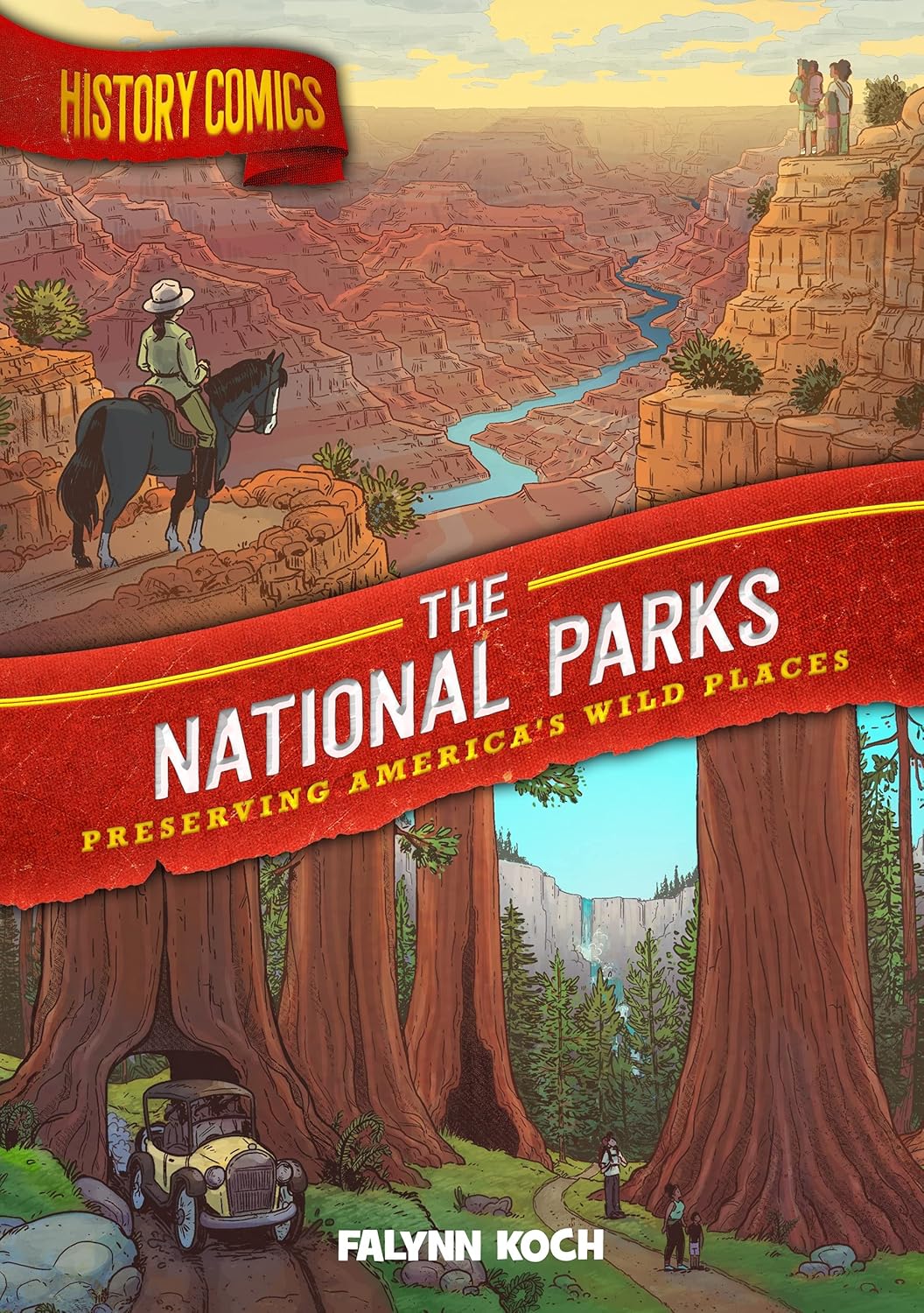
The National Parks: Preserving America’s Wild Places by Falynn Koch (Science Comics series)

A vibrant graphic-novel history in the Science Comics/History Comics style, narrated by a wise-cracking Bigfoot and Eagle, offering a witty yet substantial look at the founding of the U.S. national parks. It addresses complex themes—colonialism, conservation politics—with playful visuals, making it powerful and engaging for middle-grade readers and beyond.


50 True Tales from Our Great National Parks written by Stephanie Pearson and illustrated by Madeline Kloepper

This beautifully illustrated treasury shares 50 real-life stories from iconic national parks. From heroic people to animals, astounding features, and conservation triumphs, each tale connects deeply with its setting. Entertaining and informative, it brings parks to life across the U.S., making it a perennial favorite for families and young nonfiction lovers.
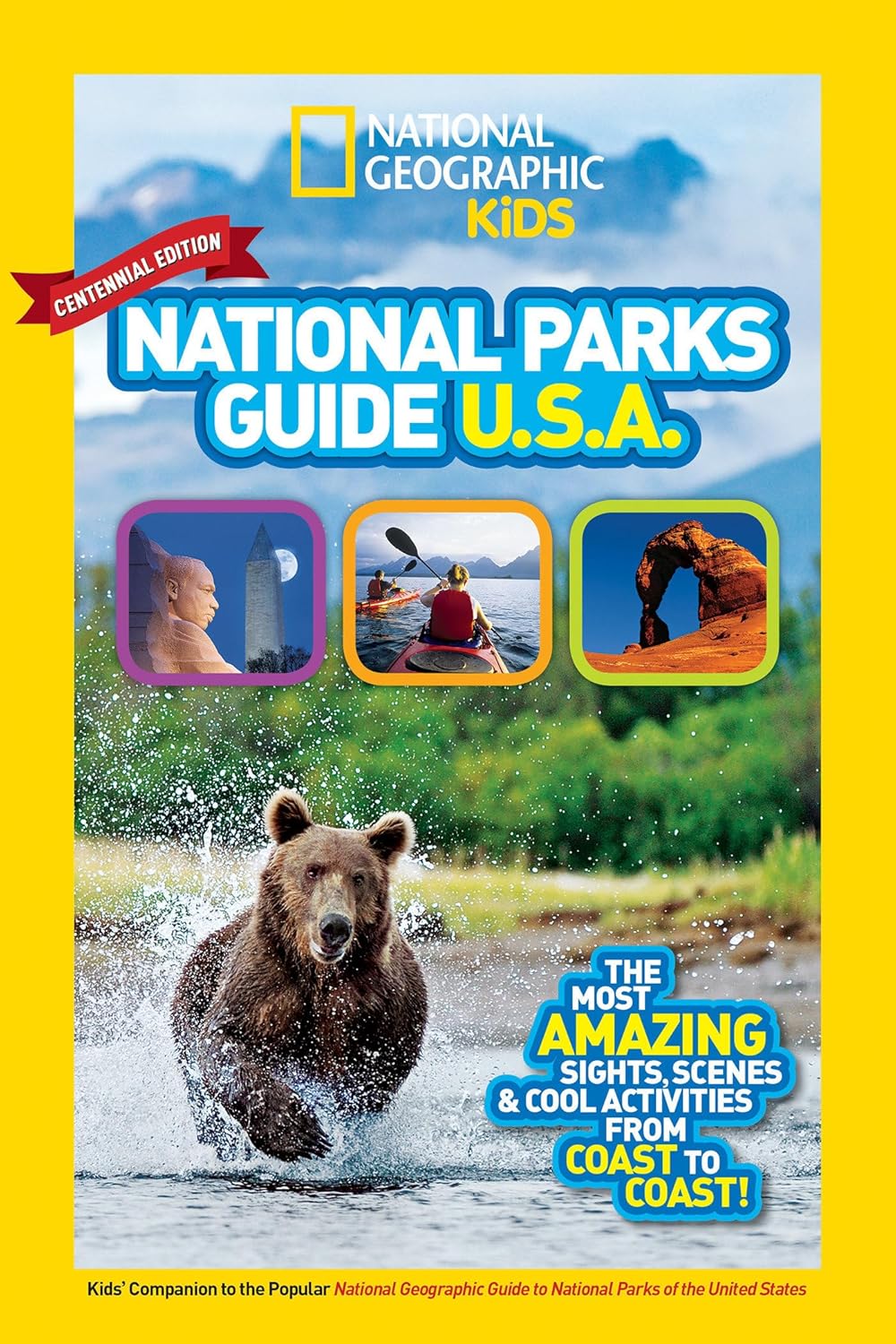


National Parks Guide USA Centennial Edition: The Most Amazing Sights, Scenes, and Cool Activities from Coast to Coast! by National Geographic Kids

A rich, celebratory children’s guide packed with dazzling color photos, maps, fun facts, Ranger tips, conservation ideas, and activity suggestions. Created for the 100th anniversary of the U.S. National Parks, it’s an ideal visual companion brimming with inspiration for young explorers preparing for a visit—or dreaming of one.
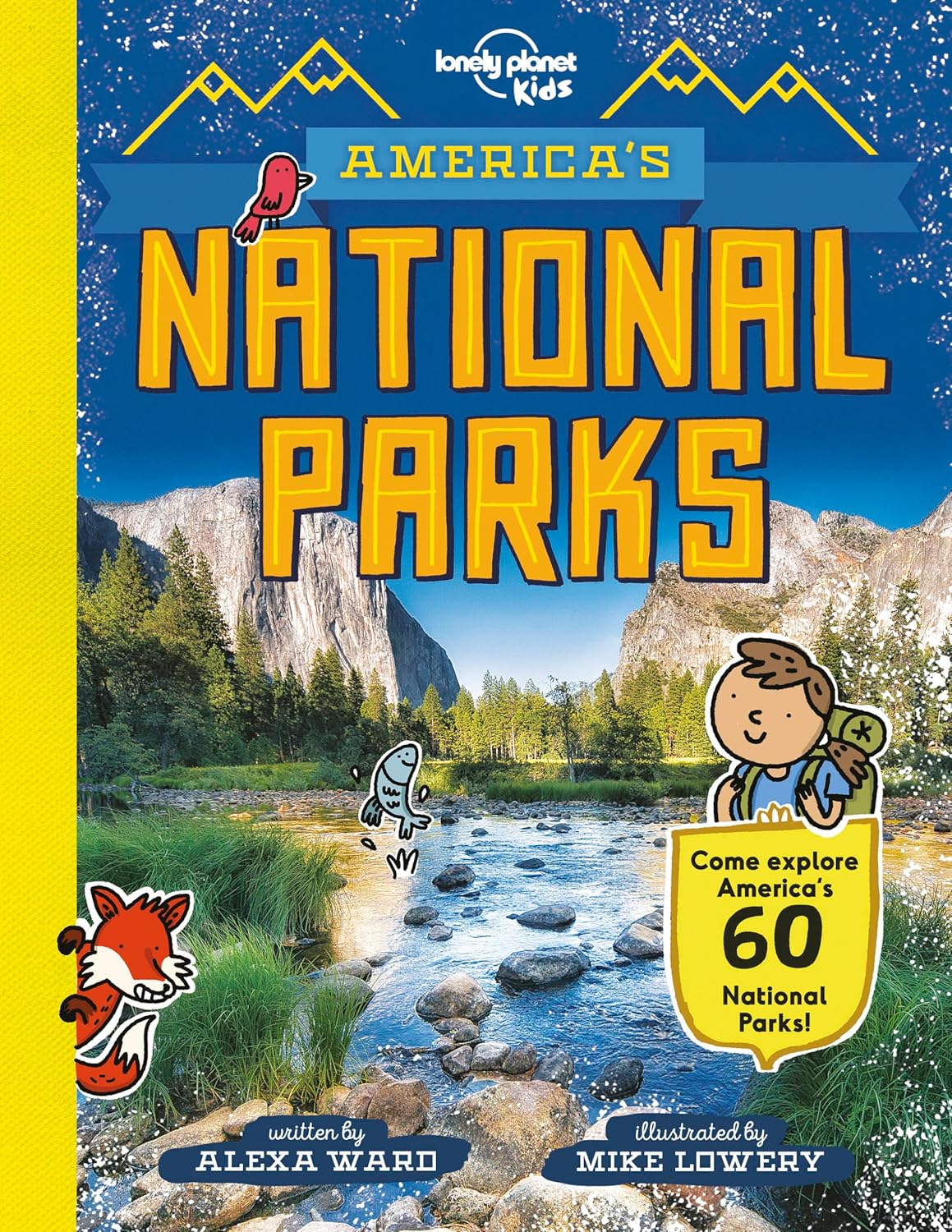


Lonely Planet Kids America’s National Parks written by Alexa Ward and illustrated by Mike Lowery 

This lively, visually stunning guide covers all 63 national parks (including the newest), with jaw-dropping photography, quirky illustrations, fun facts, thematic spreads (e.g., “Parks at Night”), and a conversational tone parents and kids both enjoy. Packed with history, tips, and secrets, it’s a dynamic and immersive read for aspiring young adventurers.
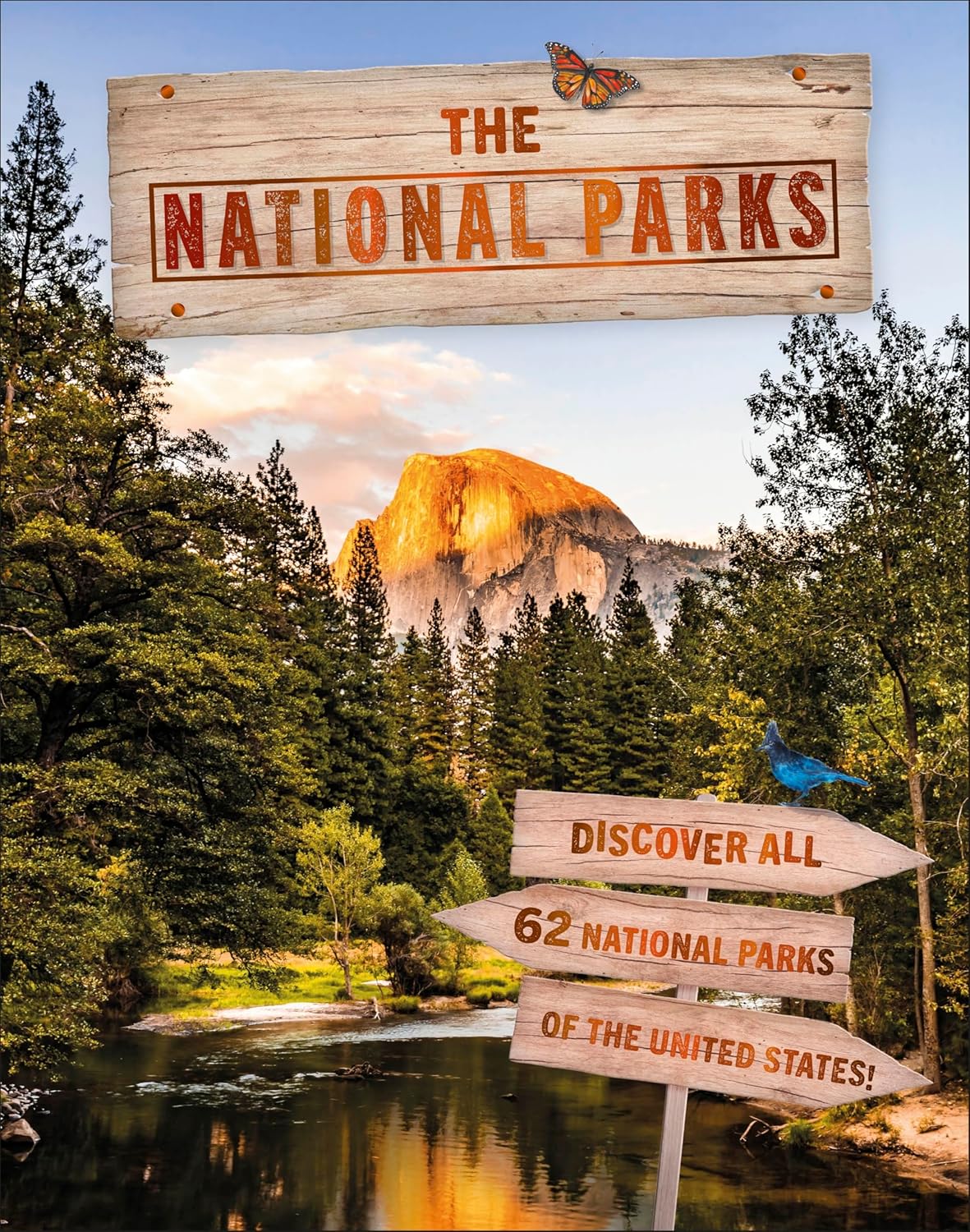


The National Parks: Discover all 62 National Parks of the United States! by DK 

A bright, cheerful travel guide for kids, showcasing all 62 U.S. national parks (not including New River Gorge, which joined the list in 2020) via striking photos and accessible text. Features fun facts—like “Wrangell-St. Elias is bigger than Switzerland”—activity tips, flora and fauna highlights, and safety advice. A perfect primer to spark young nature lovers’ curiosity and promote outdoor stewardship.


The Unlikely Hero: The Story of Wolf 8 (Young Readers Edition) by Rick McIntyre and David A. Poulsen

Biologist Rick McIntyre has teamed up with YA author David Poulsen to bring to life the reintroduction of wolves into Yellowstone National Park. This action-packed nonfiction story follows the life of Wolf 8 as he fends off grizzly bears, adopts a litter of pups, and helps his family to survive. (In keeping with the conventions of scientific research, all the wolf characters are identified with numbers instead of names.) The scenes in the book are based on McIntyre’s own observations, and readers will find themselves rooting for this underdog on his journey to become an alpha wolf.
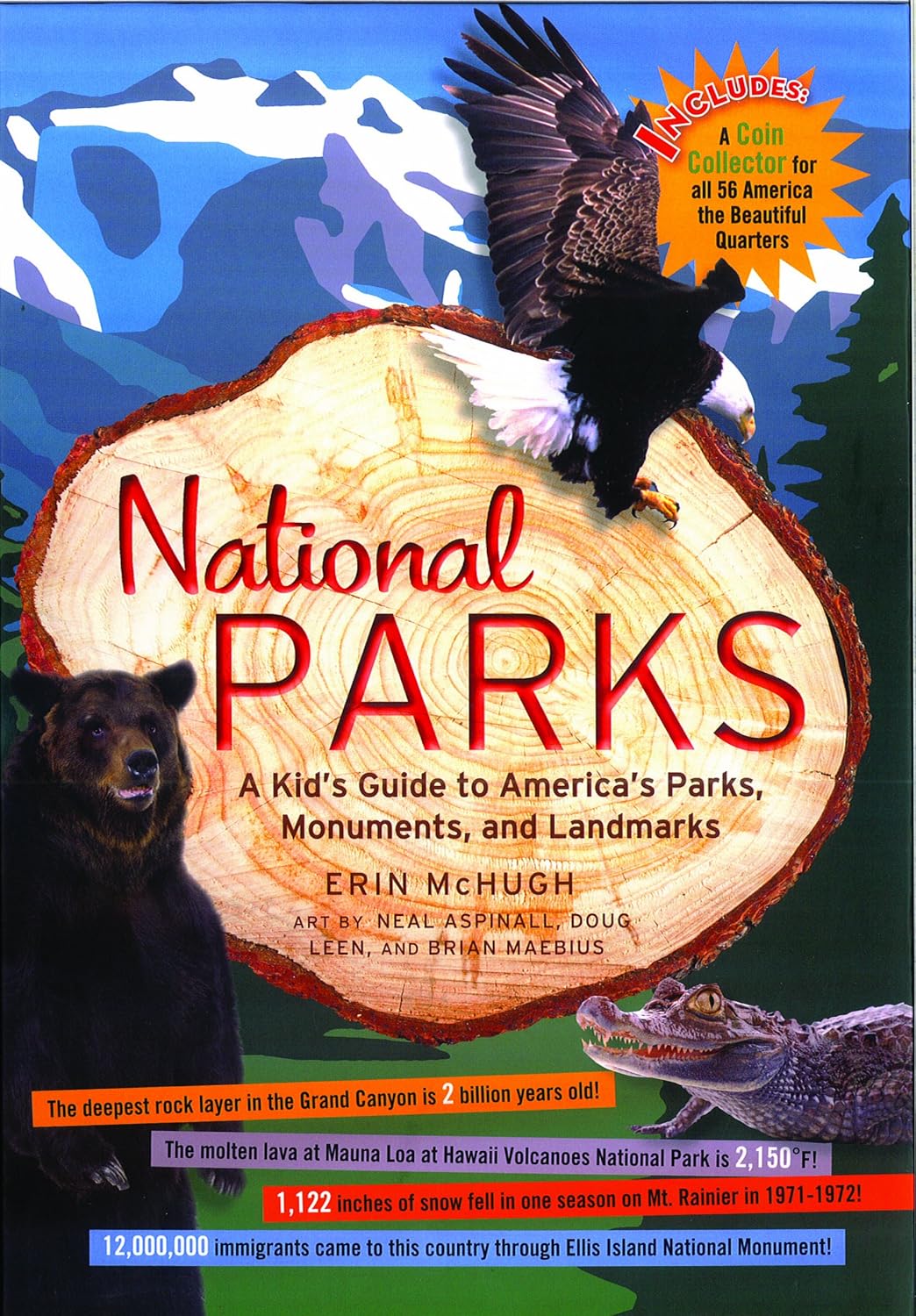


National Parks: A Kid’s Guide to America’s Parks, Monuments, and Landmarks written by Erin McHugh and illustrated by Neal Aspinall

Each page of this fact-filled book features a site managed by the Natural Park Service—not just national parks, but also scenic riverways, parkways, national forests and recreation areas, historical parks, and more. Every state and U.S. territory is represented, so U.S.-based readers will be able to find sites both far away and close to home. The images in this book include vintage travel posters as well as historical photographs and eye-popping sidebars.
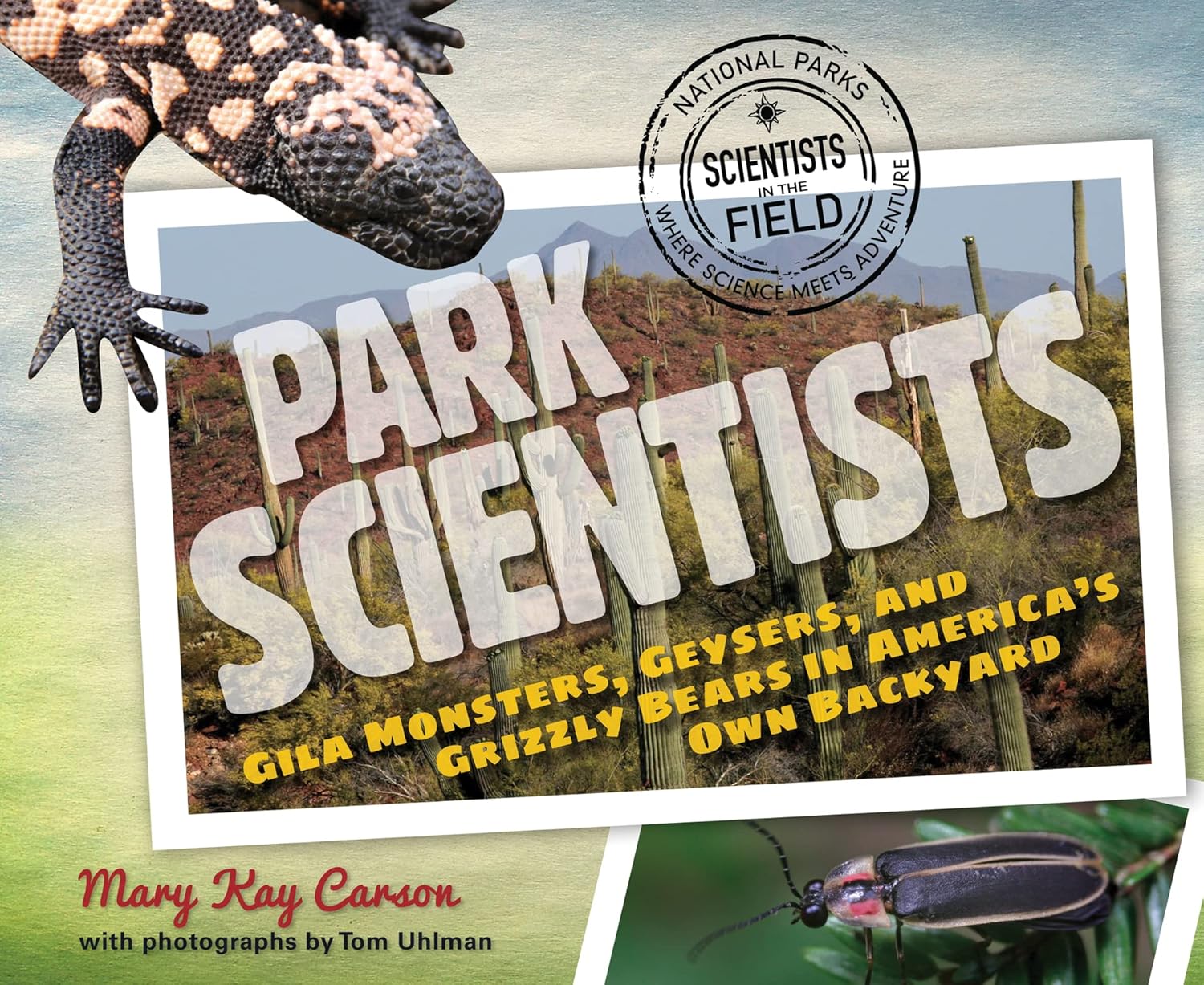


Park Scientists: Gila Monsters, Geysers, and Grizzly Bears in America’s Own Backyard written by Mary Kay Carson with photographs by Tom Uhlman

National parks serve as “natural laboratories” and “living museums” that offer unique possibilities for scientific research. This book follows in the footsteps of real-life biologists, ecologists, geologists, herpetologists, and citizen scientists in three different national parks: Yellowstone, Saguaro, and Great Smoky Mountains. Aspiring scientists will learn what makes geysers erupt, what happens when bears hibernate, how Gila monster venom can be used, and more.
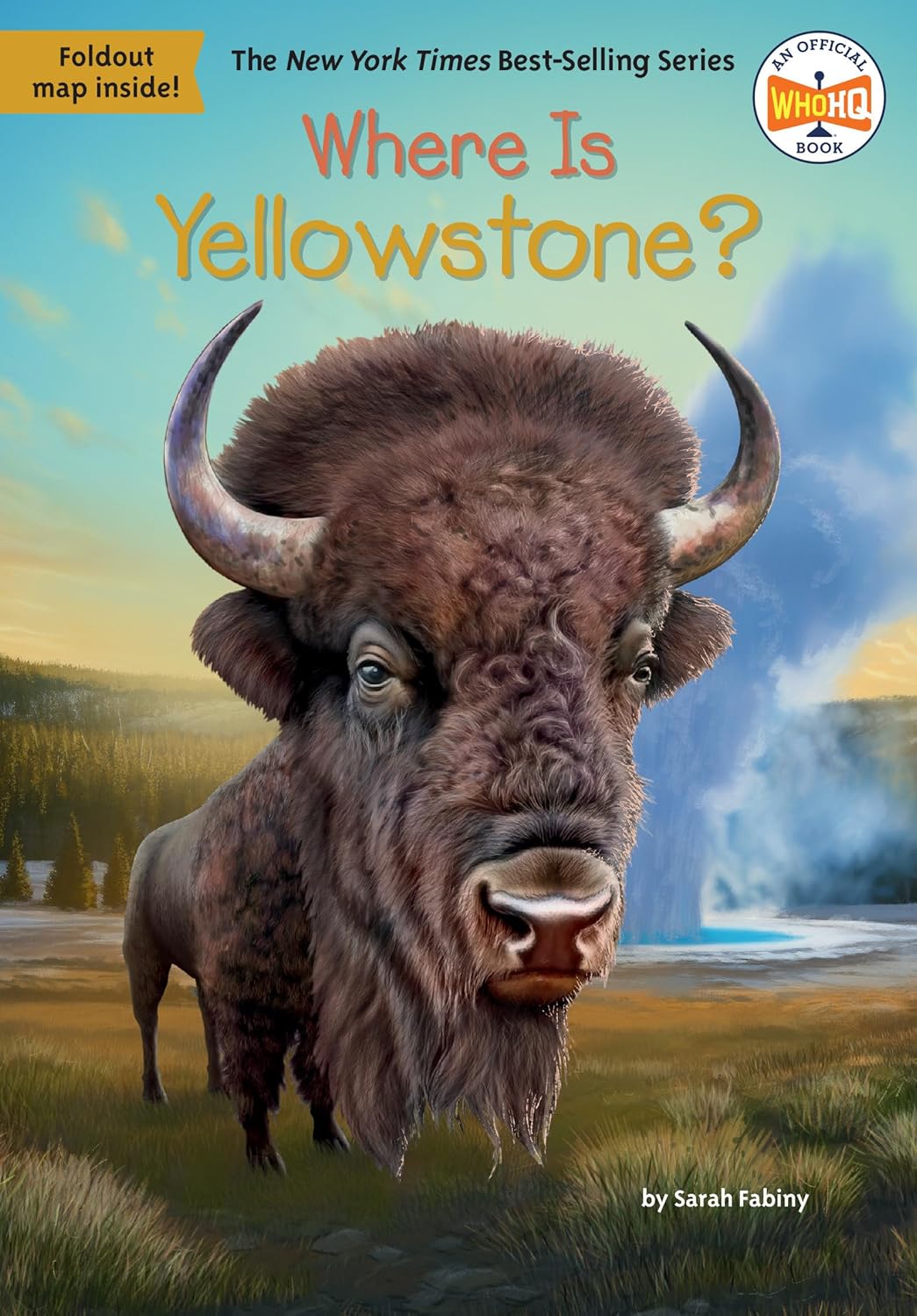


Where Is …? by Penguin Random House/Who HQ

This bestselling nonfiction series includes three titles specific to U.S. national parks: Where Is Yellowstone? by Sarah Fabiny and Stephen Marchesi; Where Are the Everglades? by Nico Medina and Gregory Copeland; and Where Is the Grand Canyon? by Jim O’Connor and Daniel Colon. Each book is divided into nine chapters and provides a deep dive into the history, culture, and ecology of the featured park.


_________________________________________________________________________________________________________

This month’s STEM Tuesday book list was prepared by:

Author Lydia Lukidis

Lydia Lukidis is an award-winning author of 60+ trade and educational books for children. Her titles include UP, UP HIGH: The Secret Poetry of Earth’s Atmosphere (Capstone, 2025), DANCING THROUGH SPACE: Dr. Mae Jemison Soars to New Heights (Albert Whitman, 2024), and DEEP, DEEP, DOWN: The Secret Underwater Poetry of the Mariana Trench (Capstone, 2023) which was a Crystal Kite winner for the Canada and North America division, Forest of Reading Silver Birch Express Honor, a Cybils Award nominee, and winner of the Dogwood Readers Award. A science enthusiast from a young age, Lydia now incorporates her studies in science and her everlasting curiosity into her books.  Another passion of hers is fostering a love for children’s literacy through the writing workshops she regularly offers in elementary schools across Quebec with the Culture in the Schools program. For more information, please visit www.lydialukidis.com.


author Callie Dean


Callie Dean is a researcher, writer, and musician living in Shreveport, LA. Her first picture book, Marvelous Mistakes: Accidents That Made History, will be published in 2026. For more information, please visit https://calliebdean.com.


STEM Tuesday– STEM in Sports– Writing Tips and Resources

Get Your Gestalt Going!

Perception psychology is not one of the first things that pops into the mind when thinking about STEM. Perception is one of those things too often taken for granted. It runs in the background 24/7/365, helping the brain make sense of the world.

Gestalt psychology emerged in the early 1900s as a discipline devoted to explaining how the brain perceives experiences by establishing a structure as a whole instead of by its parts approach through automatic grouping and associations of the individual parts. Gestalt psychology, as its own discipline, disappeared after World War II, as most of the leaders of the field were German psychologists who fled Nazi Germany and had to reestablish a new career in new countries.

The principles and ideas, however, did not disappear but seeped into other disciplines, especially those involved with visual processing and visual design. Gestalt principles are key elements in graphic design and visual marketing.

Gestalt & Sports

Around 2004, when I was still coaching high school football and tasked with our training and conditioning program and methodologies, I ran across a 1999 New Yorker article by Malcolm Gladwell called, The Physical Genius.

After reading about NHL hockey great Wayne Gretzky, and his unique ability to “see” scoring opportunities on the ice in real time, it got me thinking about the possibilities and the potential of developing this type of gestaltian perception in high school athletes. Small tweaks is our existing drills and the creation of new drills with the mindset of developing the pattern recognition of our players in football situations.

See the patterns, drill the response. Repeat the patterns, repeat the response. Again and again until the response is second nature.

Chunking

Psychologists use the term “chunking” to describe how we store familiar sequences, like phone numbers and passwords, in long-term memory as a single unit, or chunk. These particular sequences are stored as a unit instead of as individual parts. Think about chess masters, top-shelf neurosurgeons, and great athletes like Wayne Gretzky, Michael Jordan, and Tony Gwynn.

These masters of their craft developed their skills through hours and hours of practice combined with visualization of their actions. They used Gestalt principles in both practice and in visualization to be prepared for any situation that might arise. That’s the physical genius.

Gestalt principles in writing? Is it even possible? Beyond the gestalt-leaning recognition of concepts formed from letters, words, sentences, paragraphs, etc., what can gestalt principles do as part of a writer’s toolbox?

Well, a breakdown of the basic Gestalt Laws might help the writer create stories where the whole shines because of the individual parts. We can also be aware of how perception works, so the good story ideas don’t get lost in the individual parts, and we don’t lose our readers.

Gestalt Laws

  • Figure-Ground Perception – How the brain visually distinguishes an object from its background.
  • Proximity – When objects are placed close to each other, they are perceived as a group.
  • Common Fate – Objects moving in the same direction are looked at as a group.
  • Similarity – When objects look similar to one another, they are perceived as a group or pattern.
  • Continuity –The objects are arranged such that the eye moves from one object to another.
  • Closure Principle – The eye fills in when an object is not completely enclosed or is incomplete.
  • Good Gestalt – The mind looks for order and simplicity in groups of objects or images.
  • Past Experience – Based on what was seen previously or repeated, the perception of the whole is saved. Chunking.

 As writers, we can train ourselves through our practice and by applying the Gestalt Laws to create satisfying stories, but that is not the only thing we can do. Reading can help develop these skills too. Look at reading as practice, like running through cones at football practice, as a way to hone our ability to see the patterns in the parts.

In writing, just as with football drills, see the patterns, drill the response. Repeat the patterns, repeat the response. Again and again until the response is second nature.

Incorporating a Gestalt mindset may not get one into the NHL Hall of Fame or become the greatest middle-grade author on Planet Earth, but it can help middle-grade authors create better and more satisfying stories.

Mike Hays has worked hard from a young age to be a well-rounded individual. A well-rounded, equal-opportunity sports enthusiast, that is. If they keep a score, he’ll either watch it, play it, or coach it. A molecular microbiologist by day, middle-grade author, sports coach, and general good citizen by night, he blogs about sports/life/training-related topics at www.coachhays.com and writer stuff at www.mikehaysbooks.comTwo of his science essays, The Science of Jurassic Park and Zombie Microbiology 101,  are included in the Putting the Science in Fiction collection from Writer’s Digest Books. He can be found roaming Bluesky under the guise of @mikehays64.bsky.social and @MikeHays64 on Instagram.


The O.O.L.F Files

This month on the Out Of Left Field (O.O.L.F.) Files, we take a deep dive into visual perception through Gestalt Principles, and a highlight reel from The Great One himself.  

What is Gestalt Psychology? Theory, Principles, & Examples via Simple Psychology

The Physical Genius. Malcolm Gladwell, New Yorker, 1999

7 Gestalt Principles (Definition + Examples) via Practical Psychology

The Basics of Gestalt Theory – Lesson 1 – Graphic Design Theory

Top 10 Wayne Gretzky Moments


STEM Tuesday– STEM in Sports– Book List


STEM in Sports

Everyone has a favorite sport. From basketball to soccer, figure skating to baseball, STEM is involved in all of them! The books below will shed some light on how this is so by providing amazing information about the sports we love.

1. Learning STEM from Basketball: Why Does a Basketball Bounce? And Other Amazing Answers for Kids! (STEM Sports) Paperback – June 15, 2021 by Marne Ventura (Author)

Learning STEM from Basketball book

If you like basketball and want to know the secrets of the sport, this is the book to read. It’s full of fun facts! Ever wonder why a basketball bounces? Or why the rim has a net? Is there math behind a free throw? This book has the answers, anyone excited by basketball won’t be able to put it down.

2. Learning STEM from Baseball: How Does a Curveball Curve? And Other Amazing Answers for Kids! (STEM Sports) Paperback – July 7, 2020 by Marne Ventura

Learning STEM from Baseball book

Baseball is an exciting sport but do you know the history behind it? From the invention of the pitching machine, to the making of baseballs, this book takes a high-flying look at the sport in new and exciting ways. STEM comes alive while exploring all of  baseball’s secrets.


3. The Secret Science of Sports: The Math, Physics, and Mechanical Engineering Behind Every Grand Slam, Triple Axel, and Penalty Kick by Jennifer Swanson 2021

The Secret Science of Sports book

Did you know that science plays a huge part in every sport we love? From the equipment players wear, to the motions they make, STEM is a huge part of it. The Secret Science of Sports digs into the nitty gritty of scientific concepts in a fascinating way. How does biology, chemistry, math and physics affect sports? From the technology of gear to the aerodynamics of swimsuits, readers will come away with a new appreciation for their favorite sport and what it takes to play it.

4. Stem in Football (STEM in Sports) Paperback – September 1, 2018 by Brett S. Martin

STEM in Football book

Did you know physics is important when throwing a football? How about that technology is important to training? This book takes a look at the exciting game of football and what helps the players succeed by huddling around the STEM concepts that football uses. You’ll never see team training the same way!


5. Stem in Figure Skating (STEM in Sports) Paperback – September 1, 2018 by Marne Ventura

STEM in Figure Skating book

Want to understand figure skating and what it takes to glide on the ice? Take a look inside Stem In Figure Skating. Physics is key to spinning, engineering is important for blades. What else might skaters need to succeed?  This book delivers the answers.


6. Swish: The Science Behind Basketball’s Most Dynamic Plays (Sports Illustrated Kids: Science Behind the Plays) by Allan Morey  | Jan 1, 2025

Swish book

Drawing from iconic moments in sports history, this book explores the alley-oops, the buzzer-beaters, and slam dunks to dig into the science behind the sport. If you’re a basketball fan, you’ll enjoy reliving these epic moments while learning some amazing facts.


7. Goal: The Science Behind Soccer’s Most Exciting Plays (Sports Illustrated Kids: Science Behind the Plays) by Eric Braun 2025

Goal book

Motion and energy play a huge role in soccer. By examining amazing plays from some of the world’s best soccer players, readers will get a better understanding of STEM concepts and how important they are to this sport.


8. The Physics of Fun (Nomad Press) by Carla Mooney, 2021

The PHysics of Fun book

Do you like to have fun? Do you like to jump, run, ride a bike? Ever wonder what they all have in common? Physics! Physics is the science behind our favorite activities. Take a peek inside and discover how physics affects everything we enjoy!