
Posts Tagged Giveaways

STEM Tuesday — Epic Achievements and Fantastic Failures — Interview with Anna Crowley Redding

Welcome to STEM Tuesday: Author Interview & Book Giveaway, a repeating feature for the fourth Tuesday of every month. Go Science-Tech-Engineering-Math!

Today we’re interviewing Anna Crowley Redding about GOOGLE IT: A History of GoogleThe book received a starred review from Booklist, saying, “Redding does an admirable job of chronicling Larry and Sergey’s amazing successes and will inspire young people to follow in their ingenious footsteps.”

Mary Kay Carson: How did Google It come to be?

Anna Crowley Redding: This book was the brainchild of my incredibly talented and brilliant editor, Holly West. We are both excited about technology and the human stories behind tech. The more we talked, the more excited I became and dove into the research immediately. We knew from the start that this should be a fun look at exactly how this company came to be and that, of course, begins with the dreams, ideas, hard work, and failures of two students. Starting with that focus in mind, I have to say it was really delightful peeling back the onion layers of Google. That’s not to say that there aren’t serious or poignant parts of this story, there truly are. And exploring those aspects really allowed the book to demystify this huge company and the people behind it. From losing a dad, to coming to this country as a child refugee, to constant rejection, and then controversy, the personal struggles and triumphs are as much a part of the story as the technology.

MKC: Do you have a favorite aha! discovery or surprise finding you’d like to share from your research?

Anna: As far as aha! moments, there were many, but two stand out. First, reading about artificial intelligence and machine learning changed the way I think about our future and it changed the way I teach my own children about the future. As a society, we are the candlemakers standing at the dawn of electricity. That’s how big these developments are and it made me realize anew the importance of critical thinking, communication, and flexibility. These are the skills every child needs for our future. While a big change like that can be scary to think about, it can also be super exciting and fascinating. Another bit of research that changed the way I think was learning about failure, Google’s failures as a company, and the failures of people who work there… and most importantly, how THEY view failure––as a key ingredient to success. When you look at failure as an intellectual exercise, as a tool for improving your effort, as getting you closer to the solution for the particular problem you are trying to solve, well then it becomes far less personal and emotional. Your journey becomes very much about the process itself instead of a focus on instant perfection. One of Google’s attitudes about this is: fall in love with the problem, not the solution. This changed the way I approach my work, parenting, and just about everything else. It’s a concept I also actively teach my kids.

MKC: Why do you choose to write STEM books?

Anna: My background is in journalism, starting with television news. And as a TV news reporter, so much of current events touches STEM. From stories on ice-storms, plane crashes, environmental pollution, medical stories, crime, public policy and more––they all involve STEM. And using technology itself to gather and report the news is essential. That experience has kept me perennially interested in all things STEM. As an investigative reporter, that’s where I fell in love with research. The process of digging and digging is something I truly enjoy. And the common thread with every story is storytelling itself… how do I take these facts, this science, or tech and talk about it in a way that is as compelling as it is informative. As far as choosing STEM topics for writing books, I love stories about big thinkers and risk takers and naturally STEM fields are full of those stories. Sometimes when we think about STEM, it can be easy to focus on the STEM topics or products themselves, rather than how people connect to these subjects. The human aspect of STEM is what I find endlessly fascinating. Enormous problems are being solved and that requires personal and intellectual bravery. I find that very moving. It really is rewarding to tap into that part of STEM. And hopefully, in taking that angle, young readers can see themselves in these fields, in these careers, solving the problems they deem worthy.

Before diving into the deep end of writing for children, Anna Crowley Redding’s first career was as an Emmy-award winning investigative television reporter, anchor, and journalist. The recipient of multiple Edward R. Murrow awards and recognized by the Associated Press for her reporting, Anna now focuses her stealthy detective skills on digging up great stories for young readers — which, as it turns out, is her true passion. AnnaCrowleyRedding.com

MKC: To whom did you imagine yourself writing to while drafting the book?

Anna: When I was writing this book I thought a lot about my older brother as a kid. His room was full of Star Wars posters and toys. He loved Lost in Space. Every book that Elon [Musk] adored as a kid, so did my brother. So my writing goal was to write a book that my brother might have picked up and been inspired by. For Google It, it was important to recreate the world that needed Google. That meant going back to the past in a relatable and sometimes funny way to think about life before Google. What types of phones did we use? How did we get to the library if we didn’t have directions? It really was a different world, recreating that for young readers in a relatable way was, for me, an essential ingredient in bringing Google’s story to life. Hopefully that will allows students to think about today’s tech and problems the same way and challenge themselves to take these problems on–– (whether political, technological, artistic, whatever they find interesting!)

MKC: You’ve also written a book about Elon Musk, correct? What’s the appeal of entrepreneurs and inventors?

Anna: Elon Musk’s life is fascinating. Young readers are going to love diving into his back story and understanding what drives him and how he got where he is today. In ELON MUSK: A Mission to Save the World, I spend a lot of time on who Elon was as a child and as a reader. The science fiction and comic books he read as a child were his refuge from school bullies, from a complicated home life. Ultimately those stories inspired him to ask big questions, examine the world’s biggest challenges and do something about them. And when I tell you he read, I mean he read every science fiction book he could physically put his hands on. At the comic book shop, he read every comic book in the store! Flash forward to today, Elon has changed the game for electric cars. His company, SpaceX, has revolutionized rocket technology and is making plans to colonize Mars. Even though Elon often courts controversy (or controversy courts him), his work and the way he approaches problem-solving, his tolerance for failure in the course of reaching a goal––is fascinating. I hope that readers will themselves in his story, that they see their own seemingly unattainable dreams as worthy pursuits.

Win a FREE copy of Google It

Enter the giveaway by leaving a comment below. The randomly-chosen winner will be contacted via email and asked to provide a mailing address (within the U.S. only) to receive the book.

Good luck!
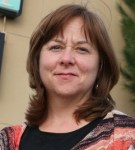
Your host is Mary Kay Carson, author of Alexander Graham Bell for Kids, Mission to Pluto, Weird Animals, and other nonfiction books for kids. @marykaycarson

STEM Tuesday– Mixing Science and Poetry/Verse — Interview with Author Leslie Bulion

Welcome to STEM Tuesday: Author Interview & Book Giveaway, a repeating feature for the fourth Tuesday of every month. Go Science-Tech-Engineering-Math!

Today we’re interviewing Leslie Bulion about her new book Superlative Birds. This fascinating and brilliantly-illustrated book of fun and friendly bird poems is layered with facts and humor. It’s already garnered multiple starred reviews, including Kirkus who says, “With characteristic humor and carefully crafted language, poet Bulion offers readers amazing facts about birds of our world…. These engaging poems read aloud beautifully…. Excellent resources for further bird study complete this delightful offering.” There’s a terrific downloadable free Teaching Guide for the book, too.

Mary Kay Carson: How did this book come about? 

Leslie Bulion: I read about the turkey vulture’s remarkable sense of smell and wrote a poem about it that was included in Sylvia Vardell and Janet Wong’s terrific Poetry Friday Anthology series. The turkey vulture’s superlative ability made me wonder about other bird-world “bests.” Each of my collections is organized around a theme and that’s how the theme for this collection hatched, complete with its ready-made, rhythmic, rhyming title: Su-per-la-tive Birds!

Superlative Birds celebrates bird “world record-holders”  through poems written in different poetic forms accompanied by short, narrative notes. While introducing these remarkable birds, readers explore all of the special attributes that help define birds: wings, eggs, nests, and beaks, as well as migration, song, and other important characteristics of birdness. A chickadee “spokesbird” challenges readers to find those attributes belonging only to birds (hint: not those I just mentioned!).

MKC: Why use poetry in a book about birds?

Leslie: In 2003 I attended a summer class at Cornell Adult University called “The Way Bugs Work.” We looked under rocks, swept nets through the field, and examined critters in the lab. I kept a science journal, scribbling notes and sketching bugs. I began to imagine insects as cool little adaptation stories. I’d written poems since elementary school and wondered if writing in the spare, elegantly small space of a poem could be a creative way to tell a cool science story. Those adaptation-themed stories metamorphosed into my first science poetry collection, Hey There, Stink Bug! (Charlesbridge 2006). My fourth collection, Leaf Litter Critters (Peachtree 2018) hatched from a bunch of sketches in that same summer science journal! Leaf Litter Critters takes an ecosystems approach, moving readers through trophic levels from primary decomposer to top predator in a “who-eats-who” of the decomposer food web.

MKC: To whom do you write–what imagined audience–while drafting?

Leslie: In creating my science poetry collections I hope the music and imagination space of poetry, the accompanying short narrative notes, and the addition of visual, narrative and resource-rich backmatter make these explorations of science and nature appealing and accessible to readers with a variety of learning styles. There’s a back-and-forth interplay between the poems, the illustrations, and narrative notes that can work for readers of many ages. At heart I’m still a fourth-grade kid who looks under rocks, sifts through sand, scans the trees and the sky, writes poems, reads and imagines. I would love for readers to find joy and wonder in these ideas and activities, too.

Leslie Bulion has been playing with the music of poetry since the fourth grade and has been a hands-on observer of the natural world from the moment she could peer under a rock. Leslie’s graduate studies in oceanography and years as a school social worker inform her science poetry collections: Superlative Birds, Leaf Litter Critters, At the Sea Floor Café, Random Body Parts, and Hey There, Stink Bug. www.lesliebulion.com.

MKC: Do you have a STEM background?

Leslie: I have graduate degrees in biological oceanography and social work, and worked as a medical social worker and a school social worker. I like to think my somewhat circuitous route has led me to my current work as a science communicator for young readers.

MKC: Could you give us a peek into your process? Do you write the poems first?

Leslie: When I was ready to explore the wild world of birds, I started by reading widely—nonfiction books and articles about birds, as well as fiction and memoir. This was the full-immersion, beginning stage of my research. There are a gazillion bird books. I didn’t read them all! I always include an element of hands-on learning when researching a book. For Superlative Birds I took a week-long class at the fascinating Cornell Lab of Ornithology. I had been interested in birds for a long time, but that week hooked me on birding—a fully sensory, mind and soul-expanding, moving meditation I do on my own and with friends. I love to record and share my citizen scientist observations in the ebird.org app on my phone.

I have a habit of tucking articles and notes into idea files for future projects—my super-fun “to-do” list. Those files give me a bit of a head start when I’m ready to work on a new project. Since I had decided to use superlatives to highlight the attributes we associate with birds, some amazing birds I’d read about did not make the cut. I read more specifically about the birds I did select. I took lots of notes, both for science concept and with an ear to language. After I finished most of my research (there’s always more!) I tackled the poems one-by-one. I considered how the form of each poem might enhance its subject. I worked on a poem (with many, many revisions, and more research), then the accompanying science note (ditto), then the poetry note. After those were finished, I created a rough plan for potential back matter. I worked very closely and joyfully with Robert Meganck on both Leaf Litter Critters and Superlative Birds, and we’re having a blast working on our upcoming Amphibian Acrobats (Peachtree 2020).

Win a FREE copy of Superlative Birds

Enter the giveaway by leaving a comment below. The randomly-chosen winner will be contacted via email and asked to provide a mailing address (within the U.S. only) to receive the book.

Good luck!

Your host is Mary Kay Carson, author of Alexander Graham Bell for Kids, Mission to Pluto, Weird Animals, and other nonfiction books for kids. @marykaycarson

National Geographic Welcomes MG Explorers Back for Another Thrilling Adventure

Join Cruz Coronado and his friends at The Explorer Academy as they travel around the globe training to be the next generation of explorers and uncovering Cruz’s family’s dangerous past. This is the second adventure in which Cruz and his teammates use real-world science and technology to solve mysteries and outwit their enemies. The first in the series is The Nebula Secret.


Welcome Back to the Explorer Academy!

Welcome to Day #5 of the Explorer Academy: The Falcon’s Feather Blog Tour!

To celebrate the release of Explorer Academy: The Falcon’s Feather by Trudi Trueit on March 19th, blogs across the web are featuring special content from Trudi and the Explorer Academy team, as well as 5 chances to win an Explorer Academy DRONE Prize Pack!

Ten Terrible Titles for Explorer Academy Book 3

The rules of the game are: “Scroll through the manuscript and stop on a random place. Whatever you land on becomes one of ten terrible titles.”

1. Guess It Wasn’t Such a Brilliant Idea After All

2. Is the Spot in the Corner a Pit or Not?

3. The Eye of the Birsh!

4. Photo 51: It’s Only the Most Important Photograph Ever Taken

5. It Could Be a Temple, or a Tomb

6. A Drawer! It Had to Be a Secret Drawer!

7. Nature Was Random

8. Most Certainly the Mummy Inside

9. After All, We Are Trespassing

10. Your Life is…Complicated

Of course, the real title for Explorer Academy #3, the sequel to The Falcon’s Feather, is…


Available September 3rd, 2019!

Blog Tour Schedule:

March 18th – BookTrib

March 19th – Big Shiny Robot

March 20th – Always in the Middle

March 21st Novel Novice

March 22ndFrom the Mixed Up Files

A fun, exciting and action-packed ride that kids will love.”

J.J. Abrams, director of Star Trek, Star Wars: The Force Awakens, Lost and Alias

Explorer Academy is sure to awaken readers’ inner adventurer and curiosity about the world around them.”

LeVar Burton, host of “Reading Rainbow”and “LeVar Burton Reads”


Buy: National Geographic | Amazon | Indiebound

Add on Goodreads

Visit the Explorer Academy Official Site

Educator Guide


Follow Trudi: Website | Twitter | Facebook | Youtube

Follow National Geographic Kids: Website | Twitter | Books Twitter | Facebook | Youtube

It’s an adventure of a lifetime when Cruz Coronado sets sail for the shores of Iceland and Norway aboard the Explorer Academy ship to continue his studies at sea. But, things take a turn while exploring the icy north, when he embarks on a dangerous mission to uncover the first piece of an important puzzle his mother left behind.

In the exciting follow-up to The Nebula Secret in the 7-book Explorer Academy series, Cruz, Sailor, and Emmett, along with their new ally Bryndis, embark on their first globe-trotting mission aboard the ship Orion. Cruz jumps right back into school and starts using the latest technology in submersible underwater dives, but is soon reminded of the dangers of exploration when his equipment fails and he almost drowns. Determined to keep his eyes on the prize, Cruz sneaks away to try to find answers, but unknowingly lures his friends into bigger trouble. When a friend of Cruz’s mom meets an untimely end, Cruz’s luck really seems about to run out and the questions multiply. What does the message mean? Where will it lead? Who is following him? And why?

This captivating book is the sequel every Explorer Academy fan is waiting to read!

About the Author: Author Trudi Trueit is a gifted storyteller for middle-grade audiences. She has written more than 100 books for young readers, both fiction and nonfiction, including The Sister Solution, Stealing Popular and the Secrets of a Lab Rat series. Trueit lives in Everett, Washington.

GIVEAWAY


  • One (1) winner will receive SIGNED copies of Explorer Academy books 1 and 2, an ADVANCE copy of Explorer Academy Codebreaking Activity Adventure (not otherwise available to the public until May!), an Explorer Academy pin, baseball cap, t-shirt, and bag, and a Quadcopter DRONE!
  • US/Canada only
  • Ends 3/31 at midnight ET

a Rafflecopter giveaway

Plus! Enter to win a once-in-a-lifetime trip!

One lucky family of four will embark on a spectacular ship-based adventure, just like the students at Explorer Academy. Experience the remarkable beauty of Alaska’s famed Inside Passage on this thrilling 8-day voyage, courtesy of National Geographic Expeditions. Get up close to icebergs and calving glaciers. See orcas and humpback whales, then listen to them with the ship’s hydrophone. Visit Glacier Bay National Park, learn about Alaska’s rich Native American heritage, and pass islands teeming with wildlife, including brown bears, sea lions, sea otters, and perhaps the world’s highest density of nesting bald eagles. Visit natgeoexpeditions.com to see a detailed itinerary for Alaska’s Inside Passage Cruise. Enter here!

Explorer Academy: The Falcon’s Feather Author Tour

Friday, March 22, 2019

Kepler’s Books

1010 El Camino Real

Menlo Park, CA

Event details:

6 p.m. – 7:30 p.m.— Public event with talk by author Trudi Trueit and National Geographic Explorer Erika Bergman, followed by book signing. Purchase tickets in advance.